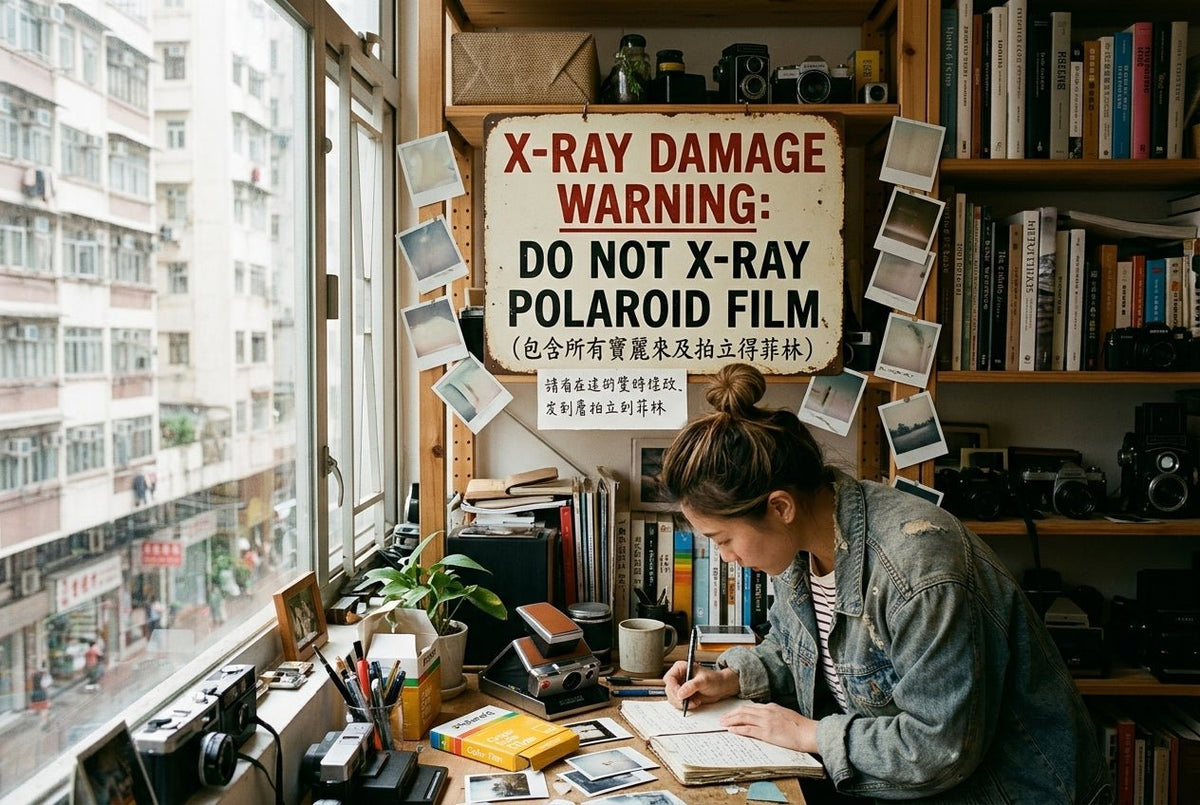
X-Ray Damage Warning: Do Not X-Ray Polaroid Film
That x-ray damage warning — do not x-ray Polaroid film — is not packaging drama. It is practical advice for instant photography enthusiasts, travelers carrying Polaroid or other instant film, and anyone taking an instant camera through airport security, because X-ray scanners can fog this light-sensitive film and leave developed photos with muted contrast, unwanted haze, or frames that feel strangely flat.
Your film can look perfectly sealed after a scanner, then reveal the damage only when the pictures begin to develop. If you want your shots to survive a city break, a wedding weekend, or a long-awaited trip, this guide explains why airport screening affects instant film, how to pack and carry it, when to ask for a hand inspection, what to do with already exposed film, and the simplest travel habits that help protect image quality.
Instant photography is about the unrepeatable moment. A scanner should not get a say in how it looks.
Why X-rays from an X ray machine Can Damage Polaroid Film
Polaroid film is a light-sensitive material, even while it sits inside a light-tight cartridge. Airport X-ray equipment uses radiation to see inside luggage. That exposure can fog the film, affecting the image before you ever press the shutter.
The result is not always dramatic or immediate. One pack may produce images with a faint overall haze; another may show lower contrast, odd streaks, or a washed-out cast. The effects can vary according to the scanner, the number of scans, the film type, and how the pack is positioned. That unpredictability is exactly why the warning is so clear.
Current Polaroid i-Type and 600 film are generally ISO 640. That sensitivity gives instant photos their recognizable look, but it also makes the film vulnerable to X-rays. SX-70 film has a lower ISO, yet it is still film and deserves the same careful handling. Polaroid Go film is no exception.
A film pack's dark plastic cassette protects it from ordinary light. It does not make it X-ray-proof.
Airport X-Ray Damage Warning for Polaroid Film
Checked luggage is the easy call: never put fresh Polaroid film in it. The screening systems used for checked bags are typically much stronger than those used at the carry-on checkpoint, and damage is far more likely.
Carry-on luggage is the better place for your film because standard carry-on x ray machine systems use relatively low radiation levels, but it is not a guarantee. Traditional carry-on scanners may affect undeveloped film, especially after repeated passes. Newer CT scanners deserve even more caution, as they are much more damaging to instant film than traditional X-ray scanners. These systems create detailed three-dimensional images of the contents of a bag, and film manufacturers broadly advise travelers to keep analog film away from them. They can destroy undeveloped Polaroid film and ruin undeveloped film quality, not just cause minor inconsistency.
The best approach is simple: keep unopened film packs in your carry-on and ask for a hand inspection before they enter any scanner. Present the film separately, ideally in a clear pouch, and make the request politely and early in the screening process.
Security procedures differ by airport, country, and officer. A hand check is not guaranteed, and security staff always have the final word. But asking is worthwhile, particularly when you are carrying multiple packs or film you cannot easily replace.
What to say at the checkpoint
You do not need a speech. A clear, calm request works best: “I have instant camera film that can be damaged by X-rays. May I have it hand-inspected?” Security agents are more likely to help when the film is already separated and easy to inspect.
Keep the film easy to access. Pull it from your bag before it reaches the bins, and avoid wrapping it in layers of clothing or packing it beneath chargers, metal accessories, and toiletries. A clean presentation makes the inspection quicker for agents and easier for people waiting behind you.
If you are traveling with a Polaroid camera loaded with film, mention that too. Do not open the camera back to prove the film is inside. Opening it will expose the remaining sheets to light and ruin them. An officer may inspect or swab the exterior of the camera instead.
How to Pack Polaroid Film for Travel
Treat film like a small creative essential, not an afterthought at the bottom of your suitcase, and pack it carefully to protect it during travel. Keep it together, visible, and protected from the other conditions that can affect its performance.
A transparent resealable pouch is ideal. It lets security staff see that you are carrying film packs and keeps the boxes separate from loose items that can crush them. If you fly a lot, keeping all packs together in one clear pouch also makes repeat hand checks easier. Leave each pack in its original foil wrapping until you are ready to load it. The packaging will not stop X-rays, but it helps preserve photo quality by shielding the film from dirt, scuffs, and accidental damage while you move through airports.
Avoid leaving film in a hot car, on a sunny windowsill, or near a radiator once you reach your destination. Heat is a different problem from X-ray exposure, but it can also compromise the final image. For longer storage before a trip, cool conditions are best. Let chilled film return to room temperature before loading it into a camera to reduce the risk of condensation.
There is no need to freeze your travel kit or turn it into a laboratory project. Hand luggage, a clear pouch, and a hand-inspection request are the moves that matter.
Should you use a lead-lined film bag?
Some travelers buy a lead-lined bag as a precaution, but it comes with a trade-off. Lead-lined bags may block low-level X-rays but are ineffective against modern CT scanners. If security cannot see what is inside, the bag may prompt a secondary inspection or a request to scan the contents again at a higher setting, which is why it can still create issues at security even when the intent is safe transport.
For Polaroid film, a straightforward hand check is the cleaner strategy. It keeps the process transparent and gives the film its best chance of avoiding exposure altogether.
If Your Film Has Already Been X-Rayed
Do not assume the pack is ruined. Load it, shoot it, and see what develops. X-ray damage can be subtle, and some packs may still be fine after limited exposure. The issue is that there is no dependable way to inspect a box and know in advance whether its images will be affected, or what visible effect X-ray exposure may have.
If the film has gone through a scanner several times, set expectations accordingly. Use it for casual frames, travel notes, experiments, and moments where a little unpredictability will not spoil the memory. Save untouched packs for work you especially care about: an event, a gift, a portrait session, or the first frames from a once-in-a-lifetime destination.
Do not confuse X-ray fogging with normal Polaroid developing conditions, and handle already developed photos carefully too, even though the main risk is to unexposed film. Fresh photos still need time and reasonable temperature to develop well. Shield newly ejected images from bright light, especially in the first moments, and let them develop according to the film's instructions. That will not reverse scanner exposure, but it helps avoid separate handling issues, since scanned film or prints can end up looking fogged rather than fully ruined.
The Smartest Option Depends on the Trip
For a quick weekend with one or two packs, carrying film through security and requesting a hand inspection is usually the most practical choice. For a shoot where every frame matters, choosing to buy film at your destination can be the lower-risk option, provided you can get authentic, fresh stock there. Some travelers also post film ahead to a hotel or destination to avoid airport scanners altogether.
That is the main question when you are deciding how to travel with film: travel light with film you trust, or source it after you land and sacrifice some certainty around availability. Creative travelers often prefer to bring their own, especially when they know the specific film format they want. A little preparation protects the look they packed the camera for in the first place.
At Bang On, instant photography is part of the pleasure of going out, going somewhere, and coming back with something physical. Keep your film out of checked baggage, ask for the hand check early if you are worried, and let the first image from your trip be shaped by the moment - not the scanner, since policies and outcomes can vary by airport.
Share
Analog photography trends are shaping a more tactile, personal camera culture. See why instant film, compact cameras, and imperfect prints matter today.