Backpack Versus Messenger Bag: Which Fits You?
The backpack versus messenger bag decision is rarely just about where your laptop goes. It affects how you move through a crowded train platform, whether your camera is ready when the light changes, and how your outfit reads from the first coffee meeting to the last stop home. The right bag should earn its place in your routine, not ask you to plan around it.
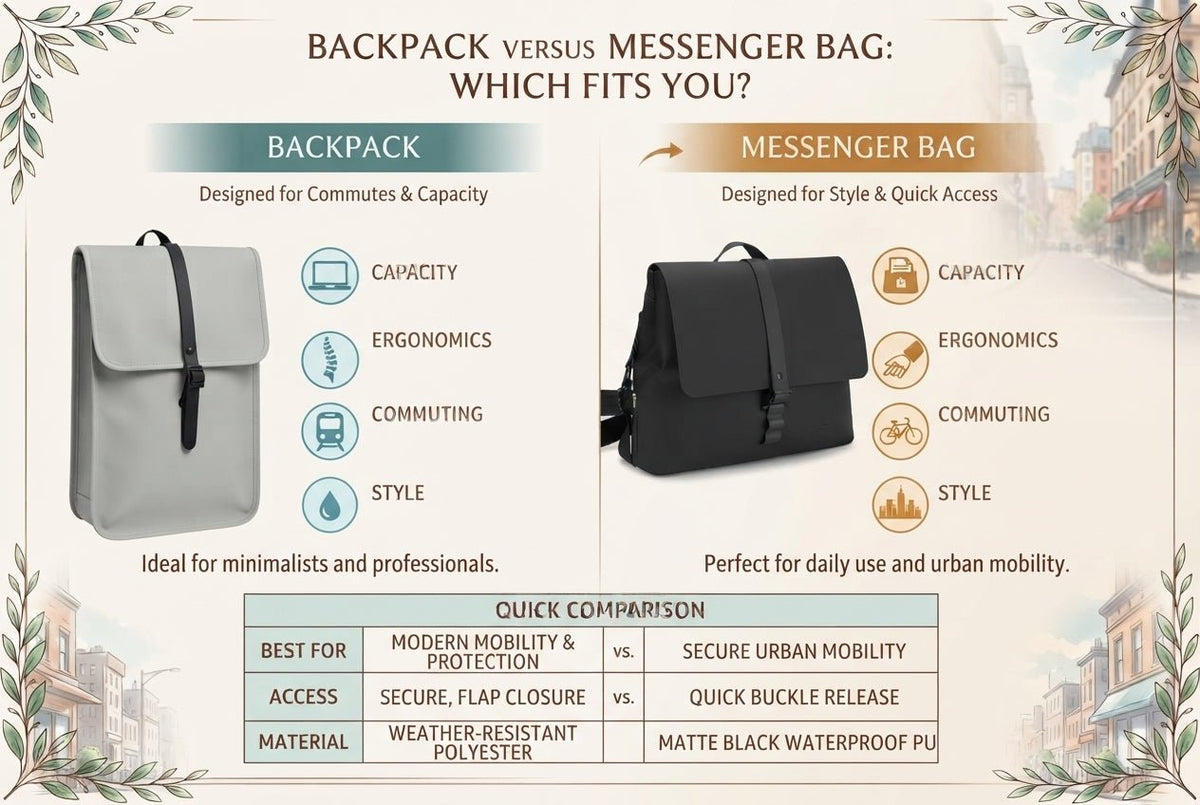
A backpack distributes weight, protects your posture, and handles the unpredictable volume of a full day. A messenger bag keeps essentials close, looks sharp in motion, and makes quick access feel effortless. Neither is universally better. The stronger choice comes down to what you carry, how far you travel, and whether your day asks for speed, capacity, or both.
Backpack Versus Messenger Bag: The Core Difference
The defining difference is how each bag carries weight, and one of the biggest differences in any backpack or messenger bag decision is how that load feels over a full day. A backpack uses two shoulder straps, spreading the load across your upper body. This makes it the more comfortable option for longer walks, bike commutes, airport terminals, and days that involve a laptop, charger, water bottle, camera, and an extra layer.
A messenger bag rides on one shoulder with a crossbody strap. Its profile is flatter and more horizontal, often sitting at your hip or lower back. That shape feels natural for a lighter daily kit: a laptop or tablet, notebook, phone, wallet, keys, and compact camera. For shorter trips and lighter loads, a laptop messenger bag works well, especially compared with bulkier laptop bags. It also puts those items within reach without taking the bag off.
There is a visual distinction, too. Backpacks tend to signal utility, travel, and relaxed modernity. A clean, structured model can still look polished with tailored outerwear or a minimal work wardrobe. Messenger bags are more direct and city-minded, and they sit easily in office environments. Their asymmetrical carry gives them a graphic presence that suits creative offices, gallery visits, and quick trips across town.
Choose a Backpack When Comfort Carries the Day
If you regularly carry more than a few pounds, a backpack has a clear ergonomic advantage. Two straps improve weight distribution and balanced weight distribution, reducing the pressure that a loaded messenger bag places on one shoulder and across your torso when carrying heavy loads on long commutes. This matters more than people think, particularly if your commute includes walking, cycling, or standing on public transit, especially those who commute daily for urban commuting with heavy items or work essentials.
Backpacks also organize volume better. A well-designed model can use separate compartments so the main compartment stays easy to access while a padded laptop sleeve or padded laptop compartment keeps tech apart from cables, smaller accessories, and bulkier items instead of turning into a bottomless compartment. Backpacks are also more efficient to pack because of their vertical design. For photography lovers, that extra space can make room for an instant camera, film packs, a charger, and the small personal items that otherwise compete for space.
Water resistance is another practical reason to choose a backpack. Weather shifts fast in a city, and a bag that offers protection for your devices and paper goods gives you more freedom to move. A laptop backpack also improves laptop protection during movement because the padded laptop stays stable against the back panel. Design-led waterproof backpacks, including styles from Gaston Luga, show that technical materials do not have to look overly outdoorsy. Matte finishes, restrained hardware, and architectural silhouettes can keep a functional bag aligned with a more considered wardrobe.
A backpack is especially right if your day changes shape. Maybe you start at a desk, meet friends after work, pick up groceries, or head out for a weekend train. In that context, carrying capacity is not excess. It is flexibility.
The backpack trade-off: Comfort and Shoulder Straps
Access is the main compromise. To reach your gear, you usually need to swing the bag around or set it down. That is fine when you are settling in at a café or office, but less convenient when you need to pay for transit, grab sunglasses, or pull out a camera quickly. Quick access matters when you are standing in transit lines or moving between stops, which is why some people still value the easy access of a slimmer shoulder bag.
Backpacks can also feel visually larger, even when they are compact. Even premium backpacks can read bigger on the body, which is why some people still prefer a slimmer messenger silhouette. If your daily carry is minimal and you prefer a streamlined silhouette, an oversized pack may look and feel like more bag than you need. The answer is not abandoning backpacks altogether. It is choosing a proportion that matches your frame and your actual essentials.
Choose a Messenger Bag for Fast, Light Days
A messenger bag works best when access is part of the job. The crossbody position lets you bring the bag forward, open a flap or zipper, and find what you need while standing. A laptop messenger bag suits fast office carry, a coworking space stop, or similar mobile routines. For a commuter who taps a transit card, carries a notebook, and moves between meetings, that convenience becomes part of the appeal.
It is also an easy fit for people who treat their bag as an extension of their outfit. A refined messenger can sit neatly over a wool coat, overshirt, or simple tee without disrupting the line of the look. Messenger bags offer a polished alternative to bulkier work bags, and a leather messenger bag with minimal branding can feel especially right for modern professionals. It feels intentional rather than purely technical, particularly in leather, coated fabric, or structured recycled materials.
A creative professional may prefer a messenger bag because it encourages a tighter edit. Bring the laptop, sketchbook, earbuds, charger, and one camera. Leave the just-in-case clutter behind. That lighter approach can make a workday feel more mobile and less burdened, especially for hybrid work and hybrid workers.
For cycling, messenger bags have a long urban history and were popularized by bike couriers. A stable crossbody strap can keep the bag close to the body, and a flap design offers fast access at a stop. Still, a bike commute with a heavier load is where backpack comfort usually wins. A single strap cannot distribute weight as evenly, no matter how well the bag is designed.
The leather messenger bag trade-off
A messenger bag can create shoulder fatigue when overloaded because all the weight sits over one shoulder, or across the body, and that can lead to shoulder strain over long periods. A 13-inch laptop may be perfectly comfortable, and an adjustable shoulder strap can help the fit; add a camera, water bottle, hardcover book, and heavy charger, and the difference becomes obvious by the end of the day, especially with heavy items or heavy loads. The issue is not the bag itself. It is using a one-shoulder design for a two-shoulder load.
Capacity can be less forgiving as well. Messenger bags are ideal for flatter items such as paper folders but can become awkward when packed with bulky objects. If you often carry gym clothes, groceries, or travel layers, the shape may work against you.
Consider What You Carry Before What You Wear
Style should matter, but it should follow function closely enough that you will enjoy using the bag six months from now. Unlike a rigid briefcase or traditional briefcases built for more stationary office routines, the better choice now often depends on how flexibly you move through the day. Start with the objects you carry on an ordinary weekday, not the aspirational version of your routine. Put them on a table: laptop, charger, headphones, notebook, camera, film, water bottle, keys, and anything else that reliably leaves home with you.
Before choosing a bag, check your laptop size so the fit works with everything else you carry. If that collection includes several bulky or heavy pieces, choose a backpack with a dedicated device compartment and adjustable padded straps. If it is mostly flat, light, and accessed throughout the day, a messenger bag may offer the cleaner experience. Small daily extras, like a power bank, also matter when you are judging space and organization.
Then think about your movement. A five-minute walk from car to office does not demand the same support as a forty-minute walk plus a subway ride. A frequent flyer needs secure closures and hands-free comfort. A freelancer moving between cafés may value a messenger bag's quick entry and compact footprint. A student carrying books and a laptop will usually benefit from a backpack, even if a messenger looks more formal, and the same function-first logic applies to hybrid workers and other modern professionals.
Details That Make Either Bag Better: The Importance of a Padded Laptop Compartment
The best choice is often decided by details rather than category. Look for a protected laptop compartment designed specifically for your device and its actual size, not a vague "up to" claim. Check whether the zipper pulls are easy to use, whether the shoulder strap adjusts enough for your height, and whether the base holds its shape when the bag is set down.
For backpacks, breathable back panels, padded shoulder straps, and a secure exterior pocket make daily use noticeably better, and UC Davis recommends using both shoulder straps for comfort. For messenger bags, prioritize a stabilizer strap, a wide padded shoulder section, and a closure you can operate one-handed so the bag still feels appropriate for office use. Interior organization should be useful but not overbuilt. Too many tiny pockets can make a bag feel rigid before you have put anything in it.
Color and material deserve the same practical attention. Black, charcoal, olive, and deep navy work across most wardrobes and hide the evidence of daily travel. Lighter shades can make a stronger style statement, but they ask for more care. A coated or waterproof fabric is a smart match for wet commutes; leather, especially full grain leather, reflects better material selection, brings character, and in messenger styles can develop a rich patina over time, though it still needs maintenance and adds weight. It also looks at home in an airport lounge as well as daily professional settings.
The Better Bag Is the One You Reach for
Choose a backpack if your routine is load-heavy, commute-heavy, or weather-sensitive. Choose a messenger bag if your kit is edited, your day moves quickly, and you want immediate access without giving up a composed look. There is no prize for choosing the more fashionable silhouette if it leaves you sore by late afternoon, and no need to settle for a purely functional bag that does nothing for your personal style.
The most satisfying everyday carry has a point of view and a purpose. Pick the shape that supports the way you actually move, then let its material, color, and details say something recognizably yours.
Share
Use this guide to watch case sizes to compare diameter, thickness, and lug-to-lug measurements, then find a watch that looks intentional on your wrist every day.
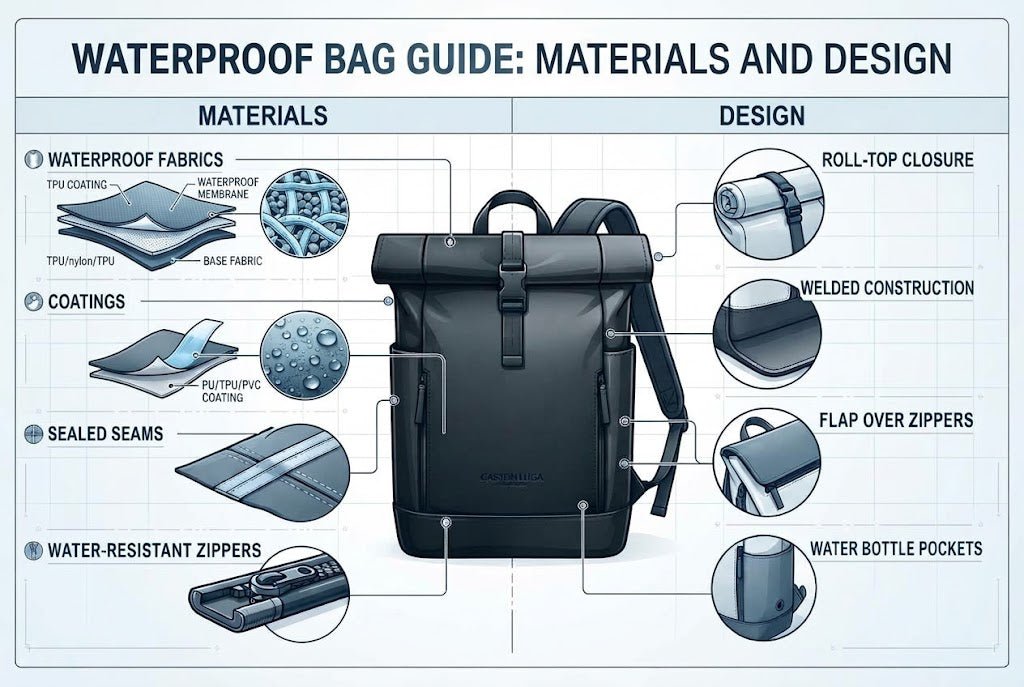
What makes a bag waterproof? See how fabrics, coatings, welded seams, zippers, and construction protect daily essentials through serious rain and commutes.