What Makes a Bag Waterproof? Materials and Design
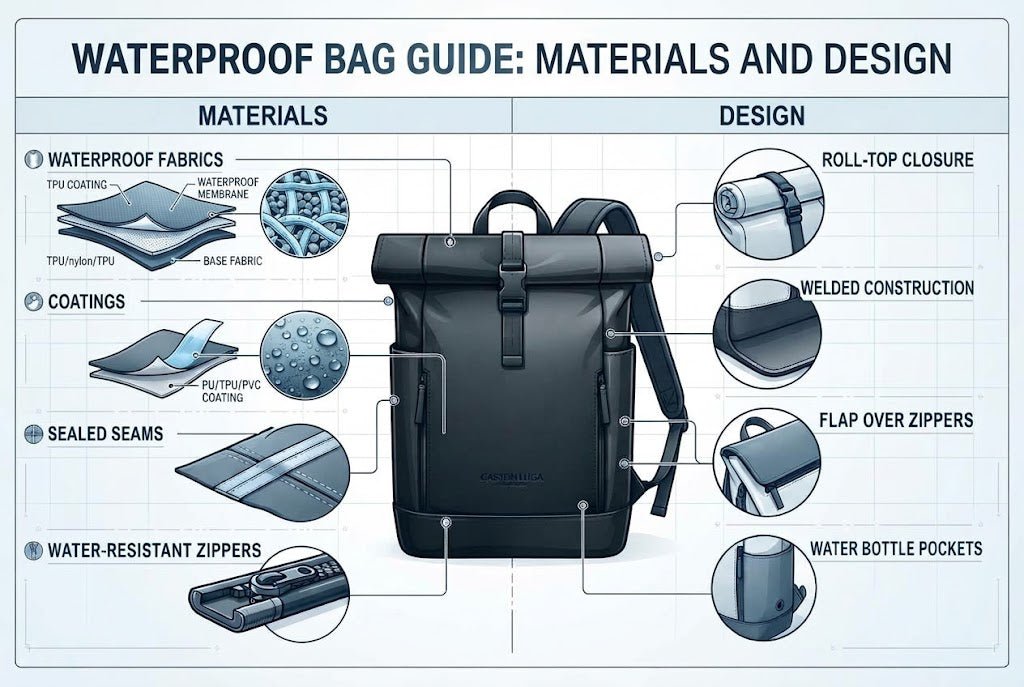
A wet commute has a way of exposing the difference between a bag that looks technical and one that is actually built for weather. Your phone, camera, notebook, and spare layer do not care how clean the silhouette is if rain finds its way through the seams. So, what makes a bag waterproof? It is never just one feature. Real protection comes from a system of fabric, coating, construction, closures, and thoughtful design working together.
For urban creatives, that distinction matters. A bag may travel from a bike rack to a subway platform, then sit beside a café table or studio floor. It needs to keep essentials dry without becoming stiff, oversized, or visually overworked. The best waterproof bags make function feel considered.
What Makes a Bag Waterproof in Real Use?
A waterproof bag is designed to stop water from passing through its exterior material and the places where that material is joined or opened. Fabric alone cannot deliver that promise. Water can penetrate through stitching holes, zipper teeth, loose roll-top closures, and even the base of a bag after extended contact with a wet surface.
This is why the word waterproof deserves a closer look. Some bags are better described as a water repellent bag for light drizzle, while a water resistant bag can handle a brief shower or splash, and only designs with sealed seams and protected entry points are truly waterproof. At the far end are dry bags and fully submersible designs made for watersports, where waterproofing takes priority over quick access and refined everyday organization.
For daily carry, the right bag usually sits between those extremes, especially if you need a commuter bag that balances weather coverage with comfort and easy access. You want dependable rain protection, but you also want a bag that opens easily, wears comfortably, and complements the rest of your wardrobe. Reliable protection depends on matching the bag type to the weather and use case.
The Exterior Fabric Is Only the First Barrier
Most waterproof bags begin with waterproof fabrics such as nylon or polyester rather than natural fibers. These materials are favored because they are lightweight, durable, and less absorbent, and a dense weave leaves fewer gaps in the fabric surface for water to work through.
Fabric is commonly reinforced with a coating or laminate on its inner face, and coated nylon or PU-coated nylon are common constructions in bags. Polyurethane, often called PU, is a familiar option. It adds a waterproof layer while retaining a relatively soft hand feel. Core materials used in bag construction include nylon, polyester, TPU, PVC, and PU. Thermoplastic polyurethane, or TPU, is another widely used material, prized for flexibility, abrasion resistance, and performance across changing temperatures. PVC can also create a highly water-blocking surface, with PVC-coated fabric often withstanding roughly 10,000-20,000 mm of water pressure, although it is often heavier and less pliable. X-Pac® VX21 is one example of a waterproof laminate fabric.
A durable water repellent finish, or DWR, may be applied to the exterior as a waterproof treatment. This is what makes rain bead and roll off rather than soaking into the surface, but the base fabric may still need a waterproof coating or laminate to repel water and block liquid water. It is useful, but it is not the same thing as waterproofing. DWR helps the outer fabric stay lighter and drier in rain; the coating or membrane beneath it is what provides the real barrier.
There is a trade-off. The more heavily coated a fabric becomes, the less breathable and often less flexible it may feel. That is not usually a concern for a backpack, but it can affect how a bag drapes, folds, and ages. A good design balances weather protection with an elevated texture that still feels at home in the city, especially when advanced materials are chosen to meet the demands of outdoor gear while still supporting overall brand positioning.
Denier Does Not Tell the Whole Story
You may see a fabric described as 300D, 600D, or 900D. Denier measures the weight of yarn used in the textile. Higher numbers often suggest a tougher, more substantial material, but they do not automatically mean better waterproofing.
A lower-denier nylon with a strong TPU laminate and properly sealed seams can outperform a heavier fabric with basic stitching. Denier is useful when considering durability, particularly for the bottom of a bag or high-wear panels. It should not be read as a rainproof rating.
Welded Seams Decide Whether Water Stays Out
Every conventional sewn seam creates tiny needle holes. Stitched seams are strong and flexible for everyday bags such as tote bags, but they are also a weak point in waterproof construction. In light rain, those openings may not cause an issue. Under prolonged exposure, water can slowly pass through them, especially where straps, pockets, and panels meet.
This is where seam construction changes everything. Taped seams use waterproof tape, often called seam tape, as part of seam sealing to close off stitch lines on the inside of a stitched join and cover the needle holes. Welded seams, also called high-frequency or heat-welded seams, bond fabric panels together without traditional stitching, and RF welding is often preferred because it creates watertight seams without needle holes. They create a particularly strong seal and are common on bags made for serious wet-weather use.
Welded construction has a clean, modern visual language, too. The absence of visible stitching can make a bag feel more architectural and minimal. Still, it is not inherently better for every use. Sewn-and-taped bags can offer more complex shaping, softer materials, and practical pocket layouts. The question is not whether a bag has the most technical-looking seam, but whether its seams match the weather exposure it is meant to handle.
Waterproof Zippers and Closures Are the Usual Weak Point
A waterproof shell can be undermined by an ordinary zipper. Standard zipper teeth leave small pathways for water, particularly when rain is driven sideways by wind. Water-resistant zippers use coated tape or a protective backing to reduce this risk, while waterproof zippers are the higher-protection option when the design needs stronger resistance. Their smooth, sealed-looking surface is often a visual cue, though not a guarantee, of better performance.
Even a water-resistant zipper has limits. For higher protection, brands may use watertight zippers on a waterproof backpack or protective camera bags. It may resist a storm during a walk across town, but it is not necessarily built to withstand immersion. Zippers also require care. Dirt and grit can wear the coating, while forcing an overstuffed bag closed can distort the zipper line and create gaps.
Roll-top closures are another effective option. When rolled tightly several times and buckled correctly, they create a long, folded path and a tight seal that water struggles to travel through. They are especially useful for commuters because they also allow flexible capacity. The compromise is access: grabbing a charger or film pack is faster with a zippered opening than with a tightly rolled top.
Storm flaps, storm guards, magnetic folds, and recessed zipper tracks provide additional protection. These details are not decorative extras. They cover openings and direct water away before it has a chance to enter.
Shape, Pockets, and the Bottom of the Bag Matter
Waterproof performance is also influenced by how a bag is designed to be used, whether it is for daily commuting or a messenger bag carried through sudden rain. External pockets are convenient, but each one introduces another opening and another chance for water to collect. A streamlined exterior with fewer exposed compartments is easier to protect from rain. Minimalist designs also help prevent water pooling and reduce stress failures over time.
The base deserves special attention. It is the part most likely to meet a wet sidewalk, a train platform, or the floor of a café. A reinforced, coated bottom improves water protection by shielding the base from wet ground. Raised feet can help in some designs, although they are more common on totes and work bags than streamlined backpacks.
Internal organization should support, not compromise, the waterproof shell. A dedicated laptop compartment, padded camera insert, or zip pocket can protect equipment from impact, but those features do not replace a weatherproof exterior. If you carry electronics or instant camera gear, consider a bag that offers both: a sealed outer shell and padding where it counts.
Waterproof Ratings: Useful, but Not the Full Story
Some technical bags list a hydrostatic head rating, measured in millimeters, while IPX ratings provide another standard for measuring waterproof performance. This indicates how much water pressure a fabric can withstand before leaking. A higher rating generally means stronger resistance, but it only describes the fabric test, not the complete bag.
The spray test simulates rainfall to assess water resistance.
A bag can use an impressive waterproof textile and still leak at its zipper or seams. Conversely, a brand may not publish a rating while still using highly effective welded construction and protected closures. Treat ratings as one piece of evidence, then examine the full build. An IPX7 rating, for example, indicates temporary immersion protection up to 1 meter. The immersion test checks whether a bag can handle submersion.
For a city commute, look for coated or laminated fabric, sealed or welded seams in key areas, and a protected main closure. For cycling through heavy rain, regular travel in wet climates, or carrying sensitive camera equipment, move toward fully taped seams, water-resistant zippers, and a roll-top or storm-flap design.

Keeping a Waterproof Bag Performing Well
Waterproof materials are durable, but they are not maintenance-free. Wipe off road grime and salt with a damp cloth after wet rides, especially around zippers and folds. For deeper cleaning, hand wash with mild soap and water, since machine washing can damage coatings. Let the bag air-dry fully before storing it. While cleaning, inspect it for wear or damage, especially around seams and closures. Avoid high heat, harsh detergents, and long periods of direct sun, which can weaken coatings and cause materials to become brittle over time. Waterproof zippers also last longer when lubricated with silicone-based wax.
If water stops beading on the exterior, the DWR finish may be wearing down. That does not always mean the bag has lost its waterproof barrier, but it can leave the outer fabric saturated and heavier in rain. A cleaner designed for technical fabrics and a compatible reproofing treatment can help restore surface performance, and it is worth reapplying DWR annually to maintain water resistance.
The most compelling waterproof bag is not the one that announces its technical credentials loudest. It is the one you reach for without checking the forecast, because its materials, seams, and closures have already done the thinking for you.
Share
Use this guide to watch case sizes to compare diameter, thickness, and lug-to-lug measurements, then find a watch that looks intentional on your wrist every day.
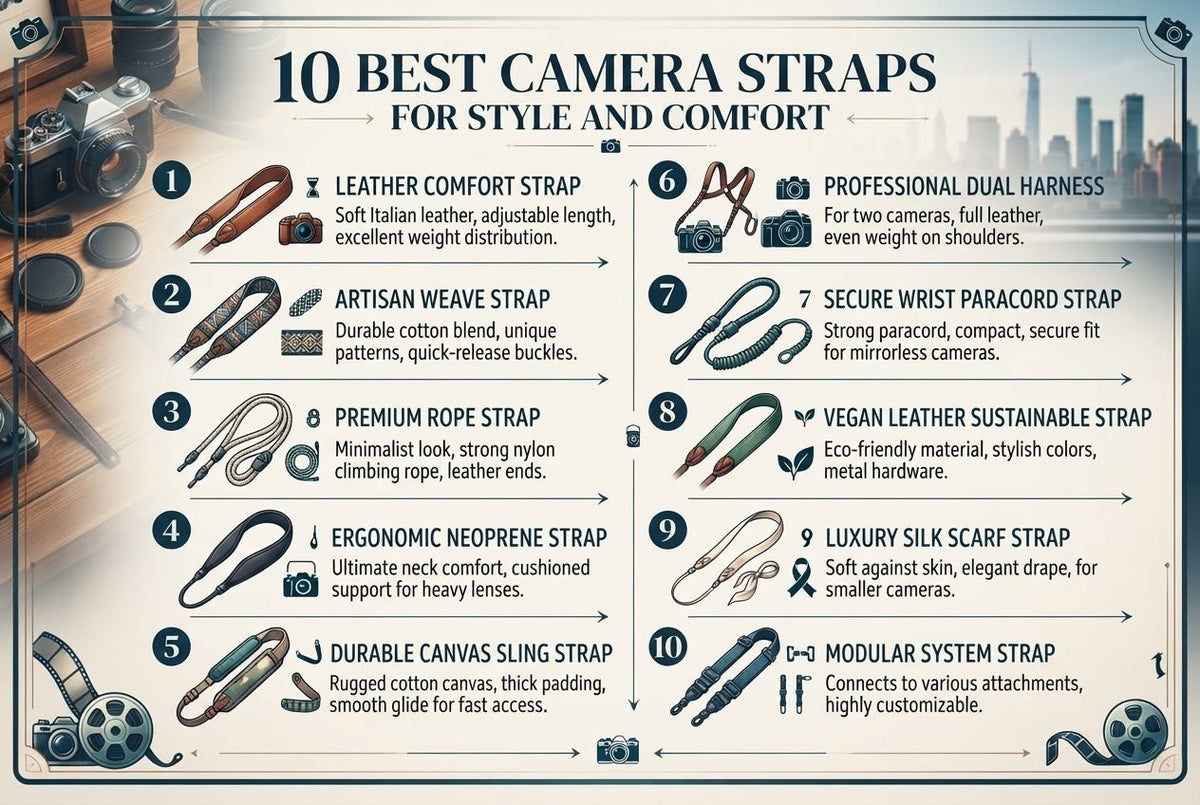
Find the best camera straps for instant cameras, mirrorless kits, and street photography, with design-led picks for comfort, control, and everyday style.