
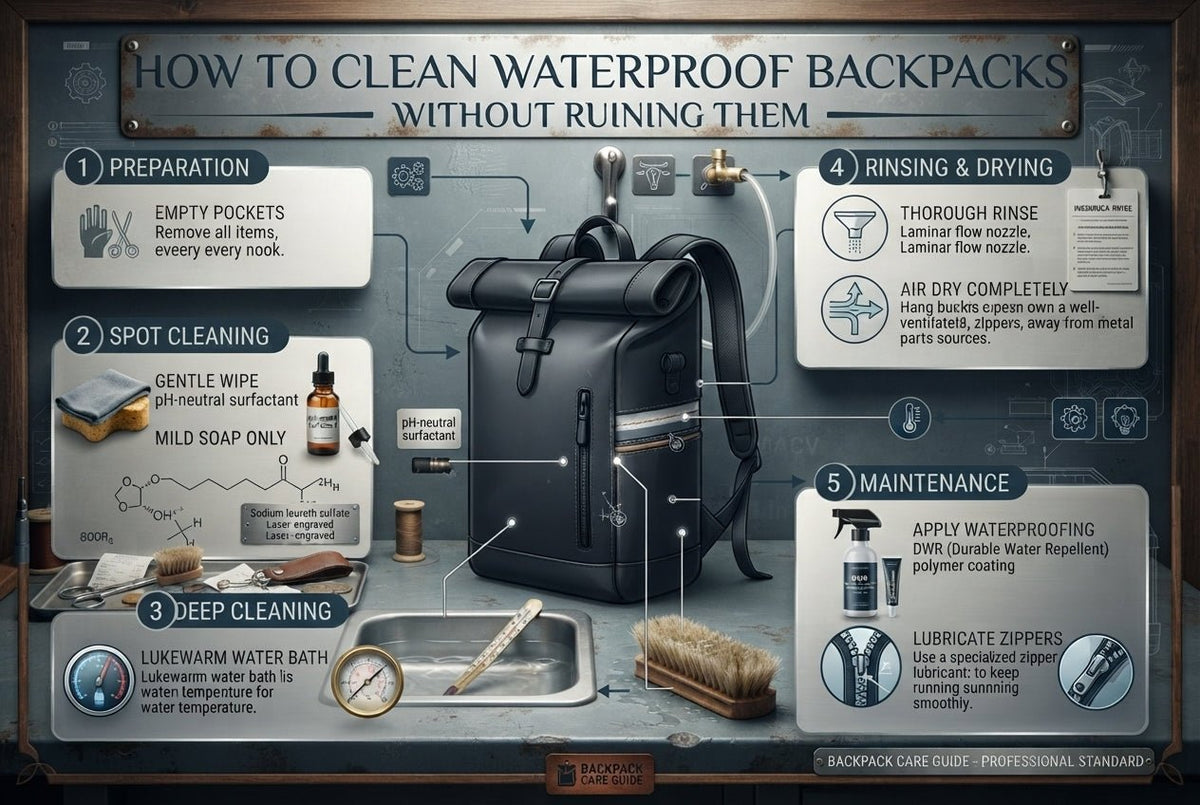
How to Clean Waterproof Backpacks Without Ruining Them
A waterproof backpack earns its place in an urban routine. It catches rain on the bike commute, sits under café tables, carries a camera through a weekend away, and picks up more city grime than you may notice. Knowing how to clean waterproof backpacks properly keeps that considered finish intact without stripping the coating that makes the bag useful in the first place.
The aim is not to make the bag look factory-new after every outing. It is to remove dirt, spills, and odor gently, while protecting the fabric, seams, hardware, and water-repellent treatment. A few patient minutes will do more for a design-led backpack than an aggressive wash cycle ever will.
First, Know What “Waterproof” Means for Your Bag
Not every water-ready backpack is built the same way. Some use coated polyester or nylon, while others rely on laminated fabrics, waterproof zippers, welded seams, or a durable water-repellent finish. A fully waterproof roll-top bag can tolerate more rain than a standard daypack with a water-resistant coating, but both need gentle cleaning.
Start with the care label and follow it when it is more specific than general advice. If the label says spot-clean only, treat that as the rule. Brands use different coatings, trims, dyes, and construction methods, so the bag's own instructions always take priority.
It also helps to separate cleaning from waterproofing. Washing a bag does not improve its water resistance. In fact, too much soap, heat, friction, or harsh chemical cleaner can reduce it. Clean first. Restore water repellency only if the bag no longer sheds water as it once did and its care guidance allows it.
What to Use Instead of a Washing Machine or Laundry Bag
Set up a simple cleaning kit: lukewarm water, a soft microfiber cloth or non-abrasive sponge, a soft brush such as an old toothbrush, pH-neutral soap, and a clean dry towel. For stubborn dirt, a small amount is enough. Think of ph neutral soap as the safest option for technical fabrics, not heavy-duty laundry detergent.
Avoid bleach, stain remover, fabric softener, alcohol-based cleaners, acetone, and abrasive scrubbing pads. These can dull the surface, weaken adhesives, damage printed details, or leave a residue that attracts more dirt. You should also skip pressure washers. A backpack is built for weather, not a high-force blast aimed directly at seams and zippers.
Machine washing is usually the wrong move, even when the bag looks tough. A waterproof backpack should never be machine washed, even on a gentle cycle with cold water, because machine washed bags can damage waterproof membranes, create invisible micro-tears in stitching, and high heat can melt plastic coatings. It should also never go in the tumble dry cycle. Heat is especially unfriendly to laminated materials and bonded construction.
How to Deep Clean Waterproof Backpacks Step by Step
Empty it completely and shake out debris
Open every compartment, including slim laptop sleeves and interior zip pockets. Remove the rain cover before cleaning and set it aside to wash and dry separately. Use a soft brush to lift loose dust, crumbs, receipts, and sand, then turn the backpack upside down and give it a gentle shake before any wet cleaning. A vacuum with a soft brush attachment can help around seams and lining, but keep the suction low and avoid pulling at mesh pockets.
Take out removable organizers or straps if the design allows. This gives you access to the areas that collect the most grime: the bottom panel, shoulder straps, back padding, and the inside corners of the main compartment.
Brush off dry dirt before adding water
Start dry whenever possible. Use a soft brush to lift mud, dust, and grit from the exterior, paying attention to seams and zipper tracks. If dried mud is stubborn, brush away what you can before reaching for a damp cloth. Rubbing wet grit into the fabric creates unnecessary abrasion.
For a quick refresh, light cleaning after a long hike or wet commute may be all the pack needs, and regular cleaning can double its life if you catch dirt while it is still fresh. Let it air dry fully, then store it somewhere ventilated rather than sealing it in a closet while any moisture remains. If heavier buildup sets in, a deep clean at least once per season is a good idea.
Spot-clean the exterior with a light touch
To wash your backpack safely, stick to hand washing with lukewarm water and mild soap rather than any machine-based wash. Mix a few drops of mild soap into lukewarm water. Dampen your cloth, then wring it out well. The cloth should be damp, not dripping. Wipe the surface in small sections, using light pressure and following the material's grain where visible.
Treat stains patiently. For food marks or city smudges on a dirty bag, once loose dust has been brushed off with a soft brush, hold the damp cloth against the area for a few seconds, then lift rather than scrub. Use soapy water only for textured fabric, webbing, or seams that genuinely need it. Test any soap solution on a hidden spot first, especially on light colors, matte finishes, or bags with a coated, rubberized feel.
Keep water away from openings as much as possible. To clean your backpack, avoid soaking it routinely, but if the whole bag is very dirty, a short 10-minute soak in lukewarm water is the limit before gentle cleaning. The less water that reaches the foam, lining, and construction layers, the faster and more evenly it will dry.
Clean shoulder straps, back panels, and the interior
Shoulder straps and back panels collect body oils, sunscreen, and everyday sweat. Wipe dirty areas with the same lightly soapy cloth, then go over them again with a separate cloth dampened only with clean water, repeating until all soap suds are gone so you flush out soap residue completely and preserve waterproof performance. Do not saturate padded sections. They can hold moisture long after the surface feels dry.
For the interior, wipe the lining with a clean damp cloth. If there is a minor spill from bottles, clean it promptly to rid the fabric of residue before it sets. A small amount of soap can be used for sticky residue, but rinse thoroughly and wipe again so no cleanser is left behind. That helps protect the backpack properly, especially around straps and lining that touch skin, since detergent residue can cause irritation on sensitive skin.
If odor is the issue rather than visible dirt, ventilation is your first tool. Leave the bag open in a dry, shaded place for a day. Strong deodorizers may mask the smell, but they can linger in fabric and are rarely necessary. If a serious spill has soaked through the padding or lining, professional cleaning may be safer than repeated home treatments.
Give zippers and hardware their own attention
Zippers work better when dirt is not packed into the teeth. Brush the tracks gently while they are dry, then wipe the pulls and buckles with a barely damp cloth. Do not force a zipper that feels gritty or stuck. Clean it first, let it dry, and test it slowly.
Waterproof zipper tape deserves extra care. Avoid brushing aggressively across it or applying oils and household lubricants. These products can collect dust and interfere with the clean, minimal finish of the bag.
Rinse the cloth, then air-dry correctly
Once the bag is clean, wipe all cleaned areas with a cloth dampened in plain water to remove any soap residue. Pat away excess moisture with a dry towel. Leave all compartments open, loosen the straps, open all zippers and pockets for airflow, and hang the bag upside down in a well-ventilated area out of direct sunlight so the backpack completely dries properly.
Do not place it near any heat source, use a dryer, or rely on other artificial heat when putting it out to dry. High heat can damage waterproof coatings and synthetic fibers. Depending on the padding and humidity, a backpack may need 24 to 48 hours to dry completely. Make sure it is completely dry before use or storage.
When to Restore Water Repellency
A clean backpack may eventually stop beading water. That does not automatically mean the bag is damaged. Surface treatments wear down over time, particularly on high-contact areas like the top, shoulder straps, and back panel. If beading stops, reapply a Durable Water Repellent spray to restore the surface finish.
If water begins soaking into the outer fabric, consult the brand's care instructions before using any water-repellent treatment. After washing, reproofing is often necessary, and if the label allows, use a spray-on reproofer on a clean, fully dry bag. Apply it from about 30 cm away, with extra attention to seams and straps. It will not repair torn fabric, failed seam tape, or a damaged zipper, but it can revive surface water shedding when the original finish has simply worn away. Reproofing also helps prevent dirt from clinging, and proper storage matters because putting a damp bag away can lead to mold and odors.
A well-made waterproof bag, including a streamlined Gaston Luga design, is meant to look sharp in real use, not live untouched on a shelf. Clean it gently after the messy days, let it dry without rushing, and let the small signs of travel become part of its character.
Share
Instant film expiration is not a reason to stop shooting. Learn how dates, storage, and film age shape color, contrast, and creative results in each photo.