Artikel: The Future of Instant Photography Is Personal
The Future of Instant Photography Is Personal
A phone can produce thousands of images before lunch. Most will disappear into a camera roll by dinner. The future of instant photography is personal: fewer pictures, more intention, and a physical print worth keeping in sight.
That shift is no longer just about nostalgia. Instant cameras, hybrid models, and compact printers offer something smartphones in a digital world often do not - a clear ending point and a more deliberate creative ritual. You compose the frame, press the shutter, and keep what comes back. For urban creatives, design-conscious shoppers, gift buyers, and anyone tired of an endless stream of polished content, that feels increasingly valuable because it turns images into tangible memories with more style, authenticity, and meaning.
From the return of physical prints to film’s premium appeal, AI’s supporting role, social uses for instant cameras, and how to choose gear that fits your habits, this article looks at why instant photography is becoming a more personal, design-led way to make and keep photos.
Instant Photography Is Becoming a Design Object
The next generation of instant cameras will not be judged on image quality alone. They will be chosen the way people choose a watch, a bag, or a favorite notebook: for how they look, how they feel in the hand, and what they say about the person carrying them.
This is already visible in the renewed interest in bold camera colors, miniature collectible formats, transparent details, retro silhouettes, and editions that feel more like personal accessories, with aesthetic appeal as part of what sets them apart, than anonymous tech. A camera that earns a place on a coffee table or clips onto a bag has a stronger role than one that lives forgotten in a drawer.
Polaroid has long understood the appeal of the iconic object, with polaroid cameras helping define that design legacy. Its larger-format cameras and recognizable white-bordered prints make the process part of the image itself. Kodak, meanwhile, brings a different kind of appeal through film cameras and playful formats that fit naturally into everyday carry. Neither approach needs to replace the other. The right choice depends on whether you want a slower creative ritual, an easy party camera, or a small design-led companion for daily moments.
For a curated retailer such as Bang On, that shift matters. The best camera is not automatically the one with the longest feature list. It is the one whose format, look, and output match the life around it.
The Future of Instant Photography Is Not Anti-Digital Photography
Instant photography is often framed as a reaction against screens. That is only half true. The category is growing because it can borrow the convenience that set digital cameras apart in the digital age without giving up the emotional weight of a print.
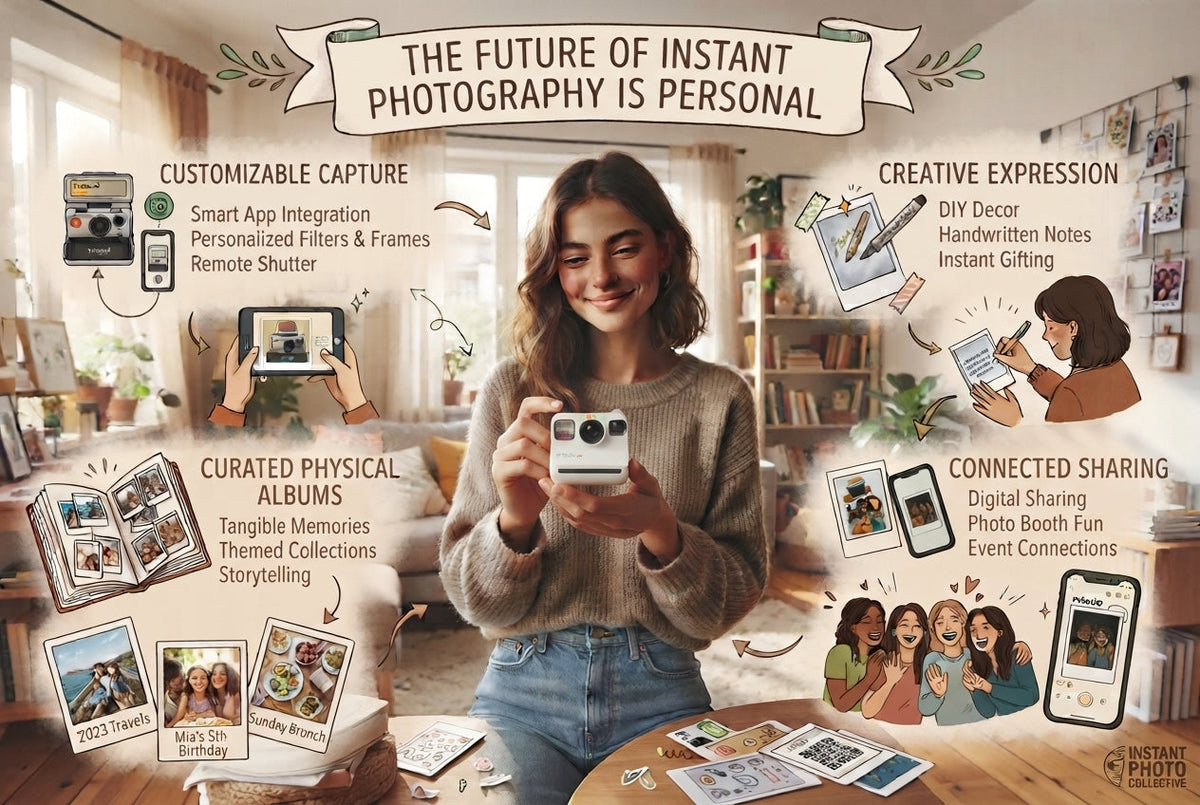
Hybrid models let users review an image before committing it to film. Instant printers turn selected phone photos into instant images for a desk, wall, journal, or gift. Companion apps can add frames, adjust exposure, make collages, and preserve scanned copies of physical prints. These features make instant photography less precious and more usable.
Purists may prefer the surprise of fully analog film. That is a legitimate preference, especially when unpredictability is part of the creative appeal. But hybrid formats solve a real concern: film costs money, and not every moment deserves a risky one-shot exposure. Being able to choose which image becomes physical can make a camera more approachable, and instant cameras offer a more practical option for beginners, travel, events, and family use.
The trade-off is simple. More control can mean less spontaneity. A printer may deliver consistent results, but it does not create the same anticipation as watching a photograph develop in your hand. The future will not settle on one winner. It will offer clearer lanes for different kinds of photographers.
The print becomes the point
The key product is not always the camera. It is the print.
A small photograph taped beside a monitor can carry more presence than screen-based images, because physical photographs stay with you instead of disappearing after a few seconds of attention. Instant prints become souvenirs, place cards, thank-you notes, visual diaries, and low-pressure gifts. In their own right, they feel personal. They invite handling. They can be written on. They age with the spaces and people around them.
That tactile value is especially relevant as image-making becomes more automated. When software can sharpen, replace backgrounds, generate scenes, and correct every imperfection, an imperfect physical print offers proof of capturing a real encounter. A little blur, a flare, or a washed-out corner is not always a flaw. It can be part of the memory.
Instant Film Will Stay Premium, and That Is Not a Problem
Film will remain the biggest hesitation for many buyers. It is an ongoing cost, it has a finite shelf life, and it can be sensitive to temperature and storage, especially when you are paying for colour film. Instant film is not the most economical way to document every meal, commute, or casual selfie.
It should not be.
The most compelling future for film is as a considered medium. Think of it as you would a great pen or a vinyl record: not the most efficient option, but one that changes the experience. You may take fewer frames, but you notice more before you take them.
That does not mean film brands can ignore value. Better availability, clear compatibility information, fresh stock, and reliable storage will matter more as customers become more informed, and so will steady production that supports consistent supply. Authorized sourcing also matters. Expired or improperly stored film can create disappointing results, and no amount of stylish packaging can rescue a bad first experience.
There is room for accessible film, too. Smaller formats and printer paper can lower the barrier for experimentation, while larger formats can retain their status as a creative treat, with Polaroid film as one premium option. The category works best when customers understand the difference before they buy, not after an avoidable disappointment.

AI May Change the Workflow, Not the Feeling
Artificial intelligence will touch photography, but it is unlikely to replace what makes instant photography desirable. Its most useful role will be behind the scenes: helping users sort phone libraries, find a photo worth printing, improve a scan of an older print, or create a quick layout for a scrapbook.
The less interesting version is AI trying to make every instant image look flawless. That misses the point. Instant photography has always had room for chance. Its visual language includes uneven exposure, unexpected color shifts, and compositions that are more felt than perfected.
Brands that use smart features well will make the process easier without sanding off its character. Imagine an app that suggests the best photo from a weekend trip to print, rather than generating a synthetic version of the trip. Or a camera that helps with exposure while preserving the singular, unrepeatable nature of the final frame. Technology should support the moment, not overwrite it.
More Instant Cameras Will Be Built for Real Social Life
The strongest use case for instant photography is not a technical test chart. It is people together.
Birthdays, weddings, gallery openings, road trips, dinner parties, campus life, and family weekends all benefit from a camera that creates a takeaway on the spot. A phone captures the event and lets people share it instantly, but an instant print can stay with the person who was there. That makes it particularly powerful for hosts, gift buyers, and people buying instant cameras for events or family occasions who want something more memorable than another digital accessory.
Expect more products designed around that social role. Compact cameras will become easier to pass around. Printers will be positioned as shared creative tools. Accessories such as cases, albums, display clips, colored frames, and carry straps will matter because they extend the life of the image after it leaves the camera.
This is also where collectibility enters the picture. Limited colors and character-driven mini cameras can make photography feel lighter and more expressive. They are not for every photographer, and they do not need to be. A serious enthusiast may want manual controls and larger prints; someone else may want a tiny camera that starts conversations, which helps explain its popularity in recent years. Both are valid expressions of personal style.
Buying Better Means Buying for Your Ritual
Choosing an instant camera is becoming less about asking, “Which one is best?” and more about asking, “What do I want to make with it?” In a growing market, there is room for more than one right kind of instant product.
If you want the classic, unpredictable ceremony of a developing print, a film-first camera is the natural fit. If you want to turn your best phone images into gifts or journal pages, an instant printer may be smarter. If you want both the physical result and a little insurance against wasted film, a hybrid camera like a Fujifilm Instax model offers a useful middle ground.
Consider where it will live, too. A larger camera may be perfect for weekend trips and portraits, while a pocket-friendly model is more likely to join you on an ordinary Tuesday. The camera you carry is the one that has a chance to become part of your visual life.
The most interesting future is not one where every image becomes instant. It is one where we become more selective, choosing between instant gratification and the images worth keeping in physical form. Keep a few frames for the people, places, and accidents you would genuinely miss - then let them take up space in the real world.
Instant film expiration is not a reason to stop shooting. Learn how dates, storage, and film age shape color, contrast, and creative results in each photo.