
Artikel: Camera Backpack Versus Sling: Which Fits You?
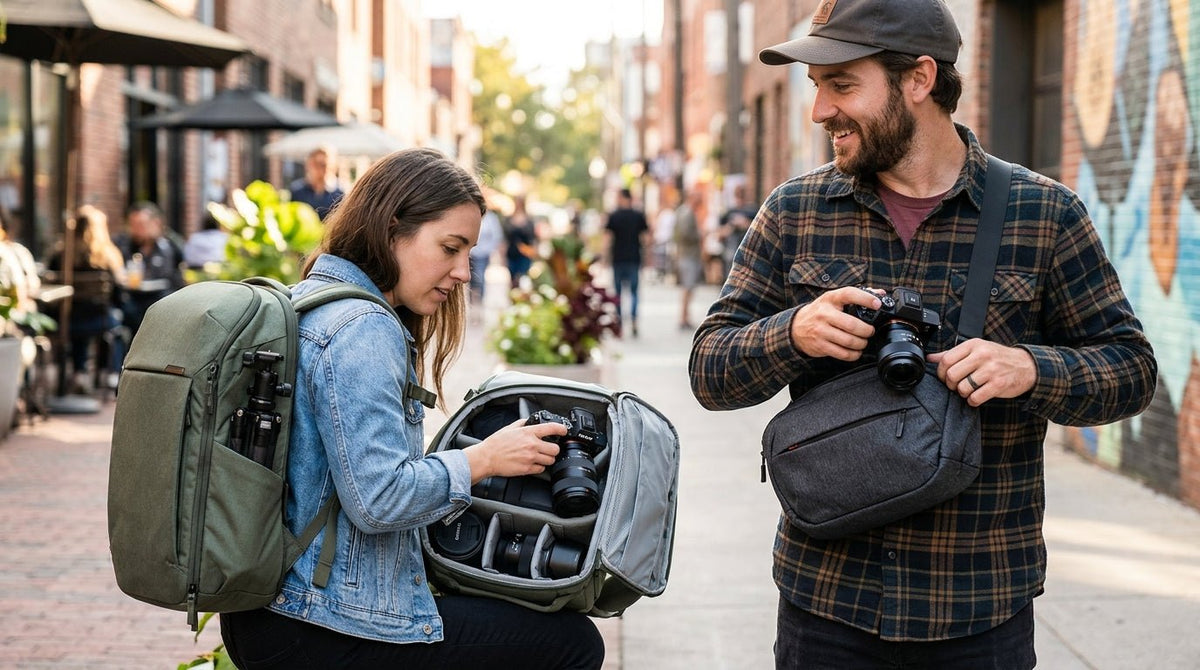
Camera Backpack Versus Sling: Which Fits You?
Your camera bag changes the way you shoot. A bag that is too slow to open can keep the camera packed away; one that is too small can turn a simple day out into a gear compromise. The camera backpack versus sling decision is less about which silhouette looks better and more about what kind of photographer you are when the moment arrives.
For city walks, instant-camera days, weekend trips, and daily creative carry, both formats can make perfect sense. The right choice comes down to access, capacity, comfort, and how much you want your bag to disappear into your personal style.
Camera Backpack Versus Sling: The Real Difference
A camera backpack is the go-to choice for most photographers when they need comfort, storage, and protection across a wider range of use cases. It spreads weight over two shoulders, keeps equipment organized in a structured interior, and usually leaves room for the non-camera parts of the day: a water bottle, light jacket, charger, notebook, or laptop. It is the considered choice when photography is central to the plan.
A sling camera bag is built for speed. It sits close to the body, stays easy to reach, and can swing from back to front without being fully removed. That makes it especially appealing for street photography, travel days with frequent stops, and anyone carrying one camera with a small supporting kit. Unlike a backpack, it places the load on one shoulder.
There is no wrong choice. A backpack earns its place through capacity and all-day comfort. A sling earns its place through freedom of movement and immediate access. The best bag depends on your shooting style and how much gear you genuinely use, rather than the kit you think you should carry.
Choose a Camera Backpack for Longer Days and Larger Kits
A camera backpack makes sense when your gear list needs room to breathe. If you carry a mirrorless or DSLR body, two lenses, spare batteries, a compact tripod, and everyday essentials, a sling can become crowded quickly. Backpacks offer separated compartments and adjustable dividers, so expensive equipment is less likely to knock together in transit.
They also handle weight better, especially for heavier loads, and a well-fitted pack can stay comfortable with roughly 8 to 12 kg for 6+ hours. Two shoulder straps improve weight distribution across your back, which matters on a full day of museum hopping, airport transfers, hikes, or event coverage. A well-designed backpack should sit close to your body rather than pulling backward, with enough structure and a supportive back panel to protect its contents without feeling stiff or oversized.
For urban creatives, there is another benefit: a camera backpack can look like a refined everyday bag rather than technical outdoor gear. Clean lines, matte finishes, restrained hardware, and thoughtful storage are worth seeking out. A bag should support your outfit and routine, not make you feel like you are headed on an expedition when you are meeting friends for coffee.
When a Backpack Is the Better Call
Choose a backpack if you regularly bring more than one lens, need a laptop compartment, travel with a full-day kit, or prefer to pack once and stop thinking about what fits. The honest answer is that event or wedding photographers carrying multiple bodies, telephoto lenses, or a full kit will usually be better served by a backpack. It is also the safer choice when weather protection and equipment separation are priorities.
The trade-off is access. Most backpacks need to come off before you can reach the main compartment, and that often means around 10 to 15 seconds to get to your camera compared with faster bags. Rear-opening designs can add security in crowded places, but they are not as quick as a sling when a scene changes in seconds. Dual-strap designs can also leave your back sweaty in warm weather. Backpacks are also more noticeable in tight restaurants, public transit, and busy galleries. Some models add side access to speed things up, though it is still less immediate than a sling.
Choose a Sling Bag for Fast, Light Shooting
A sling bag is for photographers who want their camera close, but not constantly in hand. With one strap worn across the back or chest, it keeps gear close and a compact kit available without the visual weight of a full backpack. Swing it forward, unzip, and the bag can deliver the camera in about 3 seconds so you can shoot and keep moving.
This makes a sling especially good when you shoot light with a compact setup, ideally under about 5 kg. It suits a compact digital camera, instant camera, or mirrorless body with one extra lens as the kind of kit that fits naturally. It is also a strong fit for people who do not want to divide their day into “camera time” and everything else. Because it has lower volume capacity than a backpack, this format works better for day trips, short trips, and crowded cities than full-kit days.
The format has a certain ease that suits street photography. You are less likely to miss a fleeting frame when the camera is within one movement of your hand. For analog fans and instant-camera users, that accessibility can make the bag part of the experience: film, spare packs, batteries, and SD cards stay organized, ready for the next small surprise.
Where Slings Fall Short
Capacity is the obvious limit. Even a generously sized sling can feel uncomfortable if packed with dense gear for extended periods. Because the load sits on one shoulder, a heavier kit can lead to shoulder pain or even neck strain after about an hour, especially while walking long distances. In practice, slings are best for light kits under roughly 5 kg.
A sling also requires more discipline. It is easy to overpack a backpack because there is room. It is easy to overpack a sling because every item seems small on its own. The difference is that a sling makes you feel the result immediately, and it is less stable during active movement like running or hiking. If your kit feels heavy before you leave home, simplify it, even if access is faster at about 3 seconds versus roughly 10 to 15 seconds with heavier loads in a backpack.
Think Beyond Camera Gear
The most useful comparison is not just camera backpack versus sling. It is camera bag versus real life.
Ask what else travels with you. A creative professional heading from a morning shoot to a laptop session needs a different bag from someone documenting a weekend market with a Polaroid camera. Many photographers end up owning both: a backpack for full-kit or laptop days and a small sling for lighter outings. A traveler may value a secure passport pocket and room for a charger. A parent may need hands-free comfort and space for more than photography accessories. A city commuter may place waterproof fabric and discreet styling above maximum lens capacity.
This is where design matters as much as specs. Good organization is not simply about more pockets. It is about knowing where your essentials are without stopping to search. A bright interior can make a memory card easier to spot among small accessories. A dedicated battery sleeve, a quick-access top pocket, a protected camera insert, and an exterior place for a water bottle can make a bag feel calm instead of chaotic.
Consider the bag empty, too. A heavy bag before you add equipment is rarely a pleasure at the end of the day. Materials should feel durable but wearable. The strap should be adjustable, smooth, and wide enough not to dig in, and width and padding matter even more on a sling because all the weight sits on one side. Zippers should open confidently with one hand, because that is often how you will use them.
Style, Security, Weather Protection, and Weight Distribution
Camera bags no longer need to announce what is inside. For many people, a discreet bag is a better bag. Minimal branding and an everyday silhouette can help a camera bag move naturally through the city while drawing less attention to valuable equipment.
Security comes down to details. Rear-panel access can deter casual interference on a backpack. On a sling, a body-facing pocket is useful for a phone, wallet, passport, or film. Look for zippers that feel substantial and compartments that keep gear from shifting. Protection is not only about thick padding. A camera held firmly in place is often better protected than one floating in an oversized compartment.
Weather protection deserves a realistic view. Water-resistant fabric can handle a brief shower and daily splashes; it is not the same as leaving your bag in sustained rain. If you routinely shoot outdoors, prioritize coated materials, covered zippers, and a design that keeps the main opening away from direct exposure. For everyday urban use, a clean waterproof bag can offer valuable peace of mind without adding visual clutter.
A Simple Way to Decide
Lay out the items you carry on a typical photography day. Include the unglamorous essentials: phone, keys, wallet, charger, sunglasses, water, and an extra layer. Then make two honest edits. First, remove anything you rarely use. Second, the honest answer is to choose based on your actual setup and whether you are carrying for a few hours or for extended periods.
If your final layout includes a laptop, multiple lenses, more gear, multiple bodies, or a full kit, start with a backpack. If it is one camera, a light lens setup, a small accessory kit, and personal basics for day trips or short trips, a sling will likely feel sharper, lighter, and more natural.
At Bang On, the appeal of a well-chosen bag is not simply storage. It is carrying the tools for your point of view in a way that feels considered. Pick the format that makes you more likely to bring the camera along, because the best images usually happen after you decide to leave the house. For many photographers, the most practical answer is both: a backpack for transit, with a small sling inside for the shoot itself.
Learn how to photograph with flash through simple exposure choices, bounce techniques, and off-camera light for portraits, parties, products, and travel.

