10 Best Waterproof Bags for Commuters
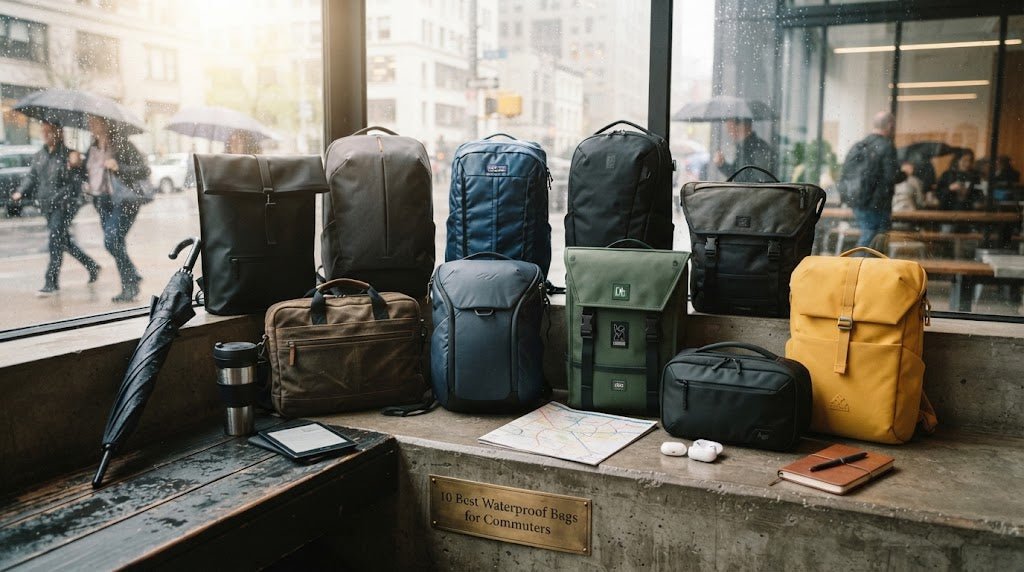
A wet subway platform, a surprise downpour, coffee in one hand, laptop on your back - this is exactly when a bag stops being a style choice and starts proving its worth. Here are the 10 best waterproof bags for commuters, spanning minimal waterproof backpacks, roll-top backpacks, waterproof totes, crossbody messenger bags, technical slings, clamshell laptop backpacks, hybrid backpack-totes, compact daypacks, commuter camera bags, and design-led options that still look right at the office, studio, or client meeting.
That last part matters more than most buying guides admit, especially for urban professionals and creatives who commute every day with a laptop, tech, and work essentials. A commuter bag lives in every part of your day. It sits under your desk, leans against cafe counters, brushes against crowded train doors, and carries expensive gear through bad weather and the occasional spill. If it looks too technical, it can feel out of place with tailored workwear. If it looks great but cuts corners on construction, the first hard rain exposes it fast.
The right choice sits in that narrow space between utility and restraint, so this guide focuses on what makes a waterproof bag genuinely suited to commuting: the strengths and trade-offs of each bag style, how to choose based on your carry load and commute, and the features that signal real quality, comfort, and weather protection.
What makes the best waterproof bags for commuters
Not every water-resistant bag belongs in this category. For commuting, materials and build matter more than marketing language.
A truly dependable bag usually starts with coated fabric, TPU-laminated material, treated nylon, or similar waterproof materials that do more than shrug off a few drops. Then come the details that decide whether your laptop stays dry: waterproof zippers, taped seams finished with waterproof tape, and a shape that does not invite water to pool at the top; that is also where water resistant bags differ from a fully waterproof backpack. If a brand says waterproof but leaves exposed zip tracks and open side pockets, treat that claim carefully.
Comfort matters just as much. City carry is repetitive. A bag can feel fine for ten minutes and irritating after a week of train transfers, stairs, and long walks. Shoulder straps should sit well, and padded shoulder straps matter even more when you are carrying heavy loads, along with balanced weight distribution and a back panel that breathes even a little. Commuters also need organization that feels intentional, not overbuilt. A main compartment with real laptop protection, whether that means a padded laptop compartment, padded laptop sleeve, suspended laptop sleeve, or a smart internal layout, is often more useful than a maze of tiny compartments.
Then there is silhouette. For most urban professionals and creatives, the best bags are visually quiet. Clean lines, matte finishes, and hardware that does not scream outdoor gear tend to age better, support a stylish design, and fit more settings for everyday use.
10 bags worth considering
1. Minimal waterproof backpacks
If your commute includes a laptop, charger, notebook, and a few daily extras, a minimal waterproof backpack is still the strongest all-around format. It’s also one of the best waterproof backpacks for commuters who want an everyday waterproof backpack for daily carry. It spreads weight well, works on foot or bike, and usually gives you the cleanest capacity-to-profile ratio. Look for a structured body with a spacious main compartment, a padded compartment for a laptop, and a zipper layout that keeps access simple.
This style works especially well for office commuters who want weather protection without tactical styling, with enough organization for office essentials and the versatility needed for everyday carry. The trade-off is that some minimal backpacks prioritize shape over expandability. If you regularly carry gym clothes or camera equipment, capacity can get tight.
2. Roll-top waterproof backpacks
Roll-top bags are often the most convincing answer for serious rain, because a roll top closure creates stronger waterproof protection by reducing exposed entry points. The closure also gives many designs more flexibility when your load changes from day to day. Many roll-top designs use waterproof materials and can keep gear dry better than zipper-first designs in sustained rain. If your main use case is bike commuting or walking longer distances in unexpected rain, this category deserves attention.
The catch is convenience. Roll-tops can be slower to open on a packed train or at security. They also tend to look more utilitarian, which may or may not suit your wardrobe. Still, some roll-tops are not fully waterproof or true submersible backpacks unless the seams and closure are built for immersion.
3. Waterproof commuter totes
For those who prefer a sharper, more fashion-led carry, a waterproof tote can be the right move. The best ones keep the vertical profile elegant while adding a zip closure, reinforced base, and a laptop sleeve that does not sag. This is a particularly strong option for lighter commuters and anyone moving between office, gallery, and dinner without wanting to switch bags.
Totes ask for discipline, though. They are less forgiving when overloaded, and shoulder carry can feel uneven during longer walks.
4. Waterproof crossbody messenger bags
A streamlined crossbody or messenger still makes sense as a good water resistant backpack alternative for commuters who carry less and want fast access. Tablets, compact cameras, notebooks, chargers, daily essentials, and a zip pocket for smaller items fit well here. In dense urban movement, that quick reach matters.
The limitation is obvious: weight sits on one side. For short commutes it is fine. If you are carrying heavy loads, it gets old fast.
5. Technical sling bags for essentials
Sling bags are not your primary work bag if you carry a laptop, but they are excellent for stripped-down commuting. If your office setup is locker-based, desk-based, or largely digital, a weatherproof sling can cover phone, wallet, keys, power bank, and a compact camera with almost no excess.
They also layer well with a larger bag for travel days. Just do not mistake compact for versatile. Capacity disappears quickly.
6. Waterproof laptop backpacks with clamshell access
This format is ideal for commuters who want order. Clamshell openings make packing easier, especially if you carry tech accessories, lunch, and extra layers. A well-designed version feels almost like a portable workstation, but cleaner.
The downside is that some clamshell bags become boxy. If profile matters to you, pay close attention to depth.
7. Hybrid backpack-tote designs
Hybrid bags are built for people whose day changes shape. Carry it as a backpack on the train, then switch to tote mode for a more refined office presence. When done well, this is one of the smartest formats in the category.
When done badly, it feels compromised in every mode. The handles can get in the way, or the straps can look messy. This is one area where design discipline really separates good from average.
8. Compact waterproof daypacks
Not every commuter needs a 20-liter workhorse. A compact waterproof daypack can be a lightweight waterproof backpack option for commuters who do not need full-size capacity, while still fitting a 13-inch laptop, a notebook, and the basics. It feels lighter, looks neater, and works well for everyday use if you prefer a less bulky profile on crowded transit; for example, the Rab Veil XP 20L weighs just 476g and is ultralight. The Exped Typhoon 25 is another lightweight waterproof pack in this compact category.
This size works best if your carry is consistent. If you often add shoes, groceries, or a camera, it can feel restrictive and may not suit commuters who regularly pack bulky gear.