
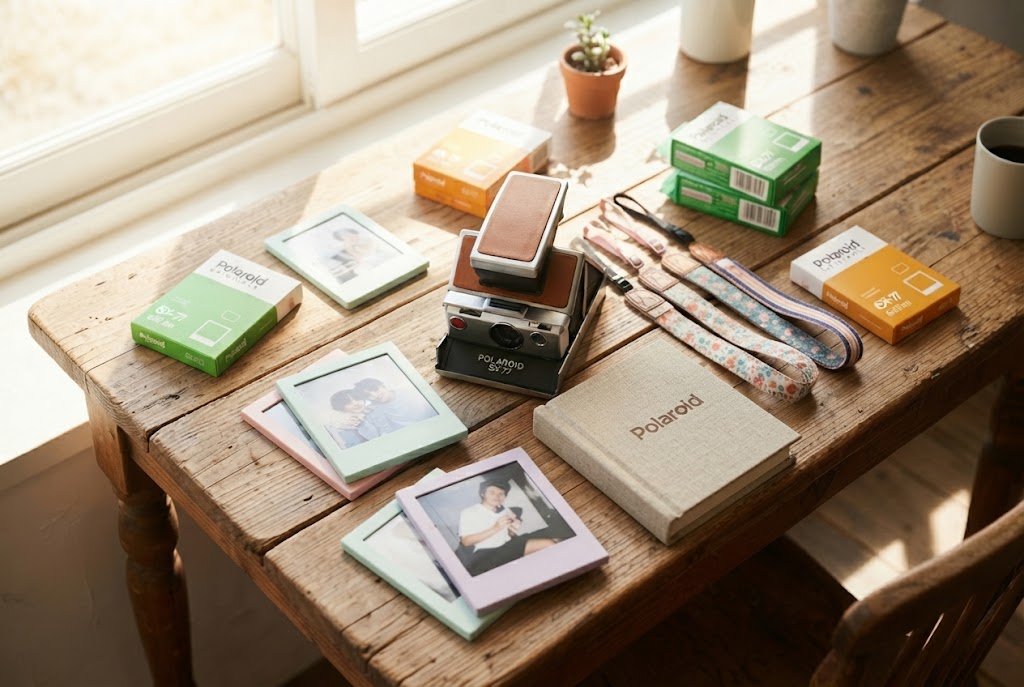
Camera Accessory Essentials Guide for Instant Shooters
A great instant camera belongs in the moment, not at the bottom of a drawer. This camera accessory essentials guide is built for the creative who wants to shoot more, carry smarter, and keep every analog detail feeling considered. The right additions do more than protect your camera. They make spontaneous photos easier to take, easier to share, and far more likely to become part of your everyday rhythm.
Start With the Way You Actually Shoot
Accessories are not a checklist to complete. They are small decisions that shape how often you reach for your camera. Someone documenting weekend trips needs a different setup from someone making portraits at dinner, collecting travel snapshots, or giving instant prints to friends.
Start by identifying the friction. Are you always running out of film? Is your camera getting scuffed in your bag? Do finished photos disappear into a desk drawer? Buy for that problem first. A selective kit looks better, costs less, and earns its place every time you leave home.
For most instant camera owners, the essential items usually fall into four categories: film, protection, power, and presentation, with camera accessories beyond that staying optional. Once those are handled, optional creative accessories can add personality without turning your camera bag into clutter. The best photography accessories help you stay prepared without overpacking.
Choose essential photography accessories that match how you actually shoot.
The Essential Camera Accessories Guide to Film
Film is the point of an instant camera, so it deserves more thought than a last-minute add-on. The best camera can only make the image that the film inside it allows. Keeping a fresh pack nearby means you can say yes to the photo when the light, people, and mood align.
Choose the Right Camera Body Format, Not Just the Right Look
First, match the film to your camera model. Polaroid cameras use format-specific film, and an instant printer may use a completely different paper or cartridge. It sounds obvious, but format confusion is one of the fastest ways to interrupt a shoot.
Then consider the visual result. Classic white-framed film has an unmistakable presence: graphic, familiar, and made for pinning to a wall. Color frames can make a casual image feel more playful. Black frames feel more polished and work especially well for portraits, concerts, and city nights. Special-edition films are worth choosing when the frame is part of the story, not just a border around it.
Freshness matters, too. Store unopened film somewhere cool and dry, away from heat and direct sun. A refrigerator can work for longer storage, but never freeze it. Let refrigerated film return to room temperature before loading it into the camera. The extra patience helps protect the color and contrast you bought the film for.
Carry Enough, But Keep It Light
One pack is a good baseline for a casual day out. For a party, trip, or creative project, bring more than you think you need. Instant photography changes behavior: once people see a print appear, they want another. Carrying a second pack lets you keep shooting without deciding which moments are worth the remaining frames.
Avoid stuffing loose film into the bottom of a tote beside keys, chargers, and other personal items. A slim pouch or dedicated compartment gives you quick access while keeping packs clean, easy to find, and protected from unnecessary pressure.
Protection Should Fit Your Style
Instant cameras are designed to be used, but that does not mean they need to collect every knock from your commute. A fitted camera case is one of the most practical purchases you can make, particularly if your camera moves between home, work, and weekends away, and a weather-resistant bag helps protect gear from rain and spills.
Look for a case that gives access to the shutter button, viewfinder, and film door without creating a ceremony around every photo. If a case is too bulky or annoying to open, it will make your camera less spontaneous. A well-designed option protects the camera body while keeping the camera ready in seconds.
Material changes the feel. Structured synthetic leather reads clean and classic. Nylon and water-resistant fabrics are better suited to active days, uncertain weather, and crowded bags, helping protect your camera gear from scuffs, light rain, and daily wear. Clear cases put the camera's color and shape on display, while a neutral crossbody case can make the camera feel like part of an outfit rather than separate gear.
A wrist strap or neck option is another small upgrade with a big effect, helping prevent accidental drops while making the camera feel more secure and more comfortable to carry. It is especially useful at street fairs, concerts, and events where you want the camera in hand but not constantly gripped. Choose a secure attachment and a strap length that lets the camera sit naturally, not bounce against your side. A good camera strap helps you stay comfortable and focused on taking great photos.
A small cleaning kit is also worth keeping nearby: many include a soft brush for dust and an air blower to remove dirt without touching the lens. Add a microfiber cloth or lens cloth for scratch-safe cleaning, and if the kit includes fluid made for camera parts, use that instead of household cleaners, which can damage gear.
Keep Power and Memory Cards Storage in Check
Most cameras have different power needs. Some instant models use rechargeable batteries, while others rely on the battery integrated into each film pack. Know which system your camera uses before a trip. For rechargeable models, a compact charging cable or power bank can save a day of shooting, especially when you are also using your phone for directions, music, and messages. Bring extra batteries for remote days when charging is difficult. A battery grip can also run on two batteries at once for extended periods, though it makes more sense if you are comfortable with a larger setup.
Do not treat a power bank as an automatic essential if your camera has dependable battery life and your outings are short. It is useful when it solves a real problem, not when it simply adds weight. This matters most on longer shoots when outlets are hard to reach. The same thinking applies to cables: bring the one you need, organize it neatly, and leave the rest behind.
For digital compact cameras and mini cameras, memory cards deserve the same attention as film, and an SD card is usually the most common format to plan around, with UHS-II options offering faster read and write performance when your camera supports them. Carry a reliable spare card, format it in-camera when appropriate, and move your images off the card regularly. A memory card reader is often quicker than a cable, and compact card readers are easy to keep in your bag. Tiny cameras invite casual shooting, which means they can fill up faster than expected. Fast storage also helps when you want to keep more high resolution photos without interrupting a day out.
Make Room for the Finished Photo
The moment after the shutter is often overlooked. A print develops, gets admired, then risks being bent in a pocket or lost under a receipt. Give your photos somewhere to go.
A small photo album is ideal for preserving a trip, a season, or a favorite group of people. Choose an album with enough room to write dates, locations, or one line about what happened outside the frame. Those notes become more meaningful over time than perfectly organized images ever will.
For photos you want to share, keep a few frames, clips, or adhesive corners at home. Instant prints work best when they remain visible. Build a low-effort wall grid, clip them to a string, or place one on a mirror. The appeal is not museum-level preservation. It is the lived-in evidence of a good time.
If you are shooting at an event, bring a simple marker. Guests can sign the border, add a date, or leave a short message. The print becomes both image and object, which is where instant photography has an advantage over another file on a phone.
Add Creative Tools Only When They Change the Result
Once your core kit is covered, creative accessories like lens filters can open up new visual directions and help you get better photos. UV filters protect lenses from scratches and debris, polarising filters reduce glare and improve contrast, and Neutral Density filters allow longer exposure times in bright conditions. Some filters can also protect your lens from environmental damage. These are not essentials for every photographer, but they are worthwhile if you want a recognizable visual language.
Reflectors can bounce light to improve portrait exposure, and small LED lights can make indoor instant photography more workable.
A small travel tripod is another smart option for self-portraits, night scenes, and group photos where nobody should be stuck behind the camera. Prioritize stability over novelty. It matters most for long exposures and low light, when even slight movement can soften a shot. A compact tripod that actually holds its position is more useful than a clever-looking one that wobbles on a table. If your focus is smooth motion instead of stills, a gimbal stabiliser is the best bet for video work.
A remote shutter release also helps avoid camera shake in self-portraits or night scenes. For clips, an external microphone will improve audio far beyond a built in microphone. In dim settings, an external flash or external flash unit provides stronger light than a built-in option, with control over direction and intensity; point it at a wall or ceiling to avoid harsh shadows and get softer results.
Be realistic about what your camera can do. Instant film has its own exposure behavior, and accessories cannot turn it into a full manual system. That limitation is part of the charm. Use creative tools to lean into surprise, texture, and atmosphere rather than chasing technical perfection, while remembering that the right support or lighting tool can still lead to better shots.
Build a Camera Bag Carry That Feels Intentional
Your camera setup should fit into the rest of your day. A protective case may be enough for a coffee run. For travel or longer city days, a waterproof backpack, crossbody, or shoulder bags option with a dedicated camera section makes more sense for lighter setups, and weather-resistant bags are a practical choice when carrying photography gear through changing conditions. The goal is not to carry a studio when you are taking pictures. It is to keep the camera easy to access instead of hauling too much gear before the moment passes.
Keep the layout simple: camera in its case, film in a protected pocket, and one clean place for finished prints. If you carry a charger, cable, or power bank, group them in a small pouch with batteries or other gear. These are the few must-have items that genuinely earn space on longer days. This prevents the familiar scramble of emptying a bag onto a table just to find one pack of film, which matters even more when your camera bag also carries other personal items.
Bang On approaches accessories the same way it approaches the best design objects: each piece should earn its place through function, finish, and a point of view. A camera kit does not need to be oversized to feel complete. It needs to support the way you move through the city, travel with friends, and notice the details worth keeping.
The most useful accessory is the one that removes hesitation. Keep film within reach, protect the camera you love using, and give the prints a place in your life after they develop. Then take the photo before the moment turns into a memory.


