12 Best Photo Accessories for Travel, Chosen Well
A camera can turn a weekend in Mexico City, a red-eye to Tokyo, or a beach day closer to home into something worth keeping. But the best photo accessories for travel are not the ones that fill every pocket. They are the few considered pieces that make shooting easier, protect your gear, and give your images a point of view.
For urban creatives, the goal is not to travel like a production crew. It is to stay ready when the light changes, the street gets interesting, or someone asks for a portrait outside a late-night diner. Choose accessories that earn their space, look good in motion, and support the way you actually travel.
Best Photo Accessories for Travel Photography Start With Your Camera Habit
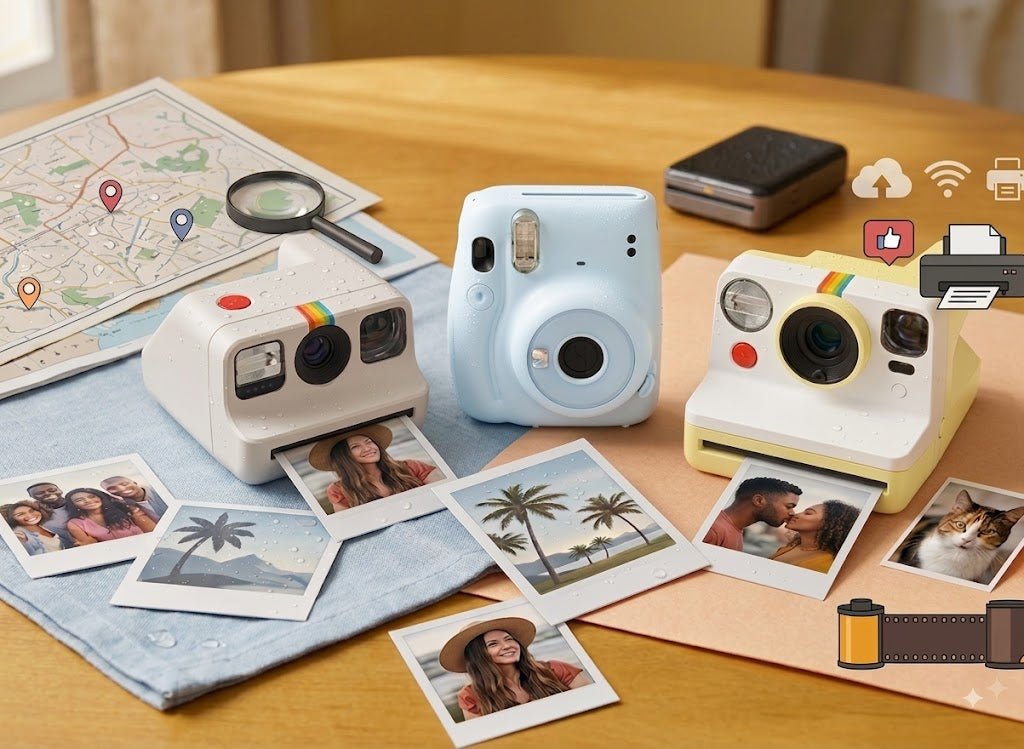
Before adding anything to your bag, decide what kind of photos you want to bring home. An instant camera suits the traveler who values tangible keepsakes and imperfect, immediate color, while a mirrorless camera is a lightweight option for travelers who want more control. A compact digital camera makes sense when you want more frames, more control, and less concern about film availability, though some travelers also pack other cameras as backup or for specific situations. A collectible mini camera can be the playful, low-pressure companion that gets passed around at dinner.
That first choice shapes the rest of your travel photography gear. Film shooters need storage and a plan for airport security. Digital shooters may prioritize power and backup. If your camera stays in your room because its kit is too bulky, none of the accessories were the right choice.
1. A Protective Everyday Camera Bag
A good travel camera bag should not announce itself as a camera bag, but it should still protect your camera gear. The best ones have clean lines, padded organization, weather-resistant fabric, and enough flexibility to work after the trip. Think of a compact crossbody for a city day or a streamlined backpack, though a dedicated camera backpack can make more sense for larger kits or longer travel days, for a flight and a full itinerary.
Protection matters, but access matters just as much. A deep, overbuilt pack can be excellent for a large interchangeable-lens setup and frustrating for a compact camera you want to reach in seconds, so the best option protects what you carry without adding extra weight. Look for a dedicated padded section, a secure closure, and room for daily essentials such as sunglasses, a passport, and a light layer. Waterproof bags are especially useful when a forecast changes or a ferry ride becomes part of the plan, and weather-resistant materials are a quality choice because they hold up over time.
2. A Camera Strap You Actually Want to Wear
The standard strap that came in the box often works, but it rarely improves the experience. A better strap distributes weight more comfortably and keeps your camera close without looking like technical gear borrowed from a newsroom, and a handy strap also improves access while walking.
For compact cameras and instant cameras, a wrist strap can be enough. It keeps the camera present and cuts visual clutter. For longer walking days or heavier cameras, choose an adjustable crossbody strap. The trade-off is simple: a wrist strap is lighter, while a shoulder strap gives you more security and reduces fatigue. Match the choice to your camera and the pace of your trip, and to how it feels on your body over a full day of walking.
3. A Weatherproof Pouch for Small Essentials
Rain is not the only risk to a camera. Sand, sunscreen, condensation, and a loosely capped water bottle can do their own damage. A small weatherproof pouch gives extra batteries, cables, film packs, and memory cards a protected home inside a larger bag.
It also makes transitions cleaner. Pull one pouch from your carry-on for the flight, then move it into your day bag without scattering loose accessories across pockets, which can save money by preventing small but expensive losses or damage. This is a small addition with a large effect on how organized travel feels.
4. Extra Instant Film, Packed With Intention
Instant film is part of the appeal. Each frame has a cost, a limitation, and a physical presence that makes you look twice before pressing the shutter. Bring enough film for the moments you expect to share, but do not overpack simply because every destination feels like it deserves endless frames.
Keep unopened packs in their original foil packaging until you are ready to use them. Avoid leaving them in a hot car or direct sun. At the airport, request a hand inspection when possible, especially with higher-speed film, since screening equipment can affect unprocessed film. Policies and equipment vary, so allow extra time rather than making the request at the last minute.
5. A Compact Photo Printer for the Digital-to-Physical Jump
A portable photo printer is ideal for travelers who shoot on a phone but still want something to hand over, pin up, or tuck into a journal, and printing photos on the spot is especially fun on group trips. It changes the social rhythm of a trip. Instead of promising to send photos later, you can make a print at the table.
This accessory is best for group trips, celebrations, and creative travel diaries, especially when you want to share prints with friends. It is less essential for a solo, ultralight itinerary where every ounce counts. Bring enough print media for the number of moments you realistically want to make physical, not for every image on your camera roll, since print media often is not free.
6. A Portable Battery With the Right Cable
Digital cameras, printers, and phones all compete for power when you are out from morning coffee through dinner. A slim portable battery is one of the least glamorous accessories and one of the most useful. Choose a capacity that can recharge your phone more than once without turning your bag into a brick.
Bring the short, reliable cables your devices actually use. A cable organizer can help, but a simple pouch works just as well. The point is to avoid the familiar travel problem of having a battery pack at 80 percent and the wrong cable in your hotel room.
7. A Spare Battery or Charging Plan for Your Camera
If you shoot digital, bring extra batteries for any full day away from an outlet. This is especially worthwhile in cold weather, where battery life drops faster, and on itineraries built around long drives, hikes, or day trips.
Some compact cameras charge by USB-C, which simplifies the kit. Others need a dedicated charger, which can be less convenient but faster for turning around multiple batteries. Check before departure as part of your purchase planning, so you know whether you need to buy a charger or spare battery before landing.
8. A Fast, Reliable Memory Card
Memory cards are easy to overlook because they are tiny. They are also where the trip lives. Use a card from a reputable brand, choose enough capacity for your shooting style, and format it in your camera before leaving. If you are shooting video or high-resolution files, check the card's speed rating against your camera's requirements.
For longer trips, two smaller cards can be smarter than one enormous card. Splitting your shooting across cards reduces the consequences of loss or corruption. Keep the spare in that weatherproof pouch, not loose in the bottom of your bag.
9. A Simple Backup Routine
Accessories can protect equipment, but a backup routine protects the work. It also helps if you want to share selects later in a travel blog or post. At the end of each day, move your favorite files to a phone, tablet, laptop, or portable storage device, depending on how much gear you carry. Even a partial backup gives you insurance against a lost camera or damaged card.
Do not let backup become a nightly production. Ten focused minutes is enough for most travelers. The best routine is the one a first time traveler or an experienced photographer will still do after a long dinner and an early morning planned for tomorrow.
10. A Pocket Cleaning Kit
A microfiber cloth, a small blower, and a lens-cleaning pen take up almost no room. They handle fingerprints, sea spray, and the dust that seems to appear on every lens the moment you leave home. Use a blower before wiping away grit, especially after beach or desert days, so you are less likely to scratch the glass.
Keep cleaning tools separate from snacks, keys, and anything that sheds debris. This is a modest detail, but clear glass is the difference between a deliberate image and a soft disappointment you only notice later.
11. A Mini Tripod for Self-Timers and Night Scenes
A compact tripod is useful when you want to be in the frame, use a self-timer, shoot a low-light street scene or night scene, or capture landscape photos that need a steadier frame. The right version folds small, has a solid grip, and supports the weight of your actual camera or phone; some compact models from Peak Design also appeal to travelers who want portability and smart design.
It is not essential for everyone. If your travel photography is candid, fast, and mostly daytime, skip it. But for couples, solo travelers, and anyone who wants more than arm's-length selfies, it earns its place quickly, and some travelers also use this setup for casual portraits when they do not want to hand the camera to someone else. Check local rules before setting one up in museums, busy transit areas, or protected sites.
12. A Travel Journal and Fine-Tip Pen
The final accessory is not electronic, but it gives your photographs context. Write down a neighborhood, a song playing in a bar, the name of the person who took the photo, or why a frame mattered, so your notes preserve the life around a photo, not just facts about the place. Pair a journal with instant prints, or use it as a companion to your digital archive, with a simple record that can also support a course of review later if you are trying to improve how you shoot.
Images preserve what a place looked like. A few words preserve how it felt. That distinction becomes more valuable with time.
Build a Travel Photo Kit Around Fewer, Better Pieces
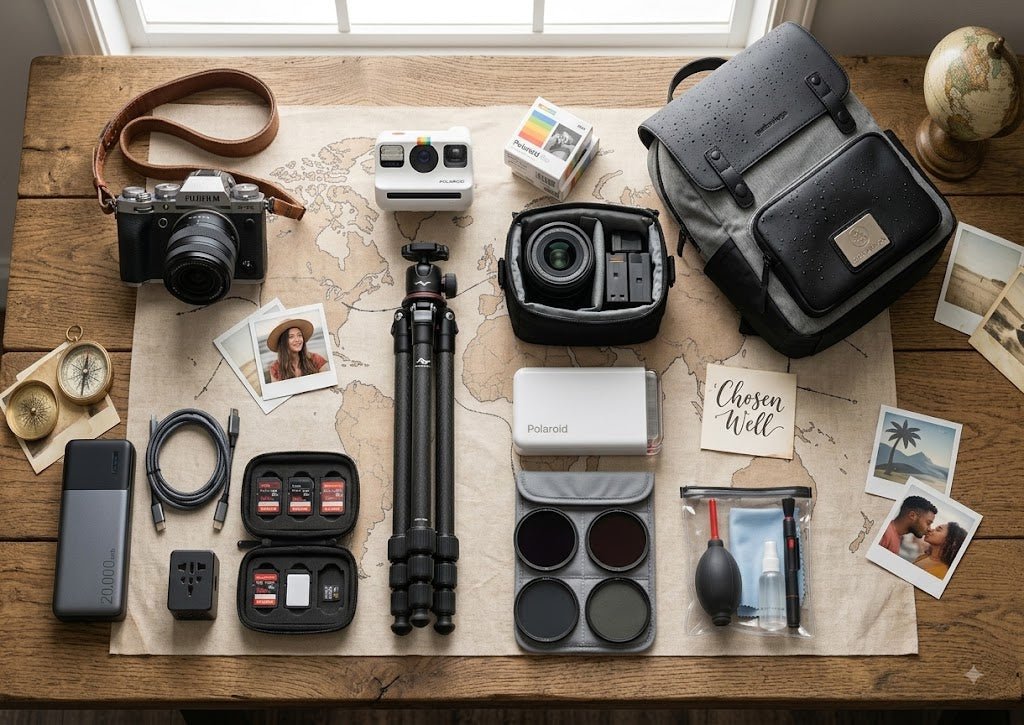
The strongest travel kit has a clear job: carry, protect, power, capture, and remember, whether that means a full frame camera or a lighter setup that suits the trip. Some travelers prefer one lens for simplicity, while others pack a compact telephoto for distant subjects. A Sony 20-70mm F4 G covers 20-70mm and weighs 488 g, which makes it an easy all-round travel option. A Tamron 28-75mm F2.8 weighs 550 g for travelers who want a fast standard zoom. A Tamron 70-300mm weighs only 545 grams if you want extra reach without a heavy bag. Some travelers rely on a Sony F4 16-35mm lens about 90% of the time because of its versatility. An ultra-wide option like the Sony FE 12-24mm F4 G weighs 565g for travelers focused on architecture or dramatic landscapes. Sony users might value the Sony A7RII and its 42.4 MP for landscape photos, while Nikon users might look at the Nikon Z7 ii with its 45.7-megapixel full-frame sensor. Mirrorless cameras from canon, Nikon, and Sony also make the electronic viewfinder useful for previewing exposure and reducing mistakes before you shoot. A waterproof bag, a camera you enjoy using, a power solution, and either film or digital storage will cover most trips with room to spare. Photo quality matters, but not every traveler needs the most expensive setup, and a cheaper option can still deliver strong results if it fits your shooting style. A circular polarizer filter enhances contrast and reduces reflections. A variable ND filter allows creative motion blur in bright conditions. Some travelers also add a drone when the trip calls for aerial coverage. The DJI Mini 2 offers over 25 minutes of flight time and shoots 4K video plus 12 MP photos. The DJI Mini 4 Pro weighs 249 grams and captures 48 MP images. The DJI Mavic Air 2S weighs 595 grams and is especially useful for high-altitude photography. Add the printer, tripod, or journal when your travel style gives them a real role.
Bang On's approach to photography accessories is built around that same edit. Design should not compete with function, and function should not force you into generic gear. Many travelers absolutely love gear that disappears into the background and simply works. Pack the pieces that make you more likely to take the camera out. The rest can stay home, leaving room to see more of the world and find the unexpected frame you traveled to find.
Find the best watches for creative professionals, from graphic statement pieces to refined daily designs with real function, character, and lasting appeal.
Our guide to instant camera film explains formats, color, storage, and shooting habits so every frame feels intentional, vivid, and worth keeping close.