What Makes a Watch Collectible? Key Signs
A watch can be technically excellent, beautifully finished, and still never become collectible. The difference is rarely one feature alone. What makes a watch collectible is the way design, story, scarcity, and lasting appeal come together - often in ways that only become clear years after its release.
For style-minded buyers, collecting does not have to mean chasing auction records or storing watches in a vault. It can mean choosing pieces with a point of view: a distinctive case shape, an unusual dial, a meaningful collaboration, or a movement worth looking after. The best collections feel personal first. Their value, financial or otherwise, follows from that conviction.
What Makes a Watch Collectible Over Time?
Collectibility is a mix of objective signals and human behavior. A limited production run matters, but only if people care about the watch. A respected brand helps, but not every model from a respected brand will hold attention. The watches that last tend to offer a recognizable identity and a reason for enthusiasts to keep talking about them.
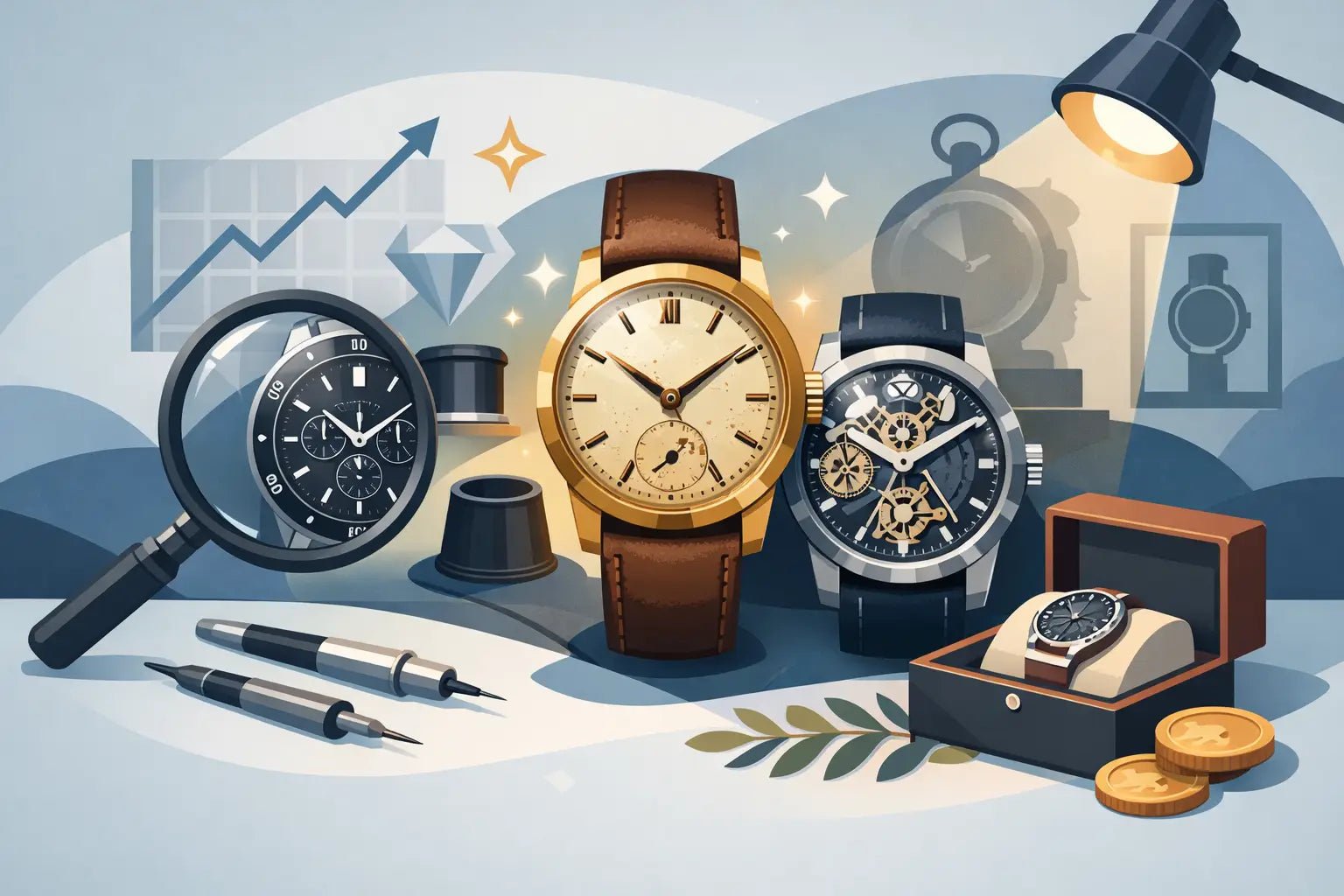
A collectible watch usually has several qualities working in its favor: clear design language, a credible story, thoughtful construction, limited availability, and a place in a broader cultural moment. It may be tied to motorsport, film, aviation, street style, independent design, or a breakthrough in watchmaking. Sometimes its importance is immediate. More often, it builds quietly as collectors begin to recognize what made it different.
That last point matters. “Limited edition” is not a shortcut to desirability. A run of 100 pieces can still feel forgettable if the design is generic or the release has no real context. Scarcity amplifies demand. It does not create it from nothing.
Design Is the First Reason Anyone Cares
Before a collector checks a reference number or production total, they notice the watch itself. Strong design is the most accessible form of collectibility because it works on the wrist, in a photograph, and years later when trends have shifted.
Look for a silhouette that is recognizable at a glance. It could be an architectural square case, a playful domed crystal, a vivid dial treatment, or an unconventional arrangement of numerals. Italian statement watches, for example, can earn attention through expressive scale and typography rather than traditional restraint. Japanese design often takes the opposite route, finding distinction in proportion, detail, and disciplined simplicity. Neither approach is automatically more collectible. The point is coherence.
A watch that knows what it is will usually age better than one trying to imitate five other watches at once. That is why design-led pieces can be smart additions to a collection even when they are not the usual blue-chip choices. They bring visual range and reveal the collector’s eye.
Details That Hold Up Under Closer Inspection
The smaller elements often separate a lasting design from a passing novelty. Consider the relationship between the case and bracelet or strap, the spacing of the markers, the legibility of the hands, and whether the dial texture adds depth instead of distraction. A good watch rewards repeat viewing.
Color can also matter. Certain dial colors become closely associated with an era or model, especially when they are used with restraint. But buying a watch solely because a color is trending is risky. The strongest choices use color as part of a complete design, not as a substitute for one.
Scarcity Works Best When It Has a Reason
Low production numbers are appealing because collectors want the satisfaction of owning something not everyone can buy. Still, the reason behind the limitation is more important than the number printed on a caseback.
A limited run connected to an anniversary, a respected artist, a material experiment, or a meaningful collaboration has a clearer story. The same is true of discontinued references. Once a design leaves production, collectors may begin to see it with fresh eyes, especially if its replacement loses a feature that made the original distinctive.
Scarcity can also happen naturally. Small independent brands and specialized makers often produce in modest quantities because their operations are intentionally focused. That kind of limited availability can feel more convincing than a mass-produced model labeled as exclusive.
Be cautious with artificial urgency. If every release is numbered, every variation is called rare, and the brand constantly introduces nearly identical editions, the signal gets weaker. Collectors notice when scarcity has become a marketing routine.
Provenance Turns an Object Into a Story
Provenance is a watch’s documented background: who made it, when it was sold, where it has been, and why it matters. At the highest end, a famous former owner can dramatically change value. For most buyers, provenance is more practical. It means original papers, service records, the correct box, and a clear chain of ownership.
These details support authenticity and make a watch easier to understand when it changes hands. They also help preserve confidence in the piece. An authorized retailer, official warranty, and direct brand sourcing are not just checkout-page benefits. They establish a clean beginning to a watch’s history.
Originality matters here too. A lightly worn watch with its original dial, hands, bezel, and bracelet can be more desirable than a heavily polished example that looks newer but has lost the details collectors value. This depends on the category and condition, of course. A vintage tool watch may show honest wear beautifully. A modern dress watch may benefit from careful preservation. The goal is not perfection. It is integrity.
The Movement Adds Depth, Not Automatic Value
Watch enthusiasts often talk about movements because the mechanism inside gives a timepiece another layer of interest. Mechanical calibers can be collectible for their engineering, finishing, rarity, or historical importance. A well-regarded automatic movement also offers the ritual many owners enjoy: winding, wearing, and maintaining a small machine built to last.
But a mechanical movement is not a requirement. Quartz watches can be highly collectible when their design, accuracy, cultural place, or technical innovation is compelling. Think of the lasting appeal of digital watches, early quartz-era icons, or graphic fashion watches that captured a specific moment. The question is not whether the movement is mechanical. It is whether it belongs in the watch’s story.
For a first-time collector, serviceability deserves as much attention as prestige. A watch should be wearable, not merely admired. Consider whether the brand supports the model, whether parts are available, and whether a qualified watchmaker can maintain it. Ownership is part of the experience.
Cultural Relevance Can Change the Equation
Some watches become collectible because they appear at the right time, on the right wrist, or in the right creative scene. They may be associated with a film, an athlete, a musician, a design movement, or a generation that embraced a particular look. This kind of relevance cannot be manufactured on a release date. It develops through genuine use and recognition.
Collaborations can be especially interesting when both partners bring something real to the result. A watch designed with an artist, studio, or cultural institution should feel like a meeting of ideas, not a logo placed on an existing case. When the visual language is specific, the collaboration has a better chance of staying meaningful after the initial launch buzz fades.
This is also where personal taste becomes a strength. A watch does not need universal approval to be worth collecting. A niche piece that speaks to your own interests - photography, industrial design, travel, music, or Japanese craft - may become the watch you reach for most. That is a better foundation than buying purely on other people’s predictions.
How to Buy With a Collector’s Eye
Start by choosing a lane, even if it is broad. You might be drawn to expressive Italian cases, Japanese minimalism, dive watches, colorful chronographs, or modern reinterpretations of vintage forms. A point of view prevents a collection from becoming a pile of disconnected purchases.
Then slow down before buying. Study the exact reference, compare dial and case variations, and understand what is included. Keep the box, warranty card, receipts, spare links, and any original accessories. Wear the watch carefully, service it when needed, and avoid unnecessary refinishing. These simple habits protect both the object and its future story.
Most of all, buy from sources that can stand behind authenticity. The secondary market can offer remarkable finds, but it demands knowledge and patience. For a current model, buying through an authorized channel gives you a reliable starting point, official support, and the confidence that the piece is exactly what it claims to be. Bang On approaches watches with that same edited mindset: fewer distractions, stronger design, and brands with a reason to be on the wrist.
A collectible watch should make you look twice before it ever makes you think about resale. Choose the one with the detail you cannot stop noticing, the story you want to carry, and the design that still feels right after the novelty is gone.