9 Polaroid Photo Projects for Modern Walls
A fresh instant print should not disappear into a drawer. These 9 Polaroid photo projects for modern walls turn small, imperfect frames into displays you can actually live with, from seasonal grids and year-long portrait archives to travel stories, guest-book walls, color studies, paired playlists, contact-style layouts, object documentation, and walls built around influential people. For urban creative professionals and design-aware readers who want their homes to feel personal without looking cluttered, they offer practical ways to use instant prints as part of a modern interior.
The best Polaroid photo projects give those small, imperfect frames a place in daily life - on a wall, beside a record player, inside a notebook, or in the hands of someone worth remembering. The appeal is not pristine archival perfection. It is the texture of a real moment, made physical. That is also why these ideas hold up: they turn forgotten snapshots into tactile records of routines, relationships, and taste in a world where most images stay trapped on a phone.
Instant photography has always been more than a camera format. It is a prompt to notice what is already around you: the corner booth, the rainy walk home, your friend's new apartment, the flowers bought for no reason. A considered project turns that instinct into an object with character. Along the way, this guide looks at display approaches, simple preservation tips, and ways to fold instant photography into an everyday, design-led lifestyle.
Polaroid Photo Projects That Feel Personal
1. Build a grid that changes with the season
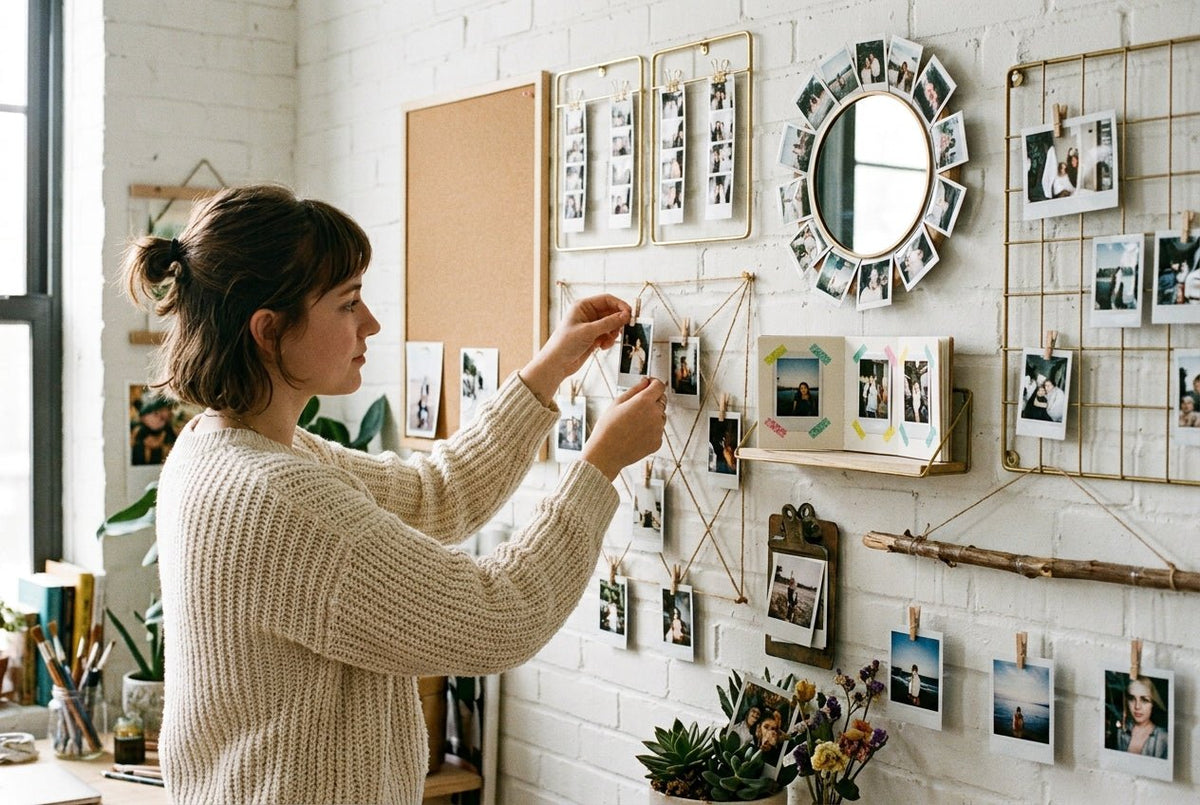
A Polaroid grid is the classic move for good reason. It gives individual images a graphic presence while keeping the overall display relaxed. Start with a simple square or rectangular arrangement and leave a little breathing room between prints. Use removable photo tabs rather than permanent adhesive so the wall can evolve.
The key is choosing a visual rule. Photograph only warm-weather weekends, one color in every frame, or the people who pass through your kitchen. A grid becomes more compelling when it records a point of view rather than every photo you happen to take. If your space is minimal, keep the arrangement tight and let the white borders act as the design detail. In a more layered room, add postcards, ticket stubs, and small notes around the edges.
2. Make a one-year portrait archive
Take one portrait of yourself, your partner, your child, or your closest friend on the same date every month. Keep the location consistent if you want the changes to feel cinematic, or let the setting shift with real life. After twelve months, you will have something more revealing than a camera roll: a compact record of time passing.
Write the month and one sentence on the border after the image has fully developed. Skip the pressure to look polished. The slight differences in mood, haircut, weather, and light are the point. For a gift, place the final set in a simple album or mount it in a long vertical frame.
3. Create a travel story instead of a travel album
Travel photos often become proof that you were somewhere. An instant travel project can do more. Pick one subject for the entire trip: hotel keys, street signs, breakfast tables, local color, shadows at noon, or the person traveling with you. The limitation makes the images feel collected, not scattered.
At the end of each day, add the day's best print to a small notebook with a few lines about where you ate, what you heard, or what went wrong. This is especially useful for short city breaks, when details blur quickly. A compact printer also works well here if you want to pull select phone images into the same tactile format. The result is less like a souvenir shop album and more like a visual field note.
4. Turn dinner parties into a living guest book
Put an instant camera near the entryway before guests arrive. Ask each person to take a portrait of someone else, then write a note beneath it before leaving. The prompt is simple enough to feel natural, but it changes the tone of the evening. People start looking more closely at one another.
Keep the finished prints in a dedicated guest book or display them on a wire rail in the kitchen. Over time, it becomes an archive of the people who have made your home feel lived in. For birthdays, housewarmings, and holiday dinners, this works better than a conventional guest book because the handwriting and faces stay together.
5. Make a color study from your neighborhood
Choose one color - cobalt, tomato red, acid green, soft pink - and spend a week photographing it wherever it appears. You may find it in a painted doorway, a sneaker, a grocery bag, a sunset reflection, or a decal on a delivery bike. The project turns a familiar route into a scavenger hunt for composition.
Display the finished prints in a single row or clip them to a slim metal board. It suits apartments and workspaces that need a small visual lift without looking overly decorated. The lesson is useful, too: once you begin searching for color, you notice how much atmosphere comes from ordinary surfaces.
6. Pair instant photos with handwritten playlists
A playlist is easy to send and easy to lose. Pairing it with a print makes it feel intentional. Photograph the place, person, or object behind a set of songs, then write the playlist title and a few tracks on the border or a card tucked behind it.
This is a strong gift for a long-distance friend, a new relationship, or anyone who values a good physical gesture. Keep it edited. Ten songs and one image will land harder than fifty tracks and a generic collage. Slide the print and card into an envelope, a book, or the pocket of a bag you are gifting.
7. Start a creative contact wall
For designers, musicians, illustrators, and anyone building a visual practice, instant film can become a low-stakes idea board. Photograph materials, sketches, screen tests, packaging, locations, type treatments, and accidental details that might lead somewhere. Do not wait until the work is finished. Use the camera while ideas are still rough.
Pin the prints above a desk and move them around as themes appear. Unlike a digital mood board, the scale is fixed and the images are physically present, which makes surprising connections easier to spot. Add short labels such as “texture,” “lighting,” or “try again.” The wall is not meant to look perfect. It is meant to keep your eye active.
8. Document an object before it changes
Some things are temporary in a quiet way: a favorite pair of worn sneakers, the first plant that survived your apartment, a car with its first scratches, a dog's favorite chair. Photograph one object from the same angle over time. The project works because it gives ordinary possessions the dignity of a subject.
You can keep the prints in a narrow sequence on a shelf or tape them inside a closet door. The emotional payoff arrives later, when you realize how much history can gather around something you barely noticed at first. Instant film is particularly good here because its soft color and imperfect exposure make the images feel like memory rather than inventory.
9. Build a small wall of people who influence you
Not every portrait needs to be formal. Photograph friends making things, mentors at work, family members in their natural spaces, or local creatives whose perspective you admire. Ask one question while you shoot: “What are you thinking about lately?” Write a short answer beside the print.
Over time, the collection becomes a personal index of influence. Keep the framing consistent, but do not over-direct the subject. A studio-perfect series has its place; this project is better when it feels observant. If you are giving the portraits as a set, use quality instant film and allow the prints to develop flat and protected before handling them.
Give the Prints a Better Chance to Last
Instant film rewards a little patience. Shield fresh prints from direct light while they develop, avoid folding or pressing on the image area, and store finished photos away from heat, humidity, and prolonged sun. If a wall gets strong afternoon light, rotate the display periodically or use copies for the brightest spots.
It also helps to match the project to the film you enjoy using. Color film brings energy to parties, travel, and color studies. Black-and-white film gives portraits and process work a quieter, editorial edge. The camera matters, but consistency matters more. Choose a format you will actually carry, then make enough pictures to develop your own visual rhythm.
Bang On's view is simple: analog joy works best when it has a place to go. Leave a few frames near your camera, pick one project that fits your life right now, and let the next good moment become part of the room.
Share
Analog photography trends are shaping a more tactile, personal camera culture. See why instant film, compact cameras, and imperfect prints matter today.