8 Best Instant Printers for Photos, Chosen Well
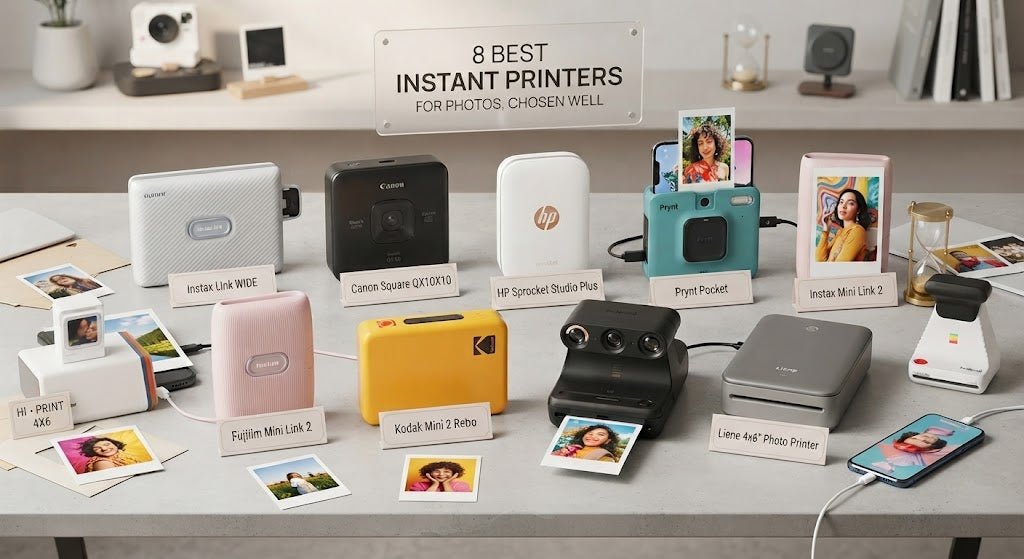
Your camera roll is full of moments worth more than a swipe. The 8 best instant printers for photos include standout picks such as the Polaroid Hi-Print, Polaroid Lab, Kodak Mini 2 Retro, Kodak Mini 3 Retro, and Fujifilm Instax Mini Link 3—each chosen for a different print style, workflow, and kind of photo keepsake. For urban creatives and design-conscious shoppers who want a stylish, functional way to turn digital memories into something physical, the right instant printer can turn a dinner with friends, a road trip, or a new creative project into something you can pin to a wall, slide into a journal, or hand to someone before the moment fades.
The right choice is less about finding the printer with the longest feature list. It is about choosing from photo printers built specifically for printing photos, not general-purpose machines, and picking the format that fits the way you keep memories, because the best instant photo printers balance portability with print quality. Do you want the unmistakable white frame of a Polaroid? Small, sticker-backed prints for a notebook? Or richer, larger snapshots that feel closer to a mini photo lab? Top-rated printers come with real trade-offs in size, cost, and longevity. This guide compares dye-sublimation, ZINK, and film-based options, along with their pros, cons, running costs, and everyday use cases, so you can choose the printer that matches your format, budget, and how you want to share and preserve photos beyond the screen.
Best Instant Printers for Photos by Print Style
1. Polaroid Hi-Print for clean, pocketable color
The Polaroid Hi-Print is the sharp choice for people who want polished 2 x 3-inch prints without carrying an instant camera. It uses dye-sublimation technology rather than traditional instant film, layering color beneath a protective coating. The result is crisp text, saturated color, strong print quality, and better color accuracy in prints that feel made to be handled.
Its peel-and-stick back gives it a practical edge for travel journals, mood boards, desk collages, and gift wrapping. The printer is compact enough for a weekend bag, and the Polaroid Hi-Print companion app makes it easy to add frames, text, and light edits before committing to a print.
There is a trade-off. This is not a classic Polaroid-film experience, and the 2 x 3 format favors portability over presence. But for urban creatives who want to print high quality photos in a portable format and move fast from phone to physical object, it is one of the most considered designs in the category.
2. Polaroid Lab for real Polaroid film from your phone
The Polaroid Lab occupies its own lane. It turns smartphone images into genuine Polaroid film prints, complete with the square composition, tactile border, and unpredictable analog character that made the format iconic.
Instead of printing directly from a file, the Lab uses your phone screen and an internal optical process to expose the image onto i-Type or 600 film. That extra step is part of the appeal. Colors can shift, contrast can soften, and no two results feel completely identical. A perfect digital image may become something more atmospheric, more human, and not always an exact match to the original image.
This is not the best fit for someone who needs quick, precise event prints. Film costs more, development takes time, and controlling the final image requires a little patience, so the photo quality here is intentionally atmospheric rather than precise. Choose it when the medium matters as much as the memory. For a gallery wall, a thoughtful gift, or a stack of images with true analog presence, the Polaroid Lab makes a stronger statement than a tiny sticker print ever could.
3. Kodak Mini 2 Retro for compact square-free prints
The Kodak Mini 2 Retro is a smart middle ground for people who want pocket portability with more photographic depth than most zero-ink printers provide. It produces 2.1 x 3.4-inch prints through 4PASS dye-sublimation technology, which uses layered color and a final protective laminate and is designed for printing photos with more consistent detail than many compact alternatives.
That laminate matters in everyday life, helping the printer produce high quality photos that hold up well after handling. Prints are better equipped to handle fingerprints, splashes, and time spent loose in a bag. The format is also more photo-forward than a square print, making it a natural option for portraits, street scenes, and travel images.
The retro-inspired styling has visual appeal without feeling like a novelty. It suits a person who wants an object with character but still expects it to perform. Replacement cartridges include paper, with each ink cartridge setup simplifying reordering, though it also means you need to factor consumables into the overall cost.
4. Kodak Mini 3 Retro for a square print with more room
If square composition is your preferred visual language, the Kodak Mini 3 Retro offers a larger 3 x 3-inch canvas. That added space makes room for larger prints, so compositions breathe more naturally. A group shot has room to breathe. A detail from an exhibition, café table, or city walk feels less like a sticker and more like a small photograph.
Like the Mini 2 Retro, it uses 4PASS printing for durable, laminated images. It is not as small as the most pocketable printers, but that is the point. This is a printer for keeping at home, bringing to a creative meetup, or packing for a trip where you know you will want more than miniature souvenirs, especially if square print sizes feel more substantial than mini sticker output.
For people drawn to Polaroid-style square imagery but looking for more predictable color and a different print finish, it is an appealing alternative. It depends on whether you value the organic variations of film or the controlled clarity of dye-sublimation.
5. Fujifilm Instax Mini Link 3 for playful instant sharing
The Instax Mini Link 3 is built around the social side of printing. It sits squarely in the portable photo printers category, making Instax Mini film prints from your phone, then layering in app-based features designed for parties, shared albums, and casual creative sessions with a smooth wireless printing workflow. You still get a real Instax print, with its familiar white border and developing image, but you have more control over what reaches the film than you would with an instant camera alone.
Its biggest strength is emotional immediacy: you can print photos in the moment at a birthday dinner, pass them around the table, and end up with printed keepsakes instead of another file lost in a feed. Instax Mini film is smaller than Polaroid film, so it works best for portraits, close-up details, and simple compositions.
The app features can feel a little busy if your taste leans minimal. Still, the printer itself understands what instant printing does best: it gets people off their phones and into the moment together.
What Actually Makes an Instant Photo Printer Worth Buying?
Print technology shapes nearly every part of the experience, and most printers in this category fall into a few distinct photo-printing types. Dye-sublimation printers, such as the Polaroid Hi-Print and Kodak Mini series, generally deliver sharper detail, more consistent color, and a protective surface, which makes them a strong pick for high quality photos with stronger photo quality overall. They are ideal for images you want to preserve in an album or display in a clean, graphic setting. Among comparable models, the Liene Amber printer stands out for the closest color accuracy, with Wi-Fi connectivity and a companion app adding to its appeal. For a more portable but larger-format option, the Canon Selphy CP1500 weighs 2.4 pounds without the battery, offers an optional rechargeable battery, and can produce prints that last up to 100 years.
Zero-ink, or ZINK, printers use zink technology and rely on special paper that activates with heat. That paper contains embedded dye crystals that change color when heated. They are often compact and convenient, but compared with other printers, their color and detail can be less refined. They make sense for casual stickers and quick keepsakes, especially when portability is the priority. If image quality is your deciding factor, compare real sample prints for print quality, color accuracy, and how well each model handles different colors rather than relying on printer specifications.
Special paper also affects how printers produce final results.
Film-based printers bring a different value. Polaroid and Instax formats create objects with personality - framed, tangible, and slightly imperfect. Film is more expensive per print, and the results are not as clinically accurate. That is exactly why many people prefer it. A film print can feel like an artifact rather than a reproduction.
Size is equally personal. A 2 x 3-inch print is ideal for journals and everyday carry. A 3 x 3-inch square carries more visual weight. Larger Polaroid film prints have the strongest presence on a wall, but they also ask more from your budget and your patience.
How to Choose Without Overthinking It
Start with where your prints will live, because printing images and printing photos for different uses calls for different formats. If they belong in a notebook, on the back of a phone case, or across a compact mood board, choose a small sticker-backed printer. If you want photos for a shelf, gallery wall, or gift box, choose a larger square format or genuine Polaroid film.
Then consider your relationship with editing. A printer that works from your phone lets you crop, brighten, and select with intention, but the best choice also depends on its connectivity options. Some models also support wi fi, offer Wi-Fi connectivity, or pair with a computer for editing and printing workflows. Canon's Selphy CP1500 can print directly via USB, Wi-Fi, and an SD card, which is useful if you want more flexibility between phone and camera images. Kodak Dock 4Pass keeps casual use simple with one-touch printing and device charging. HP Sprocket Studio Plus is another app-led option, with a fun photobooth app plus collage tools. That is useful for design-minded projects and photos taken in difficult light. If you prefer the surprise of letting an image develop in your hand, film brings back the friction that makes photography feel special.
Finally, look beyond the printer's purchase price. Running costs should be judged by the price per print for refills, whether that is cartridges, paper, or film. For example, the Canon Selphy CP1500 comes in at about 32 cents per print, and Canon sells ink-and-paper packs for 108 prints at $35. The best value is not always the lowest price per print. It is the format you will actually use, share, and keep. A matte finish can also matter if you want a less reflective look for display.
A quick test of the app workflow, print speed, and output can make the decision much clearer. Some buyers simply want an only printer dedicated to photos rather than a multifunction device. Bang On's approach to photography is simple: choose objects that earn their place in your daily life. An instant printer should not be another gadget in a drawer. It should be the small machine that makes you print the photos you would otherwise forget.
Pick the format that matches your eye, keep a fresh pack of paper or film nearby, and print the frame that made you pause. The best photographs deserve a life beyond your camera roll.
What makes a watch collectible? See how design, scarcity, provenance, movement quality, and relevance turn a timepiece into a real piece worth keeping.