Why a Kodak Film Camera Still Feels Different
Your phone can take a hundred technically perfect photos before lunch. A Kodak film camera still feels different because it asks for something more interesting: attention. The process is slower and more deliberate, so you frame with intent, accept a little uncertainty, and wait to see what the light actually did. That tactile rhythm is the point, and it creates a visual language that digital photography does not.
For urban creatives and design-savvy people who care about how their everyday carry looks and feels, film is not a rejection of digital photography. It is a different way to make images—one shaped by grain, imperfect exposures, soft flash, film stock choice, and the satisfying limitation of a finite roll. A compact Kodak camera makes that language easy to carry from a late-night diner to a weekend road trip, while the rest of this piece looks at why Kodak film cameras feel unique, how their simple design keeps shooting accessible, how to think about styles like full-frame versus half-frame, and which habits make film photography such a mindful, expressive medium.
What Makes Kodak Film Cameras Worth Carrying
Kodak has long been part of photography's visual memory, from family snapshots and vacation prints to contact sheets pinned above studio desks. Founded by George Eastman in 1888, Kodak helped introduce the first mass-market camera and affordable film, and the Kodak Brownie, launched in 1900, remains the clearest example of how picture-taking became accessible and helped popularize photography. Its current reusable film cameras carry that approachable spirit forward. They are made for pictures that feel lived-in, not overworked.
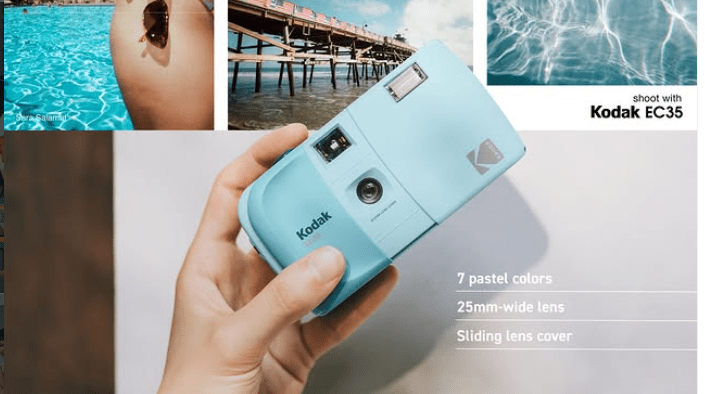
Most Kodak reusable models favor simple controls over technical complexity. You load a 35mm roll, advance the film, frame the shot, and use flash when the scene calls for it. That simplicity is especially appealing if you want the tactile experience of traditional film and the rhythm of using film without beginning with a complicated vintage camera, uncertain repair history, or a manual settings learning curve.
The results have character because the process leaves room for chance, and a big reason many photographers still value film is the nostalgia and emotional connection it can create. Direct flash can give portraits a candid, early-2000s editorial edge. Daylight produces softer, warmer scenes depending on the film stock you choose, and some stocks render skin tones naturally while adding a unique aesthetic. Slight misses in focus or exposure are not always mistakes. Sometimes they are the detail that keeps an image from looking like every other image in your camera roll.
Choose the Right Kodak Camera for Your Style
The best choice depends less on specs than on how you want to shoot, because the right camera depends on the kind of photographer you are and what you want from your equipment. If you want an uncomplicated point-and-shoot for parties, travel, and everyday snapshots, a standard reusable 35mm Kodak camera is the natural fit. Its full-frame images give you the familiar 24 or 36 exposures per roll, depending on the film you load. It is also easier to carry and use on impulse than larger cameras, and it stays more immediate than many modern cameras.
A half-frame option such as the Kodak Ektar H35 takes a different approach. It captures two vertical images in the space normally used for one 35mm frame, effectively doubling your exposure count. A 36-exposure roll can become roughly 72 images. That makes half-frame especially good for diaries, sequences, outfit details, street scenes, and anyone who wants to shoot freely without burning through a roll in one afternoon. The Kodak Ektar H35 is a clear example of how sequencing and texture can produce a more film like result without relying on specs.
There is a trade-off. Half-frame negatives are smaller, so scans may look grainier and carry less detail than full-frame images. For social sharing, small prints, and expressive visual storytelling, that texture can be part of the appeal. Resolution is not the only factor shaping a cinematic look or a strong film aesthetic. If you expect to make large prints or want the cleanest possible scans, full-frame is the safer direction.
Color also matters. A bright camera can feel playful and graphic. A neutral finish sits more quietly in an everyday carry rotation. Neither changes the photograph, but the object you enjoy bringing along is the one that will actually make it into your bag. Unlike digital cameras or a kodak digital camera with advanced features, these models usually win on feel rather than technical extras.
Film Choice and Film Grain Shape the Final Image
The camera is only half the aesthetic. Your film stock determines much of the color, contrast, and grain you see after processing, and many film photographers choose stocks based on how they handle dynamic range, film grain, and color response. ISO 200 film is a strong choice for bright outdoor days, while ISO 400 is the flexible everyday option for mixed light, overcast afternoons, and flash photography. Higher-speed film can help in lower light, though it often brings more visible grain, and some stocks are prized for softer tones or warmer tones depending on the light.
For a clean, sunlit look, choose a consumer color negative film and shoot outdoors. For flash-lit nightlife, a 400-speed roll is usually more forgiving. Black-and-white film shifts attention toward shape, shadow, and gesture, and Tri-X remains a classic option for that look, but it may require a lab that specifically processes it.
Keep expectations realistic: these cameras are designed for ease and personality, not interchangeable lenses, fast autofocus, or extensive exposure control. Low light without flash can be challenging. Subjects moving quickly may blur, and lens optics plus basic shutter limitations shape that motion blur and overall look as much as the film stock does. Higher resolution alone will not create the look a fine art photographer may prefer. That is not a reason to avoid them. It is a reason to choose moments where atmosphere matters more than technical perfection.
A Small Ritual: Why We Shoot Film for a Big Return
Film rewards a few good habits. Check that the film is advancing after you load it. Use flash indoors or after sunset when your subject is close enough for it to matter. Keep the lens clear of fingerprints. Most of all, do not rush to finish a roll just to see the results. The lack of immediate feedback is part of the discipline and one reason film slows you down. Let it collect a small season of your life.
When the roll is complete, have it developed and scanned by a trusted lab, which will usually return a digital file as well. Save the scans, but keep the film negatives too. They are the original record and can be rescanned later at a higher quality, and if you develop your own film, storage matters even more. A little post processing can shape the scans, but it is not what creates the look in the first place.
A Kodak camera earns its place because it turns ordinary plans into material worth remembering. Take it where your phone feels too automatic, and give the next 36 frames a little more thought. That appeal has survived shifts in technology, even through the changes of recent years.
Share
The Retrospekt x Polaroid 600 Instant Film Camera - Monchhichi pairs a refurbished vintage icon with collectible character and real analog charm for gifts.