Polaroid Printer Review: Is Hi-Print Worth It?
A camera roll is a crowded place. A Polaroid printer gives the photos worth keeping a more physical role: on a studio wall, inside a journal, slipped into a birthday card, or arranged on the fridge without asking anyone to open an app. This Polaroid printer review looks at what that experience is really like, where it shines, and where the charm comes with a few practical compromises.
The short answer: Polaroid's portable Hi-Print is one of the most satisfying ways to turn phone photography into small, polished keepsakes. It is not the right tool for every photo project, and it does not replace the singular look of a classic instant camera. But for urban creatives who want richer color, cleaner detail, and prints they can actually share, it earns its place in the everyday carry rotation.
What a Polaroid printer does differently

A camera roll is a crowded place. A Polaroid printer gives the photos worth keeping a more physical role: on a studio wall, inside a journal, slipped into a birthday card, or arranged on the fridge without asking anyone to open an app. This Polaroid printer review looks at what that experience is really like, where it shines, and where the charm comes with a few practical compromises.
The short answer: Polaroid's portable Hi-Print is one of the most satisfying ways to turn phone photography into small, polished keepsakes. It is not the right tool for every photo project, and it does not replace the singular look of a classic instant camera. But for urban creatives who want richer color, cleaner detail, and prints they can actually share, it earns its place in the everyday carry rotation.
What a Polaroid printer does differently
A Polaroid printer begins with a photo already on your phone. That changes the rhythm of instant photography. Instead of committing at the moment you press the shutter, you can choose your best frame afterward, crop it, adjust the brightness, add a border, and print only the images you want to live beyond the screen.
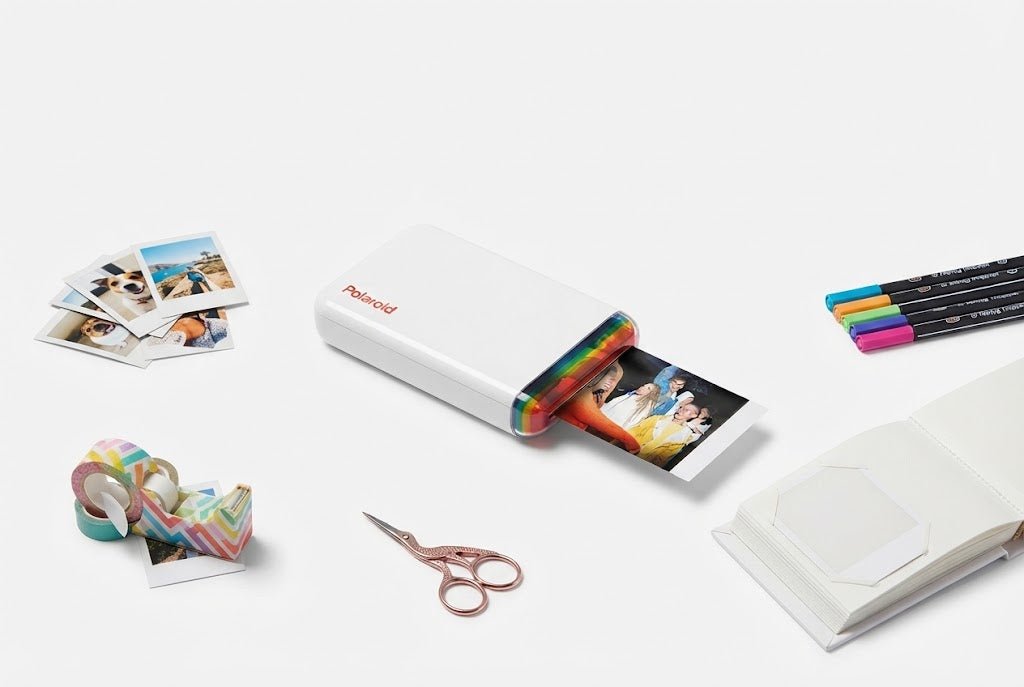
The Hi-Print uses 2 x 3-inch all-in-one paper cartridges built around dye sublimation technology, with each cartridge holding both the photo paper and dye ribbon. This dye sub process uses a ribbon to apply cyan, magenta, and yellow across four passes before sealing the image with a protective top layer. The result feels more finished than many pocket photo printers: color is saturated without looking harsh, faces retain useful detail, and the surface is designed to stand up to fingerprints, splashes, and the low-grade chaos of a bag or desk drawer.
Unlike zink prints on zink paper from rivals like hp sprocket, the Hi-Print’s output is generally preferred for sharper fine details and more vibrant color, and its 2.1 x 3.4-inch photos are slightly larger too. That polished finish is the key distinction. Classic Polaroid film is loved for its soft unpredictability, chemical texture, and one-of-one character. The Hi-Print is more controlled. It gives a phone image a small-format print treatment rather than pretending to be analog film. Both approaches have a place, but they serve different instincts.
Polaroid printer review: print quality and feel
The best Hi-Print images tend to have a clear subject, decent available light, and strong color separation. Street scenes with a bright storefront, a portrait against a clean wall, a well-composed lunch, or a travel image with blue sky and architectural lines all translate beautifully. The printer gives these pictures a crisp, lively finish that looks deliberate rather than disposable.
Skin tones generally fare well, especially from current smartphones with restrained editing. Heavy filters are less forgiving. If an image is already pushed toward neon, overly warm, or aggressively sharpened on-screen, the print can make that treatment feel even more pronounced. A quick edit before printing is worth the minute it takes.
The 2 x 3-inch size is small, but that is part of the appeal for a portable printer built for photo printing. These are not prints for framing above the sofa. They are visual notes: miniature souvenirs, desk objects, gift add-ons, and tactile reminders of ordinary days that deserve more than a swipe. The scale also makes the Hi-Print especially good for scrapbooks, mood boards, and journal spreads.
The paper's adhesive back is more useful than it first sounds: the prints are peelable stickers that sit neatly in journals, which makes the scrapbooking angle immediately practical. Peel and place turns a print into a sticker, with none of the extra glue, tape, or fuss that usually separates a good creative intention from a finished page. For anyone building a travel diary or an inspiration wall, it is a quietly excellent feature.
The experience: simple, but not entirely instant
Pairing the printer with a phone is straightforward, and the Polaroid Hi-Print app makes it easy to select an image and prepare it for the 2 x 3 format on an iPhone or Android device. Bluetooth pairing is simple and quick, but the Polaroid Hi-Print connects via Bluetooth only rather than Wi‑Fi or USB, so it is really built for a smartphone or tablet workflow. The printer itself is compact enough for a weekend bag, a creative workspace, or a party table. It is designed for use in moments when passing around a print feels better than sending another message.
There is a small ritual to each image. The printing process uses four passes as each color layer is applied, and prints usually take around 50 to 70 seconds to complete, or about 80 seconds per photo depending on the image, so this is not the near-immediate reveal of a traditional instant camera. That speed is slower than some rivals; the Canon SELPHY QX10 prints in about 43 seconds per photo. That wait is a bit longer than some people will expect if they are printing a stack of images for an event. Think of the Hi-Print as portable personal printing, not high-volume event production. The app shows real-time progress updates while each print is being made.
The device is also best used with a charged phone and a little patience for app-based setup. People who prefer a fully analog process may find that dependence on a phone removes some of the magic. For most people, though, the phone is precisely the point: the hi print app has an easy app interface and lets you make quick edits with filters and text, use the Polaroid Hi-Print app to choose the number of prints, and turn an already excellent camera into a source of physical photographs.
The trade-off: cost per print
The Hi-Print's convenience has an ongoing cost. Paper cartridges are a consumable, and each self-contained pack combines the dye ribbon instead of traditional ink with photo paper for 10 prints, so running costs climb quickly. In practice, you are buying two cartridges for 20 prints at about $20 total, or roughly $1 per image. That sits on the high side versus Zink options, and dye-sublimation printers generally carry a higher cost per print than traditional instant film alternatives. That is less a flaw than a clear trade-off for instant, portable output, even if the high cost per print is worth noting.
It helps to think of each print as a selected object, not a backup of every image you take. Print the photo that marks the trip, the dinner, the new apartment, or the person you do not see often enough. Used this way, the format feels intentional and the cost feels easier to justify, especially if you do not plan to print in bulk.
There is also less waste than with an instant camera when a shot goes wrong. You decide after seeing the photo on your phone. For gift makers, parents, travelers, and anyone who likes to create on the fly, that control can offset the higher per-print price, even though prints here are pricier than Zink prints.
Hi-Print vs. Polaroid Lab
Polaroid's printer range has two distinct personalities. The Hi-Print is the better pick for portability, polished color, and compact sticker-backed images. It suits daily life: a creative desk, a road trip, a birthday, a small gesture that needs a photograph attached.
The Polaroid Lab is for a different kind of maker. It transforms phone images into larger, real Polaroid film prints. That means the result carries the recognizable square format and chemical character people associate with the brand. It is more of a home object than a bag-ready accessory, and it asks for more attention to image preparation, film handling, and the natural variation of analog development.
Choose the Lab if the imperfect, film-forward Polaroid look is the whole reason you want a print. Choose the Hi-Print if you want dependable, vivid mini prints with the freedom to make several in an afternoon. Neither is universally better. The right one depends on whether your priority is analog atmosphere or easy creative output.
Who should buy a Polaroid Hi-Print?
The Hi-Print makes the most sense for people who already photograph constantly on their phones but rarely do anything with those images afterward. It is particularly strong for journal keepers, scrapbookers, travelers, students, hosts, and gift buyers looking for an accessory with personality and repeat use.
It also works well for photographers who want a quick physical proof or a playful leave-behind. A finished 2 x 3 print has more presence than a QR code or an AirDrop, even when the original image was shot digitally.
It may be less compelling if you need larger prints, archival fine-art output, or the lowest possible print cost. A home photo printer or lab order is better suited to those jobs. And if your favorite part of Polaroid photography is the surprise of developing film, an instant camera or the Polaroid Lab will offer a more emotionally satisfying process.
Final take: small prints, strong presence
The Polaroid Hi-Print succeeds because it understands that most phone photos do not need to become wall art to matter. They need a form that invites touch, display, and exchange. Its color is polished, its format is genuinely useful, and its adhesive-backed prints turn casual documentation into something you can place with intention.
For the right person, it is less a gadget than a creative habit. Keep it charged, save your best frames, and print the ones that deserve to leave the camera roll. At Bang On, that kind of analog joy in a digital world is exactly what makes a design-led accessory worth carrying.