Instant Photography Trends 2026 Worth Watching
A phone can record every second of a night out. An instant camera asks a better question: which second deserves to become a physical object? That shift defines the instant photography trends 2026 worth watching: more intentional shooting, prints treated as keepsakes, imperfect flash photos, bolder color, small-scale display ideas, hybrid analog-digital workflows, and compact design-led cameras that feel as personal as the bag or watch you carry. The category is not chasing digital convenience. It is leaning harder into color, ritual, and the small thrill of handing someone a picture before the moment has cooled.
For urban creatives and design-savvy people who want style and function in the same object, instant photography is more than a nostalgic side hobby. It offers a tactile alternative to an all-digital camera roll, with more texture, presence, and room for personal expression in everyday life. This guide looks at where instant photography is moving now: why physical prints matter again, how flash and color are being used on purpose, which hybrid cameras and printers fit modern habits, how people are displaying photos in small spaces, and how to choose a camera based on the feeling and use you actually want.
Instant Photography Trends 2026: Less Content, More Keepsake
The major shift is intentionality. Instant photos are increasingly being used as keepsakes rather than disposable content. A print from a birthday, a road trip, or a late-night gallery opening carries evidence of the occasion: the imperfect crop, the ambient light, the person behind the camera, and the few minutes spent waiting for an image to develop.
That physical presence matters. Digital images live among thousands of other files in the digital age, often seen once and forgotten. A physical print lands on a desk, slips into a notebook, or gets taped to a mirror. It stays visible long enough to become part of a space.
This does not mean every photo needs to look precious or perfectly composed. In fact, the appeal often comes from the opposite. A little motion blur, a flash-lit foreground, or an unexpected color cast can make the result feel more alive than a carefully edited phone image. The point is not perfection. It is a photograph with a point of view.
Instant Cameras Are Becoming Personal Objects Again
In 2026, an instant camera is increasingly chosen the way a watch or bag is chosen: for the experience it creates and the personality it projects. Compact proportions, distinct colorways, tactile controls, and recognizable silhouettes matter. The camera is not simply stored away until a party. It travels in an everyday bag, sits on a shelf, and shows up in the frame as part of the creative ritual.
That has made design-led cameras especially compelling for people who want gear that feels considered without becoming overly technical, with some buyers comparing instax cameras and polaroid cameras as lifestyle objects as much as tools. A camera with an easy interface can still be expressive if it offers creative features, maintains solid image quality, and has a strong visual identity with a consistent, distinctive print.
There is a useful trade-off here. More manual control can reward a photographer who wants to experiment with exposure, flash, and distance, even though automatic exposure helps and most instant cameras still favor ease of use. A simpler point-and-shoot model makes more sense for spontaneous group photos, travel days, and gifting. Neither choice is more serious. It depends on whether the desired result is control or momentum, and on the user's shooting style.
The return of the imperfect flash photo
Clean daylight portraits will always have their place, but the built in flash is firmly back in the visual vocabulary. It creates contrast, catches reflective surfaces, and turns an ordinary restaurant table or apartment hallway into a setting with character. The look is immediate, sociable, and slightly unruly.
Instant cameras are well suited to this style because the print softens the hard edges of flash photography. Skin tones, shadows, and highlights take on a more tactile quality than they do on a phone screen, and direct flash can sometimes exaggerate or mimic light leaks as part of the look. The result can feel fashion-forward without looking overproduced.
The key is to work with the limitations. Stay aware of the camera's recommended flash range, avoid placing subjects against a very distant dark background, make slight adjustments to framing and composition, and let the foreground do some of the visual work. Instant photography rewards proximity, which is especially helpful for group shots and self portraits when working close to the subject.
Color and Image Quality Are Creative Choices, Not Afterthoughts
The era of treating every instant print as a faded throwback is giving way to more deliberate color choices. Bright, graphic color is popular for parties, travel, and street scenes. Softer palettes and warmer tones suit interiors, portraits, and quiet daily documentation. black and white film remains a strong option when shape, contrast, and expression matter more than location.
What is changing is the confidence to mix visual moods. A photo journal can hold sunlit vacation shots beside high-flash portraits and moody monochrome frames, using different film choices to create images with distinct moods. That variety feels more current than forcing every image into one preset aesthetic.
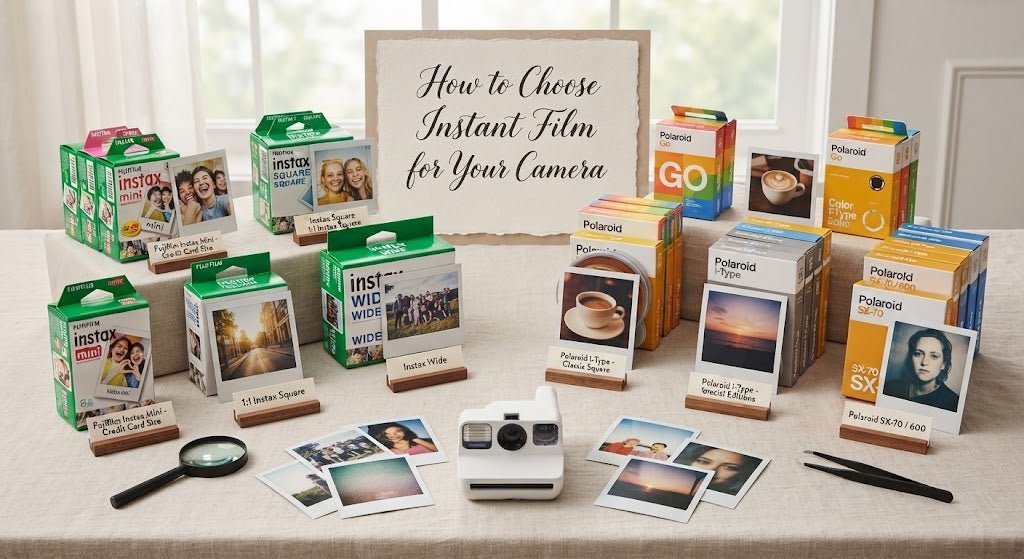
Film borders are part of the equation, too. The classic white frame remains iconic, but Fujifilm offers three film sizes: mini, wide, and square, and colored, special-edition, and square format options, including Instax Square, can turn a print into a small graphic object, though it runs around $1.10 per frame. Instax Mini film measures 54 x 86 mm, while Fujifilm Instax Mini film measures 2.4 by 1.8 inches. Instax Wide film is roughly double the size of Mini, so the format changes how a print reads visually. Use them selectively. A bold border can elevate a stack of party photos or a themed gift, while a simpler frame often gives everyday images more room to breathe.
Instant Film Prints Are Moving Beyond the Fridge Door
One of the most practical instant photography trends in 2026 is the rise of small-scale display. People are building visual archives in ways that feel casual, personal, and easy to change. A few prints clipped over a work desk, tucked into a travel journal, or arranged in a shallow frame can say more about a season than a perfectly curated gallery wall.
Instant images are also becoming part of how people host. Leave a camera out at a dinner party and guests start taking photos, and instant cameras offer a more participatory way to document the event. Use prints as place cards, add them to a birthday guestbook, or make a small wall at a wedding weekend where everyone can contribute. The camera becomes a social object, not just a tool for the designated photographer.
For gift buyers, this opens up a better idea than another generic tech accessory. Pairing an instant camera with a few packs of film makes the gift immediately usable, and different formats like instax mini, instax wide, and polaroid i type suit different uses, with larger formats working better for sharing or display. The recipient gets the object, but also the first set of memories it is designed to make.
Analog does not have to mean disconnected
The strongest setups often combine physical and digital habits. Hybrid instant cameras combine a digital camera workflow with instant printing, and compact printers can turn selected phone images into prints, while traditional instant cameras preserve the surprise of not knowing exactly what the frame will become. These are different experiences, and it is worth choosing based on the occasion.
Hybrid models also make digital photography more practical because a digital preview lets you check the shot before committing to a print. Previewing a digital image or digital photo before printing helps reduce film waste and avoid wasting film.
A printer is useful when you have already captured the image and want to make a physical copy for a journal, a mood board, or a gift. A traditional camera is better when the making of the picture is part of the event. One is about curation after the fact, including selecting from a phone or memory card before printing a physical print; the other is about presence in real time.
Small Cameras, Bigger Everyday Use
The appetite for miniature and collectible cameras is another sign that photography is becoming more playful. Tiny cameras can be clipped to a bag, brought on a weekend trip, or passed around without the pressure attached to a larger camera setup. As compact cameras, many also use affordable mini film that suits casual everyday shooting. Their limitations are part of the charm. They invite experimentation rather than technical overthinking.
That said, compact does not automatically mean suitable for every situation. Small-format cameras are excellent for daylight, casual portraits, and visual diary work, and beginner-friendly options like Fujifilm Instax Mini keep instax mini film easy to find. They also often work well for selfies because some include a selfie mirror. For low-light events, large groups, or images where detail is essential, a larger instant camera or a phone may be the better choice. Good creative tools are not defined by doing everything. They are defined by doing one thing well enough to make you reach for them.
This is also why accessories matter. A protective case, a clean way to carry extra film, and a dedicated place for finished prints make a camera easier to use regularly. If it is inconvenient to bring along, it will stay on the shelf. The best setup is the one that fits your actual routine.
Buy for the Feeling You Want to Create
The most useful way to choose an instant camera in 2026 is to start by choosing among the best instant cameras for the feeling and use case you want, not just the specifications. Start with the scenes you want to remember. Do you want candid flash photos with friends? Quiet travel notes? Styled product and outfit shots? A family camera that anyone can use? The answer will point you toward the right balance of format, controls, size, and film cost. If you want more creative control, hybrid options like the instax Mini Evo or fujifilm instax mini evo can be a better fit, especially with lens effects and film effects. Some advanced users also like to shoot film with systems that feel more tactile, while setups with interchangeable lenses sit outside the typical instant category but appeal to people who want maximum flexibility. Some advanced models also add exposure compensation, wider shutter speed control, and better battery life, which matters if you rely on screens and effects often.
Film cost deserves an honest place in the decision. Instant photography is not built for unlimited shooting, and that is part of its value. Each frame asks for a little attention. Still, if you plan to use a camera at events or on trips, factor in enough film to avoid becoming overly cautious. Think about format choice too, including i type film for newer Polaroid bodies. Polaroid film costs about $20 for a pack of eight shots, so the per-print cost adds up quickly. A camera that feels too expensive to use is rarely a camera that becomes meaningful.
Authenticity matters as well, especially with film-based products where storage conditions, official support, and reliable sourcing affect the experience. That matters whether you prefer Fujifilm Instax, classic Polaroid, or a newer mini evo style hybrid. A curated retailer such as Bang On helps remove some of that uncertainty, leaving you free to choose the camera that fits your style instead of sorting through questionable inventory.
The most enduring trend is simple: make photographs that can leave the screen. Carry a camera you want to use, give a print to someone before the night ends, and let the imperfect frame earn its place in your life. Storing prints away from direct sunlight also helps them last longer.
Mini camera versus instant camera: compare image style, sharing, cost, and carryability to find the compact camera that suits your everyday creative life.