Kodak Still Makes Sense
Some brands never really leave the frame. Kodak is one of them, and yes, Kodak still makes sense for people who want photography to feel immediate, approachable, and expressive rather than overly technical or generic. From the days of George Eastman and the Kodak No. 1 to amateur photography on film and today's easy-to-carry Kodak cameras, the Kodak brand has always been tied to making picture-taking simple, personal, and enjoyable.
That still matters now because cameras have split into two extremes. On one side, smartphones make images frictionless but often interchangeable; on the other, high-end digital photography systems reward technical interest, bigger budgets, and spec-chasing around things like a megapixel sensor or shutter control. Kodak sits in a more interesting lane. It gives first-time camera buyers, travelers, students, urban creative professionals, design-minded consumers, and gift shoppers a more intentional way to shoot without the complexity of pro equipment or the polished sameness of phone photos.
This piece looks at why Kodak continues to feel relevant, how its cameras balance design and usability, where they fit against phone cameras, why authenticity and official products matter when you buy, and which Kodak options make the most sense for your own use or as a gift. If you want a camera with style, portability, and a distinct point of view—whether that's instant, digital, or film camera appeal—Kodak remains a practical and characterful choice.
Why Eastman Kodak Company still stands out
Kodak has brand recognition, of course, but recognition alone does not keep a camera relevant. What keeps Kodak compelling is the way it connects product design with a specific kind of image-making. The Eastman Kodak Company was founded in Rochester, New York, by George Eastman in 1888, and it is less about technical obsession and more about mood, memory, and ease.
That makes a difference if you are not trying to become a gear expert. A Kodak camera often appeals to people who want a device they will actually bring along to dinner, a weekend trip, or a night out. The barrier to entry feels low, but the result still feels distinct from another phone photo buried in a camera roll.
There is also a style factor. Kodak has a visual identity that does not need explanation. The brand feels familiar, but not generic, and that recognition carries visual memory tied to Kodak’s history and brand equity across generations. In a market full of devices built to disappear into utility, Kodak products often feel like objects with presence. For design-minded shoppers, that matters as much as specs.
The early Kodak No. 1 film camera and the slogan “You press the button, we do the rest” are an example of how the company made amateur photography accessible worldwide.
Kodak and the return of intentional film photography
The appeal of Kodak lines up with a broader shift in how people want to document their lives, and its long history gives the brand unusual reach across more than one generation. More shoppers are looking for tools that slow things down just enough, especially after recent years made polished digital photography feel a little too frictionless. Not to make photography difficult, but to make it feel deliberate, with images that hold a clearer story.
That is why compact digital cameras, instant formats, and nostalgic form factors keep finding new audiences. They create a small amount of friction in a good way. You pay a little more attention. You frame the shot. You hand the camera to someone else. You live with the color and flash and softness instead of editing everything into sameness, which is part of why film photography still appeals in an era shaped by digital technology.
Kodak fits naturally into that mindset. It offers a version of photography that feels social and tactile. The experience is not only about image quality. It is about how the camera changes the moment while you are in it. The brand feels familiar, but not generic. Its nostalgic logo stays highly visible through licensing, and it has also become a symbol in lifestyle and streetwear.
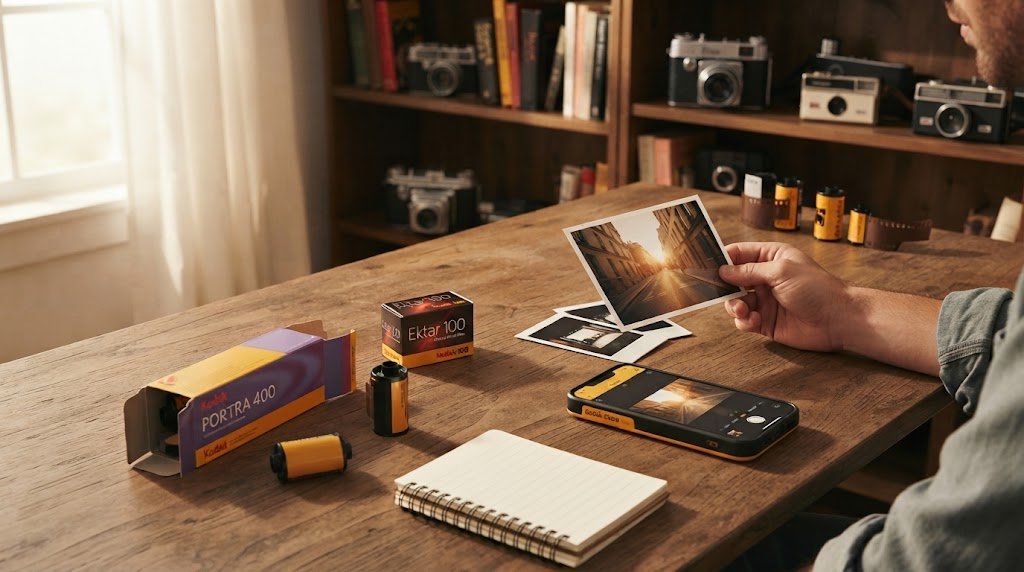
For some people, that means a compact camera that slips into a bag and comes out when the light gets good. For others, it means a playful mini camera or an instant-friendly device that makes photos feel like keepsakes rather than content. Others are drawn to film itself, whether that means choosing a particular film stock, shooting color negative film, dropping rolls at the lab to get them developed, or simply enjoying the slower rhythm of processing. The right choice depends less on abstract performance charts and more on how you want photography to live in your day, whether that involves still films or a more casual mix of analog and digital habits.
What to look for in a Kodak camera
The strongest reason to buy Kodak is not that it can do everything. It is that the right model can do one job very well for the way you actually shoot. In recent years, younger buyers have also leaned toward intentional creativity over polished digital perfection.
If portability matters most, a small Kodak camera makes sense. A compact form factor is easier to carry than a larger interchangeable-lens system, and that convenience changes behavior. People take more photos when the camera is already with them. For travel, casual street shots, parties, and daily life, that is often more valuable than having advanced controls you rarely touch.
If the emotional side of photography matters more, look at models that lean into charm and spontaneity. Some Kodak formats are less about precision and more about personality. They suit gift buyers, beginners, and anyone who wants photography to feel light again. That bit of friction is part of the appeal in film photography, where limited exposures encourage more careful shot selection before pressing the shutter. Many photographers still value film stock for the organic texture and dynamic range of silver halide emulsions.
Then there is usability. The best Kodak options tend to be straightforward. Menus are not the point. The point is getting from seeing something to capturing it without overthinking. That ease is part of the value. You can also see the revival in rising demand for films like Kodak Portra 400 and Kodak Gold 200, along with the return of local labs for processing.
Still, there are trade-offs. If you want the cleanest low-light performance, deep manual control, or the flexibility expected by dedicated hobbyists, Kodak may not be the ideal answer. That is not a flaw so much as a positioning choice. These cameras are often strongest when judged by enjoyment, portability, and style rather than by pure technical ambition.
Who Kodak is really for
Kodak works best for people who care about photos but do not want photography to become homework. That includes first-time camera buyers, travelers, students, creative professionals looking for a lighter second camera, and anyone shopping for a gift that feels personal without being overly complicated. There is also a long history behind that appeal: from George Eastman and the Kodak No. 1 onward, the company helped make photography less intimidating for the amateur and shaped a generation that saw pictures as part of everyday life. Today, that story continues through licensed product lines rather than a single all-in-house consumer camera strategy.
It also suits a certain taste level. If you like objects that feel considered - not overly precious, just well chosen - Kodak has an advantage. The brand sits comfortably alongside other design-led everyday items because it carries cultural familiarity without feeling sterile. If you want a simple film camera feel or an easy entry point into amateur photography, that familiarity still matters.
This is especially true for people building a more intentional everyday setup. A camera does not have to be a specialist tool to earn a place in your bag. Sometimes it just needs to make you want to document your life more often and with a little more character. For portability, Kodak launched the PixPro range in 2013 for digital photography, including compact and action cameras. Kodak also licenses its brand for related gear such as cameras and photo printers, so it is worth checking the specific model and use case before you buy.
Kodak digital camera versus your phone
This is the obvious comparison, and it is worth being honest about it. For convenience alone, your phone wins. It is already charged, already connected, already in your pocket. For many situations, that is enough.
But enough is not always memorable. A dedicated Kodak camera changes how people behave around photos. It creates a clearer beginning and end to the act of taking a picture. You notice composition more. Friends ask to use it. The photos feel separate from the blur of messages, screenshots, and app clutter. That appeal reaches back to amateur photography: the Kodak No. 1, produced as the first consumer camera in 1888, and the Brownie, sold for one dollar in 1900, made picture-taking feel accessible, a beginner-friendly idea Kodak later extended with the preloaded disposable camera in 1987.
There is also an aesthetic difference. Phone cameras have become excellent, but they often push everything toward polished consistency. Kodak can feel more individual. Sometimes that means imperfect flash, softer rendering, or a color profile with more personality. If that sounds like a compromise, it can be. If that sounds like the point, then it probably is.
Why authenticity matters with Kodak
When a product has broad recognition, where you buy it matters. That is especially true for cameras and accessories, where warranty support, sourcing, and product condition can shape the experience long after checkout.
For a brand like Kodak, authenticity is part of the purchase decision, not an afterthought. The kodak brand appears across more than one product line today because Eastman Kodak and Kodak Alaris now sit behind different parts of the business, so trusted retail matters. As a company with a long imaging legacy, Eastman Kodak Company also helped shape digital photography by developing the first digital camera prototype in 1975. You want the real product, proper support, and confidence that what you are buying matches the brand promise. Authorized retail matters because it reduces the uncertainty that can come with popular branded goods.
That is one reason curated retailers have an edge here. Kodak’s digital push once surged with EasyShare to $5.7 billion in sales by 2005, then its share fell to 7% by 2010 before it exited the digital camera market in 2012, which is why the appeal now is less about convenience and more about how the gear changes the photo-taking experience. A selective edit is often more useful than an endless catalog. It helps buyers focus on models that actually fit a lifestyle instead of drowning in options that all sound similar on paper, whether that includes film, equipment, photo printers, or other imaging tools shaped by decades of production and processing. Bang On approaches gear this way - less noise, better choices, and a shopping experience built around taste as much as function, not a warehouse-style display built to sell everything at once.
Kodak as a gift makes a lot of sense
Some products are practical but forgettable. Others are beautiful but hard to use. Kodak tends to land in a better place between the two, which is why it works so well as a gift.
It feels personal without being too specific. You do not need to know every detail of someone's technical preferences to choose a camera that fits their style. The Kodak name now spans licensed and corporate businesses, which is why authenticity matters when buying branded products. Eastman Kodak filed for Chapter 11 bankruptcy protection in 2012 and emerged in 2013 as a technology company, while the brand continued across multiple product lines. It can suit a birthday, graduation, holiday, or travel send-off because it offers both object appeal and an experience.
There is also a nice kind of optimism built into it. A camera suggests future moments and a story that can last across a generation, whether that means loose prints in a box, everyday images on a shelf, or the slower ritual of film sent to a lab. It invites someone to make memories, document a trip, shoot with friends, or print something they want to keep. That emotional range gives Kodak a broader appeal than many gadgets in the same price orbit, and that extends beyond consumer cameras to film photography as well as Kodak's commercial inkjet printers and electrophotographic equipment.
The case for choosing Kodak now
The smartest reason to choose Kodak is simple. It makes photography feel fun again without asking you to overcommit. That matters in a market where many devices either disappear into convenience or demand a level of seriousness most people do not want.
Kodak occupies a sweet spot between nostalgia and usability. It speaks to people who like design, who care about the feeling of objects, and who want more from a photo than technical perfection alone. It also suits a gift that preserves a story, not just creates more images. It is not for every kind of shooter, and it does not need to be. The point is choosing a camera that fits your life, not chasing one that wins every category.
If you want a camera that feels easy to carry, easy to share, and easy to love, Kodak remains a smart choice. In recent years, that appeal has also tied back to prints and tangible memories you might keep in a box instead of leaving on a phone. Not because it is trying to be everything, but because it still knows exactly what it is for.
The best camera for your lifestyle is often the one that makes you want to reach for it before the moment passes.
Share
A sharp look at the keychain digital camera the millennium era made iconic - tiny, playful, low-res, and suddenly relevant again today.
Learn how to choose authentic designer watches with confidence, from seller checks to warranty details, design cues, and red flags to avoid.