記事: Why Officially Sourced Watch Brands Matter
Why Officially Sourced Watch Brands Matter
A watch can look right in a product photo and still be the wrong purchase. That is why officially sourced watch brands matter: they give you an authentic watch, valid warranty coverage, correct documentation, accurate product information, and brand-backed support if anything goes wrong. The difference often appears later, when the warranty is not honored, the serial details do not add up, or the model arrives with the wrong documentation. Choosing officially sourced watch brands protects more than a transaction. It protects the design, service, and confidence behind the object on your wrist.
For people who choose watches as part of their personal style, provenance is not a technical footnote. It is part of the product. If you are a design-conscious buyer, creative professional, or anyone weighing style with everyday function, this is the part of the purchase that decides whether the ownership experience feels complete or compromised. A distinctive Italian statement piece, a customizable designer watch, or a considered Japanese timepiece carries a point of view. Buying it through an authorized source means receiving that point of view as the brand intended.
This guide looks at what official sourcing means in the watch industry, where gray-market buying creates risk, how warranty and quality control change the value of a watch, what to check when assessing an authorized retailer, and why those details give buyers more confidence in their choice.
What official sourcing actually means in the Swiss watch industry
Official sourcing means a retailer receives inventory through a brand, its approved distributor, or a recognized supply chain. The retailer is authorized to represent the brand and sell its products within the relevant market, which matters across the watch industry and especially for major brands. That is different from a watch simply being described as "authentic" by an individual seller or marketplace listing.
An authorized retailer generally receives current product information, proper packaging, warranty materials, and access to brand-backed support. It also has a relationship to protect. If there is a defect, a missing component, or a question about coverage, there is a clear route back through the retailer and brand, with quality control part of that support chain.
This does not mean every officially sourced watch will be identical in price to every listing online, and that can matter even more in high end purchases. It means the price reflects a more complete purchase: known origin, valid coverage, and a retailer accountable for what it sells. For a design object you may wear for years, that distinction has weight.
Why officially sourced luxury watches are worth choosing
The gray market can be tempting because it often presents familiar brand names beside lower prices, which is especially relevant with luxury watches. But "lower" does not always mean better value, and official boutiques can matter for high-demand models because they help buyers build a purchase history. Inventory may be older, sourced outside the intended region, missing original warranty coverage, or handled by several parties before it reaches you. Some listings are genuine watches sold outside approved channels. Others are much harder to verify and may even turn out to be fake.
The practical risk is not limited to counterfeits. A genuine watch without a manufacturer-valid warranty can still leave you carrying the cost of a movement issue, water-resistance failure, or repair. Many luxury watches contain over 100 precision components, so unsupported repairs can become expensive quickly. That is especially frustrating with watches that are designed to be worn often rather than stored away.
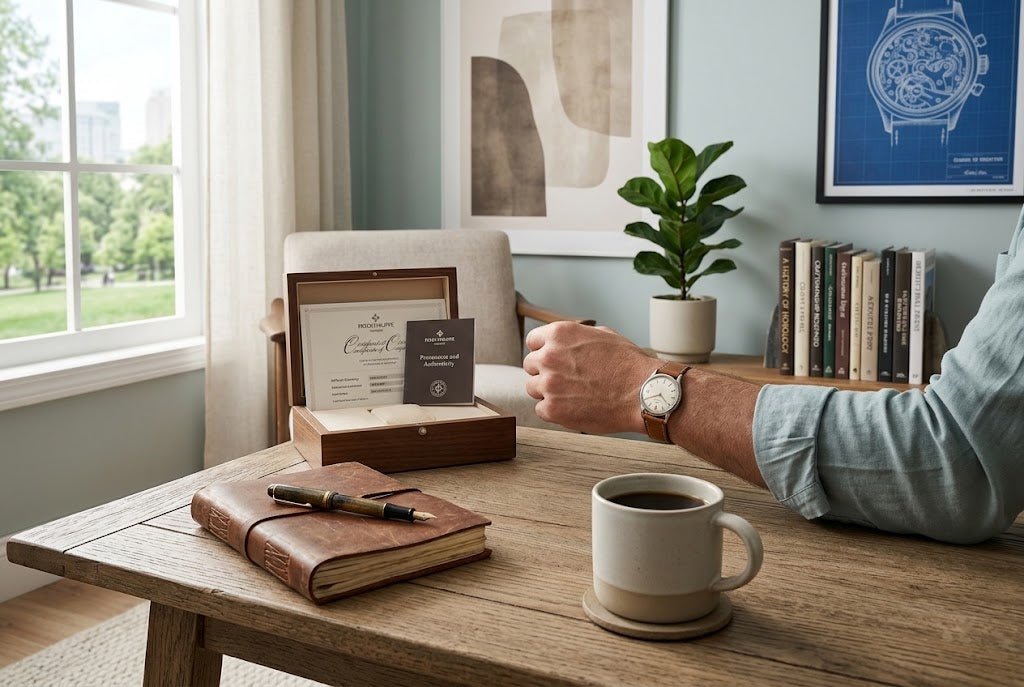
Official sourcing also helps preserve the details that make a watch feel complete. Original presentation boxes, instruction booklets, correctly stamped warranty cards, and model-specific straps are not mere extras. They are part of ownership, particularly when the watch is a gift or a collectible design piece. They can also affect resale value if you later want to recover some money. Some Rolex models resell for more than their original price, which is why complete documentation matters.
There is also a less obvious benefit: this is the level of accurate context buyers should expect from official channels. Authorized retailers are more likely to present the correct case dimensions, movement type, material specifications, water-resistance rating, and care guidance. Those details shape whether a watch works with your routine. A 42 mm statement case may be exactly right for one wearer and visually overwhelming for another. A leather strap may suit the office but not a humid summer commute. Good product information makes style more usable, and many luxury watches can last for decades with proper care.
Authenticity and quality control are only the starting point
A real watch is the baseline, but buyers usually want the full ownership experience too, including the quality and craftsmanship behind the piece.
Consider a design-forward watch with a distinctive case, unusual dial treatment, or limited colorway. Its appeal comes from more than timekeeping. Many luxury watch brands build that appeal through history as much as design. Some pieces also wear like jewelry or make a clear fashion statement. It is an expression of taste, a small piece of industrial design that follows you through meetings, travel days, gallery openings, and weekend coffee runs. If something goes wrong, you want support that recognizes the watch as the brand made it, not as a mystery item moving between resellers.
Official sourcing brings clarity to that experience. You know where the piece came from, which warranty applies, and who can help if the product needs attention. That confidence makes it easier to choose with intention instead of second-guessing every detail after checkout.
It matters for gift buyers, too. A watch is personal without being overly specific. It can mark a graduation, promotion, birthday, or creative milestone. Giving an officially sourced piece means giving something that arrives with its story intact, not a question mark disguised as a bargain.
How to assess a watch retailer before you buy
You do not need to turn every purchase into an investigation. A few signals reveal whether a retailer or company presenting itself as an authorized seller takes sourcing seriously.
First, look for direct language around authorization, official warranties, brand relationships, and retail status. Vague phrases such as "factory fresh" or "100% genuine" may sound reassuring, but they do not explain where the inventory comes from or whether the manufacturer will support it. That matters even more as the pre owned watch market grows at 12% annually and the pre-owned luxury watch market is projected to reach €79 billion by 2033.
Next, assess the selection. A thoughtful retailer will not necessarily carry every reference from every brand. In fact, a focused edit can be a positive sign, since it can make it easier to compare models within a given line. It suggests the assortment was built around design relevance, daily wearability, and a clear customer point of view rather than a race to list the most products.
Pay attention to product pages as well. Clear specifications, accurate imagery, expected contents, warranty information, and practical guidance show care. Claims about factory standards are more credible when production follows recognized systems such as ISO certification for quality management. A good retailer helps you understand the watch before it reaches your door, from the personality of its dial to the reality of its dimensions.
Finally, consider whether the retailer has a coherent point of view beyond price. That perspective should not be driven only by price, marketing, or sales volume. Watches make more sense when presented alongside the culture they belong to: bags built for city movement, cameras made for spontaneous documentation, and accessories that reward a sharper eye for everyday design. Bang On approaches watches this way, as wearable objects within a wider creative life.
Strong sourcing standards matter across the wider industry.
Warranty coverage: read the fine print, then wear the watch
A manufacturer warranty is one of the clearest advantages of official sourcing, but it is worth knowing what it does and does not cover. Most warranties address defects in materials or workmanship to the quality standards buyers expect from a watch made in Switzerland or similar premium piece, and that official support can continue to matter into the future. They typically do not cover accidental damage, normal strap wear, scratches from daily use, battery replacement, or water damage caused by using the watch beyond its stated rating. Only authorized service centers can provide genuine replacement parts for repairs.
That is not a reason to treat a warranty as less valuable. It is a reason to see it accurately. Warranty coverage is a safety net for product faults, while thoughtful care handles the rest.
Keep your proof of purchase and warranty documentation together. Follow the brand's guidance on water exposure, magnetic fields, and servicing, including using an approved watchmaker when the brand calls for it; the wider service system is under pressure, with the Swiss watch industry needing about 4,000 new trained watchmakers by 2026 while only 400-500 graduate annually, a gap that puts added focus on authorized networks and shows how traditional knowledge transfer is breaking. Demand for CNC finishing technicians is also rising sharply, up 54%, which makes official service access even more important. If your watch has a leather strap, give it a break after heavy perspiration or rain. If it is rated for swimming, confirm the crown is fully secured before getting in the water. Small habits preserve the function and finish that made you choose the watch in the first place.
The real value is confidence in your choice
A watch purchase is rarely just about telling time. Your phone can do that without leaving your pocket. You choose a watch because it changes the way an outfit resolves, adds character to a daily uniform, or offers a tactile pause in a screen-filled day.
That emotional value deserves a purchase path that feels equally considered. Official sourcing gives you a credible origin, meaningful warranty coverage, and the assurance that the watch you selected is the watch the brand intended to put into the world, protections that matter especially when buying luxury pieces from established names such as Rolex or Omega, and even more in fine watchmaking, where heritage and after-sales support shape long-term ownership.
Choose the design that catches your eye, but choose the source with equal care. Some watches fall naturally into different style categories or occasions, but official sourcing matters across them all. The same logic applies whether you are buying an entry piece, a luxury brand with broad recognition, or prestige purchases such as Patek Philippe, Audemars Piguet, Vacheron Constantin, and Grand Seiko, where icons like the Royal Oak and the demand that keeps most luxury watch brands competing for the top spot make official channels especially important. It is the one you can wear with confidence long after the first unboxing.
Share
Our Gaston Luga review looks at design, weather protection, comfort, and daily organization to help you choose the right bag for city life with clarity.