Guide to Buying Japanese Watches That Feel Personal
A great Japanese watch rarely needs to announce itself. It earns attention through proportion, a clean dial, a quietly capable movement, or a detail that makes you look twice. This guide to buying Japanese watches is for people who want more than a logo on the wrist - they want an object that works hard, looks considered, and fits their own rhythm.
Japanese watchmaking covers a broad visual and technical spectrum. One end is practical, precise, and built for daily abuse. The other is deeply refined, with small production details and finishing that reward a closer look. The right choice is less about chasing a single “best” watch and more about deciding how you want it to live with you.
Why Japanese Watches, Including Grand Seiko, Have Their Own Appeal
Japan has shaped modern watch culture from several directions at once. Its major brands made reliable quartz watches accessible, pushed solar power and radio-controlled timekeeping into everyday products, and developed mechanical pieces with serious enthusiast credibility. At the same time, independent and design-led labels have given Japanese watches a distinct visual language: disciplined, functional, and often more interesting the longer you wear them.
The value is not always about being inexpensive. Japanese watches can be affordable, but their real appeal is the way engineering and design tend to meet in the middle. A well-chosen piece can be exacting without feeling precious, expressive without becoming costume jewelry, and easy to wear without disappearing into the background.
That range does create one important distinction: a Japanese brand is not automatically the same thing as a watch made in Japan. Manufacturing may take place in Japan, elsewhere in Asia, or across multiple locations depending on the model. If country of manufacture matters to you, read the product specifications rather than assuming. A Japanese movement can be excellent regardless of where final assembly occurs, but transparency is part of buying well.
Start With the Movement You Will Actually Use
Movement choice changes the entire ownership experience. Before focusing on color or case shape, decide what kind of relationship you want with the watch. Seiko, founded in 1881 and maker of Japan’s first wristwatch, helped turn watchmaking into both engineering and art, while Casio’s 1983 G-SHOCK made durable everyday design a cool part of the category. Japanese watch culture tends to focus on useful design over unnecessary complications, which is why quartz, solar, and mechanical options all have real credibility. If you want to go a bit deeper, the movement caliber matters, and Orient has built its own in-house movements since 1901. Of course, if you hunt for JDM references, you may find designs and even unique movements not offered in global-market versions.
Quartz: precise, low-maintenance, ready every morning
Quartz is the natural choice for a daily watch that needs to be accurate and uncomplicated. A battery-powered quartz movement is typically slim, reliable, and far less demanding than a mechanical movement. It suits someone who rotates watches, travels frequently, or simply prefers putting one on without thinking about winding or setting it.
The trade-off is emotional rather than practical. Quartz lacks the visible mechanical theater some collectors love. But a great quartz watch can be exceptionally well designed, and its precision is hard to argue with. Do not mistake “quartz” for “basic.” In Japanese watchmaking, it often means purposeful.
Solar: the practical choice with less waste
Solar watches convert light into power stored in a rechargeable cell. They are ideal for people who want quartz accuracy but would rather not schedule battery changes every few years. Most modern solar watches charge from indoor light as well as sunlight, though brighter light charges them more efficiently; for example, the Casio G-SHOCK GW-5000U-1 uses Tough Solar.
Solar is especially compelling for an everyday watch, but it is not maintenance-free forever. Rechargeable cells age, and a watch left in a dark drawer for months may need time in the light. Still, for a one-watch collection, it is among the most useful formats available.
Mechanical: character, ritual, and a little imperfection
Mechanical watches run through springs, gears, and a balance wheel rather than electronics. Automatic versions wind themselves through wrist motion; hand-wound models ask you to participate. This is the choice for someone who enjoys the object as much as the timekeeping. An accessible example is the orient Bambino, with an in-house movement and a 40-hour reserve. Casio introduced G-SHOCK in 1983, and its reputation is tied to durability. For more autonomy, the seiko Baby Alpinist SPB155 offers a 70-hour power reserve.
Expect less accuracy than quartz and occasional servicing over the long term. That is not a flaw. It is the bargain you make for a moving machine on your wrist. If you want more to look at, pay attention to the caliber and whether there is an exhibition caseback. If a few seconds gained or lost per day will annoy you, choose quartz. If the ritual appeals to you, mechanical may feel more personal every year, and Spring Drive adds to that appeal by letting the second hand glide smoothly across the dial.
Digital and multifunction: utility with a graphic edge
Japanese digital watches remain icons because they solve real problems. Alarms, timers, multiple time zones, backlighting, and serious shock or water resistance can make them better companions for travel, training, and creative workdays than a more formal analog piece. The Casio AE1200 is a cheap entry point at around $30, with prices that make it easy to try the category without overthinking it.
Their appeal is also visual. A crisp digital display, squared case, or resin strap can bring a deliberate technical contrast to a tailored jacket, loose denim, or an all-black everyday uniform. The key is to choose one that feels intentional, not merely nostalgic.
A Guide to Buying Japanese and Vintage Watches by Style
A watch should complement your existing wardrobe rather than compete with it. Start with the clothes and objects you reach for most: your bag, glasses, camera, shoes, and outerwear often reveal more than trend reports do.
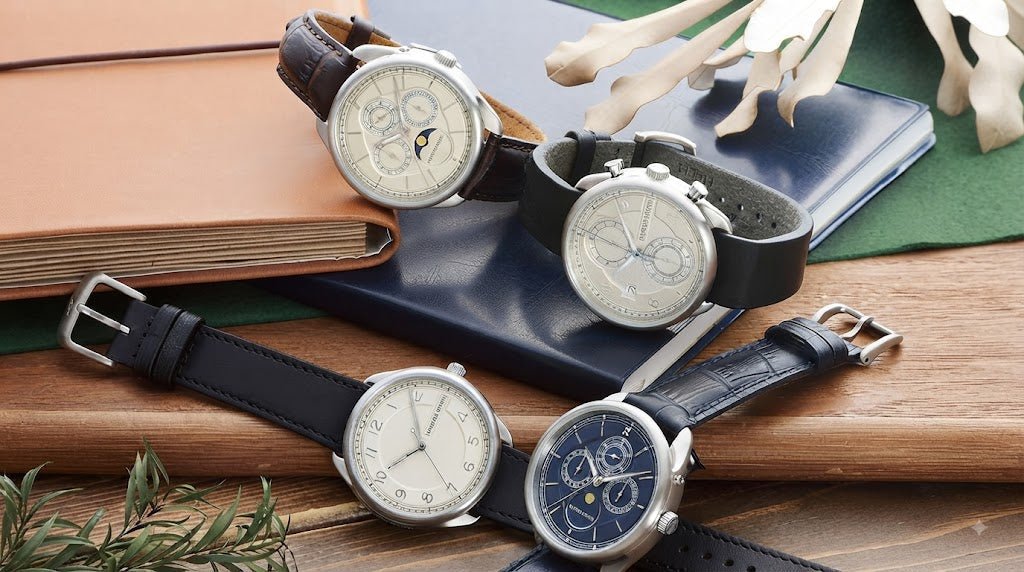
For a clean, architectural look, consider a simple three-hand watch with a restrained dial, slim indices, and a brushed steel case. At the higher end, Grand Seiko shows how Japanese watchmaking can deliver luxury through high-end craftsmanship and innovation. Grand Seiko dials often take inspiration from natural phenomena such as snow and birch trees, which gives otherwise restrained timepieces an elegant sense of depth. This is where design-led Japanese pieces shine. Brands such as Master Works and JPN offer a more editorial take on the category, suited to someone who sees a watch as part of a larger personal aesthetic.
If your style is more utilitarian, a field-inspired, dive-inspired, or digital watch will make more sense. Look for clear markers, durable materials, and functions like world time, plus a strap that can take daily wear. Just be honest about your use. A dive-style watch can look great at a desk, but if you swim regularly, check the stated water resistance rather than trusting the silhouette. The Casio AE1200 is a strong bang-for-the-buck pick at accessible price points.
For a dressier setting, avoid assuming smaller always means more formal. A 38 mm watch with a strong case profile may wear bolder than a flat 40 mm model. Dial finish, lug length, strap choice, and case thickness matter as much as diameter.
Fit Is the Detail Most Buyers Miss
A watch can be beautifully made and still feel wrong if it overwhelms your wrist. Case diameter is a useful starting point, but lug-to-lug measurement is often more revealing. That is the vertical distance from the tip of one lug to the other. If the lugs extend beyond the edges of your wrist, the watch will likely wear too large.
For many people, 36 mm to 40 mm is a versatile range, and that size works well on most wrists, though there are no fixed rules. The majority of buyers also lean toward smaller, practical watches for daily wear. A compact square digital watch may wear larger than its numbers suggest, while a 42 mm dive watch can look balanced because its bezel reduces the visible dial area. Product photos can distort scale, so compare measurements with a watch you already own. When checking stated water resistance, a practical example is the citizen Promaster Diver, which is rated to 200m for buyers who actually swim or dive.
Thickness deserves equal attention. A thin watch slides easily under a cuff and feels lighter during long workdays. A thicker model may deliver more presence, greater water resistance, or an automatic movement, but it can feel top-heavy on a smaller wrist. It depends on whether you want your watch to recede or make a visual statement.
Materials, Sapphire Crystal, Straps, and Everyday Wear
Stainless steel is the dependable default: durable, versatile, and easy to dress up or down. Titanium is lighter and often more comfortable for all-day wear, though its darker tone and lighter weight may not satisfy someone who wants the dense feel of steel. Resin is excellent for sport and daily impact resistance. Leather brings warmth and texture, but it dislikes sweat, water, and humid summers.
A bracelet gives a watch a more finished, urban feel, while a fabric or rubber strap makes it more casual and adaptable. If you are buying your first Japanese watch, a steel bracelet is usually the most flexible option. For many people, 36 mm to 40 mm is a versatile range. The majority of Japanese buyers tend to prefer smaller, practical designs, which is one reason this range suits most wrists and aligns with a broader preference for function over unnecessary complications. You can always add another strap later, but a matching bracelet is harder and more expensive to source after the fact.
Water resistance is often misunderstood. “Water resistant” without a meaningful rating should not be treated as swim-ready. A 50-meter rating is generally fine for hand washing and surface exposure, while 100 meters or more is the more confident choice for swimming; the Citizen Promaster Diver also makes sense here, especially since the Promaster line was introduced in 1985 for divers. Water resistance also depends on gaskets remaining intact, so it should be checked periodically if the watch sees frequent water.
Buy for Authenticity, Not Just a Good Price
A watch with a suspiciously low price can become an expensive distraction. Gray-market inventory may be genuine, but it can come with unclear warranty coverage, missing documentation, altered accessories, or no manufacturer support. Counterfeits are another risk, especially with highly recognizable models. Prices for used watches in Japan are generally fair if you do your research, inspect carefully, and check current stock.
Buy from an authorized retailer when official warranty coverage and direct sourcing matter to you. Keep the receipt, warranty card, and original packaging. These details support service requests and help preserve resale appeal if your tastes change later. If you are planning a trip to Tokyo to shop, the city has diverse watch shops for watch collectors and rewards careful comparison and in-person inspection, including destinations like Nakano Broadway where you can compare everything from vintage timepieces to modern references from Omega or Patek Philippe. Shellman in Ginza is one well-known watch shop for vintage watches. The vast majority of prices are clearly labeled, but the majority of better buys still go to shoppers who slow down, compare condition, and ask what has already been sold. Many Japanese watch shops have limited English signage or information online, so check each store website before you go. In many cases, cash is still preferred when you pay at a Japanese watch shop.
At Bang On, the approach is intentionally selective: choose the piece because its design and purpose are right, not because an endless catalog made the decision harder. That same focus helps if you are comparing different price points or deciding whether to spend more for details like finishing, a stronger caliber, or an exhibition caseback. A watch is a small daily object, but it carries a surprising amount of visual weight, and gold-tone accents or plating can shift it from purely utilitarian to more overtly dressy.
Give yourself permission to choose the one that makes you want to check the time. The best Japanese watch is not necessarily the most technical or collectible, though many enthusiasts are just as interested in the little things, from a box crystal to the last bit of movement refinement. It is the one you keep reaching for as you head out the door.
Waterproof backpacks for travel protect cameras, clothing, and creative gear from wet commutes and sudden downpours. Choose materials, details, and fit.
Rolex Hong Kong buying requires more than a recognizable name. Learn how availability, provenance, pricing, and personal style shape a smart choice with care.