Artículo: Camera Bags That Keep Up With Your Creative Day
Camera Bags That Keep Up With Your Creative Day
Your camera is most useful when it is with you. That sounds obvious, but a camera that stays on a shelf because its case is bulky, awkward, or visually out of place is not getting much life. The best camera bags that keep up with your creative day make carrying gear feel natural and seamless: they protect your camera, stay comfortable across long hours, give you quick access when a moment appears, and let you bring only what you need without bulk.
For urban creatives and photographers, a camera bag is not only protective equipment. It is part of the daily uniform. It has to respect your gear, work with how you move, and look intentional without turning every outing into a full expedition. This guide looks at the main options—crossbody bags, shoulder bags, backpacks, and inserts—along with how to choose the right size, balance protection with weight distribution, organize for faster access, and decide when weather resistance and style matter most. The right bag shapes how often you actually carry your camera, how comfortable you feel doing it, and how ready you are to catch more of the moments that make up your creative life.
Start With How You Actually Shoot
The right choice begins with an honest look at how you actually shoot, not a long list of features. The right camera bag for daily use depends on that reality. A compact instant camera has different needs than a mirrorless setup with two lenses. A photographer who walks all day needs a different carry solution than someone driving to a weekend shoot.
If your camera is primarily for spontaneous frames, travel memories, and social occasions, keep the bag compact for a compact size that is easier to bring along. Extra space can seem useful at checkout, but an oversized bag often becomes a reason to leave the camera behind. A close-fitting crossbody or slim shoulder bag can hold the essentials without becoming a separate piece of luggage.
For a mirrorless or DSLR camera, think beyond the body itself and buy around your specific gear. Factor in the lens you use most, one backup battery, a memory card case, a cleaning cloth, and perhaps a small charger. That is usually the real everyday kit. Buying for an imagined future setup can leave you with a bag that feels empty, cumbersome, and overbuilt for your current creative routine.
Travel is the exception. When you need room for a second lens, travel documents, a water bottle, and a light layer, a backpack with a dedicated camera compartment earns its place. Different bags make sense for different days. The goal is not to carry everything you own. It is to carry the pieces that make the day easier.
Camera Bags Come in Different Roles
No single format wins in every situation. The strongest choice is the one that matches your camera, your pace, and the way you prefer to access your gear.
Crossbody bags for quick access and everyday use
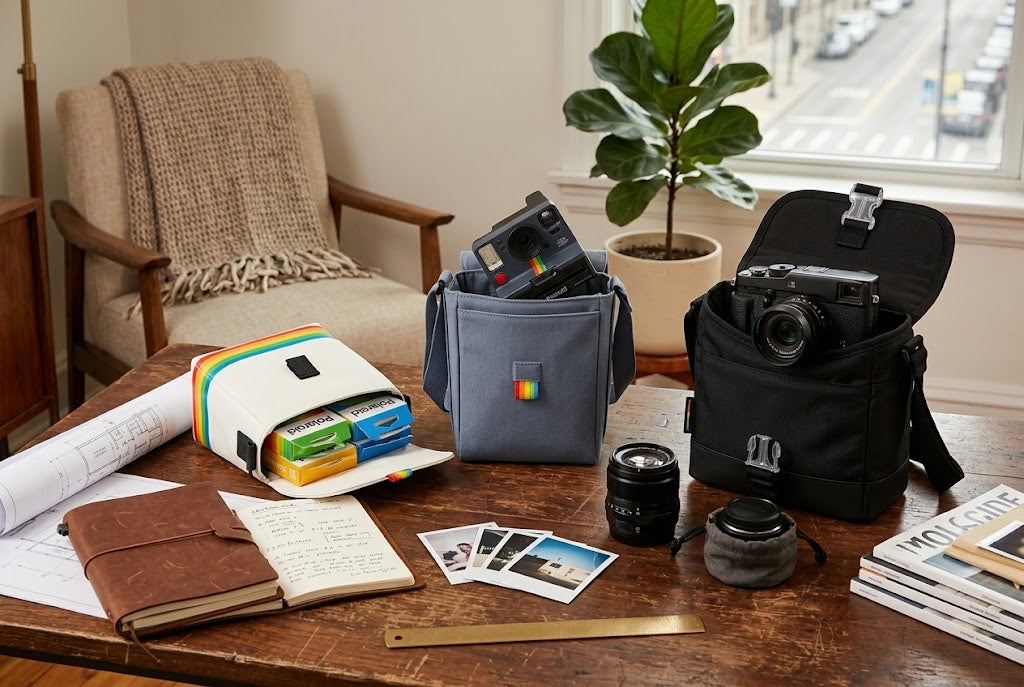
A crossbody bag, or sling, is made for movement. It sits close to the body so the bag stays secure while you walk or shoot, keeps a compact camera within reach, and gives you fast access with the speed that suits quick everyday shooting. Sling bags offer quick access for street photography, and sling-rotation designs can let you reach your gear in about 5 to 10 seconds without removing the bag, while still working well with casual city dressing. This format is especially good for instant cameras and smaller digital cameras because you can open the bag, take the shot, and keep walking without breaking the rhythm of the day, which matters when capturing moments.
Look for an adjustable strap and a shape that rests comfortably against your side. A slim profile also helps with street photography or moving through crowded city streets. A bag can look minimal and still need enough depth to prevent the camera from pressing against the zipper or losing protection at the corners. Just keep in mind that extended wear on one shoulder can lead to shoulder pain, so this format is best for lighter kits or shorter sessions.
Shoulder bags for a more considered kit
Some photographers prefer carrying a bag on one shoulder for a more flexible everyday setup. They can hold a camera body, lens, accessories, and personal essentials while keeping everything accessible from the front, making this a go to choice when you want a little more than a minimal kit without using a backpack.
The trade offs show up in the way the load sits on one side. A shoulder bag loaded with gear can become tiring over a long day, so be practical about capacity, choose this format when quick access matters most, and keep the kit disciplined rather than filling every available pocket.
Backpacks for longer days and heavier gear
A camera backpack distributes weight more evenly, with better weight distribution when heavier items sit close to your back, and gives you room for a fuller setup so you can carry your gear comfortably over long distances or through a full day. It suits airport days, gallery visits, outdoor shoots, and commutes where your laptop and camera need to travel together.
A good backpack should not feel like technical equipment first and personal style second, though on larger packs a waist belt can be useful for heavier setups. Clean lines, considered materials, and a structured silhouette can make it fit naturally into a workday or weekend plan. Practicality does not have to announce itself.
Inserts for people who already have a favorite bag
A padded camera insert is the quiet solution for turning a regular backpack or favorite tote into a camera-ready carry option. It creates a protected section inside a larger bag and offers flexibility when the same carry piece needs to move between work, travel, and photography, helping a single bag cover more uses instead of buying a separate pack for each one.
The compromise is access. An insert is often slower to reach than a dedicated camera bag, and it may shift if the outer bag is too loose. Still, for light kits and style-led everyday carry, it can be exactly enough.

Protection and Weight Distribution Is More Than Thick Padding
Padding matters, but it is only one part of protection. The better question is whether the inside of the bag keeps your camera from moving around and keeps your equipment safe. A lightly padded compartment that fits your gear closely can be safer than a heavily padded space where the camera slides from side to side.
Look for a soft interior that will not scratch the camera finish or lens, along with adjustable dividers to suit your equipment. Your camera should feel held in place, with room for multiple lenses if that is part of your setup, not squeezed. If dividers are too rigid or the compartment is overly narrow, getting the camera in and out becomes a small frustration you will notice every time.
Weather resistance also deserves a realistic reading. A water-resistant exterior can handle a sudden drizzle and the occasional wet sidewalk. It does not necessarily mean the bag is built for hours in heavy rain. If you regularly shoot outdoors in rough conditions, prioritize protected zippers, weather resistant materials, and a construction that keeps water from pooling around seams in light rain.
Do not overlook the closure. A zipper should open smoothly with one hand and feel secure when closed. Magnetic flaps are elegant and fast for light use, but they are not always the best match for crowded transit or a bag carrying expensive gear, where quality construction helps keep gear safe. This is where your environment matters as much as your aesthetic preference, especially if you want a tough build.
Access Changes What You Capture
A camera bag can be beautifully designed and still be wrong if it slows you down or hurts access speed. The moments worth photographing rarely wait while you unclip several buckles, move loose accessories, and search for a lens cap.
Think about where the opening sits when you wear the bag. Front or side access works well for a crossbody or a sling bag and lets you keep the bag close in busy areas. For street photographers, that kind of fast, unobtrusive access can matter just as much as comfort. A top-opening backpack is simple and secure, although it requires you to set the bag down. Rear access provides added security and keeps the harness side clean, but it can be less convenient when you need to move quickly.
Small organization details matter here. Dedicated pockets for batteries, film packs, memory cards, and cables stop the inside from becoming a tangle of small objects, and a good bag keeps those small tools in place without interrupting the shoot. Just do not confuse more pockets with better organization. The best interiors make sense at a glance.
Choose the Right Camera Bag Size You Will Want to Carry
The most common mistake with camera bags is choosing too much capacity. Bigger can feel safer, especially if you are investing in a bag meant to last. Yet a large bag brings extra weight, a broader silhouette, and an invitation to overpack. Often, the best camera bag is not the biggest one, but the one you will actually carry comfortably through the day.
Before choosing, lay out the items you carry on a normal photo day. Include the camera, your preferred lens or film, power, personal items, and any work essentials. Then choose a bag that accommodates that set with a little room to spare, making sure it has room for your setup without excess bulk. The camera should be protected, but the bag should still feel easy under an arm, on a train, or beside a chair.
Some professional photographers may need more room, but most daily setups benefit from restraint.
This approach also helps you avoid treating every outing like a production. A smaller kit often encourages more photography because the barrier to bringing it along disappears.
Style Should Not Be an Afterthought
Your bag will be visible long before anyone sees the images you take. That does not mean it needs to be loud. A considered color, matte finish, refined hardware, or clean shape can say more than oversized logos and tactical detailing.
Neutral shades are versatile, particularly if the bag moves between office commutes and weekend plans. Black, charcoal, olive, and deep navy tend to age well and pair easily with most wardrobes. A brighter accent can be a strong choice for someone who sees their camera as part of a more expressive look. The right answer depends on whether you want the bag to blend in or become part of the visual statement.
At Bang On, the strongest everyday pieces are chosen with that balance in mind: useful enough for real movement, distinctive enough to feel personal. A camera bag should support the way you shoot, not ask you to dress or travel differently for its sake.
Give yourself permission to choose the bag that makes you reach for your camera more often. Protection is essential, but the real value is a carry piece that turns an ordinary walk, commute, or weekend plan into another chance to make an image.
Share
Our Gaston Luga review looks at design, weather protection, comfort, and daily organization to help you choose the right bag for city life with clarity.