Polaroid Film Versus Kodak Prints: Which Fits?
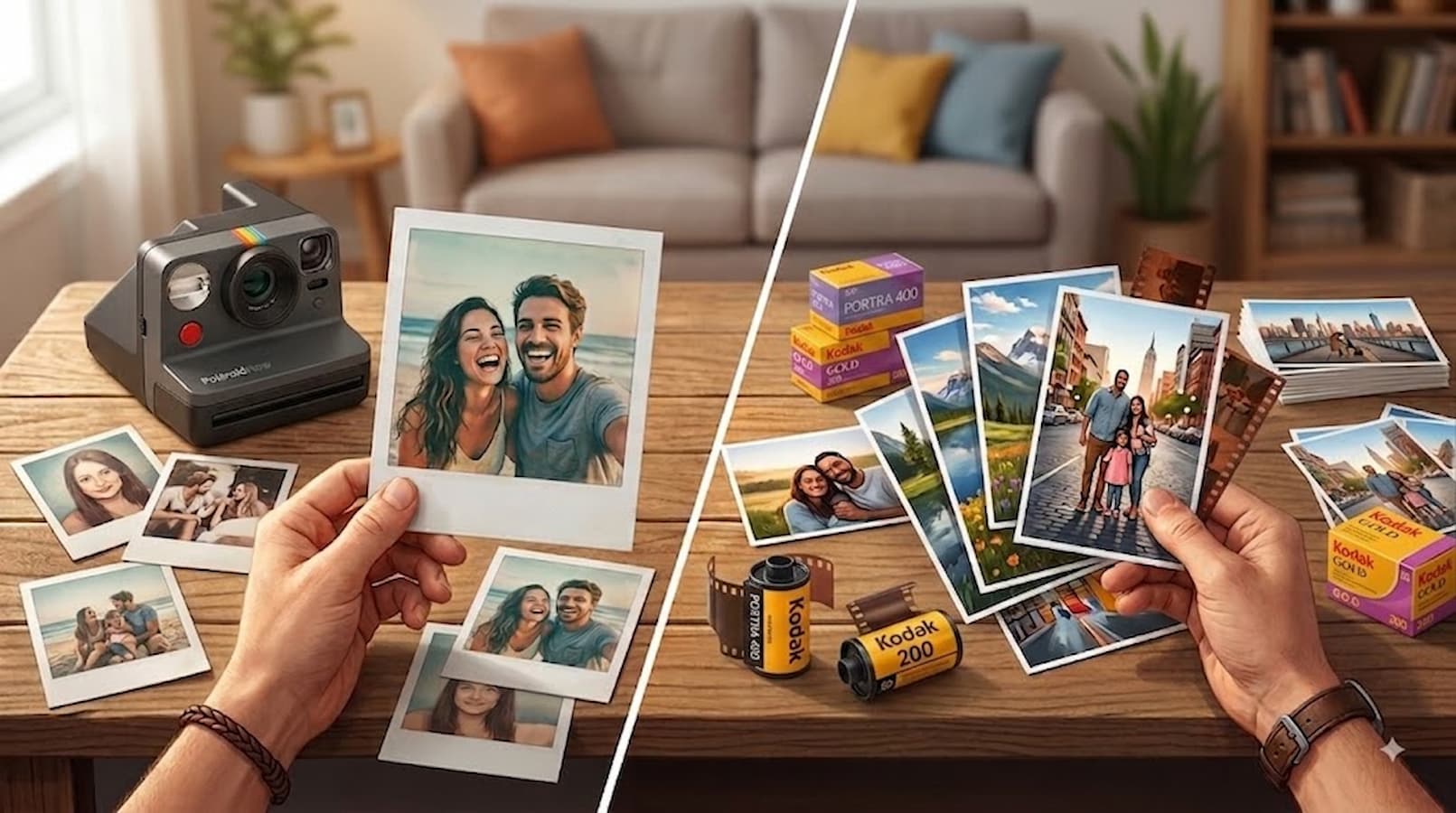
A photo on your phone can be copied, edited, posted, and forgotten before lunch. An instant print has a different job. It becomes a note on a fridge, a page in a journal, or proof that a night actually happened. When you ask polaroid film versus kodak prints which fits, the short answer is this: Polaroid film suits people who want an analog, one-of-a-kind photo with character and unpredictability, while Kodak prints fit those who want cleaner color, more consistent results, and easier everyday convenience. You are choosing the object your memory will become.
Polaroid leans into analog character and the theater of a developing image. Kodak gives you several print technologies designed for sharper, faster, often more controlled results. Neither is automatically better. For urban creatives, design-minded shoppers, and instant photography fans weighing style as much as function, the better fit depends on how you shoot, how you share, and what you want the print to feel like in your hand. This comparison looks at print technology, image character, format options, convenience, creative use, and cost, so you can match each option to different photography styles, occasions, and ways of keeping a moment.
Polaroid Film Versus Kodak Prints: The Core Difference in Instant Photography
Polaroid film is a true instant-film experience. You take the picture, the camera ejects a print, and the image develops over the next several minutes. The chemistry, light, temperature, and camera all leave a subtle fingerprint on the final photo. Colors may shift. Highlights may bloom. A frame may come out beautifully imperfect. That unpredictability is not a flaw for Polaroid fans. It is the point.
Kodak prints are less singular because Kodak instant cameras and portable printers use different systems. Some products use ZINK, or Zero Ink, paper, which creates a small adhesive-backed print through heat. Others use Kodak 4PASS technology, which layers color and applies a protective finish for a more traditional photo-print look. The experience is still immediate, but it is generally more repeatable and less dependent on the conditions around you.
So the first distinction is simple. Polaroid makes a photograph that records the mood of the moment. Kodak often makes a print that prioritizes clarity, color consistency, and convenience.
The Polaroid Look Is Part of the Photograph with Polaroid Cameras
A Polaroid image is recognizable before you notice the subject. The square format, generous white border, softened detail, and occasionally dreamy color carry their own visual language. It is a format with history, but it does not feel stuck in the past. For a dinner party, road trip, backstage portrait, or everyday scene with good light, that look can turn an ordinary frame into a keepsake.
Polaroid film rewards a slower approach. You think about composition before pressing the shutter because each exposure costs something and cannot be endlessly retaken. Afterward, you shield the print from strong light while it develops and let the image arrive at its own pace. It is a small ritual, especially satisfying in a culture built around instant review and constant deletion.
There are trade-offs. Polaroid film is sensitive to temperature and light. It performs best when stored properly, used before its expiration date, and handled with care. Detail can be softer than a digital image, and indoor shots often demand an understanding of flash, distance, and available light. If you need every print to look clean and technically precise, Polaroid can feel demanding.
But if you want character that cannot be recreated by a filter, its limitations become creative direction. The occasional surprise is part of the ownership experience.
Format and Film Type Matter as Much as Color
Polaroid offers more than one film size, and that choice changes the feel of the final piece, especially when you compare its larger prints with Instax Mini. The classic square format gives portraits and group shots room to breathe. Smaller formats are easier to carry, trade, and tuck into a wallet or notebook. A larger print has more presence on a desk or gallery wall; a mini print feels more casual and collectible.
Fujifilm Instax film is a separate film type and is not compatible with Polaroid cameras.
The best format is often determined by what happens after the photo develops. A travel journal calls for something compact. A guestbook, studio wall, or gift may deserve the larger visual impact of a classic Polaroid frame.
Kodak Prints Favor Control and Convenience with Kodak Instant Cameras
Kodak's instant-print ecosystem suits people who want physical photos without giving up the confidence of digital capture. Depending on the device, you may be able to review an image, choose a favorite, apply a simple edit, then print only the version worth keeping. That is a major advantage for parties, family events, and travel, where poor lighting and fast-moving subjects can make one-shot photography feel risky.
ZINK prints are typically small, portable, and made for spontaneous sharing. Their peel-and-stick backing makes them useful for scrapbooks, planners, lockers, and personal packaging. The finish is more graphic than gallery-like, which works well for visual notes and playful everyday documentation.
Kodak 4PASS prints are the stronger fit when image quality is the priority. They tend to deliver more defined detail, richer color, and a finish built to resist fingerprints and splashes. If you are printing portraits from your phone, assembling an album, or making quick gifts that should look refined, 4PASS has a clear appeal.
The trade-off is emotional rather than technical. A Kodak print can be more dependable, but it may not carry the same sense of chance. You are often selecting a finished image from a screen, rather than committing to a frame before you know exactly what it will become.
Do not treat all Kodak prints as the same
This is the detail that makes shopping easier. Kodak is not one print experience. Before choosing a camera or printer, look at the output technology and the print size, not just the brand name.
A compact ZINK printer is ideal when you want adhesive mini prints and maximum portability. A 4PASS printer is better when you want a more photo-forward result, particularly for portraits and prints you plan to save. Among Kodak instant camera models, the Kodak Mini Shot 3 Retro is a clear example, with a retro-inspired design and modern features, and Kodak cameras are generally lightweight and designed for simplicity, so you still get the immediacy of a dedicated camera with more control than traditional analog film.
If you are comparing print cost, factor in what comes in each paper pack and how often you genuinely print. For a concrete benchmark, Kodak Mini Shot 3 Retro film costs around $20 for 60 prints. The lowest per-print price is not always the best value if the format does not suit your habits. A small sticker print that goes into your journal can be more valuable than a higher-resolution print that stays in its box.
Choose by the Moment You Want to Create
Polaroid is for the person who wants photography to interrupt the moment in a good way. It invites people to gather around a developing image. It gives a host an easy party ritual and gives a creative a physical reference board full of original, imperfect frames. It is especially strong when the camera itself is part of the style statement, since some polaroid cameras pair sleek lines or customizable shells with that tactile feel, and the Polaroid Now+ Gen 2 blends vintage style with modern technology. For a smaller, simpler entry point, the polaroid go offers a compact, affordable take on the format that simplifies the classic experience, with film at about $1.31 per shot.
Kodak is for the person who wants the freedom to print more often, with less uncertainty. Kodak cameras are lightweight, designed for simplicity, and better suited to budget-friendly casual shooting. It fits a trip where you want to send friends home with photos, a family gathering where retakes matter, or a desk setup where a compact printer can turn camera-roll favorites into tangible objects. It also makes sense for gift buyers who know the recipient loves photos but may not want the learning curve of analog film. For day-to-day convenience, Kodak models often use standard AA batteries, while the Polaroid Now+ uses a built-in rechargeable battery; it also adds creative features through a smartphone app, though Polaroid models often demand more battery power overall.
There is room for both in a considered camera collection. A Polaroid camera can be your weekend object - the one you bring when atmosphere matters. A Kodak printer can be your everyday tool - the one that helps your best digital images leave the screen. Bang On's edit of instant cameras, film, and print accessories is built around that kind of intentional choice: distinct tools for distinct creative habits.
The Cost Question Is Really a Creative Question
It is sensible to compare the ongoing cost of film and paper, but do not stop there. As a practical guide to print costs, Polaroid 600 film costs $2.02 per shot, Instax Mini film costs about $0.80 per shot, and Kodak Gold half frame film costs $0.36 per shot. Each Polaroid exposure asks for commitment. That can make you shoot less, yet value each print more. Kodak paper often makes it easier to print freely, especially when you are working from an existing camera roll or can review the shot before printing.
Think about your likely output. If you want ten meaningful frames from a vacation, Polaroid may feel worth every exposure. If you want fifty small prints for a scrapbook, party table, or collaborative wall, Kodak's convenience may better support the project. The camera that gets used is always a better purchase than the camera with the most impressive specification sheet.
Let the Print Match Your Personality
Choose Polaroid film when you want texture, anticipation, and a photo that feels inseparable from the day it was taken. Choose Kodak prints when you want flexibility, repeatable quality, and an easier path from digital image to physical keepsake.
The most satisfying instant-photo setup is not the one that wins every category. It is the one that makes you reach for it on the way out the door - then gives the people around you something real to take home.
This urban everyday carry guide helps city creatives choose a refined watch, weather-ready bag, camera, and daily essentials that earn their space daily.