How to Choose Instant Film for Your Camera
A pack of instant film is not just a refill. To choose instant film for your camera, start with one non-negotiable: buy film made for your exact camera system, because instant film is not universal. From there, pick the format—mini, square, or wide—and then choose color or black-and-white film based on how you shoot and the look you want.
For urban creatives and design-minded instant camera users, that choice shapes more than convenience. It affects image size, tone, compatibility, and the final quality of your photos, while helping you avoid the expensive mistake of buying film your camera cannot use. This guide walks through matching film to camera models, choosing a format for different occasions, deciding between color and monochrome, and factoring in how often you shoot and how to handle film properly.
How to Choose Instant Film Starts With Your Film Camera
Instant film is not universal. A Polaroid camera cannot use Fujifilm Instax film, and an Instax camera cannot use Polaroid film. Even within one brand, different camera generations require different packs. The cleanest-looking film box is still the wrong choice if it does not match the camera in your bag.
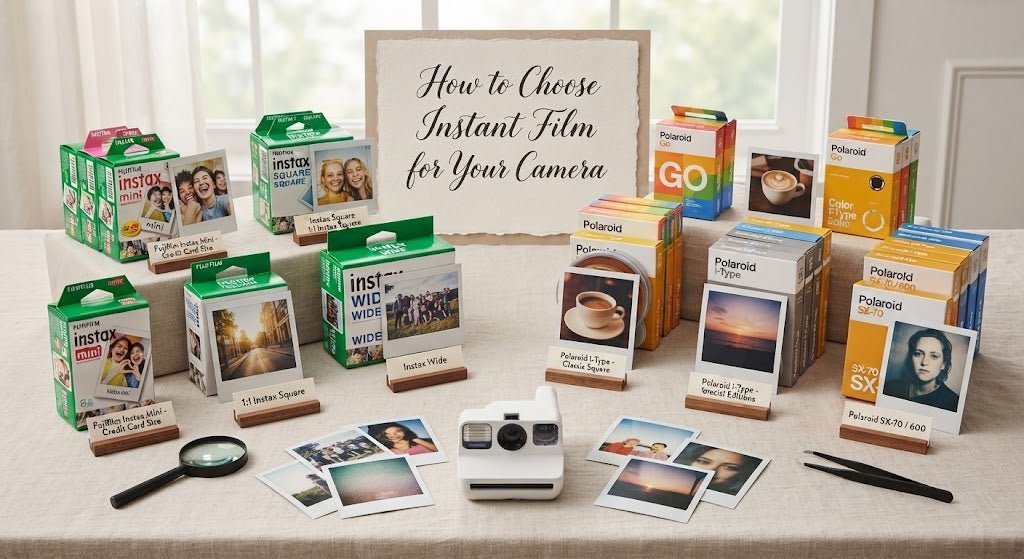
For Polaroid cameras, the most common options depend on which film camera system you use: i-Type, 600, SX-70, and Polaroid Go film. Modern Polaroid cameras such as the Now and I-2 are designed for i-Type film. This film has no built-in battery because those newer cameras have rechargeable power. It is often the more considered choice for regular shooting because you are not paying for a battery your camera does not need.
Polaroid 600 film includes a battery in every film cartridge. It is essential for classic 600 cameras, which draw power from the film pack. It can also work in many newer compatible Polaroid cameras, but i-Type is usually the better-value option when available. SX-70 film is made for vintage SX-70 cameras and has a lower sensitivity suited to their exposure system. Polaroid Go film is exclusive to the compact Polaroid Go format.
Fujifilm Instax follows a similarly specific system: Instax mini, Instax SQUARE, and Instax WIDE. Unlike medium format or large format formats that use roll film, instant systems require their own dedicated packs. Their names make the choice more intuitive. Mini is compact and wallet-friendly. SQUARE offers a balanced, graphic frame. WIDE gives portraits, group shots, and travel scenes more breathing room.
Before choosing a film pack, check the model name printed on your camera or inside its film door. This takes seconds and avoids the most frustrating kind of creative purchase: the one that cannot be loaded.
Choose a Format That Fits the Moment
Film format changes more than print size. It changes how you compose, and different films also change handling and the way a scene feels in the frame. Small Instax mini prints feel casual, quick, and social. They work naturally for party snapshots, photo walls, place cards, and everyday visual diaries. Their small scale encourages close framing and direct moments.
Instax SQUARE and traditional Polaroid formats create more presence. The near-square image asks you to slow down and consider balance, negative space, and the relationship between your subject and the frame. It is a strong format for portraits, architecture, street scenes, and the kind of image you might pin above your desk.
Instax WIDE is the choice when the scene is the story. Think friends across a dinner table, an open road, a skyline, or a landscape that loses its impact when cropped tightly. For example, it makes more sense than mini film when you want one frame to hold a group at a restaurant without squeezing everyone too close. It is less pocketable than mini film, but it rewards a wider point of view.
If you are choosing film as a gift, format matters just as much as camera compatibility. A person who wants an easy party camera will likely enjoy mini film. Someone who treats photography as part of their creative practice may appreciate a larger square or wide print with more room for composition.
Decide on Color, Black and White, or a Special Frame
Colour film is the everyday default and usually gives more vibrant pictures, while black-and-white creates a more dramatic look; the right choice also shapes saturation, warmth, mood, and the final image. Colour packs suit travel, celebrations, fashion, food, and bright daylight. With Polaroid, expect a recognizable analog character: soft contrast, gentle unpredictability, and colour that can shift with light and temperature. Fujifilm Instax is known for vibrant, consistent image quality. Polaroid generally has a softer, more artistic aesthetic than Fujifilm. Instant colour film also behaves differently from color negative or slide film, so the look is part of the format as much as the scene. That imperfection is part of the appeal, not a defect to correct.
Both Polaroid and Fujifilm offer color and monochrome film options. Black-and-white film changes the energy of an image. Black and white films remain popular because they deliver timeless, versatile results. It can simplify a busy city scene, make a portrait feel more intentional, or turn an ordinary rainy afternoon into something worth keeping. Choose it when shape, light, texture, and expression matter more than the exact color of the moment. Tri X is often chosen for more contrast, while Pan F is known for fine grain.
Frame color is a smaller decision with a surprisingly visible effect. Classic white frames keep the focus on the image and work with almost anything. Black frames can make the image feel sharper or show more contrast. Color frames, patterned editions, and limited releases add personality before the shutter even clicks. They are especially good for events, scrapbooks, and gifts, where the border becomes part of the memory.
Special-edition film is worth buying for a purpose, not just because it is limited. Use it when the frame supports the occasion: a birthday, a trip, a creative project, or a series of portraits. For everyday shooting, standard film gives you more flexibility and makes it easier to build a cohesive collection of prints.
Think About How Often You Actually Shoot
Instant photography is tactile, but it is not free-form digital photography. Every exposure has a cost, so the right pack also depends on your shooting rhythm. If you shoot often, compare cost per image, since most photographers who shoot regularly benefit from checking pack pricing before they start shooting, and choose the standard film format your camera uses. Larger multipacks can make sense when you know you will use them, especially before a vacation, party, or creative weekend.
If you only bring out your camera for meaningful occasions, buy a fresh pack closer to the date you plan to use it. Film has an expiration date, and its best results come from sensible storage. Keep unopened packs cool, dry, and away from direct sunlight. If you refrigerate film, let it return to room temperature before loading it into the camera.
Do not stockpile film simply because it looks good on a shelf. Film is made to help you start shooting. Buy enough to capture the season ahead, then let the next pack reflect what you want to photograph next.
Match Film to the Light You Expect
Most instant film is designed for daylight and flash photography, but film speed still affects how it handles daylight, low light, and motion. Box speed is simply the film’s rated sensitivity. Bright outdoor light can create crisp, lively results. Low light introduces more atmosphere, but it also asks more from the camera and from your technique, especially when you need fast shutter speeds or are shooting night photography. A little patience goes a long way.
With Polaroid film, protect the print from strong light as it develops, particularly in the first moments after it exits the camera. Slide it into a pocket or under the camera's film shield rather than shaking it. Let it develop flat. Cold weather can slow development and shift colors, so keep both camera and film close to your body when shooting outside in winter. Tungsten light and other mixed indoor light sources can also shift colour in instant photos.
Instax film generally develops faster and is often more immediately predictable, which makes it a natural fit for social settings. Polaroid can feel more experimental and expressive, especially for photographers who enjoy the material character of analog images. Neither is automatically better. It depends on whether you want dependable instant souvenirs or a more interpretive, one-of-one result.
Avoid the Common Compatibility Mistakes
The most frequent error is confusing a camera brand with a film type: brand names are not the same as specific film brands or film sizes. “Polaroid film” is not a single universal product, and “Instax film” still needs a size designation. The second is buying 600 film for a camera that uses SX-70, or assuming Polaroid Go film fits a full-size Polaroid camera. It does not.
A third point is worth clarifying for shoppers comparing instant cameras with compact digital models: not every camera that prints a photo uses traditional instant film. In some cases, the only difference in naming between similar products still does not make them cross-compatible. Some cameras and printers use dye-sublimation paper, and many hybrid cameras use special Zink (Zero Ink) sticker paper instead. Older analog cameras may also appeal to photographers who want manual control. Those systems can be great for convenience, but they create a different object and a different shooting experience. If you want the chemistry, border, and analog surprise of instant photography, choose true instant film made for your camera, and check the exact model first, especially with vintage Polaroid cameras.
Build a Film Habit, Not a Perfect Shot
The best pack is the one that makes you bring the camera along. Some film shooters may also enjoy black and white films once they know their preferred look. Start with standard color film, such as kodak gold for everyday use, in the correct format, then add black and white or special frames once you know how you like to shoot. Keep one pack ready for ordinary days, because ordinary days are often where the images with real staying power happen.
Bang On's approach to instant photography is simple: choose the format that suits your camera, then choose the look that feels like you. A print does not need to be technically flawless to earn a place on your wall, in your wallet, or inside a well-worn journal.
Instant photography trends 2026 favor tactile prints, thoughtful color, compact cameras, and creative keepsakes made for sharing beyond the daily screen.