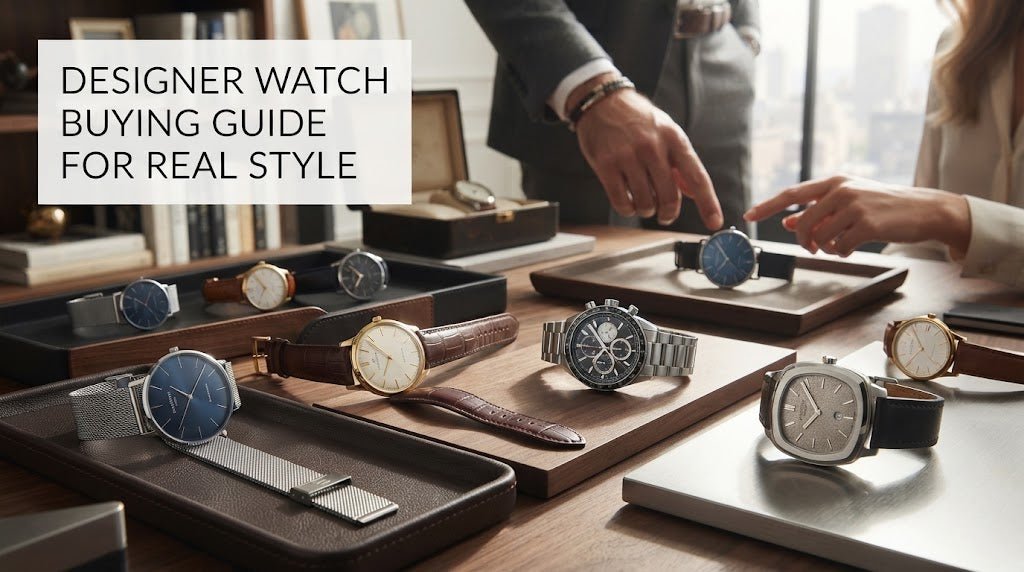
Designer Watch Buying Guide for Real Style
A good watch changes more than your wrist. It changes how the rest of your look reads - sharper, more considered, more personal. That is why a designer watch buying guide should start with taste, not specs alone. The right piece is not just accurate timekeeping. It is proportion, material, mood, and the quiet confidence of wearing something chosen well.
For most people, the mistake is not buying too cheaply or too expensively. It is buying too generically. Designer watches earn their place when they bring a point of view. You notice it in the case shape, the dial layout, the strap texture, even the way the watch sits under a cuff or next to a T-shirt sleeve. If you are buying one for yourself or as a gift, the goal is simple: find a watch that feels distinct without becoming hard to wear.
How to use this luxury watch buying guide
Start with where the watch will live, because any practical luxury watch buying guide should match the piece to your lifestyle first. If it is meant for daily wear, especially for first-time buyers choosing a first piece, versatility matters more than novelty. A clean dial, balanced dimensions, and durable materials will serve you better than a loud detail you may tire of in a month. If the watch is more of a style piece, then character can take the lead. An unconventional case, bold numerals, or a fashion-forward color story can make sense when the watch is part of a larger personal aesthetic.
That first decision - everyday staple or statement accessory - will narrow almost everything else and help you make an informed decision. It affects case size, strap choice, movement, and budget. It also keeps you from buying a beautiful watch that never leaves the box.
Style first, but be specific
Saying you want a watch that looks good is too vague to be useful. It helps to define the kind of design language you actually respond to. Some people lean minimalist and architectural. Others want Italian flair, vintage cues, or technical dive-watch energy. None of these is more correct than the others, and the better choice usually comes down to personal taste, with each one pointing to a different kind of brand and wearing experience.
If your wardrobe is mostly monochrome, structured, and modern, a watch with a clean dial and restrained detailing will likely feel more natural, depending on your personal preferences around details like dial tone or strap feel. If you dress with more texture, color, or streetwear influence, you can usually carry something bolder. Watch design works best when it feels integrated into your overall visual rhythm, not pasted on top, with timeless design as the aim.
This is where curation matters. A retailer with a curated selection often makes better sense than a giant catalog because the options have already been filtered for design quality and relevance. You spend less time sorting through filler and more time deciding between pieces that already meet a certain standard.
Size is where good taste becomes visible
One of the most common mistakes in sizing is poor proportion. A watch can be beautifully designed and still look wrong if the case is too large, too thick, or too visually heavy for the wrist. Case diameter gets the most attention, but watch size, lug-to-lug length, and thickness matter just as much.
Your wrist size should guide the proportions you choose, and a compact case often looks more refined and intentional on a smaller wrist. If you have a larger wrist, you have more flexibility, but oversized still is not automatically better. Many design-led watches look strongest when they feel balanced rather than dominant. A slimmer profile also tends to wear better day to day, especially if you move between casual and tailored clothing.
Pay attention to the dial opening too. Some watches wear larger because the bezel is thin and the face appears expansive. Others wear smaller because the bezel takes up more visual space. Photos can be misleading, so dimensions are worth reading carefully.
Movement matters, but maybe not for the reason you think
There is no single right answer when it comes to movement type. The better choice depends on how you live.
Quartz watches are practical, accurate, and low maintenance. If you want a watch that you can grab without thinking, quartz movements make a lot of sense. It is especially good for people rotating between several watches, since it keeps time consistently without needing regular wear to stay running.
Automatic watches offer a different kind of appeal. As mechanical watches, they are tactile and often more emotionally satisfying to own, and self winding models are powered by wrist motion. You are buying into craft as much as function, with mechanical movements adding to that appeal. That said, automatics usually cost more, may run less precisely than quartz, and require more attention over time.
On a mechanical model, it is also worth checking the power reserve.
For many style-conscious buyers, movement is partly about ritual. If you love the idea of wearing something engineered, automatic has real charm. If you want design without maintenance friction, quartz is the cleaner choice. Neither is a compromise if it matches your habits. Automatic options are commonly found in higher-end offerings, while quartz remains practical.
Materials tell you how the watch will age
The best designer watches do not just look good on day one. They wear in well, and smart material choices can support long term value. Case material, crystal, and strap construction all shape that experience.