What Bag Works for Commuting? Choose Better
The wrong commute bag announces itself by 8:40 a.m. Your shoulder is tense, your laptop is knocking into everything else you carry, and the zipper becomes suspiciously hard to find when the train doors open. Asking what bag works for commuting is less about picking a category and more about choosing a bag that moves easily between the street, public transit, a bike rack, and the office while balancing capacity, comfort, and style.
A good commuting bag carries your essentials without overload, keeps them organized, and still feels right once you step into work. For urban creatives and design-conscious professionals, the bag is not an afterthought but one of the most visible pieces of everyday carry, so the right choice affects how smoothly the whole day runs. This guide compares backpacks, totes, crossbodies, and messengers, with attention to commute length, weather protection, fit, organization, and how well each one works beyond the office.
Start With Your Actual Daily Commute
The best choice depends on the journey, not just the contents. A 10-minute walk to a car calls for something different from a 45-minute train ride with a station transfer and an unpredictable forecast.
Think through the points where your bag creates friction on your daily commute. If you stand on a crowded train, a slim profile matters. If you bike, cyclists usually need secure straps and a close-to-body fit that stays stable while riding. If you work from cafes or carry equipment to shoots, fast access and protective organization can outweigh a minimal silhouette.
Also be honest about the daily essentials that come with you every day. A laptop, charger, notebook, water bottle, headphones, keys, lunch, camera, and light layer, as work essentials, can fill more space than expected. Buying too small creates a bag that looks refined but fails by Wednesday. Buying too large often means carrying unnecessary weight all week. Storage capacity is the main concern only if you routinely carry more than the basics.
What Bag Works for Commuting by Carry Style?
The commuter backpack: best for laptops and longer routes
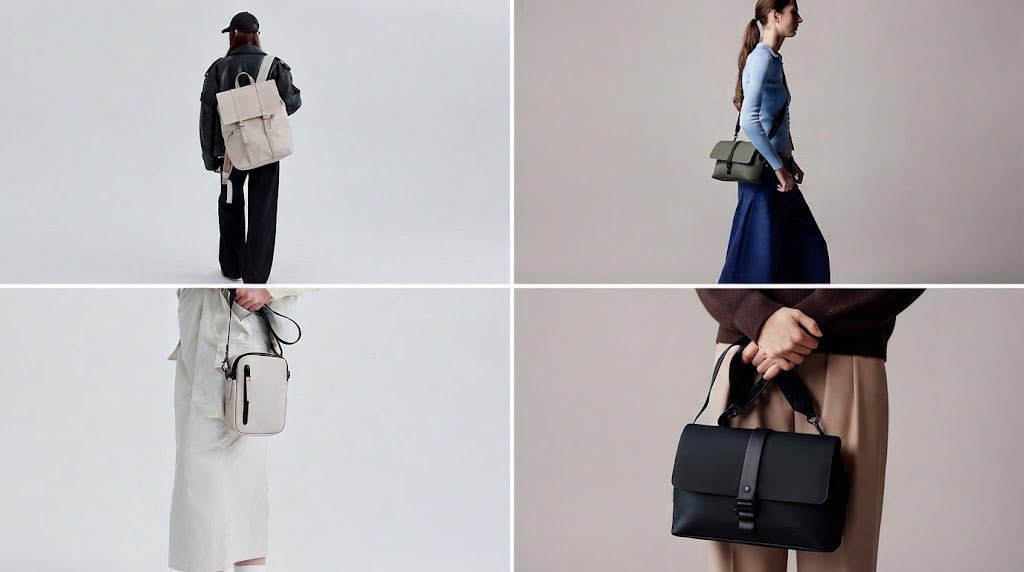
For most people carrying a laptop, a laptop backpack is the practical front-runner. It distributes weight across both shoulders, keeps your hands free, and usually offers enough structure for a workday's essentials. That makes it especially strong for walking, biking, or taking multiple forms of transit on longer commutes.
The difference is in the design. A commuter backpack should feel compact against your back rather than tall and loose. Look for a padded laptop compartment, a stable base, and a close-to-body fit that keeps a compact size, plus an opening that lets you reach smaller items without unpacking the whole bag. Separate exterior pockets for keys, transit cards, or earbuds make easy access much simpler during the day. Some commuters also want extra space for a light layer or gym gear without losing a streamlined profile.
A backpack is not automatically the best answer, though. Bulky outdoor styling can feel out of place in a more polished office, while too many straps and pockets add visual noise. A clean, architectural backpack in a durable material gives you the utility without looking like you are headed for a weekend hike.
Tote bags: best for lighter, office-first days
Tote bags work when your commute is short, your load is controlled, and presentation matters. They have an ease that a backpack cannot always match. A well-shaped tote can move from train platform to client meeting, and more commute-friendly versions usually add a shoulder strap so you do not need a wardrobe adjustment.
The trade-off is weight distribution. A tote loaded with a laptop, water bottle, and lunch becomes uncomfortable quickly, especially if you walk more than a few blocks. It can also be less secure in packed stations if it has an open top.
Choose a tote with a zipper or secure closure, a structured laptop sleeve, and straps long enough to sit comfortably over a coat. If you carry only a tablet, notebook, and personal essentials, it may be all you need. If your daily load regularly reaches five pounds or more, rather than just everyday essentials on lighter days, a backpack will usually feel better by the end of the week.
The crossbody: best for essentials and flexible days
A crossbody is the right commuting bag when work gear stays at the office, your laptop is not coming along, or you want to travel light. It carries daily essentials with less bulk, is easy to manage on public transit, and has a casual precision that suits creative, city-based routines.
It is particularly useful if you prefer a couple bags for different parts of the day. Carry a backpack for work equipment, then use a compact crossbody for your phone, wallet, camera, and keys after hours. That setup works well for errands or short trips after work. That setup prevents the common problem of bringing a full-size work bag to dinner simply because everything is trapped inside it.
The limitation is capacity. Do not force a crossbody to do a backpack's job. Overfilling it strains the strap, distorts the shape, and leaves you digging through a single crowded compartment.
The messenger: best for fast access and a comfortable shoulder strap, with caveats
Messengers make sense for commuters who need to reach documents, a tablet, or a camera while moving, and they can be the best bag for people who prioritize side access in transit. Their flap-front design can be convenient in transit, and they often have a distinctive, editorial look.
Still, a fully loaded messenger puts weight on one shoulder, so it is not ideal for all-day wear on longer routes. For a short urban commute, that may be fine. For a long walk or daily bike ride, it can become tiring. Pick one with broad adjustable padded straps at the shoulder contact area, a stabilizer strap if cycling is part of your route, and enough internal padding for your tech.
Weather Is Not a Minor Detail
Rain protection and water resistance are two of those features you only value after a wet commute turns a laptop sleeve into a liability. If you live in a city where showers, slush, or damp platforms are normal, prioritize water-resistant fabric, coated zippers, and a closure that does not leave the top exposed.
Water-resistant is not the same as fully waterproof. A water-resistant bag can handle a walk through light rain. A waterproof design offers more protection in sustained weather, including the ride home, but may have a more technical feel or fewer quick-access openings. The right level depends on how much time you spend outside and how sensitive your gear is.
For commuters who want weather readiness without sacrificing a pared-back look, waterproof bags from design-focused labels such as Gaston Luga are worth considering. The useful test is simple: would you trust the bag with your laptop during an unexpected 15-minute walk in the rain? If the answer is no, it is not built for your routine, including short walks, transit connections, or bike segments.
Organization Should Be Quiet, Not Complicated
A bag with 18 compartments is not necessarily organized; smart organization matters more. It can become a scavenger hunt. The strongest commuter bags use a few purposeful zones to help you stay organized: one protected space for a laptop or tablet, one area for larger daily items, and one quick-access pocket for the things you reach for in motion.
Pay attention to the small objects that usually disappear: charging cables, pens, sunglasses, a compact camera, and keys. Internal pockets help, but they should not be so tight that you cannot use them. Elastic loops and zippered pouches are useful when they keep items from drifting, not when they turn packing into a system you have to maintain.
A light interior lining is another understated advantage. Dark bags with dark linings may look sleek, but finding a black cable at the bottom of one during a late commute is rarely elegant.
Fit Matters More Than Capacity Claims
The right bag can list a generous volume and still be wrong for your body. Try to picture it on your actual route. Does the backpack sit high enough that it will not bump into the backs of your legs? Are the straps comfortable over a jacket? Does the tote stay under your arm, or does it slide off? Can you open the main compartment with one hand? Often, the best fit matters more than comparing packs with similar volume claims.
For backpacks, a narrow, contoured shape often feels more refined and is easier to manage in a crowd. For crossbodies and messengers, adjustable straps are essential because the ideal length changes with outerwear. For totes, a reinforced handle attachment is worth checking, especially if a laptop is part of the plan.
The goal is not maximum capacity. It is a bag that carries what you need without becoming the largest object in every room.
Choose a Bag That Can Leave the Office
Your daily commute does not end at your desk. It may end at a gallery opening, a dinner reservation, a quick photo walk, an airport gate, or small trips like errands. The best commuter bag earns its place in those moments too. Some people keep a couple bags depending on whether they need office polish or after-hours flexibility.
Avoid designs that are so formal they only work with office clothes, or so sporty they clash with everything else. Neutral colors are versatile, but texture and proportion are what keep a bag from feeling generic. Matte black, deep navy, stone, or olive can all feel current when the shape is clean and the hardware is restrained.
A distinctive bag does not need to be loud. It needs to look considered: enough character to reflect your taste, enough function to make your day easier. Choose the one you will reach for even when you are not commuting. That is usually the bag that will stay in rotation.
Is instant film worth buying? See what you gain in color, craft, and keepsake value, plus the costs and habits that make each frame feel worthwhile today.
Shop watch gifts for creatives chosen for expressive design, dependable function, and the kind of character that earns a place in a daily style rotation.