How to Choose Laptop Bags That Last
To choose laptop bags that last, start with the basics that matter in daily use: the right size for your laptop, enough padded protection, a carry style that suits your routine, durable weather-resistant materials, and functional details like smart compartments and comfortable straps. For urban professionals and creatives who carry a laptop every day, the best option is not just the one that looks good online, but the one that holds up through commutes, meetings, and constant use without becoming uncomfortable or disorganized.
A good laptop bag usually reveals itself at the worst possible moment - when you're sprinting for a train, standing through a long commute, or pulling your computer out in a client meeting and realizing the bag looks far less considered than the rest of your setup. For most people, laptop bags are not just storage. They are part of the daily uniform, and they need to work as hard as the gear inside them.
That is where the buying decision gets more nuanced than it first appears. The right bag has to protect your device, yes, but it also has to fit your routine, your wardrobe, and the way you move through a city. A bag that feels perfect on a product page can become irritating after one week of real use. A cleaner design with fewer features can sometimes outperform a feature-heavy option that never quite sits right.
This guide looks at the points that actually affect longevity and satisfaction: carry styles, laptop fit, material choices, protection, interior organization, and how to balance style with function so you can buy a bag that lasts instead of replacing one that never really worked.
What laptop bags are really for
The obvious answer is protection, but that is only the baseline. Laptop bags also organize the rest of your day. Charger, notebook, headphones, keys, camera, wallet, water bottle - these accessories tend to accumulate fast, and the wrong interior layout turns a simple commute into a constant search.
The better question is how much work you expect the bag to do. If it only needs to carry a laptop between home and office, a slim profile makes sense, though some buyers want one bag that can move between work, flights, and short trips. If it needs to move between coworking spaces, flights, coffee shops, and evening plans, you need something more adaptive. The best options leave enough room for a laptop and other items without becoming bulky. That usually means a smarter mix of padded structure, quick-access compartments, and a silhouette that still feels polished when the day shifts gears.
The first filter: your carry style
Before materials, before color, before brand, decide how you actually want to carry the weight.
Backpack laptop bags
For many people, a backpack is the most practical choice. A laptop backpack can help spread weight evenly across both shoulders, leaves your hands free, and usually gives you enough volume for a laptop plus daily extras. Adjustable straps also matter because they improve fit and comfort on longer walks or commutes. A good one should also leave room for other gear beyond the computer itself. If you bike, walk longer distances, or carry a camera alongside your laptop, this format often wins on comfort alone.
For many people, it becomes a daily driver rather than just a work bag. The trade-off is visual bulk. Some backpack laptop bags look overly technical, which can feel out of place in a creative office or a more design-conscious setting. The strongest options keep the structure clean and the hardware understated. They read as intentional rather than utilitarian.
Messenger and shoulder styles
Messenger-style laptop bags like a laptop messenger bag feel more classic and often more office-friendly, especially if you prefer a shoulder-oriented format. They are easy to swing on and off, and an adjustable shoulder strap can make them more comfortable and convenient when you are moving through airports or meetings. For lighter loads, they can be a strong fit. Some professionals still prefer a briefcase or a laptop briefcase when they want a more formal look.
The limitation is weight distribution. A shoulder bag carrying a laptop, charger, and a few extras gets heavy fast. If your commute is short, that may not matter. If your day involves stairs, walking, and hours of wear, it usually does.
Tote-style laptop bags
Totes appeal to people who want a softer silhouette and a bag that transitions easily from work to the rest of life. They can look refined and understated, especially in minimal materials and neutral tones. Tote and shoulder-forward silhouettes are among the common styles people choose based on personal preferences.
But a tote only works if the interior is disciplined. Without a proper padded laptop compartment and some structural support, it becomes a stylish hold-all rather than a reliable everyday carry. For some users, that flexibility is the point. For others, it creates friction every single day.
Size matters more than most people think
Many returns happen for one simple reason: choosing the perfect laptop bag starts with proper size matching, so your device does not shift around inside. A 14-inch device can vary a lot in actual dimensions, and a sleeve that is too tight or too loose undermines the point of carrying protection in the first place.
Check the laptop compartment dimensions, because it’s not only the size on the product page that matters but the actual internal measurements. There is a big difference between a snug protective fit and extra space that lets the laptop move around. Then think one layer beyond the computer itself. Do you carry a protective case around the laptop? A laptop sleeve is lightweight, but on its own it provides only minimal protection. A charger brick? A mouse? A hard drive? A notebook? How you pack the bag for work or travel should shape that choice, and additional pockets help separate cables and other devices from the laptop itself. Bright linings also make chargers and small accessories easier to spot. The difference between a bag that fits and a bag that functions usually comes down to enough usable space for those extras without crowding the main compartment.
Oversizing has its own downside. A bag made for a 16-inch laptop can swallow a smaller device and feel awkwardly large on the body. The cleanest everyday carry tends to be close to your actual needs, not one size bigger just in case, especially if you want it to work as a personal item.
Material changes the whole experience
Material is not just about looks. It affects weight, weather resistance, structure, and how the bag ages.
Nylon and technical fabrics are practical for everyday city use because high quality materials tend to be lighter, more resistant to rain, and better at keeping a clean, modern look. The challenge is that cheap synthetic materials can look flat or overly sporty. Better versions have texture, depth, and enough structure to hold their shape.
Waxed canvas is another weather-resistant option if you want a different look and feel.
Leather can look exceptional and age beautifully, but it adds weight and often requires more care. For someone who wants a more formal or heritage-leaning aesthetic, that may be worth it. For frequent commuters, travelers, or anyone who values low maintenance, lighter waterproof materials often make more sense.
Then there is the question of rigidity. Some laptop bags have a crisp, architectural shape that looks sharp and protects electronics well. Others are softer and more flexible. Neither is inherently better. Structured bags tend to feel more polished. Softer bags can be easier to live with when you are carrying mixed gear and need a little give.
Protection and the importance of a laptop compartment without overbuilding
A laptop bag should protect your device, but not every buyer needs military-grade everything. Overbuilt padding, excessive reinforcement, and hard-edged compartments can make a bag heavier and less elegant than it needs to be.
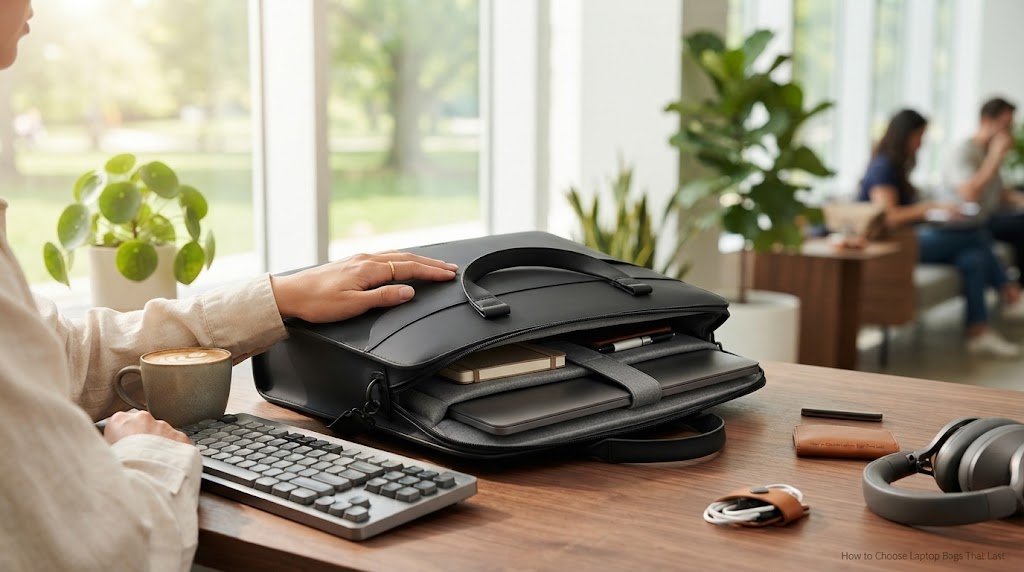
For daily use, focus on the essentials: a dedicated padded laptop compartment or laptop sleeve, a false bottom so the device does not sit directly on the bottom of the bag, and enough structure to prevent the laptop from shifting. A soft lining also helps prevent scratches. Water-resistant fabric and quality zippers matter too, especially if your commute includes unpredictable weather. YKK zippers are a reliable benchmark, and zipper sizes above #5 generally hold up better over time.
The laptop should sit well padded inside the compartment for extra protection, with high-density foam offering effective impact protection without too much bulk. What matters most is enough padding, not excessive reinforcement. If you travel often or carry more expensive gear, you may want additional security features like lockable zippers and anti-theft locks to help prevent device theft in crowded commutes or travel, along with denser padding. But for a normal workday, refined protection is usually better than aggressive bulk.
The details and interior organization that separate a good bag from a great one
This is where product pages often underplay what matters. Strap design, zipper placement, handle comfort, and pocket logic make an outsized difference once the bag becomes part of your routine.
A well-designed laptop bag gives the right things easy access. You should not have to open the main compartment every time you need your keys or transit card. Exterior stash points can also help with a rain layer, water bottle, or other stuff you do not want buried in the main compartment. The laptop section should be easy to reach at security checkpoints or in meetings, so you can get the laptop inside and out without disturbing the rest of the bag. The handles should feel solid, not decorative. The straps should stay comfortable after an hour, not just five minutes. Quality hardware such as metal buckles usually outlasts plastic parts. A unique feature like a better handle layout or smarter access point can make everyday use noticeably easier.
Interior organization is also highly personal. Some people want dedicated slots for every item. Others prefer a cleaner main compartment and fewer dividers. If you already use pouches or tech organizers, too many internal pockets can actually get in the way. It depends on whether you want the bag itself to manage your gear or simply carry it elegantly. Some bags offer layouts that work better than others if you carry a lot of small gear.
Style is not separate from function
For urban professionals and creatives, the visual language of a laptop bag matters. You carry it into workspaces, studios, meetings, airports, and dinners. It should feel aligned with your clothes and your environment.
That does not mean choosing form over function. It means recognizing that the best laptop bags do both. A bag with a strong silhouette, restrained branding, and well-chosen materials tends to age better stylistically than something built around trend details. Minimal design also has a practical advantage: it is easier to wear every day.
This is where curation matters. A selective retailer like Bang On makes the search easier by focusing on bags that already balance utility with design credibility. That is often the difference between browsing endlessly and buying with confidence.
When to spend more
Not everyone needs a premium bag, but there are cases where spending more is the smarter move. If you carry a laptop every day, if your bag doubles as part of your professional image, or if you are rough on your gear, quality pays off over time, and the higher upfront purchase often makes more sense in the long run.
What you are really paying for is not a logo alone. It is better construction, more durable materials, cleaner finishing, and a design that has been thought through beyond the headline features. Cheap bags often fail at the stress points first - straps, handles, lining, and zippers. Those failures tend to happen right when you are relying on the bag most.
That said, expensive does not automatically mean right. Some premium bags prioritize appearance and sacrifice usability. Others add features you will never use. The best value comes from buying a bag that fits your real routine, not your aspirational one.
Choosing with clarity
The best laptop bag is rarely the one with the longest feature list. It is the one that feels considered in use. It fits your laptop properly, carries comfortably, protects what matters, and still looks right at 8 a.m. and 8 p.m.
If you are deciding between two options, choose the one you would genuinely want to carry every day. Practicality gets a lot of attention, but friction usually comes from the smaller details - too heavy, too bulky, too many compartments, not enough structure, the wrong strap, the wrong shape. Once those are right, the bag disappears into your routine in the best possible way.
A well-chosen laptop bag does not ask for attention. It simply makes your day move better, and that is the kind of design worth carrying.
Share
Polaroid vs Kodak instant cameras - compare film, design, photo quality, and everyday use to find the right instant camera for your style.
Our gaga milano watch review breaks down design, comfort, movement, value, and who these bold Italian watches actually make sense for.