Kodak Reusable Film Camera: Is It Worth It?
The first roll tells you almost everything: yes, a Kodak reusable film camera is worth it if you want an easy, approachable film experience that gives you the charm of analog photography without the complexity, upkeep, or decision fatigue of vintage gear. A Kodak reusable film camera is not for the person chasing technical perfection on every frame. It is for the person who wants film to feel easy again - loaded, carried, shot, and enjoyed without turning every outing into a gear decision.
That is exactly why these cameras have found a place in the current analog revival. They sit in a sweet spot between one-time-use convenience and the higher commitment of vintage film bodies, which makes them a practical choice for beginners trying film for the first time, casual style-led shooters who want a fun everyday camera, gift buyers looking for a low-barrier option, and urban creatives who want analog gear that fits real life. You get the charm of 35mm, the ritual of waiting for scans or prints, and a camera that feels casual enough to bring anywhere.
What follows looks at what makes Kodak reusable film cameras appealing, where their simplicity becomes a limitation, how their photos tend to look, why film choice matters, and how they compare with disposable and vintage cameras so you can decide whether buying one makes sense for the way you actually shoot.
Why the Kodak reusable film camera still works
A lot of film interest today comes from people who like the look of analog but do not want the maintenance, price swings, or unpredictability that often come with older cameras. A Kodak reusable film camera answers that with a simpler proposition. It is light, straightforward, and approachable.
That simplicity matters. Many vintage point-and-shoots now cost more than they should, and plenty of them are one dead flash capacitor away from becoming shelf decor. A reusable Kodak model gives you a more current, lower-stress entry point as an automatic camera for casual users who just want to shoot without fuss. You are not buying it for manual controls or collectible status. You are buying it because it is easy to use and easy to keep using.
For urban creatives, that ease has real value. It means tossing a film camera into your bag before a gallery night, weekend trip, or dinner with friends without overthinking it. It means treating a Kodak film camera as part of the ritual, adding character to the process rather than friction.
What you are actually getting
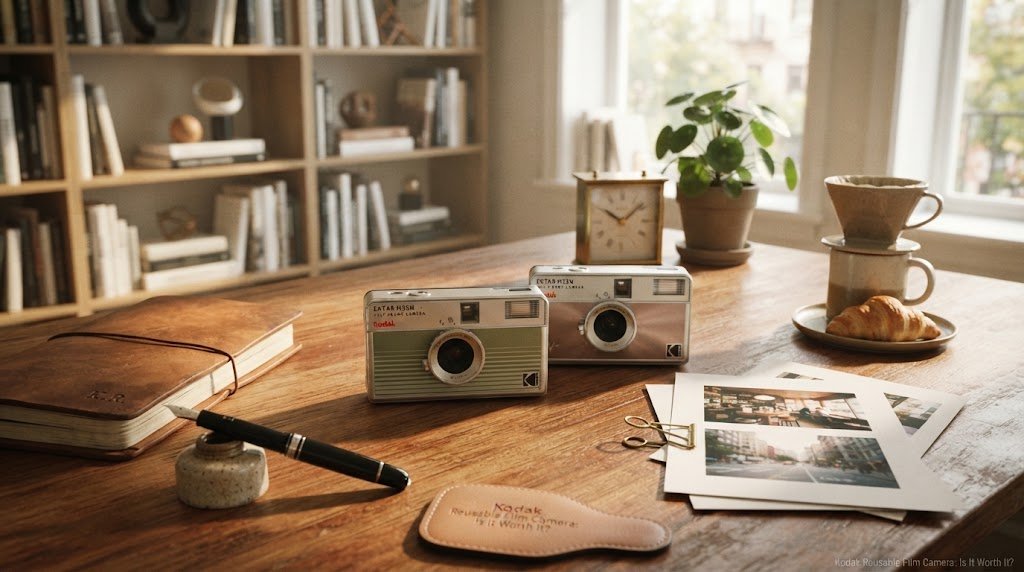
Most Kodak reusable film cameras follow a familiar formula. They are 35mm cameras with a fixed-focus lens, fixed shutter speed, and a built-in flash, using a standard 35mm camera roll. The body is usually compact and light, often with a design language that feels playful rather than precious.
In practical terms, that means the camera makes most decisions for you. You frame, you shoot, and if the light is low, you switch on the flash. You are not getting high-resolution photos, but a simpler film experience with very little standing between the moment and the photograph.
That is the appeal, but it is also the trade-off. A fixed-focus lens will not give you the crisp subject isolation or low-light flexibility of a more advanced film camera. A fixed shutter means you work within the camera's limits, especially across changing lighting conditions, not the other way around. If you want exposure control, zone focusing, or a sharper premium lens, this category will feel intentionally basic.
Still, basic does not mean pointless. It means edited. And for many people, that edit is what makes the camera attractive in the first place.
Who a Kodak reusable film camera is really for
This type of camera suits a few buyers especially well. The first is the beginner who wants film without the homework. You do not need to be an expert photographer to enjoy it: loading a roll, winding after each shot, and getting back a strip of images already feels satisfying. Add too much technical complexity too soon, and the romance can disappear.
It also suits the style-conscious casual shooter. Some cameras are built for obsession. This one is built for presence. You bring it to parties, day trips, a long weekend, and everyday moments that benefit from a little grain and imperfection, especially if you want to catch a few special moments rather than document everything.
Gift buyers are another obvious fit. A Kodak reusable film camera feels thoughtful because it is both usable and expressive. It has the familiarity of a known brand, the nostalgic pull of film, and the kind of low-barrier learning curve that makes the images captured feel easy to enjoy right away.
Where it may not fit is with experienced film photographers who want more control or higher optical quality. If you already know your film stocks by character, meter light by instinct, and care deeply about lens rendering, you may see this as a fun secondary camera rather than your main one.
What kind of photos should you expect?
The look is part of the reason anyone buys one. A reusable Kodak camera tends to produce film photos that feel candid, direct, and a little loose around the edges. That can be a feature, not a flaw.
In bright daylight, results are usually the strongest. Outdoors, on city walks, vacations, and daytime gatherings, the camera has enough light to do what it is designed to do. The photos often carry that familiar disposable-camera energy, but with the benefit of using the body again.
Indoors or at night, you will rely much more on flash. That creates a very specific aesthetic - close subjects, punchier highlights, and that snapshot look people often associate with party photos from the late 1990s and early 2000s. Some shots may look instagram worthy, while others lean more raw. If that is the mood you want, great. If you want natural low-light subtlety, this is not the right tool.
The other thing to expect is inconsistency. Film itself has variables, and simple cameras add a few more. Framing may be a little off, and some results can be slightly blurry. Exposure can vary depending on the scene. Some shots will feel unexpectedly perfect because they are not overmanaged. Others will miss. That is part of the format's charm, but only if you are buying into the actual moment and even those less than ideal emotions honestly.
Film choice matters more than you think
Because the camera is simple, your film stock does more of the expressive work, and it affects image quality more than many beginners expect. A daylight-friendly ISO 200 or 400 color film is usually the safest place to start. It gives you flexibility for outdoor shooting and enough room for general use.
If you know you will be shooting indoors, at events, or after sunset, a faster film can help, though the built-in flash will still be doing heavy lifting. Black-and-white can also be a strong pairing if you want something moodier and more graphic.
This is where the camera becomes more personal than it first appears. The body may be simple, but the look changes with the film you load into it. That makes each roll feel intentional, especially since a standard 35mm roll gives these reusable cameras 36 exposures. With Kodak cameras, that limited count usually encourages more patience before you press the shutter. Taking multiple pictures of the same scene can be tempting, but film often makes you value a more deliberate singular snap.
Reusable versus disposable
This is the comparison most shoppers make first, and for good reason. The shooting experience can feel similar. Both are simple, both often rely on flash, and both are geared toward casual photography.
The difference is value over time and a slightly different mindset. A reusable model invites repetition. It becomes part of your routine instead of a one-off novelty. If you plan to shoot more than a few rolls over the year, it makes more sense than continuously buying disposables, especially when you factor in the environmental cost of repeatedly replacing single-use bodies. A cheap reusable film camera can also be the more practical buy if you want that same casual vibe more than once.
There is also a design argument here. A reusable film camera feels more considered as an object. It is something you keep in rotation, not something you use up. For buyers who care how their everyday accessories look and feel, that matters.
Reusable versus vintage point-and-shoots
Vintage compact cameras can produce better images. Many have sharper lenses, autofocus, and more refined metering. But they also come with more uncertainty. Battery compartments corrode. Electronics fail. Prices rise on hype alone.
A Kodak reusable film camera is a less romantic choice in one sense, but a more rational one in another, especially if you are looking at an entry-level model like the Kodak M35. Compared with something like the Ilford Sprite, the appeal is similarly straightforward: simple handling over vintage complexity. Worth noting, you are choosing known limitations over hidden problems. That is often a smart trade if your goal is regular use, not collecting.
It also lowers the pressure. With a sought-after vintage point-and-shoot, every drop, scratch, or malfunction feels expensive. With a simple reusable model, you are freer to carry it often, use it casually, and let it be part of real life.
What to consider before you buy
The smartest question is not whether the camera is good in an abstract sense. It is whether its limitations match your habits.
If you mostly shoot in daylight, like direct flash at night, and want a camera that asks very little from you, it makes sense. Ownership costs also rise over time because film and development are ongoing expenses. If you want a polished analog object that gives you the film experience without vintage maintenance, it makes even more sense. One benefit is that you can end up with physical prints or scans later, not just files sitting on your phone.
If your expectations lean toward clean low-light performance, edge-to-edge sharpness, or creative control, you may outgrow it quickly. That does not make it a bad camera. It just means it occupies a very specific lane.
For many people, that lane is enough. Not every camera needs to be your forever camera. Some are simply there to get you shooting, keep you curious, and make everyday moments feel worth documenting.
That may be the best way to think about a Kodak reusable film camera. It is not trying to be the most advanced option on the shelf. It is trying to keep analog photography accessible, stylish, and easy to bring into your day. Afterward, getting the camera roll processed is part of the experience too. That wait is part of how film takes shape, from shooting to finally getting scans or prints back, and processing a roll commonly costs about $30 total. Film photos arrive more slowly—sometimes in just a few days, depending on the lab—and photo processing capabilities vary, while a small business lab may also give you an online album alongside prints, much like the camera’s playful Candy Pink finish adds to its appeal. Flame Scarlet gives it another bold, style-first option. Even if the cost adds up, that delay can make the results feel like treasured possessions, with a few meaningful frames kept and the rest left to memory. Those developed photos often end up in the group chat and can become some of your most treasured possessions. For the right buyer, that is more than enough reason to load a roll, head out, and enjoy what comes back.
Share
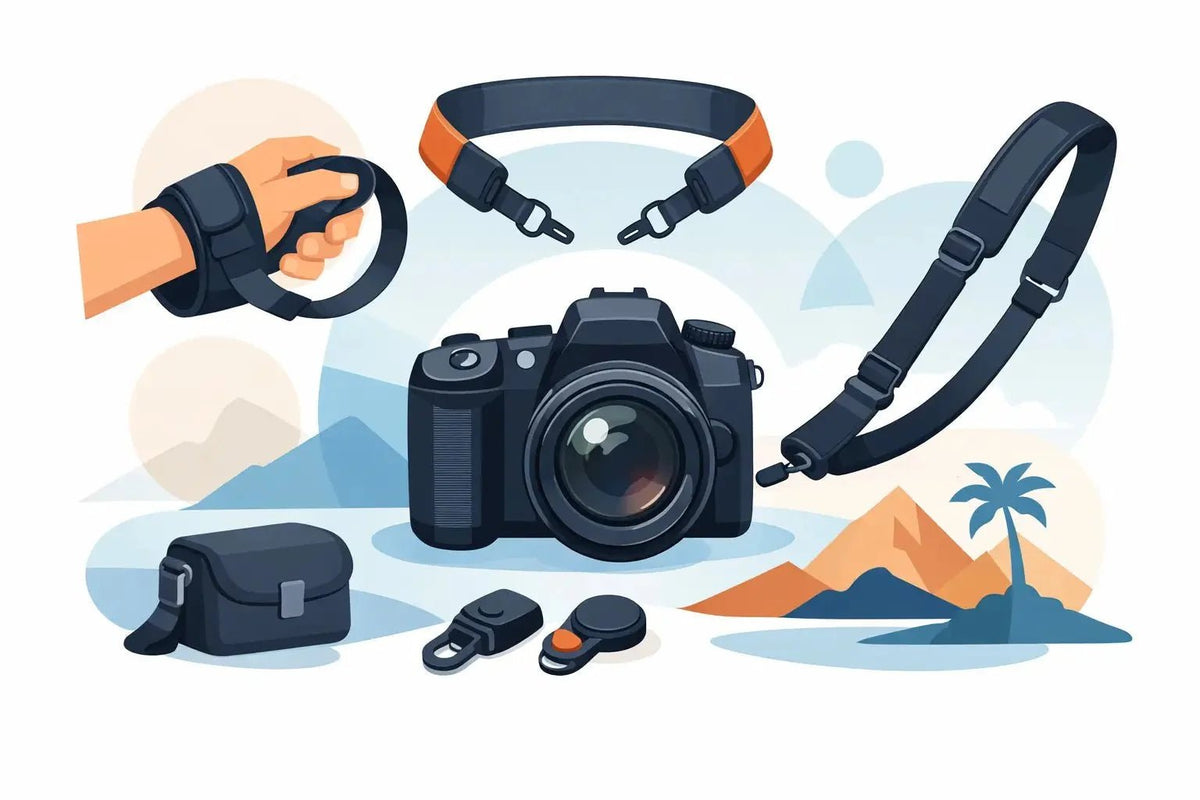
A camera strap changes how your gear feels, moves, and fits your style. Here's how to choose one that balances comfort, function, and design.
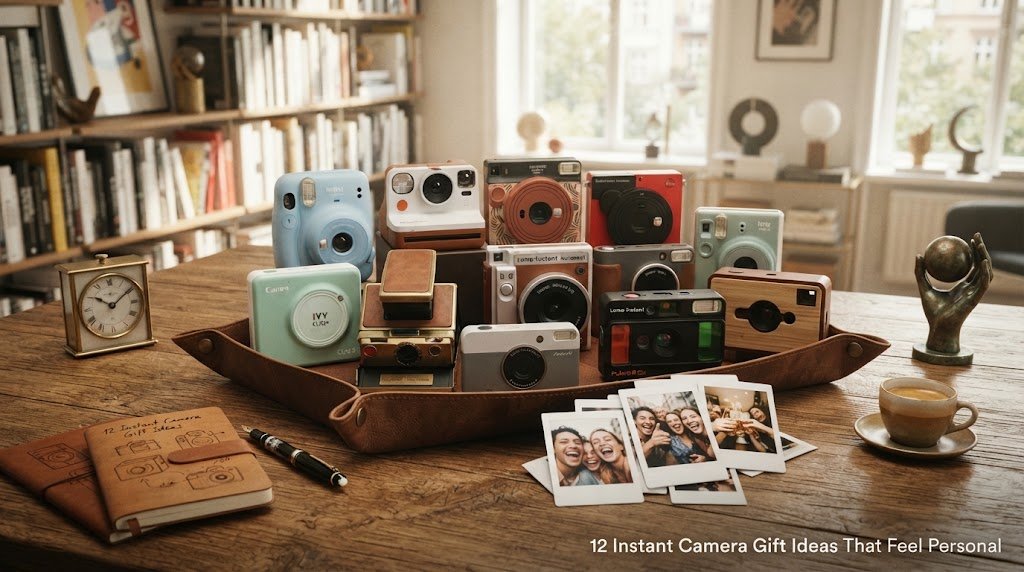
Looking for instant camera gift ideas? These 12 picks help you choose a stylish camera, film, or accessory that feels personal and easy to gift.