How to Choose the Right Camera Strap
A bad camera strap announces itself fast. The right one is easier to choose when you start with how you carry your camera: match the strap type, material, length, width, and attachment hardware to your shooting style, camera weight, and personal aesthetic so you get the best balance of comfort, access, and style. A good camera strap does the opposite of a bad one. It disappears when you need comfort, stays ready when you need speed, and adds something to the overall experience of carrying your camera.
For photographers who care as much about design as daily use, especially anyone shooting with an instant camera, compact model, or everyday carry setup, the strap is not an afterthought. It shapes how the camera lives with you through the day, which is why details like fit, materials, hardware, and even common buying mistakes matter. If the camera feels easy to carry, you bring it more often. If it looks considered, it feels more personal. And if it works with the way you shoot, it stops getting in the way of the moment.
Why the right camera strap matters
The strap affects three things at once - comfort, access, and style. Most people shop for only one of those. Usually comfort. But a strap that feels soft and still slows down your draw is not always the right choice. A sleek strap that looks refined on a shelf but twists constantly in use is not right either.
The better question is how you actually carry your camera. If you wear it for quick street shots on weekends, your needs are different from someone bringing an instant camera to parties, travel days, or casual dinners. A heavier setup changes the equation again, so choose your camera strap based on the full camera setup, your shooting style, and how much support you need, since shoulder straps distribute weight more evenly than neck straps for heavier cameras. Width, material, attachment points, and length all shape how the camera sits on the body and how fast it comes to hand.
This is also one of those accessories where design and function should not be separated. A camera is often part of your everyday kit, alongside your watch, bag, and phone. The strap should feel coherent with that. Not flashy for the sake of it, and not purely technical if that is not your style. The best choices tend to look simple, feel intentional, and wear well over time.
Types of camera strap and who they suit
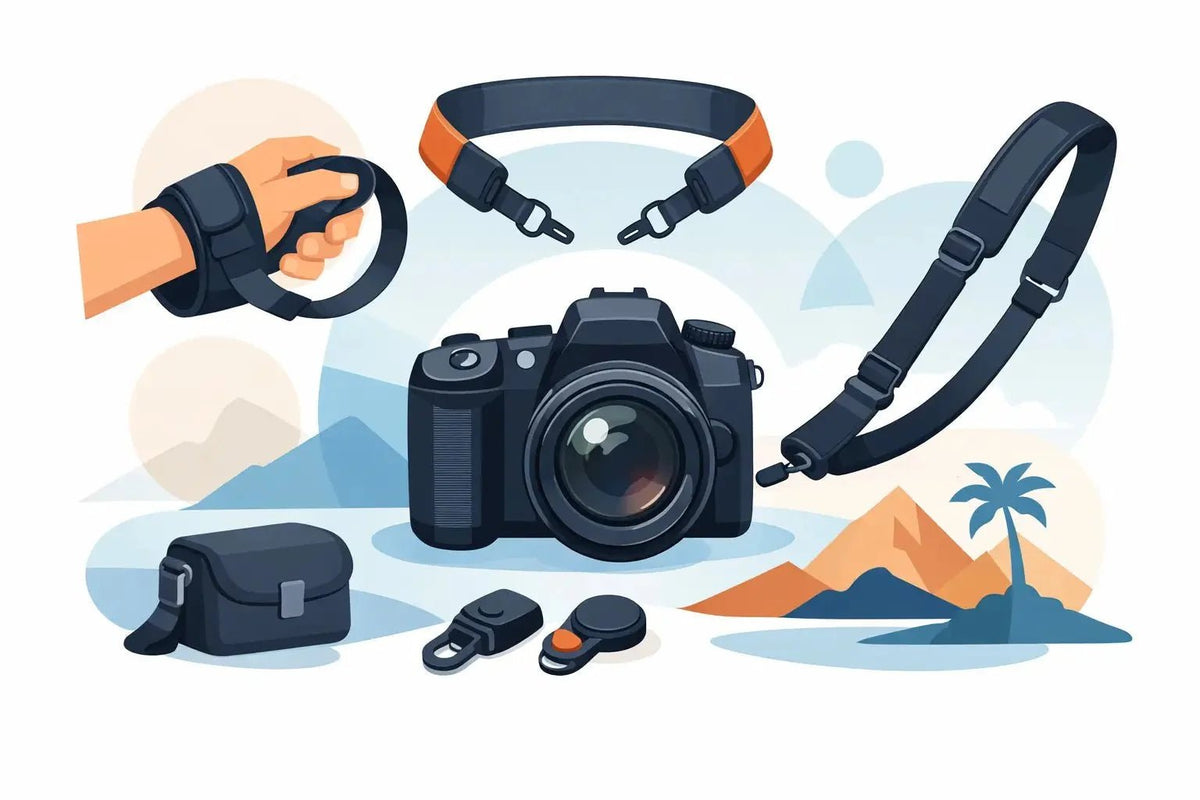
The classic neck strap is the default for a reason. It is familiar, balanced, and easy to use, especially for lighter cameras. If you are carrying an instant camera at an event or using a compact camera while traveling, a neck strap keeps the camera visible and accessible. The trade-off is fatigue. On longer days, weight collects around the neck and shoulders quickly.
A shoulder or sling-style camera strap shifts that load more naturally across the body. A cross body shoulder strap can also keep the camera close while you move, which helps it feel more secure and easier to reach. For city use, travel, and walkaround photography, this is often the more comfortable option. It also tends to feel more modern in practice because the camera can rest lower at the side and come up fast when needed. The downside is swing. If the strap length is not dialed in, the camera can move more than you want, especially in street photography where quick access is the main reason many people choose sling straps.
Wrist straps are minimal and clean. They make sense for very light cameras, compact digital models, and users who want the least visual clutter possible. They are also a good fit for photographers who mostly keep the camera in hand and only want backup security against drops, though camera holsters are another option for people who want more freedom of movement without straps. But they do not help with carrying fatigue because they are not really meant for hands-free use.
Rope-style straps have become popular for good reason. They feel lighter than padded straps, look more refined than overtly technical options, and often suit design-forward cameras particularly well. Still, rope is not automatically more comfortable. On a heavier camera, a thin rope strap can create pressure points over time.
Leather straps bring a certain finish and maturity to a setup. They age well, often look better with wear, and pair naturally with cameras that already carry a retro or tactile design language, including film cameras. The trade-off is flexibility. Some leather straps need time to soften, and not all of them perform equally well in heat, rain, or active use.
How to choose a camera strap by material
Material changes the whole feel of the strap. Nylon is practical, durable, and usually the easiest to maintain, and webbing versions are especially strong and weather-resistant. It works well for everyday use and tends to be the safest choice if you care more about utility than romance. It can, however, feel generic if the finishing is poor.
Cotton or woven fabric straps often feel softer against the skin and can bring more texture to the look of the camera. For casual shooters and lighter gear, they strike a strong balance. Neoprene is often better for heavier cameras because it adds shock absorption. Just keep in mind that softer materials can stretch, absorb moisture, and show wear differently.
Leather is the most tactile option. Good leather develops character instead of simply wearing out, which is part of the appeal. But the quality gap is real. Cheap leather can stiffen, crack, or feel decorative rather than dependable. If you go this route, look for double-stitched seams because construction matters as much as the hide itself.
Rope and climbing-cord-inspired options have a distinctly modern edge. They are compact, strong, and easy to pair with urban everyday carry. They also tend to suit smaller cameras especially well because they avoid bulk. On large cameras or medium format gear, though, they can feel too narrow unless paired with a shoulder pad or a wider profile.
Fit matters more than most specs
The wrong length can ruin an otherwise great camera strap. Too short and the camera sits awkwardly high, making movement feel restricted. Too long and it bounces, knocks into your body, and becomes annoying on stairs, in crowds, or while biking around the city.
An adjustable strap with sliders you can tighten or loosen easily matters because the same person may carry differently depending on the day. A shorter setting works for crowded settings and quick access. A longer strap can feel better over a jacket or crossbody bag, especially during extended use. If you switch between outfits, bags, or shooting styles, flexibility is not a bonus. It is part of the function.
Width deserves the same attention. Narrow straps look sleek and work well on lighter cameras. Wider straps distribute weight better and usually feel more stable. The right strap width, especially in a wider strap with extra padding, improves weight distribution on heavy gear. This is one of those design decisions where cleaner is not always better. A comfortable camera strap helps spread the load weight evenly, which can reduce neck fatigue and neck pain. A minimal strap on a heavier camera may look sharp online and feel terrible after extended periods.
Attachment points, hardware, and security
The strap is only as trustworthy as the connection. That sounds obvious, but it is where many people compromise. Split rings, anchor systems, buckles, and lug adapters all have their place, but they should match the camera's attachment points, including different strap lugs, and the way you use it. If you carry heavier weights, especially with medium format cameras, check the tested load rating: a high quality strap can support over 50kg (115lb), and Lucky Straps can hold over 50kg (115lb).
If you switch straps often, a quick-release system makes life easier. It lets you move between wrist strap, neck strap, or no strap at all without fuss. For users who like modular gear, this is one of the smartest upgrades. Quick release mechanisms should still include secure backups such as double loops to reduce accidental drops or accidental disconnection. Just make sure the hardware feels secure and does not scratch the camera body.
Metal hardware looks premium when done well, but finishing matters. Cheap hardware can chip, rattle, or leave marks. Leather tabs and fabric loops can help protect the camera where metal meets body. Small details count here because they affect both longevity and how refined the setup feels in hand. Anti theft features are also useful in crowded travel or event settings to keep your camera safe.
Style is part of the decision
A camera strap sits in plain sight. It is visible in use, visible in storage, and often visible in your photos too. So yes, aesthetics matter.
The question is not whether the strap is stylish. It is whether it suits the camera and your everyday rhythm. A bold patterned strap can make sense for a playful instant camera or social setting. A cleaner strap with muted tones may feel better for daily city carry, travel, or travel photography, or giftable setups where versatility matters more.
This is where curation helps. Too many options create noise. The right strap usually becomes clear when you stop chasing every feature and start looking for fit between object, outfit, and use, though the final choice still comes down to personal preference. A well-chosen accessory should make the whole setup feel more resolved.
What to avoid when buying a camera strap
The most common mistake is choosing a stock camera strap just because it came with the camera, or picking an upgraded option for looks alone. The second is buying for pure technical performance and ignoring how the strap feels in everyday life. Most people need something in between.
Avoid straps that are overly padded for a light camera, because they add unnecessary bulk; for compact cameras and other lighter setups, most straps will work, while heavier gear needs more support. Be careful with very thin straps on anything with real weight. Watch for rough edges, stiff stitching, and attachment hardware that feels flimsy or overly complex. And do not assume premium price always means better usability. Sometimes a simpler strap with better proportions wins.
If you are shopping for a gift, lean toward adaptable designs. Neutral colors, adjustable length, and options with two lengths tend to work across more cameras and more personal styles. The safest choice is usually one that feels elevated but not fussy.
The best camera strap is the one you keep using
A camera should be easy to bring along. That is the whole point. The right strap supports that instinct. It makes the camera feel less like equipment and more like part of your day - ready for a commute, a weekend walk, a dinner with friends, or a trip where the best shots happen between plans.
For design-conscious photographers, that balance matters. You want something functional, yes, but also something that belongs with the rest of your carry. That is why the best camera strap is rarely the most technical or the most dramatic, because different camera straps suit different photography style needs. It is the one that feels good, looks right, and quietly earns its place every time you reach for your camera.
The best straps are the ones matched to your gear, from smaller travel kits to wedding and event photographers carrying multiple cameras, and that fit can make all the difference for body comfort on long shoots or extended days, whether you lean toward familiar options like Peak Design or Black Rapid. Choose the one that makes you want to carry your camera more often, because a well chosen strap works best when it is matched to the camera you already use. The rest tends to follow.
Share
Thinking about a Kodak reusable film camera? Here's what it does well, where it falls short, and who it suits for easy analog shooting.