Kodak Keychain Digital Camera - the Millennium
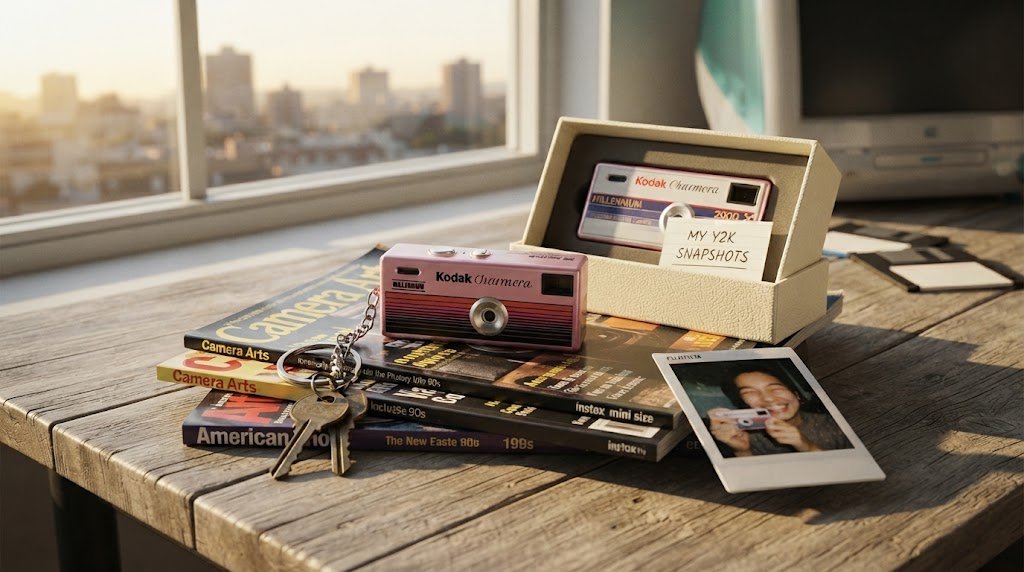
A Kodak keychain digital camera from the millennium era was a tiny, playful gadget made to live on your keys, offering casual, low-resolution photography that prioritized novelty, access, and portability over technical perfection. Around the turn of the 2000s, these tiny cameras arrived as gadgets first, cameras second - but that was exactly their charm. They could fit in the coin pocket of your jeans, hang next to your house keys, and still feel like the future.
For anyone with a soft spot for design objects, pocket tech, or early digital photography - especially urban creative professionals and design-savvy buyers who want everyday carry gear with retro appeal and clean, functional design - the appeal is easy to understand. The keychain camera sits in the same cultural lane as translucent plastic electronics, first-generation MP3 players, and compact point-and-shoots that made everyday documentation feel casual and new. That shift still matters: these millennium-era mini cameras helped normalize always-available photography, created a distinct imperfect visual style, and now offer a more characterful alternative to today’s polished imaging devices.
This piece looks at their design, cultural significance, user experience, aesthetic appeal, collectibility, and current relevance, with comparisons to modern mini-cameras and practical buying advice for anyone considering one now.
Why the keychain digital camera the millennium era still matters
Most old tech gets remembered for what it lacked. The better way to look at millennium-era keychain cameras is through what they introduced. They turned photography into an everyday reflex. Not a planned event, not a polished hobby - just a habit. Clip it to your bag, keep it in a jacket pocket, take a quick shot of a coffee cup, a friend at midnight, a street sign, a bad haircut. That casual impulse now defines digital image culture, but these devices were early proof that people wanted photography to feel frictionless.
Their design mattered too. These were objects made to be seen. Small enough to spark conversation, often finished in silver plastic, clear shells, candy colors, or metallic tones, they borrowed from the optimistic industrial design of the era. You bought one because it was functional, but also because it looked like a tiny piece of the future.
That combination of form and function is why they still resonate with design-conscious buyers. The camera itself became part of the look. It was an accessory, not just equipment.
What these cameras were actually like to use
Memory softens a lot of old gadgets. In real terms, a keychain digital camera from the millennium years was usually low resolution, had minimal storage, and offered almost no control. Battery life was inconsistent. Screens, if included at all, were tiny. Transferring photos to a computer could be weirdly specific, often dependent on old software or proprietary cables.
And yet the user experience had a kind of honesty that feels refreshing now. You pressed a button, framed loosely, and accepted whatever came back. The images were often grainy, blown out, underexposed, or strangely colored. Sometimes they were perfect precisely because they were imperfect.
That trade-off matters. If you want sharp files, dynamic range, and instant sharing, a modern phone will outperform a millennium keychain camera in every category. But if you want images with texture, unpredictability, and a distinct visual mood, the older device gives you something a phone usually has to imitate with filters.
The aesthetic was low-fi before low-fi became a style
A lot of contemporary photography products sell nostalgia as a preset. The original keychain cameras didnt need to manufacture it. Their technical limits created it naturally, while newer interpretations like the Charmera keep that feeling by blending retro design cues with digital-era styling and adding customized retro-futurism frames. Compression artifacts, soft focus, clipped highlights, and rough color rendering gave even ordinary scenes a sense of distance. The photos looked immediate and detached at the same time.
That is a big reason the format feels current again. We are living in a moment where too much image quality can make photos feel generic. Hyper-clean files are useful, but they can also flatten personality. Low-fi digital, especially from early consumer devices, reintroduces friction. It leaves room for surprise.
For urban creatives, that matters more than nostalgia alone. The visual result is not just retro. It is editorial in a different way - looser, warmer, less resolved, and often more alive, especially with customised retro futurism frames playing with retro styles and color rich pixelated filters shaping that stylized look. A keychain camera does not document life like a professional tool. It sketches it. It also taps into the visual mood of the digital age.
Why collectors and style buyers keep coming back
There are a few reasons these cameras continue to circulate beyond pure novelty.
First, some current versions are collectible without being too precious because they are sold in blind boxes for collectibility, with the charmera keychain digital camera being a good example of that modern format. That mystery-box format also reinforces that the camera is designed as a collectible blind box item, which adds scarcity and display appeal. Second, they represent a specific moment in consumer design when miniaturization itself felt magical. Third, they fit naturally into everyday carry culture. Anyone interested in watches, bags, compact cameras, or well-designed accessories understands the appeal of an object that is both functional and expressive.
There is also the scarcity factor. Many of these devices were not built for longevity, which means surviving examples feel more special now. The package matters too, especially when it still includes original software or cables alongside clean cosmetic condition. But even a lightly worn unit can be desirable because wear often confirms the objects life rather than diminishing it.
Buying one now takes more judgment than nostalgia
If you are considering a keychain digital camera the millennium period produced, it helps to separate collectible value from practical value. They are not always the same thing.
A camera can look great in photos and still be frustrating to own, but a modern example like the Kodak Charmera is approximately 58×24.5×20 mm and is designed to fit in a pocket or on a keychain. Old internal batteries fail. Compartments corrode. Older USB connections may be outdated, while newer models use a built-in 200mAh rechargeable battery charged via USB-C. They also include a micro SD card slot for storage. Some models require operating systems that are no longer easy to access. Others can still function as simple point-and-shoot devices but make file transfer annoyingly complicated.
That does not make them bad buys. It just changes the standard. If your goal is to own a design object with occasional creative use, a few inconveniences may be part of the experience. If your goal is regular, reliable shooting, then condition and compatibility matter much more than rarity.
This is where curation counts. Whether you are making a purchase for vintage tech, a collectible instant camera, or any camera-adjacent accessory, the difference between random inventory and considered selection is trust. A good retailer or seller reduces guesswork. That mindset is part of why design-led stores like Bang On resonate with photography lovers - fewer choices, better choices, and a clearer point of view.
How it compares to modern novelty cameras
The kodak charmera keychain digital is a tiny digital camera supporting modern conveniences, with a 1.6-megapixel resolution, while keeping the early keychain form. Better charging, easier file transfer, more stable sensors, and support for both photo taking and video recording all make them easier to live with. In practical terms, that is a win.
But the comparison is not simple. Newer novelty cameras can sometimes look too polished, both physically and in image output. They capture the idea of millennium tech without fully reproducing the accidental weirdness that made the originals memorable. The best modern versions understand this and avoid overcorrecting. They keep the small scale and playful feel, with video recording and photo mode, while preserving some unpredictability in the images.
So which is better? It depends on why you want one. Original models bring historical texture and authentic visual quirks. Contemporary versions bring convenience and fewer headaches. For some buyers, the right answer is both: an original for the shelf and occasional use, and a newer mini camera for daily carry.
The emotional appeal is bigger than specs
What makes these cameras endure is not megapixels. It is the way they frame memory. A keychain digital camera was often used for moments that felt too small for a serious camera and too fleeting to plan around. That gave the format a kind of social intimacy, and the pictures often stayed more personal, more nostalgic when shared with friends, carrying a distinctly photogenic spirit because of it.
There is also something satisfying about a device with a singular purpose. In a phone, the camera is one feature among many, competing with notifications, edits, apps, and instant performance. In a tiny dedicated camera, the act feels narrower and cleaner, making it not just a camera but a more focused object for memory-making, adding fun back into picture-taking through a single-purpose device. You notice what you are shooting because the device asks more of your attention and gives less in return.
That restraint is part of its modern value. It turns image-making back into a small event, with a little of the raw surprise of early digital pictures and the world you were actually in.
Should you buy a keychain digital camera now?
A Kodak keychain digital camera from the millennium era was a tiny, playful gadget made to live on your keys, offering casual, low-resolution photography that prioritized novelty, access, and portability over technical perfection. Around the turn of the 2000s, these tiny cameras arrived as gadgets first, cameras second - but that was exactly their charm. They could fit in the coin pocket of your jeans, hang next to your house keys, and still feel like the future.
For anyone with a soft spot for design objects, pocket tech, or early digital photography - especially urban creative professionals and design-savvy buyers who want everyday carry gear with retro appeal and clean, functional design - the appeal is easy to understand. The keychain camera sits in the same cultural lane as translucent plastic electronics, first-generation MP3 players, and compact point-and-shoots that made everyday documentation feel casual and new. That shift still matters: these millennium-era mini cameras helped normalize always-available photography, created a distinct imperfect visual style, and now offer a more characterful alternative to today’s polished imaging devices.
This piece looks at their design, cultural significance, user experience, aesthetic appeal, collectibility, and current relevance, with comparisons to modern mini-cameras and practical buying advice for anyone considering one now.
Why the keychain digital camera the millennium era still matters
Most old tech gets remembered for what it lacked. The better way to look at millennium-era keychain cameras is through what they introduced. They turned photography into an everyday reflex. Not a planned event, not a polished hobby - just a habit. Clip it to your bag, keep it in a jacket pocket, take a quick shot of a coffee cup, a friend at midnight, a street sign, a bad haircut. That casual impulse now defines digital image culture, but these devices were early proof that people wanted photography to feel frictionless.
Their design mattered too. These were objects made to be seen. Small enough to spark conversation, often finished in silver plastic, clear shells, candy colors, or metallic tones, they borrowed from the optimistic industrial design of the era. You bought one because it was functional, but also because it looked like a tiny piece of the future.
That combination of form and function is why they still resonate with design-conscious buyers. The camera itself became part of the look. It was an accessory, not just equipment.
What these cameras were actually like to use
Memory softens a lot of old gadgets. In real terms, a keychain digital camera from the millennium years was usually low resolution, had minimal storage, and offered almost no control. Battery life was inconsistent. Screens, if included at all, were tiny. Transferring photos to a computer could be weirdly specific, often dependent on old software or proprietary cables.
And yet the user experience had a kind of honesty that feels refreshing now. You pressed a button, framed loosely, and accepted whatever came back. The images were often grainy, blown out, underexposed, or strangely colored. Sometimes they were perfect precisely because they were imperfect.
That trade-off matters. If you want sharp files, dynamic range, and instant sharing, a modern phone will outperform a millennium keychain camera in every category. But if you want images with texture, unpredictability, and a distinct visual mood, the older device gives you something a phone usually has to imitate with filters.
The aesthetic was low-fi before low-fi became a style
A lot of contemporary photography products sell nostalgia as a preset. The original keychain cameras didnt need to manufacture it. Their technical limits created it naturally, while newer interpretations like the Charmera keep that feeling by blending retro design cues with digital-era styling and adding customized retro-futurism frames. Compression artifacts, soft focus, clipped highlights, and rough color rendering gave even ordinary scenes a sense of distance. The photos looked immediate and detached at the same time.
That is a big reason the format feels current again. We are living in a moment where too much image quality can make photos feel generic. Hyper-clean files are useful, but they can also flatten personality. Low-fi digital, especially from early consumer devices, reintroduces friction. It leaves room for surprise.
For urban creatives, that matters more than nostalgia alone. The visual result is not just retro. It is editorial in a different way - looser, warmer, less resolved, and often more alive, especially with customised retro futurism frames playing with retro styles and color rich pixelated filters shaping that stylized look. A keychain camera does not document life like a professional tool. It sketches it. It also taps into the visual mood of the digital age.
Why collectors and style buyers keep coming back
There are a few reasons these cameras continue to circulate beyond pure novelty.
First, some current versions are collectible without being too precious because they are sold in blind boxes for collectibility, with the charmera keychain digital camera being a good example of that modern format. That mystery-box format also reinforces that the camera is designed as a collectible blind box item, which adds scarcity and display appeal. Second, they represent a specific moment in consumer design when miniaturization itself felt magical. Third, they fit naturally into everyday carry culture. Anyone interested in watches, bags, compact cameras, or well-designed accessories understands the appeal of an object that is both functional and expressive.
There is also the scarcity factor. Many of these devices were not built for longevity, which means surviving examples feel more special now. The package matters too, especially when it still includes original software or cables alongside clean cosmetic condition. But even a lightly worn unit can be desirable because wear often confirms the objects life rather than diminishing it.
Buying one now takes more judgment than nostalgia
If you are considering a keychain digital camera the millennium period produced, it helps to separate collectible value from practical value. They are not always the same thing.
A camera can look great in photos and still be frustrating to own, but a modern example like the Kodak Charmera is approximately 58×24.5×20 mm and is designed to fit in a pocket or on a keychain. Old internal batteries fail. Compartments corrode. Older USB connections may be outdated, while newer models use a built-in 200mAh rechargeable battery charged via USB-C. They also include a micro SD card slot for storage. Some models require operating systems that are no longer easy to access. Others can still function as simple point-and-shoot devices but make file transfer annoyingly complicated.
That does not make them bad buys. It just changes the standard. If your goal is to own a design object with occasional creative use, a few inconveniences may be part of the experience. If your goal is regular, reliable shooting, then condition and compatibility matter much more than rarity.
This is where curation counts. Whether you are making a purchase for vintage tech, a collectible instant camera, or any camera-adjacent accessory, the difference between random inventory and considered selection is trust. A good retailer or seller reduces guesswork. That mindset is part of why design-led stores like Bang On resonate with photography lovers - fewer choices, better choices, and a clearer point of view.
How it compares to modern novelty cameras
The kodak charmera keychain digital is a tiny digital camera supporting modern conveniences, with a 1.6-megapixel resolution, while keeping the early keychain form. Better charging, easier file transfer, more stable sensors, and support for both photo taking and video recording all make them easier to live with. In practical terms, that is a win.
But the comparison is not simple. Newer novelty cameras can sometimes look too polished, both physically and in image output. They capture the idea of millennium tech without fully reproducing the accidental weirdness that made the originals memorable. The best modern versions understand this and avoid overcorrecting. They keep the small scale and playful feel, with video recording and photo mode, while preserving some unpredictability in the images.
So which is better? It depends on why you want one. Original models bring historical texture and authentic visual quirks. Contemporary versions bring convenience and fewer headaches. For some buyers, the right answer is both: an original for the shelf and occasional use, and a newer mini camera for daily carry.
The emotional appeal is bigger than specs
What makes these cameras endure is not megapixels. It is the way they frame memory. A keychain digital camera was often used for moments that felt too small for a serious camera and too fleeting to plan around. That gave the format a kind of social intimacy, and the pictures often stayed more personal, more nostalgic when shared with friends, carrying a distinctly photogenic spirit because of it.
There is also something satisfying about a device with a singular purpose. In a phone, the camera is one feature among many, competing with notifications, edits, apps, and instant performance. In a tiny dedicated camera, the act feels narrower and cleaner, making it not just a camera but a more focused object for memory-making, adding fun back into picture-taking through a single-purpose device. You notice what you are shooting because the device asks more of your attention and gives less in return.
That restraint is part of its modern value. It turns image-making back into a small event, with a little of the raw surprise of early digital pictures and the world you were actually in.
Should you buy a keychain digital camera now?
If you want convenience, no. Your phone already solved that. If you want the Kodak Charmera Millennium Edition as a collectible design object rather than pure convenience, or a playful way to make images that do not look algorithmically optimized, then yes - with realistic expectations. It also echoes the dawn of the digital era.
The best reason to own one now is the same reason people loved them then: they make photography feel light. Not lesser, just lighter. Less precious, less managed, and often more fun. That is a rare quality in contemporary tech, where every object seems to promise total performance, instead of fast forwarding that early-2000s feeling into the present.
A portable retro time capsule like the kodak charmera millennium edition promised something smaller, with seven retro styles and playful options like date stamps that make memory-making feel a little more personal. A little novelty. A little design pleasure. A little proof that even low-resolution memories can still hit with perfect clarity years later.
If that sounds appealing, trust the instinct. The best objects are not always the most advanced. Sometimes they are the ones that still know how to surprise you, which is part of why the kodak charmera millennium still works as an icon of that future past mood.
Share
Build a minimalist weekend travel packing list that keeps style, function, and flexibility intact - without overpacking or second-guessing.
Shop authentic branded watches online with more confidence. Learn what signals real value, official warranty, and smarter design-led buying.