Is Instant Film Worth Buying for Modern Shooters?
For modern shooters, instant film is worth buying if you want photography to be physical, intentional, and social—not just cheap, unlimited, or technically perfect. A photo on your camera roll can disappear under 20,000 others by next week. An instant print lands on a desk, gets tucked into a book, or becomes part of the wall above your workspace. That difference is the real starting point when asking, is instant film worth buying?
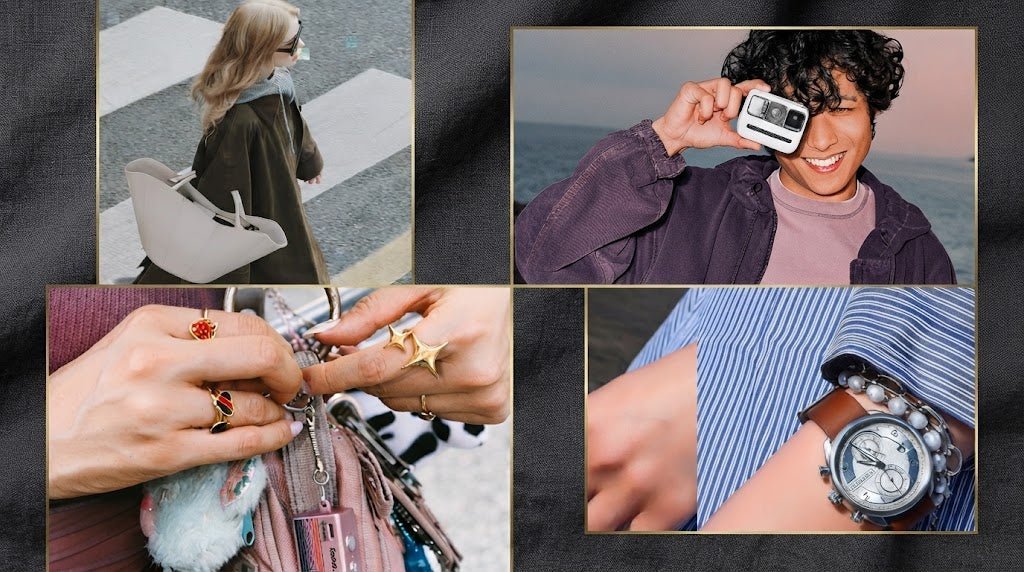
For people drawn to analog joy in a digital world—especially design-minded, style-conscious shooters who care as much about how a camera fits into everyday life as the image it makes—instant film offers something a phone cannot: a one-of-one object with its own color, texture, and small surprises, along with the imperfect analog charm that a digital camera usually smooths away. Whether that feeling justifies the ongoing cost depends on how you shoot, what you value, which instant camera and film format you choose, how film expense compares with digital convenience, and whether you will actually use the camera beyond the first weekend. This guide looks at the tradeoffs, shooting considerations, and the creative ritual of instant prints so you can decide when instant film is genuinely worth it.
Is Instant Film Worth Buying? The Honest Answer
Instant film is worth buying if you see photography as part record, part ritual. Pressing the shutter comes with a little pressure because every frame has a price. That limitation can be refreshing. You compose with more care, wait for the right expression, and let a scene be a scene instead of firing off 40 near-identical takes.
It is less compelling if your priority is volume, razor-sharp detail, or low-cost documentation. A phone is better for travel coverage, family events with fast-moving kids, group photos, and any situation where you need reliable results in difficult light. Digital cameras are better when you want control over exposure, lenses, editing, and large prints.
Instant film occupies a different lane because instant prints turn social, physical photography into part of the experience. It is for the dinner party portrait that gets passed around the table, the road-trip image taped into a journal, the spontaneous photo booth moment, and the imperfect image that somehow feels more alive because it cannot be recreated exactly.
What You Are Really Paying For
The price of film is the biggest hesitation, and it should be considered plainly. Those ongoing film packs and film refills are the recurring purchases behind the higher cost per image. Each pack gives you a fixed number of frames, so the cost per image is meaningfully higher than digital photography, and buyers should price out consumables like instax film before purchasing. You are paying for chemistry, paper, a tangible print, and the experience of watching the image appear. You are also paying for a creative constraint.
That constraint changes behavior. With unlimited digital storage, it is easy to photograph everything and revisit almost nothing. With instant film, the question becomes: is this worth a frame? The answer will not always be yes. That is a feature, not a flaw, for photographers who want their photos to carry more intention.
There is also value after the shutter clicks. A print can be signed, dated, gifted, displayed, slipped into a wallet, or kept as one of those credit card sized prints people carry around. It needs no password, app update, cloud account, or screen time. For a birthday, a new apartment, a wedding weekend, or a creative project, that physical presence has staying power.
The Look Is Part of the Point
Instant film does not chase digital perfection. Colors can lean warm, highlights can bloom, shadows can fall away, and indoor shots may carry a grainy softness. These characteristics are often described as flaws by technical standards. Creatively, they are the visual language people choose instant photography for.
That does not mean every frame will look dreamy. Bright natural light is usually your friend. Flash behavior matters, especially with closer subjects. Instant film is sensitive to weather conditions, which can affect development, and images typically develop within 60–90 seconds after exposure, while expired or poorly stored film can produce unpredictable results. The medium rewards a little awareness.
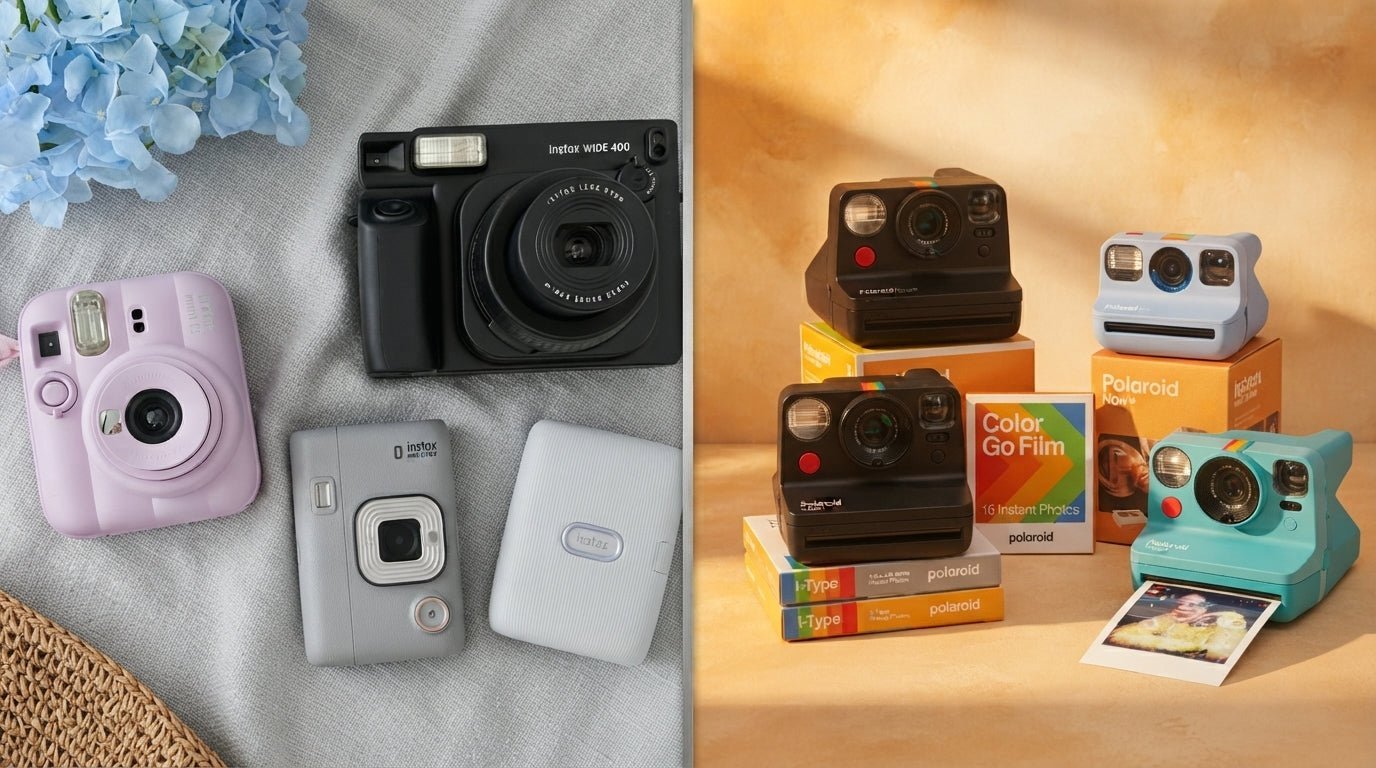
Think of instant film less as a replacement for your phone camera and more as a distinct material. Different instax cameras, film format, and lighting shape the final image in different ways, and film sizes change the look as much as the camera itself. Instax Mini produces credit-card sized prints that feel tighter and more casual, Instax Square gives more balanced framing, Instax Wide is especially suited to group photos and landscapes, and a polaroid camera using polaroid film produces larger prints with a vintage aesthetic. The white border and square prints or rectangular composition become part of the object, not just packaging around a photograph. For style-conscious shooters, that built-in design quality is a major reason to keep a camera within reach.
A note on expectations
If you expect every shot to look like a carefully edited social post, instant photography can disappoint. If you can enjoy an occasional soft focus, a strange flash reflection, or a slightly off-center composition, it becomes far more rewarding. Its best images often feel candid because the process does not invite endless correction.
Which Shooters Get the Most From Instant Film?
Instant film makes the strongest case for people who want to participate in their photos, not simply collect them. It suits creative professionals looking for visual references, friends who host often and want easy prints from group shots, travelers who keep journals and share travel memories right away, and couples who want a more personal record of everyday life.
It is also one of the few camera formats that naturally makes people gather around the image, partly because you can start shooting without much setup. Take a photo on a phone and everyone checks their own screen. Take an instant photo and people wait for the print, speculate about how it will turn out, then pass it around. The camera becomes a social object.
Gift buyers should consider that appeal, too. An instant camera with film is an attractive option for the right recipient when the tactile experience matters more than specs. It is an invitation to make things. The best recipient is not necessarily a serious photographer. It might be the friend who keeps ticket stubs, the sibling moving into a first apartment, or the person who always volunteers to document a night out.
The Film Cost and Other Expenses That Catch New Owners Off Guard
The camera itself is only the entry point. Film is a recurring expense, and it deserves a place in the budget before you commit. Some formats stay at a more reasonable price than others, and instax mini film or other mini film options are often cheaper to keep buying than larger packs. A camera that seems like a casual purchase can become a drawer-bound novelty if buying refills feels like an afterthought.
By comparison, instax wide film and instax square film usually push ownership costs up because each square film or wide print is larger.
Storage matters as well. Keep fresh film sealed until you are ready to use it, away from excessive heat and direct sun. Once a print ejects, let it develop according to the film maker's guidance rather than shaking it aggressively. The old habit looks cinematic, but it is not a shortcut to a better image.
You should also consider the practical rhythm of shooting. Instant cameras work best when they come along with you: in a tote for a weekend market, on the passenger seat for a day trip, or on the table during a birthday dinner. If you only imagine using one for major vacations, a printer that turns selected phone photos into physical prints may be a better fit.
Instant Camera Film or a Pocket Printer?
This is the choice many buyers overlook. An instant camera captures the moment with no redo button. A portable printer lets you get a digital preview on your phone before printing, which is the main advantage over an instant film camera, while the Fujifilm Instax Mini LiPlay is another popular hybrid model alongside the Instax Mini Evo.
Choose an instant camera if the surprise is the point. You want a dedicated visual mood, a break from your screen, and a print that belongs to that exact moment. Choose a printer if you take great photos digitally but want to turn favorite images into gifts, journal pages, or desk-worthy keepsakes without spending film on test shots. Some hybrid models, such as the Instax Mini Evo and Instax Mini LiPlay, sit between both categories because they save images first, allow digital preview before printing, and print later. Some can also save images to a microSD card. They often include Bluetooth connectivity for remote shooting. With internal memory and a small LCD screen, they feel closer to a phone-plus-camera workflow while still behaving partly like a classic instant tool and partly like a modern digital device. By contrast, the Polaroid Now+ Gen 2 adds manual controls through a smartphone app.
Neither choice is more authentic. They simply create different habits. The camera is about presence and chance. The printer is about selection and control. A curated photography setup can include both, with each doing what it does best.
How to Make Every Pack Feel More Worth It
The easiest way to waste film is to treat it like a phone camera. Slow down before you shoot. Check the light, get closer than you think, and make sure the background adds something instead of distracting from the subject. Most instant cameras are happiest with a clear subject, a straightforward composition, and often a close-up subject that reads clearly on the print; on casual models, a selfie mirror can also make self-portraits easier. Most Instax cameras are easiest to use when you work within their simple framing and exposure limits. The Fujifilm Instax Square SQ40 is a good example, since it keeps operation to three settings and feels approachable right away. Simpler models usually suit buyers who do not need advanced features or extra creative options, while others may prefer more shooting modes when they want to experiment beyond straightforward snapshots.
Save the camera for moments with a reason to exist on paper. Photograph the friend who finally finished a big project. Capture the storefront from a first date. Start a small wall of portraits from every dinner you host. A theme gives the camera a role and makes refills feel like creative material rather than a consumable expense.
It also helps to buy from an authorized retailer that sources directly from recognized brands, including Fujifilm Instax. Fresh, properly handled film and official warranty support remove avoidable uncertainty, particularly when you are buying a camera as a gift or building a collection you plan to use for years. This is the kind of considered selection Bang On is built around: design-forward gear with a real place in daily life.
The Best Reason to Buy It
Instant film will not make every photo better. It will make some photos matter more. The cost asks you to be selective; the format asks you to accept imperfection; the print gives the moment somewhere to live after the night is over.
If that sounds like a limitation, keep shooting digitally. If it sounds like a welcome change of pace, buy a few packs, check whether your model uses AA batteries or a built in rechargeable battery before heading out, and whether it offers decent battery life, bring the camera somewhere worth remembering, and give yourself permission to make images that do not need a screen to feel complete, whether you prefer the classic look of vintage cameras or even vintage polaroids, or want modern convenience.
Mini camera versus instant camera: compare image style, sharing, cost, and carryability to find the compact camera that suits your everyday creative life.
Wondering what bag works for commuting? Compare backpacks, totes, and crossbodies by weather, laptop size, transit habits, and personal style, daily use.
If you like an analog camera feel, some of the best instant cameras now mix retro styling with exposure compensation, a light meter, and control over shutter speed. Higher-end options may also offer double exposure, a wide angle attachment, a twin lens reflex camera-inspired design, or square format prints for shooters who want more style and experimentation.