12 Best Watches for Design Lovers
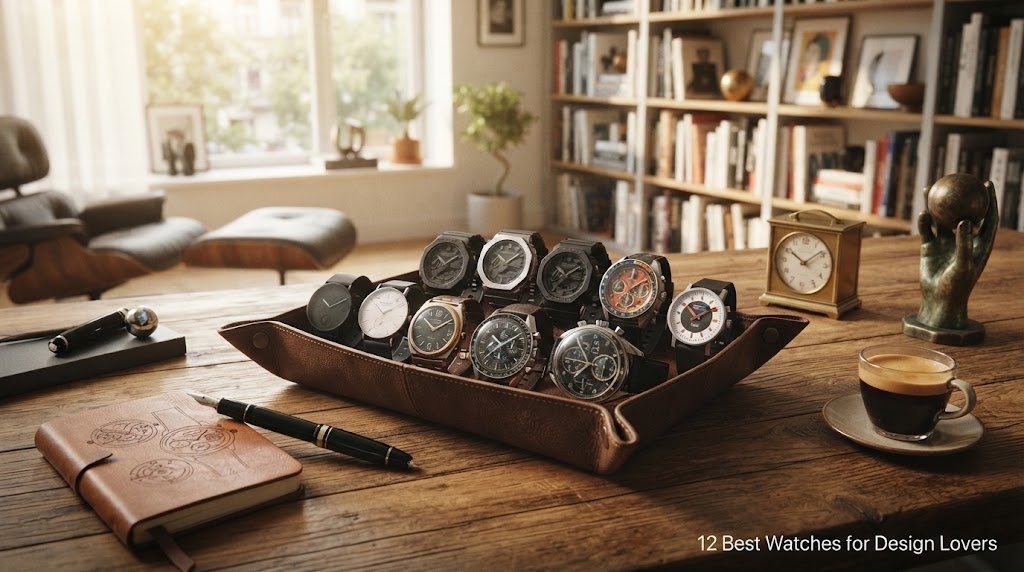
The 12 best watches for design lovers are the ones that do more than tell time: they bring a clear point of view to the wrist, with names in this selection including Gagà Milano, UNDONE, Master Works, and other design-led timepieces chosen for originality, proportion, and everyday wearability. A good watch sets the tone before you say a word - on your wrist, in your daily carry, and in the small design choices people notice without quite naming them. That is why the best watches are rarely the loudest or the most expensive.
For a design-minded buyer, the appeal is usually more specific than "luxury" or "value." If you are an urban creative professional or style-conscious wearer who wants something authentic, well-designed, and expressive without looking overdone, the difference often comes down to details: the tension between a clean dial and an unconventional case, the warmth of a domed crystal, the feel of a mechanical versus quartz movement, or the way a strap changes the whole personality of a watch. Good design lives in those details, and so does regret - a watch can look great in a product photo and still feel flat once it is on the wrist.
That is where curation matters. This guide focuses on 12 watches across minimalist, retro, functional, and more design-forward styles, with attention to the features that actually shape long-term satisfaction: form, balance, movement, originality, and how well a piece fits your visual language and daily routine. If you care about lasting appeal rather than novelty, the field narrows quickly. You are not shopping for every watch. You are looking for the right kind of watch.
What makes the best luxury watches for design lovers different?
Design-led watches are not one style. Some are stripped back and architectural. Others are expressive, playful, or a little theatrical. What connects them is intent.
The best ones know exactly what they are trying to say. A minimalist piece should feel calm, not empty. A statement watch should feel deliberate, not chaotic. Even functional details matter here. Typography, hand shape, crown size, lug length, dial texture, and case finishing all change the read. The strongest examples also earn their place as iconic watches through distinctive design, not just styling.
That is also why design lovers often care less about spec-sheet bragging rights than mainstream watch buyers do. Movement type, water resistance, and crystal material still matter, but they matter in context. If a beautifully balanced watch sits perfectly under a cuff and works with the rest of your wardrobe, that can outweigh a feature you will never use. In a market crowded with luxury watches, careful curation helps watch enthusiasts focus on pieces with real point of view.
12 best watches for design lovers
1. Gagà Milano for unapologetic personality
Some watches are meant to blend in. Gagà Milano is not one of them. The watch market offers a massive variety of top-tier timepieces, so this list mixes styles instead of repeating similar picks, and certain watches and watch brands stand out because they shape how a modern watch collection is built. Its oversized cases, stylized numerals, and theatrical dial layouts make it a strong choice for people who treat accessories as part of their visual identity.
This is a watch for design lovers who prefer character over restraint. It works best when the rest of your look is clean enough to let it lead. If your style leans minimal, it may feel like too much. If you like Italian flair, a yellow gold detail or a two tone finish can feel exactly right.
2. UNDONE for customization with design discipline
Customization sounds good in theory but often ends in overdesigned results. UNDONE stands out because the brand understands limits. The best pieces still feel coherent, even when the details are personal. Oversized cases and stylized numerals already do much of the work, and yellow gold or two tone executions can push that theatrical appeal further. Depending on the model, that balance may come through quartz movements or a hybrid setup that borrows some tactile appeal associated with mechanical movement.
That makes it ideal for buyers who want something distinctive without drifting into novelty. If you care about process as much as outcome, this is one of the smartest entries in the category. It gives you room to express taste, not just add decoration.
3. Master Works for Japanese balance and detail
Master Works has the kind of visual restraint that rewards a second look. The design language is refined, but not sterile. Cases feel measured, dials feel composed, and the finishing tends to support the silhouette rather than fight for attention. That balance gives the watch a classic design without making it feel dated, while the clean lines keep the overall look sharp and easy to wear.
For many design lovers, this is the sweet spot. It has enough detail to feel intentional, enough simplicity to wear every day, and enough personality to avoid disappearing into a sea of generic minimal watches. Part of UNDONE’s appeal, by contrast, is access to quartz movements for buyers who want simplicity and less fuss. Some builds also appeal to buyers who like the feel associated with a mechanical movement.
4. JPN for clean everyday modernism
If you want a watch that feels contemporary without trying too hard, JPN deserves attention. The appeal is in the edit, with clean lines across the case and dial colors. Nothing feels accidental, and nothing feels forced.
This is a useful choice for people who want design credibility in a quieter register. It pairs well with modern workwear, monochrome dressing, and even a casual day in jeans with streamlined everyday carry. Less statement piece, more silent signal. That restraint gives it lasting appeal rooted in classic design.
5. Deep Blue for functional design with edge
Not every design lover wants delicacy. Some want a watch with real visual weight and practical toughness. Deep Blue brings a more tool-oriented energy, but when chosen well, that can be part of the appeal.
The right Deep Blue model works for someone who likes industrial forms, stronger case geometry, and a watch that feels ready for impact. It leans closer to a tool watch, with the kind of toughness associated with dive watches, including details like sapphire crystal and bold hour markers that support clarity and durability. Historically, the rolex submariner set an early benchmark here after its 1953 introduction, and that original context matters because 100 meters of water resistance was already a strong signal of purpose. The Seiko SKX007 is also widely seen as a perfect starter dive watch, which helps ground this category in accessible, everyday design rather than only appeal for the serious collector. It is less about minimalism and more about honest utility. If your taste runs clean but rugged, this direction makes sense with workwear, a streamlined carry, or even a casual day in jeans. Subtle dial colors can also shift the mood without disrupting the brand’s quiet approach. The Doxa SUB 200 is a good reference point for diving pedigree, while Certina's DS Super PH500M shows how 500-meter water resistance can push a tougher, more specialized look.
6. Bauhaus-inspired minimal watches for pure form
The Bauhaus school still shapes modern watch design for a reason. The best examples are legible, proportionate, and quietly intelligent. They do not shout about good taste. They assume it. That restraint also separates them from the more overt tool watch feel of something like a khaki field.
A watch in this style is often the easiest to wear long term. It resists trend fatigue and works across offices, weekends, and travel. Some of the appeal still overlaps with dive watches because legibility and toughness remain part of the design brief. Sapphire crystal and strong hour markers are part of the practical visual cues that make this style attractive. The trade-off is emotional intensity. If you want instant drama, this category may feel too calm.
7. Retro chronographs for graphic appeal
A well-designed chronograph has a natural visual richness. Subdials, pushers, scale markings, and color contrast can create a layout that feels almost poster-like on the wrist.
For design lovers, the attraction is often graphic rather than technical. You do not need to use the chronograph every day to appreciate the composition, whether that is the bold square case of a Monaco, the motorsport pull of TAG Heuer, or the way an automatic chronograph turns timing into part of the watch’s identity. A tachymeter scale and a tactile chronograph function add to that layered appeal. This category is calmer than a Khaki Field-style watch, though both reward clarity and purpose; field watches are rugged and legible, while Bauhaus minimalism strips things back even further. You do need to like visual density. If you prefer negative space and simplicity, this style can feel busy.
8. Tank-style watches like the Cartier Santos for architectural elegance
There is a reason rectangular watches keep returning. They offer a different kind of sophistication - more architectural, more editorial, and often more fashion-aware than the average round case. On many vintage-inspired models, the chronograph layout, subdials, and tachymeter scale add to that visual appeal rather than making the dial feel busy.
The rise of the automatic chronograph also helped define retro sports-watch design and made this kind of timepiece feel more collectible.
A tank-style silhouette suits design lovers who care about shape language. It also wears especially well with tailoring, knitwear, and cleaner wardrobes. TAG Heuer offers a clear example here: the Monaco launched in 1969 with a square case and a bold graphic dial. The Cartier Santos also matters in this conversation, originally created as a practical alternative to pocket watches and now seen as one of the clearest links between early aviation utility and dressier watch design. The Omega Speedmaster became the first watch worn on the moon in 1969, which only adds to the pull of historically grounded design. The Patek Philippe 1518, the first wristwatch with a perpetual calendar and chronograph, shows how this category also reaches into high-horology traditions. The limitation is versatility for some buyers. If you want one watch for sporty casual wear, round cases tend to adapt more easily.
9. Integrated bracelet designs like the Audemars Piguet Royal Oak for modern polish
Few categories feel as distinctly contemporary as the integrated bracelet watch. The way the case flows into the bracelet creates a strong, unified object rather than a simple watch-and-strap combination. In the broader market, even a luxury watch brand can trace this appeal to iconic luxury sports watches, especially Audemars Piguet and the Audemars Piguet Royal Oak, with the Royal Oak and AP Royal Oak helping define the look through an octagonal bezel and visible screws. A different but equally enduring example of strong case design is the Cartier Santos, an early square case watch created in 1904 for aviator Alberto Santos-Dumont as a practical alternative to pocket watches.
This makes it especially attractive to buyers who notice industrial design, though some also prefer a more refined timepiece. Fit matters more here than with a standard strap watch, so wrist size and bracelet taper should not be afterthoughts. When the proportions are right, the result feels sharp and complete. Dress watches are characterized by being slim and elegant, which is a big part of the appeal of tank-style designs.
10. Skeleton or open-heart watches for mechanical theater
Some design lovers want to see the system. Richard Mille’s 67-02 shows how far that idea can go, weighing only 32 grams and built with athletes in mind. Skeleton and open-heart watches bring movement into the visual language, turning function into ornament.
The Royal Oak remains the defining reference point for integrated bracelet design. Audemars Piguet turned that idea into one of the most influential luxury watch forms ever made. The AP Royal Oak made its bezel screws part of the visual identity, which helped define the bolder industrial language of luxury sports watches. It was launched in 1972. Many buyers still treat it as the watch that invented the luxury sports watch category and reshaped what a luxury watch brand could do in steel.
This can be compelling, but it is not universal. A great open-worked watch feels engineered and balanced, especially when the dial reveals an automatic movement without losing clarity. A weak one feels cluttered fast. If you love visible mechanics, this style offers drama and can produce truly exceptional timepieces, sometimes pushing into cutting-edge innovation. If you prefer calm surfaces, it will probably never be your watch. Richard Mille sits at an average retail price around CHF 294,118, which places that kind of mechanical theater at the far end of the market.
11. Color-dial watches for controlled expression
A black or silver dial is safe. A deep green, warm salmon, navy, or off-white dial is often more interesting. Color can shift a watch from generic to memorable without changing the case at all. Even the best skeleton models are appreciated as exceptional timepieces because the movement becomes part of the design, and an automatic movement often adds to the appeal when the mechanics are visible.
For design lovers, the key is restraint. The best color-dial watches feel intentional and wearable, not trendy for one season. A subtle date window can keep the dial practical without disrupting the look. If the rest of your wardrobe is neutral, a colored dial can do a lot of work with very little effort. The Tissot PRX is a good reference point here because its retro look shows how a strong dial color can feel elevated rather than loud. The same idea applies to a two tone watch when the contrast is handled with enough restraint.
12. Smaller case watches for proportion-first style
For years, bigger meant bolder. Now, proportion has the stronger argument. Frederique Constant is also a useful reference here for smaller, vintage-leaning dress styles, especially if you want Swiss elegance in a more accessible format. Smaller case watches often look more refined, more considered, and more in tune with contemporary style. Even the Tissot PRX 80 shows how dial treatment can move a watch from basic to design-forward.
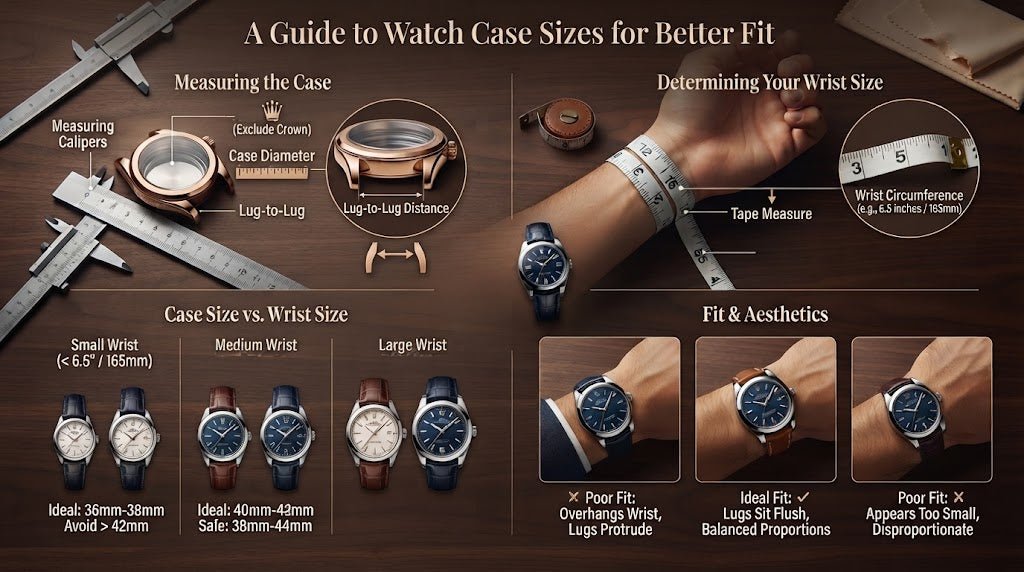
This is not just about trend. It is about how a watch sits, how much dial you actually need, and whether the whole object feels designed for a wrist rather than a display stand. For many design-conscious buyers, sizing down is not compromise. It is clarity. That is also why historical significance still matters, while modern iterations keep classic proportions relevant for current buyers. A date window can either support or interrupt a strong color composition depending on where it sits. Some buyers also prefer two tone versions when they want more visual contrast. The Tissot PRX 80 is priced at $725 and offers a luxurious feel at that level.
How to choose the best watch collection for design lovers
Start with your own visual language. Do you dress in sharp neutrals, soft textures, vintage references, or more expressive statement pieces? A watch should extend that language, not interrupt it.
Then think about where design matters most to you. Some buyers respond to silhouette first. Others notice the dial, the typography, or the way polished and brushed surfaces interact in light. Knowing your entry point helps you filter faster. The Tudor Black Bay 58 is a good example: introduced in 2018, it draws on vintage design and uses a highly wearable 39mm case, showing how a modern collection can respect history without feeling oversized.
Practicality still counts. Quartz can make perfect sense if you want reliability and low maintenance, especially in models with quartz movements or even digital watches. Mechanical watches offer romance and depth, and an automatic movement can be part of that appeal, but they ask more of you. If you need something more water resistant for daily wear, brands like seiko have long made that easy to find. Leather feels warm and classic, while steel tends to feel cleaner and more architectural. Neither is better in the abstract. It depends on how you live.
It is also worth being honest about how much distinctiveness you actually want. There is a big difference between a conversation piece and an everyday signature. The first can be thrilling. The second tends to earn more wrist time.
Why curation beats endless choice
Most people do not need more options. They need better filters. A selective retailer with a clear design point of view can save you from the usual spiral of tabs, specs, and near-identical watches pretending to be different. That matters in a crowded watch world, where strong curation helps separate genuinely distinctive pieces from noise across many watch brands.
That is especially true if authenticity matters to you, and it should. A design-led watch loses some of its appeal the moment trust enters the picture. Buying from an authorized source with official warranty coverage is not just the safer move. It respects the object itself. Bang On has built its reputation around that kind of edit - selective, design-first, and grounded in real brand sourcing. That approach also makes more sense once you look beyond marketing and consider how the secondary market treats durability, demand, and long-term appeal. In the swiss watch industry, names like rolex, patek philippe, vacheron constantin, jaeger lecoultre, and richard mille are often used as benchmarks when people compare the best luxury watch brands or define what a luxury watch brand represents for collectors. Rolex accounts for roughly 33% of the Swiss watch market, while Cartier holds about 9%, which shows how concentrated brand attention can be. Patek Philippe also sold an estimated 72,000 watches in 2025, part of why a few names dominate collector conversations and appeal to seasoned buyers and enthusiasts alike. Even so, a good retailer does not need to imitate the whole market to be useful. It needs a sharper point of view and a better fit for a new audience that wants design, authenticity, and less guesswork.
The best watch is not the one with the longest feature list. It is the one that still feels right six months later, when the novelty has faded and only the design remains. Practicality still matters, though, especially if you want something versatile and water resistant enough for everyday wear. Quartz movements make sense if you want low-maintenance accuracy and an easy daily grab-and-go option, and the Seiko Astron was the first quartz watch released in 1969. An automatic movement makes more sense if you care about mechanical character and the small rituals that come with wearing it. Digital watches can still make sense if you care more about utility, nostalgia, or toughness than traditional mechanics. The Casio F-91W became a cult classic after launching in 1989. GMT watches are designed for tracking multiple time zones, and the Seiko 5 Sports GMT, released in summer 2022, is a strong accessible example at around $495. Seiko is also a useful reference point if you are building a balanced collection across styles and budgets. Citizen Eco-Drive technology powers watches using any light source. The Citizen Tsuyosa Automatic retails for $356.25. The Omega Moonswatch launched in 2022 by blending luxury and accessibility. The Timex Expedition Scout is an easy value pick for under $50. The G-Shock DW6900 costs less than $60 and remains a strong digital option. The Casio F-91W launched in 1989 and remains popular. Across entry-level and collector tiers alike, watches continue to reward buyers who choose with patience instead of just chasing features.