
文章: Designer Watches Versus Smartwatches for Style
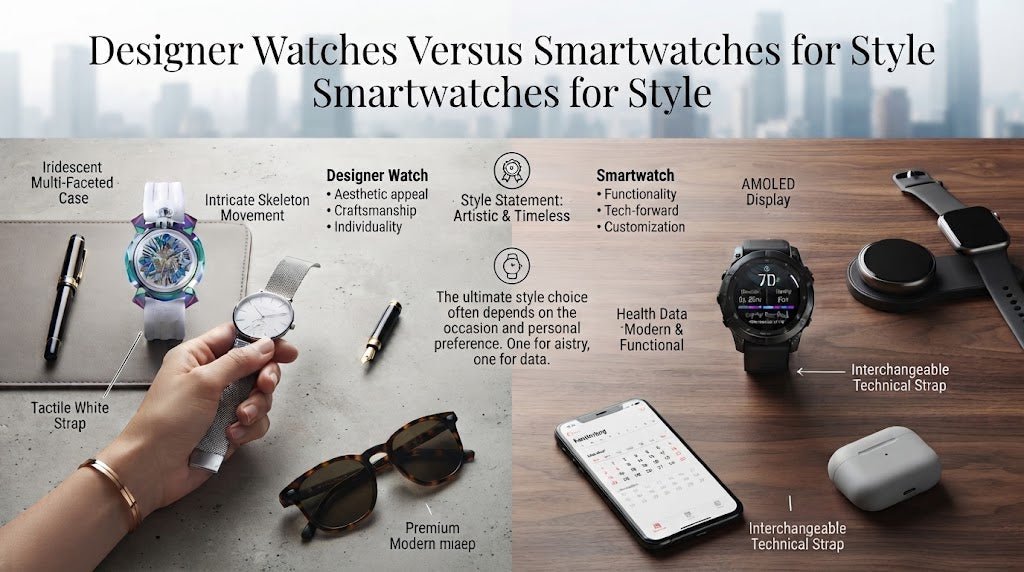
Designer Watches Versus Smartwatches for Style
A watch sits at the edge of every gesture: reaching for a coffee, typing a message, holding a camera, shaking a hand. In terms of style, designer watches versus smartwatches comes down to this: designer watches give you a fixed, deliberate visual identity, while smartwatches offer adaptable digital function with a look that often reads more neutral or tech-led. That makes the choice more than a question of features. It is a question of what you want your everyday objects to say before you say anything at all.
For urban creatives and design-savvy shoppers who want wristwear to reflect personality as well as fit daily life, a watch is rarely just a timekeeper. It is part of the composition - alongside a jacket with a considered cut, a well-worn bag, or the camera brought along for a weekend walk. Smartwatches offer extraordinary convenience. Designer watches offer a more deliberate kind of presence. Neither is automatically the better choice. The right one depends on the role you need it to play, the occasions you dress for, the wardrobe it needs to work with, and details like fit, materials, and finish. This guide looks at those trade-offs, the strengths of each category, and why buying from an authorized retailer such as Bang On matters when authenticity and warranty-backed ownership are part of the value.
Designer and Luxury Watches Versus Smartwatches Style: The Core Difference
A designer watch is designed to be seen as an object. Its case shape, dial layout, crown, analog dial with hour and minute hands, strap, and finishing carry the visual weight. Whether it is an oversized Italian statement piece, a clean Japanese-inspired design, or a custom-built watch with an unexpected dial, it creates a point of view on the wrist.
A smartwatch is designed first as wearable technology, reflecting how the watch industry now extends beyond traditional timekeeping. Its display can shift through different watch faces, with digital watch faces acting as the main styling mechanism. That flexibility is useful, but it can also make the watch feel visually neutral when the screen is dark or overly busy when it is awake. The hardware often stays the same while the software does the styling.
This is why the style decision in watches vs smartwatches often comes down to permanence versus adaptability, with much of the smartwatch appeal rooted in modern functionality. A designer watch has a fixed identity. You choose it because the design already feels right. A smartwatch can become many things across a single day, from fitness tracker to calendar alert to digital wallet, but its character is more dependent on the face and band you select.
Why a Designer Watch Feels More Personal to Your Personal Style
The best luxury watches do not need to announce themselves with a logo; as classic watches, they project timeless style and timeless elegance while symbolizing elegance and craftsmanship. They earn attention through proportion. A curved case that sits close to the wrist, a domed crystal, a colored dial with depth, or a thoughtfully matched leather or metal strap can make a familiar outfit feel more intentional.
That tactile quality matters for traditional timepieces. Mechanical details, textured dials, and physical pushers invite a closer look. Even a quartz watch, unlike a mechanical watch, can prioritize dependable accuracy, while traditional watchmaking values mechanical movements and design with a sense of ceremony when the form is distinctive. A watch with a recognizable silhouette becomes part of your visual signature in a way a standard black screen rarely does.
There is also less pressure to constantly interact with it. A designer watch gives you the time, then gets out of the way. For people whose work already involves screens, or who prefer simplicity, that quietness can feel like a small luxury. It keeps the wrist from becoming another place where attention is being requested.
Designer watches are especially strong when your wardrobe has a clear visual language, and a traditional watch works well as a finishing piece with a classic aesthetic. If you lean toward tailored overshirts, monochrome layers, vintage denim, elevated sneakers, or creative office essentials, a watch with character can tie the look together without making it feel over-styled. It is a finishing piece, not a notification center.
Style is not the same as formality
A common mistake is assuming designer watches are only for formal dressing. A polished stainless steel bracelet can suit formal events as easily as casual styling, while a minimalist dial works with a blazer and a bold tonneau case, colorful strap, or graphic dial can feel equally natural with a T-shirt and cargo pants. The goal is not to look dressed up. It is to look considered.
A statement watch also brings balance to otherwise simple outfits, especially with classic watch styling. When the clothing is quiet, the wrist can carry the visual interest. Conversely, if you wear patterned shirts, colorful outerwear, or prominent jewelry, a restrained watch with a clean dial can create breathing room.
Where Wearable Technology and Smartwatches Win
Smartwatches earn their place through utility, and the functionality smartwatches bring fits naturally into modern life, especially for anyone with an active lifestyle. For a run before work, a day of meetings, a commute with headphones on, or a travel day where quick access matters, notifications and health and fitness features can genuinely improve the experience, especially for health-conscious users. The ability to check a message without pulling out a phone is convenient. So is fitness tracking that measures heart rate, supports sleep tracking, and helps people stay on top of fitness goals and overall well being. Many smart watches can also run various apps and control smart home devices remotely.
Their minimal hardware can also suit a certain kind of modern uniform. A dark smartwatch with a sleek design and interchangeable bands can look sharp with performance outerwear, technical fabrics, and streamlined sneakers. If your wardrobe is built around function and reduced color, the device can feel coherent rather than generic.
The trade-off is visual repetition. The same square or rounded screen appears on millions of wrists. Changing straps and faces helps, but the product can still read as a piece of technology before it reads as an accessory, with limited battery life and frequent charging every 1–2 days on average. For some people, that is exactly the point, especially tech enthusiasts who value devices that prioritize modernity and tech integration, and for training-focused users they can be invaluable tools. For others, it is the reason they reach for a designer watch on weekends, dates, events, and creative workdays.
The screen can interrupt the look
A smartwatch can pull focus in a way an analog watch does not, unlike smartwatches that are built to keep surfacing alerts. A bright alert during dinner, a vibrating wrist during a conversation, or a dense complication-filled display can make the accessory feel more like a task list than a personal object. This is not an argument against the technology. It is an argument for choosing when that technology belongs on your wrist.
If you own one smartwatch, consider treating it as a purpose-built tool rather than your only watch, especially since new models arrive so often that devices can feel outdated within a few years. Wear it for training, travel, or schedule-heavy days, which also means less frustration with charging every 1-2 days. Let a designer watch take over when you want to be present, photograph an afternoon, meet someone new, or simply wear something with more visual substance.
Choosing by Occasion, Not by Team
The most stylish answer is often to stop treating the choice as a permanent allegiance, because whether a traditional watch depends on the occasion and your personal preference. A watch rotation can be practical without becoming excessive. One reliable smartwatch and one designer watch cover remarkably different needs.
For movement-focused days, the smartwatch makes sense. For an interview in a creative field, a dinner reservation, a gallery opening, or a casual day when you want your outfit to feel finished, a designer watch has the advantage. It shows attention to detail without demanding attention from everyone around you.
Travel is more nuanced. A smartwatch is useful for boarding passes, time zones, and activity tracking. Yet a designer watch can be the better travel companion if you want to disconnect from constant alerts or prefer an accessory that looks good in every photograph. Consider your itinerary, because where the future of watches lies is often in balancing tradition with digital convenience. A hiking-heavy trip and a design-focused city break ask for different wristwear.
Fit, Scale, and Materials Matter More Than Price
No watch looks stylish if it is poorly proportioned for the wearer. Before choosing between designer watches and smartwatches for style, look at case size, thickness, lug shape, and strap width. A large case can be a great statement, but it should sit securely rather than overhang the wrist. A slim case is refined, though it may disappear if you prefer bolder clothing.
Materials shape the mood, too, and in luxury timepieces or high end watches they also signal lasting quality through premium materials. Leather warms up a watch and works beautifully with knitwear, denim, and tailoring. Steel, often in stainless steel, feels architectural and versatile. Rubber or silicone reads sportier and more casual. A colored strap can turn a simple watch into the focal point of an outfit, while a black or brown strap makes a stronger dial easier to wear every day. On some regular watches, sapphire crystal adds scratch resistance, while precious metals can raise both visual richness and retail value.
Authenticity matters when you are buying design, and luxury watchmakers build long-term value through craftsmanship and durable construction seen across the luxury watch industry, from Patek Philippe to Rolex. A watch's details - from print quality on the dial to the fit of the bracelet and the finish of the case - are the details you are paying to enjoy, and some high-quality pieces even appreciate over time and can outperform traditional investments.
A well-kept traditional mechanical watch can last for generations, become part of family history, and a Rolex from the 1950s can still function perfectly today.
Even after years of neglect, some mechanical watches can still be restored.
Buying from an authorized retailer such as Bang On means the product, warranty, and brand story align with the purchase.
Let Your Wrist Have a Point of View
A smartwatch is excellent at helping you do more, while classic luxury watches bring timeless design to the wrist and remind you that luxury watches symbolize elegance and craftsmanship. A designer watch is excellent at helping your personal style say more with less, much like traditional timepieces valued for lasting style. There is room for both, especially when you choose them with the same care you bring to a camera, bag, or pair of shoes.
Pick the smartwatch when information and movement lead the day. Pick the designer watch when you want an object with shape, texture, and a lasting point of view that regular watches have long carried. The strongest choice is the one that makes you look down at your wrist and feel that it belongs there in our daily lives, alongside connected devices.