文章: Creative Desk Camera Display Example Ideas
Creative Desk Camera Display Example Ideas
A desk says more than most people realize. It holds the tools behind the work, but it also sets the visual temperature of the room. A creative desk camera display example is not about turning your workspace into a store shelf. It is about giving a favorite camera a place where it can be seen, reached, and used.
For photographers, collectors, and anyone drawn to analog joy in a digital world, a camera can earn its space beside the monitor. An instant camera with a stack of finished prints, or a collectible mini camera perched on a small riser, adds personality without asking for much square footage. The best setups feel considered, not crowded.
Start With One Camera Worth Seeing
The easiest way to make a display feel intentional is to choose a hero piece. This might be a Polaroid instant camera in a distinctive color, a compact Kodak camera with a retro profile, or a small digital camera that goes everywhere with you. The camera should be visually strong enough to hold attention on its own.
Avoid treating every camera you own as desk decor. A lineup can look impressive in a dedicated shelf or studio, but on a working desk it can quickly become visual noise. One camera, supported by a few quiet details, has more presence than five items competing for attention.
Position matters. Place the camera at the outer edge of the desk, beside a speaker, on a low cabinet, or near a lamp where it will not interfere with your keyboard, writing surface, or charging cables. If you use it often, keep it within arm’s reach. A display should never make a good object inconvenient.
Give It a Small Stage
A shallow wood tray, a compact metal riser, or a clean acrylic stand gives a camera definition. It separates the object from the loose essentials around it and makes even a modest desk feel more composed. Choose materials that work with the room: warm wood for softer interiors, matte black metal for an industrial setup, or clear acrylic for a lighter, gallery-like look.
The stand does not need to be dramatic. In fact, too much elevation can make the camera feel like a museum piece rather than part of your daily life. A subtle lift is usually enough.
A Creative Desk Camera Display Example That Feels Personal
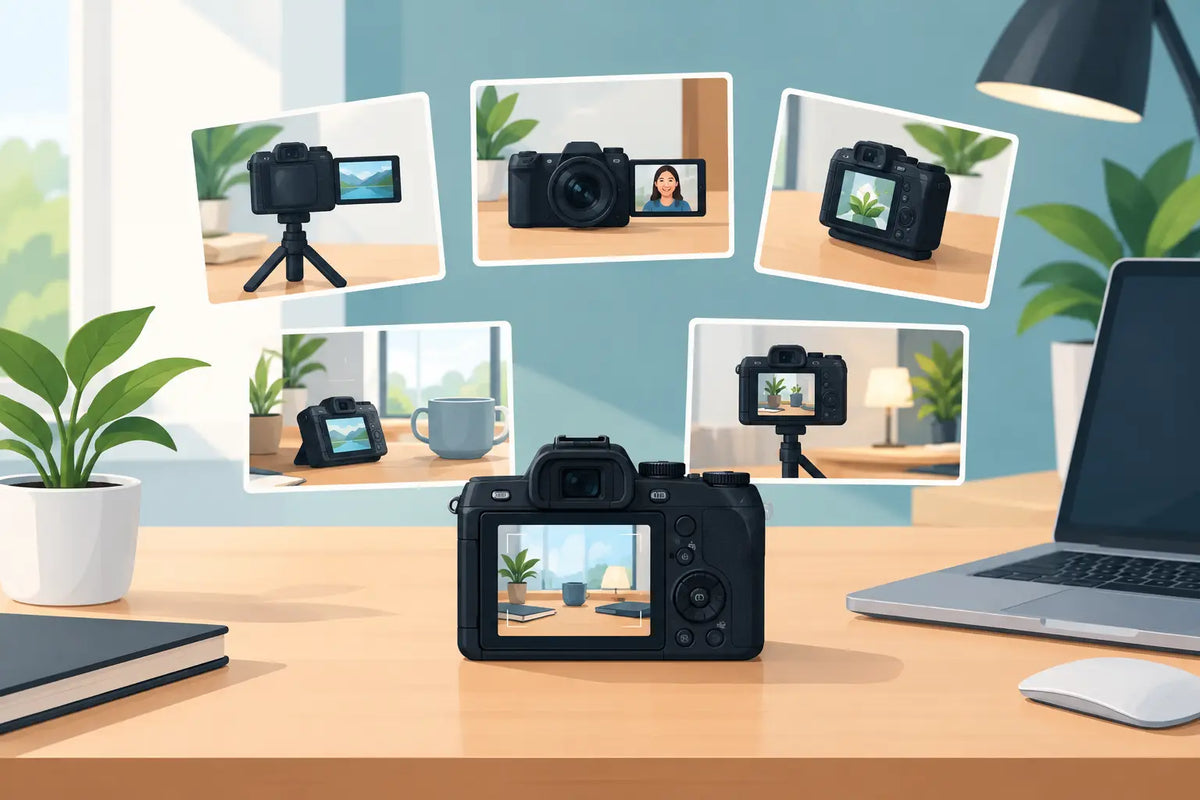
Imagine a walnut desk with a matte black desk lamp, a silver laptop, and a compact instant camera resting on a low black tray. Next to it sits one unopened film pack and two square prints clipped to a slim wire photo holder. One print is a city scene, the other a candid portrait. A small ceramic catchall holds a lens cloth and spare batteries.
That is a creative desk camera display example with a clear point of view: functional gear, real memories, and no decorative filler. The camera is ready for a walk, a dinner, or a weekend trip. The prints make the setup personal without turning it sentimental.
This approach works because it uses contrast carefully. The camera’s shape is the visual anchor. Prints introduce texture and color. The tray creates order. The catchall handles the small, necessary objects that otherwise drift across a desk. Every item has a reason to be there.
Use Prints as Proof of Use
A camera display becomes more convincing when it includes the images the camera made. Instant prints are especially effective because they are objects in their own right: imperfect, tactile, and tied to a specific moment.
Keep the number low. Two to four prints are enough for most desks. Tape them in a loose grid above the work surface, lean them against the wall, or use a small stand that lets you rotate images as new ones come in. A changing print display keeps the desk from becoming static.
Color coordination can help, but it should not become a rule. A bright image can wake up a neutral desk, while monochrome prints can bring calm to a setup with colorful accessories. The better question is whether the image feels like yours. A photo with a story will always look stronger than one chosen only to match the chair.
Build Around a Simple Palette
The cleanest displays usually stay within two or three dominant tones. Think black, cream, and chrome; natural wood, white, and forest green; or soft gray, red, and clear acrylic. This leaves room for a camera with a bold finish without making the desk feel over-styled.
If your instant camera is already colorful, let surrounding pieces stay quiet. If the camera is black or silver, a vivid print, bright film box, or graphic notebook can carry the color. The goal is balance, not perfect matching.
Keep the Working Surface Honest
A camera display has to coexist with actual work. This is where many aesthetically ambitious desks fail: the image looks good from one angle, but there is nowhere to put a notebook, coffee, or camera strap.
Reserve the center of the desk for what you do most. Keep your camera display on one side, preferably the side opposite your dominant hand. Use a cable organizer so charging cords do not cut across the scene. If your camera needs charging, a discreet cable routed behind the stand is better than leaving it plugged into the nearest port.
There is also a case for leaving the camera off the desk entirely during intense work periods. Put it on a nearby shelf, then bring it back when the desk returns to its slower, more personal mode. Good design adapts to real routines.
Add Accessories With Restraint
Accessories can deepen the story, but only when they relate to the camera or the way you use it. Film packs, a wrist strap, a compact photo printer, or a contact sheet of small prints all make sense. Random figurines and decorative objects can dilute the composition unless they genuinely belong to your visual language.
Consider a small rotation instead of permanent accumulation. Display a fresh film box after a shoot, swap in new prints at the start of the month, or change the strap when the season shifts. These small moves make the workspace feel alive and prevent the display from becoming background clutter.
For a gift-worthy setup, pair a camera with a few thoughtful components rather than a pile of extras. A camera, film, and a place to display the first photos is a complete idea. It gives the recipient a starting ritual, not just another device.
Let the Setup Invite You Outside
The strongest desk display does not keep a camera parked at home. It makes you want to pick it up. That is why a ready-to-use setup matters more than a pristine one. Keep film loaded, batteries charged, and a small space clear enough to grab the camera without rearranging your day.
At Bang On, the appeal of a well-chosen camera has always been larger than its spec sheet. It is a design object, a creative prompt, and a record of places worth remembering. Give it a visible place on your desk, then let it spend most of its time in your hand.