Instant Film: How to Choose, Shoot, and Keep It
The frame matters because it is finite
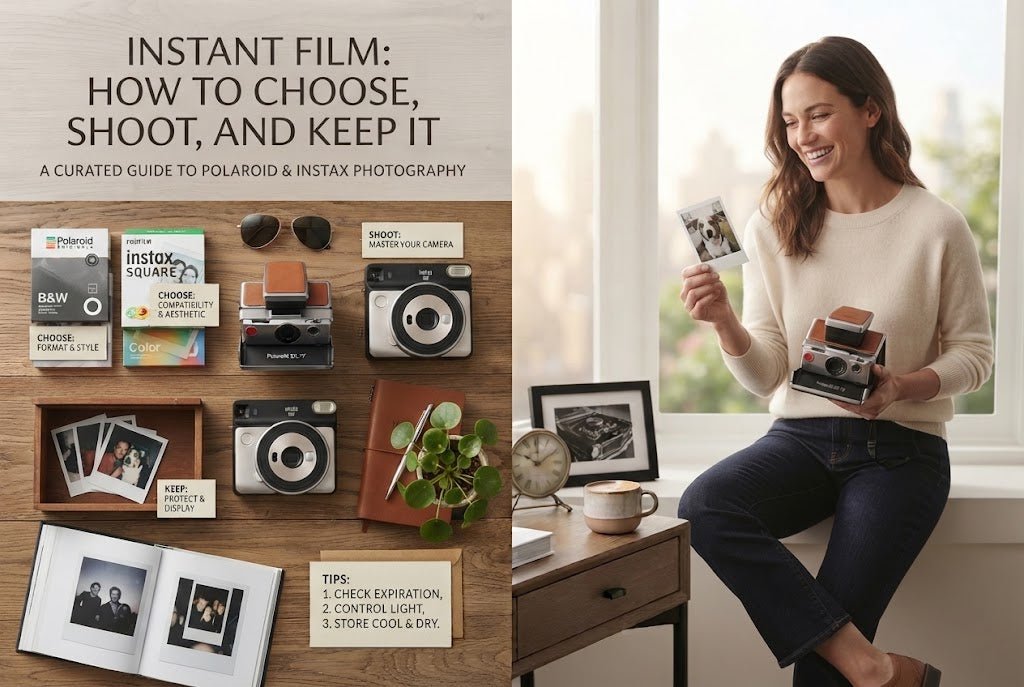
To choose instant film, start with the format your camera uses—Polaroid i-Type, Polaroid 600, Polaroid Go, or Fujifilm Instax Mini, Square, or Wide—then pick the film that matches your camera model, the print size you want, and the look you want your photos to have. A phone can take fifty versions of the same moment without asking much of you. Instant film asks for a decision before the shutter clicks. That small constraint is the point. You compose with more care, stay present a little longer, and leave with an object that cannot be copied by a swipe.
For urban creatives and design-minded photographers who want something more distinctive than another camera roll, that object is more than a nostalgic souvenir, because you can hold the finished photo in your hand. It can be a record of a late dinner, a studio wall, a weekend trip, an opening night, or the people who make a place feel like yours. The chemistry, the white border, and the slight unpredictability give each frame its own character. No preset does quite the same thing.
The best way to enjoy instant photography is not to chase technical perfection, because different photographers prefer different ways of shooting and choosing well starts with what you have noticed about your own habits. This guide helps you choose the right film for your camera, shoot with light and composition in mind, protect and store film properly, and build an instant film practice that embraces the medium for what it is: tactile, intentional, and better suited to meaningful images than endless digital duplicates.
Start with the instant film format your instant camera uses
Not all packs are interchangeable. This sounds obvious, but format confusion is one of the fastest ways to turn an exciting new camera into a frustrating first outing. Check your camera model first, compare film sizes, then buy film made specifically for it.
Polaroid cameras generally use one of several distinct formats. i-Type film is designed for newer Polaroid cameras with rechargeable batteries. Because the camera powers the film ejection, i-Type packs do not need an onboard battery. That makes them a smart fit for modern Polaroid models and a more considered choice if you shoot regularly.
Polaroid 600 film includes a battery inside each pack, which is necessary for classic 600 cameras. It can also work in some compatible cameras, but it is not a substitute for every format. Polaroid Go film is smaller and made exclusively for the compact Go camera. Its scale is part of its appeal: more portable, more casual, and ideal for a bag you actually carry every day.
Fuji Instax is a separate system. Instax Mini makes wallet-size prints with a bright, easygoing look. Instax Square gives a more balanced, graphic composition, while Instax Wide uses wide film for larger images that are especially useful for group photos, landscapes, and environmental portraits. None of these formats work in a Polaroid camera, and Polaroid film does not fit an Instax camera.
This is not just a technical detail. Format changes the feeling of a photograph. A smaller print feels intimate and spontaneous, and the form of the final print is part of that appeal. A square frame naturally suits portraits, still life, and design details. A wider frame gives a scene room to breathe, while a big print can simply have more presence. Choose the camera and film combination that matches the way you want to remember things, not simply the one with the most familiar name.
What instant film does differently
Instant photography rewards intention, but it does not demand a studio setup. Light changes with location, and its character comes from how it handles light, color, and time. That is why two frames made seconds apart can feel noticeably different. Choosing film also means considering lighting conditions and how often you shoot, since sensitivity and cost affect everyday use.
Most instant cameras favor generous light, so your indoor or outdoor location matters. Outdoors on an overcast afternoon, by a large window, or in a bright room, film can produce soft skin tones and pleasing detail with very little effort. In low light, the camera may use flash and a slower exposure. Higher ISO film tends to work better in darker environments, and Fujifilm Instax ISO800 is a high-sensitivity option. That can create a cool, direct look that suits parties and nighttime street scenes, but it can also introduce blur if the subject moves.
The flash is not an admission of failure. With many instant cameras, it is a core part of the look. At close range, it can make a portrait feel candid and immediate. At a little more distance, it may not reach the subject effectively, leaving the background dark. Work with that falloff instead of fighting it: place a friend near a storefront, a painted wall, or another surface with visual texture.
Exposure compensation, if your camera has it, is worth learning, though some beginner cameras offer very little control beyond basic adjustment. A bright snowy sidewalk, pale wall, or window-filled interior can fool the meter into making a frame too dark. Shift exposure brighter when the scene is dominated by light tones. In a dark bar, under a shaded awning, or against a deep-colored background, reducing exposure can preserve atmosphere. Color and light can also cast a different mood across the image. The choice between color and monochrome film also changes the final aesthetic, and Polaroid is known for a more artistic, moody, vintage look that develops slowly. Take a note of what you did after a few frames. Film teaches quickly when you pay attention. The workflow difference with a hybrid instant camera is that you can review images before printing, which helps save film through selective printing.
How to get better shots without making them look overworked
The strongest instant photos often have one clear idea. It might be a face in strong afternoon light, a red chair against concrete, steam rising from a takeout cup, or the geometry of a train platform. Give the frame a subject, then remove distractions by moving a few steps rather than relying on later edits.
Get closer than you think. Many first attempts leave too much empty space around a person or object. A tighter composition makes prints from a mini camera feel more intentional, especially with Mini or Go film. For portraits, keep your subject within the camera's recommended focus distance. If the camera uses close-up or selfie mode, switch to it when needed. Focus limits are real, and no amount of charm can bring back a face that was photographed too close for the lens.
Hold the camera steady after pressing the shutter, with a firm grip on the body. This matters most indoors or at night, when exposure may take longer. If your subject is moving, ask them to pause for one beat. The result can still feel alive without becoming a blur.
Then protect the print as it ejects. With current Polaroid film, shield the developing image from strong light right away by putting it face down on a table, slipping it into a pocket, or using the camera's film shield when available. Do not shake it. Shaking does not speed development and can leave marks before the chemistry settles.
Development time varies with film type and temperature. Resist the instinct to inspect the image every few seconds. Set it somewhere flat, let the colors arrive, and accept that the final frame may surprise you. That reveal is one of the few photographic rituals that still feels genuinely physical.
Storage is part of the final instax mini image
Instant film is a living material before it becomes a photograph. Heat, moisture, and age can affect color, contrast, and consistency. If you bought film for a future trip or gift, do not leave it in a sunny car, near a radiator, or at the bottom of a humid bathroom cabinet, where strange temperature swings can affect results.
For longer storage, keep unopened film packs refrigerated according to the manufacturer's guidance, ideally in their sealed packaging. Before shooting, let a cold pack return to room temperature for about an hour. Loading film straight from the refrigerator can affect performance, particularly in a chilly environment.
Once a pack is in the camera, plan to use it within a reasonable period. The dark slide ejects when you load it, and the remaining frames are no longer protected in the same way as unopened film. Keep the camera away from extreme heat and avoid opening the film door until the pack is finished. Opening it exposes the next frame and can ruin it.
Buy from an authorized retailer when freshness and proper handling matter, even if you are shopping to a budget. Film is not the category for mystery inventory that has spent an unknown amount of time in a warehouse or on a shelf, since badly stored packs can waste money over time. Bang On curates official-brand photography gear for exactly this reason: the experience should begin with the real product, correctly sourced and ready to use.
Build a practice, not a pile of random prints
Film costs more per frame than a phone photo, and for many people that is part of the instant film game. It creates a reason to choose what deserves the shutter. If you shoot often, a hybrid camera can save film because you print only the images you want, and the Instax Mini 12 sits at the low end of entry price at around $70. Rather than carrying a camera only for special events, make it part of a small personal project.
Photograph the same corner of your neighborhood each month. Make one portrait of every guest who comes to dinner. Collect signage, storefront colors, hands, transit windows, or baby portraits from a creative workspace. Vintage Polaroids such as the manual-focus SX-70 have risen 2–3x in value over the past and can even be an investment, while toy-style models like the Fuji Instax 8 tend to have little or no resale value. A repeated subject gives your pictures cohesion without making them stiff, and discovering your preferences is part of the process. After a few packs, you will have something more interesting than isolated snapshots: a visual record with a point of view.
Keep the finished prints somewhere visible. Tuck them into a notebook, arrange them in a slim album, clip them to a studio board, use a pin to hang one near your desk, or include one in a handwritten note. Avoid storing them under heavy pressure or in direct sun, since both can affect the image over time. If you scan a favorite, you gain a shareable copy, and a printer can help if you want extras. A few examples can turn favorite prints into a more coherent project.
Let the imperfect frame earn its place
A soft corner, a flash reflection, a slightly unexpected crop - these are not always mistakes. Sometimes they are the evidence that a photograph happened in real time, with real light and no second chance. Instant film is at its best when it remains a little unruly.
Bring a few frames to the moments you would otherwise leave only in your camera roll. Slow down before the shutter, protect the print after it appears, and let the finished image live somewhere you can encounter it again.