How to Pick Everyday Carry Bags
You feel a bad bag almost immediately. The strap cuts in, the shape collapses, your camera fights for space with your charger, and suddenly something you carry every day becomes a small daily annoyance. That is why knowing how to pick everyday carry bags matters. The right one should make movement easier, not more complicated, and it should look right in the contexts where you actually live - commuting, shooting, working, traveling light, or moving through the city on a weekend.
A lot of people start with appearance, and to be fair, they should. An everyday carry bag sits in your line of sight all the time. It becomes part of your uniform. But good selection starts where design meets behavior. The best bag is not the one with the most compartments or the trendiest silhouette. It is the one that fits your loadout, your pace, and your sense of style without asking for compromise every single day.
How to Pick Everyday Carry Bags: Start with Your Real Everyday Carry
To pick everyday carry bags, start by auditing what you actually carry from Monday to Sunday, then choose a format that suits that load and your style, size it around your core essentials with a little margin, and pay close attention to materials, comfort, and organization. For urban creative professionals and design-conscious people who want one bag that works hard without looking generic, the right choice makes daily carry lighter, cleaner, and more intentional.
Before you compare shapes or materials, look at what you actually carry from Monday to Sunday. Not the fantasy version of your life. The real one.
If your daily essentials are a laptop, notebook, charger, earbuds, wallet, keys, and a compact camera, you need very different capacity than someone carrying only a phone, slim wallet, sunglasses, and a small film camera. That sounds obvious, but this is where many bad purchases begin. People buy for occasional overflow, then spend the rest of the year carrying a half-empty bag that feels oversized.
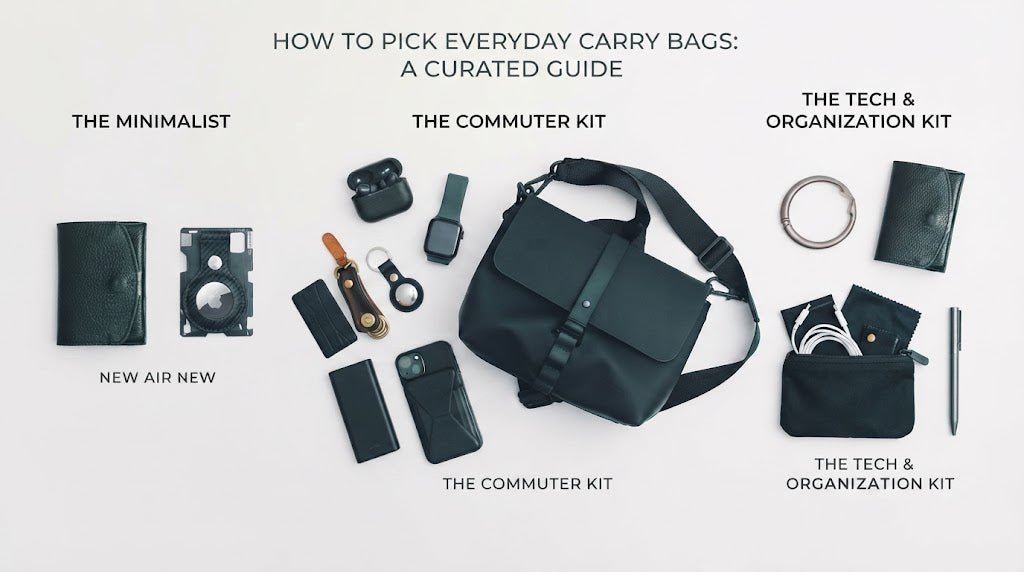
A better approach is to group your items into layers. Start with non-negotiables, then work outward. Your core layer is what never leaves you. The second layer covers work or creative tools. The third layer is optional - water bottle, light jacket, extra film, power bank, or a tablet. Once you know those layers, the right size becomes much clearer. From there, you can judge whether a backpack, crossbody, or tote fits your usual day, how much structure and pocketing you need, and whether the bag works with your wardrobe instead of against it.
If you regularly carry a laptop, dimensions matter more than quoted capacity. A 14-inch device can fit very differently depending on sleeve design, zipper opening, and interior padding. If you carry a camera, internal organization matters more than pure volume. Bags that look roomy on paper can feel badly arranged once real gear goes in. The rest comes down to practical trade-offs: durable versus refined materials, all-day comfort versus compactness, and buying for your typical day rather than the rare one.
How to pick everyday carry bags by format
The easiest way to narrow the field is by choosing the right bag type first. EDC stands for everyday carry. Format shapes your entire experience. The ideal choice balances functionality, comfort, and style across capacity, organization, and durability.
EDC backpack
An EDC backpack is usually the best choice if your load is heavier, bulkier, or more tech-driven. Most bags in this category sit between 10 and 25 liters. It distributes weight better and makes sense for commuting, travel days, and longer time out of the house. A sternum strap can also help keep it stable on longer commutes. For urban use, the strongest options feel structured but not bulky. You want enough organization for devices and accessories, with dedicated pockets for electronics, pens, and quick-access items, but not so many pockets that everything disappears into its own compartment.
The trade-off is visual presence. A backpack is practical, but it is also the largest statement on your back. If your style leans minimal and refined, look for clean lines, subtle branding, and a profile that stays compact when not fully packed.
Crossbody or sling
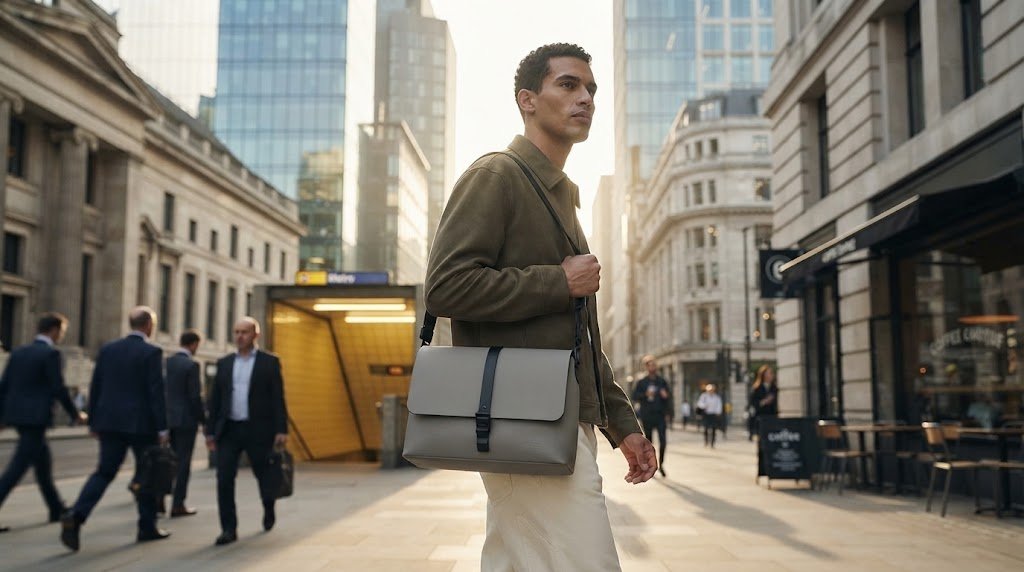
For lighter carry, a crossbody or sling is a strong EDC bag option. It keeps essentials close, makes fast access to frequently used items convenient, and suits fast, city-based movement. It also pairs well with creative routines - carrying an instant camera, wallet, phone, and a few extras without the commitment of a full backpack.
Around 5 liters works especially well for lightweight everyday carry in a sling. A good example is the tom bihn Side Kick, which weighs just 9.4 ounces.
The downside is capacity and comfort over long hours. Once a crossbody gets overloaded, it stops feeling effortless. If you like this category, be honest about weight. Small bags are best when they stay small in spirit, not just in dimensions.
Tote, hybrid, or compact bag
Totes, satchel, and hybrid carry styles appeal to people who want flexibility, a softer silhouette, and a compact size when they want that versatility without the visual bulk of a backpack. They can feel elevated and easy, especially in work or casual settings where a technical backpack looks too sporty. Some hybrid designs solve this well by offering tote handles plus a shoulder strap or backpack function.
Messenger-style options can vary widely in size, from the Satchel 13 at seven liters to the Timbuk2 Commute Messenger Bag at 14 liters.
This category depends heavily on structure. An unstructured tote can look great, but if your carry includes electronics or fragile gear, too much openness becomes a liability. Photographer-focused options like the Peak Design Everyday Messenger prioritize protected organization for camera carry. Style is strong here, but function varies widely.
Size is where most mistakes happen
People usually regret buying too big more than too small. A large bag invites clutter, and that kind of disorganization adds daily friction and stress. It also changes the way you move. It bumps into chairs, crowds your commute, and asks you to manage empty space all day.
A compact bag, on the other hand, enforces discipline. That can be a good thing if your routine is stable. But if your days are unpredictable, too little flexibility becomes frustrating.
The sweet spot is enough room for your core carry plus a little margin. Think one extra layer, not five. If your essentials fit perfectly only when packed with precision, size up slightly. If you can throw in a sweatshirt, gym kit, lunch, and a camera without noticing, size down.
This is especially true if aesthetics matter to you. A bag looks better when its scale fits your frame and your use. The best bag should also suit your body frame, with smaller options often working better for petite individuals. A well-proportioned medium bag almost always feels more intentional than an oversized one trying to cover every possible scenario.
Materials change both performance and mood
Material is not just about durability. It changes how a bag feels, ages, and reads visually, so durable materials matter for both function and style.
Nylon and technical fabrics tend to be lighter, more weather-resistant, and better for active daily use. Choose water-resistant materials like nylon or treated canvas for durability. They suit commuters, travelers, and anyone who needs practical reliability. The best versions still look refined rather than purely utilitarian.
Canvas and textured fabrics can feel warmer and more casual. waxed canvas is a durable treated option that ages well. They often age with character, but they may pick up marks faster and usually offer less protection in wet conditions unless treated.
Coated or waterproof materials make a lot of sense for urban movement. If you carry electronics, camera gear, or film, weather protection is not a small feature. It is peace of mind. Still, fully technical finishes can feel more modern than timeless, so it depends on your aesthetic.
Reinforced stitching at stress points also improves long-term durability. Hardware matters too. Zippers are often the most abused component, so quality matters and they should move cleanly. Buckles should feel secure without becoming fussy. Straps should hold their adjustment. When a bag is part of your daily routine, these details stop being details.
Comfort is a design decision
A beautiful bag that carries poorly will eventually stay home.
This is where straps, back panels, weight, and access all come into play. A good EDC bag should be easy to open, close, and reach into multiple times throughout the day. Wider straps generally distribute pressure better. Padded shoulder areas help if you carry tech or camera gear. A backpack should sit close to the body without feeling stiff. A crossbody should stay stable when you walk, not swing around with every step. Its closures should add security in motion without slowing access too much.
Access is part of comfort too. If you reach for your phone, transit card, keys, or film regularly, your bag should support that rhythm. Fast-access pockets are not a luxury in an everyday bag. They are part of the whole point.
The best everyday carry bags feel intuitive after a day or two. You stop thinking about where things go. That ease is worth paying for because it reduces friction every time you leave the house.
Style should match your personal uniform
If you are figuring out how to pick everyday carry bags, do not separate style from function. The right bag should match your lifestyle and work with the clothes you already wear.
If your wardrobe is monochrome, architectural, and clean, a sharply designed backpack or minimal crossbody will probably feel right. If your style is more relaxed, textured, and casual, a softer tote or canvas-based bag may integrate better. If you move between creative work, office settings, and weekend city use, a versatile bag in neutral tones with understated design usually gives you the most range.
Black is the safe choice for a reason. It works, hides wear, and suits most wardrobes. But muted olive, gray, navy, and warm earth tones can feel more distinctive without becoming difficult, and a neutral color is still the best choice if you want the most compatibility with your wardrobe. The key is longevity. Your everyday bag should still look like you six months from now.
This is where curation matters. A selective retailer like Bang On makes the decision easier because it narrows the field to bags that already balance design credibility with actual use. That saves time, but it also reduces the chance of buying something that looks good online and feels wrong in daily life.
Look for useful organization for EDC essentials, not gimmicks
More compartments do not automatically mean better design. In fact, too much internal segmentation can make a bag harder to use.
Good organization supports your habits. It gives sensitive items protection, keeps small items from disappearing, and helps heavier gear stay balanced. Bad organization forces you into a layout that does not match what you carry.
For most people, one secure main compartment, dedicated pockets for electronics, pens, and quick-access items, plus one laptop or tablet section if needed, are enough. If you carry a camera, look for padded separation or modular space with a pouch. If you carry only essentials, keep it streamlined. Empty pockets become visual and practical clutter.
Buy for your most common day, not your busiest one
This is probably the cleanest rule of all. Your everyday carry bag should serve your most common day beautifully, so start by thinking about how you are actually packing for that routine. It does not need to solve every scenario in a single day or every edge case.
If you occasionally need more capacity, that is what a second bag is for. Trying to make one bag cover office work, photo walks, weekend travel, gym sessions, and formal settings usually leads to a compromise that excels at none of them. Some people also keep separate EDC gear in a compact pouch for occasional specialization, whether that means a small flashlight, a multi tool, a knife, or an aid kit, so the main bag stays dialed in for daily use and your next adventure.
A well-chosen everyday bag should feel like a natural extension of your routine and your taste. It should carry what matters, move well through the city, and still feel right when you catch your reflection in a window. For a minimalist everyday carry approach, that usually means keeping weight and bulk under control. That is the standard worth holding onto.