How to Match Bag Outfits Without Overthinking
A bag is rarely just the thing that carries your day. It changes the posture, proportion, and attitude of an outfit before anyone notices the details. Learning how to match bag outfits is less about following rigid color rules and more about choosing a silhouette and finish that make your look feel considered.
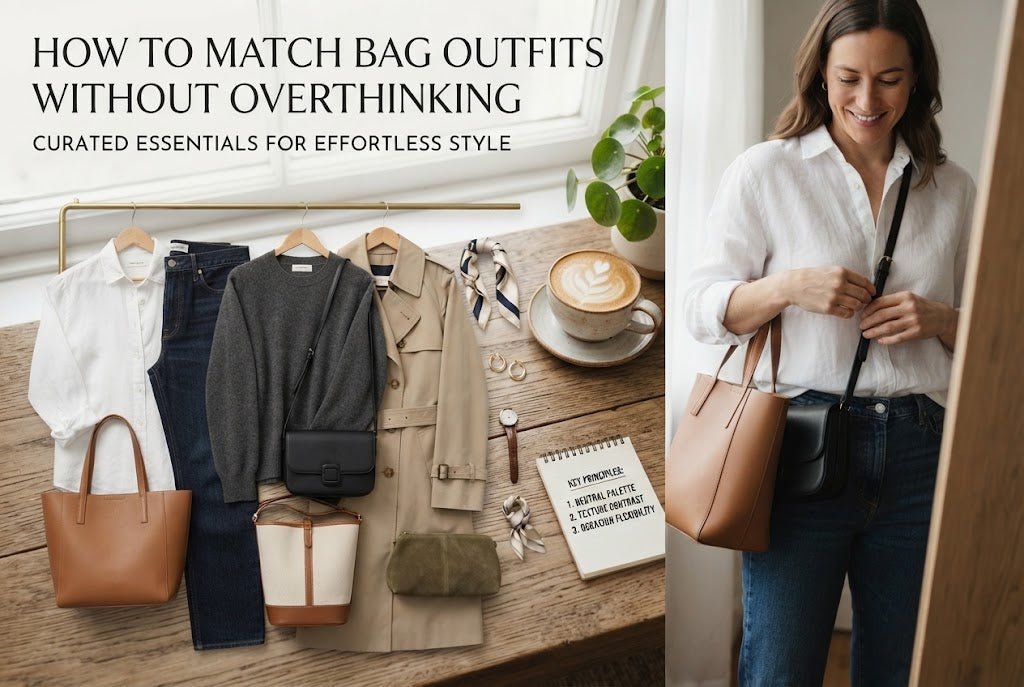
The strongest combinations do not look overly coordinated. They look natural: a compact crossbody that sharpens a relaxed overshirt, a structured backpack that gives tailored layers a modern edge, or a simple tote that lets a statement watch and clean sneakers carry the visual weight. The goal is not a perfect match. It is visual balance.
Start With the Bag's Job
Before color enters the conversation, decide what the bag needs to do and what the occasion asks of it. A workday commute, gallery opening, airport run, and weekend photo walk call for different capacities, different energy, and different formality levels. A bag that works beautifully with a minimalist office outfit may feel too formal with faded denim and a vintage tee.
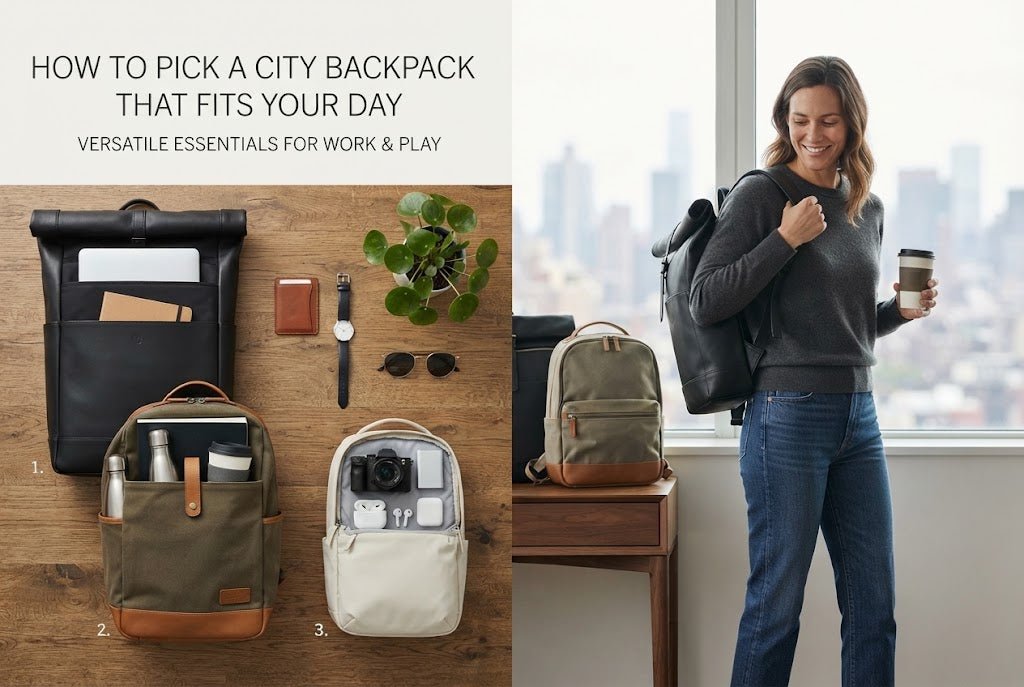
Backpacks tend to bring utility and structure. They pair naturally with outerwear, relaxed tailoring, technical fabrics, and sneakers because each piece shares an everyday, mobile quality. A slim, water-resistant backpack can also make a wool coat and straight-leg trousers feel less corporate and more city-ready.
Crossbody bags are more flexible than people give them credit for. A compact crossbody can break up a monochrome outfit, add purpose to a simple T-shirt and chinos, or make wide-leg pants feel more intentional. Keep the scale in check. If your outfit has volume - oversized knitwear, a puffer, or loose trousers - a very small bag can look lost. A medium crossbody usually gives the look enough visual presence, while a tiny bag can disappear against bulkier layers.
Totes work best when the outfit already has an easy confidence. Think denim, lightweight tailoring, linen, relaxed dresses, or a clean sweatshirt-and-trouser combination. Their open, uncomplicated form feels polished without looking precious. They usually offer enough space for everyday essentials while still feeling functional. They are especially useful when your day moves between work, coffee, and a spontaneous stop to pick up film or a camera accessory, then carries on into dinner or other night plans.
How to Match Bag Outfits Through Proportion
Most bag mismatches are proportion problems, not color problems; size matters more than people think. A large bag beside a streamlined outfit can feel heavy; a tiny shoulder bag with bulky layers can feel accidental. Look at the overall outline in a mirror before leaving, not just at the individual pieces.
If your clothes are fitted and crisp, introduce a bag with enough structure to complement the silhouette and hold its own. A boxy crossbody, clean backpack, or defined tote with clean lines gives a narrow silhouette a confident finish. When the clothing is loose, soft, or layered, choose a bag with some substance but avoid anything overly rigid unless you want contrast to be the point.
Contrast can be effective when it is deliberate. A refined leather-look bag against a washed sweatshirt creates a useful tension. So does a sporty backpack with a long coat and knitwear. But if every element is competing - oversized jacket, bold print, oversized bag, bright shoes - one strong element can create movement, while too many make the outfit lose its center. Let one or two pieces lead.
Bag placement matters, too. A crossbody worn high on the torso reads active and graphic, almost like part of the outfit's architecture. Worn lower at the hip, it feels more relaxed. Backpacks should sit close to the body when you want to maintain a cleaner profile, particularly with tailored clothing or a longer coat.
Choose a Color Relationship, Not an Exact Match
Matching your bag exactly to your shoes is a classic move, but it is not the only one. In fact, exact matching can sometimes make an outfit feel overly planned. A more current approach is to focus on color harmony rather than exact matching and create a relationship between colors.
Neutral bags - black, charcoal, navy, gray, olive, cream, and warm brown - are the foundation of a flexible wardrobe. They work because they do not ask for attention every time you get dressed. A black bag can anchor pale denim and a white shirt, while an olive bag gives black, gray, navy, and earth tones a softer edge.
When wearing a colorful bag, repeat its mood rather than its precise shade. A muted blue bag works with washed denim, slate trousers, or a gray tee. A warm yellow or orange detail can sit well against brown, navy, off-white, and faded green. The colors do not need to be identical. They simply need to feel like they belong in the same visual temperature, with enough warm and cool balance to look intentional.
Consider the hardware and finish as part of the palette. Matte black hardware feels more understated with technical fabrics and monochrome looks. Brighter metal details, especially gold hardware or jewelry, can elevate a sharper outfit when the rest of the palette supports it. These small connections help the right bag feel integrated without the obviousness of matching everything.
Let Texture Set the Mood
Texture is one of the quickest ways to make an outfit feel right for its setting and create more dimension. A smooth, structured bag reads cleaner and more refined than a soft nylon option, even in the same color. Neither is better. It depends on whether you want the look to lean polished, casual, outdoor-ready, or creatively off-duty.
For denim, cotton twill, jersey, and relaxed knits, nylon and matte technical materials feel natural. They bring function without looking like an afterthought. For tailored trousers, wool, crisp shirting, sleek outerwear, or suede, a bag with a more architectural shape creates a cleaner line and adds quiet elegance without overcomplicating the outfit.
Do not be afraid to mix textures. A waterproof backpack with a wool overcoat is a practical city combination, not a contradiction. The contrast says you dress for real life while still paying attention to form. That balance is often more stylish because the contrast keeps the outfit interesting, rather than leaving every material too perfectly aligned.
Match the Formality, Then Break One Rule With a Casual Bag
Choosing the right handbag should generally meet the formality of the outfit, but it does not have to mirror it. With a blazer and polished shoes, a slim backpack or structured crossbody often works better than a bulky, casual carryall. With sweatpants and a technical jacket, a refined bag can make the outfit feel elevated, while a casual bag keeps it more relaxed than purely athletic.
The key is to break only one rule at a time, because contrast looks intentional rather than wrong when the rest of the outfit is not also fighting for attention. If your bag is sporty with a tailored outfit, keep the colors restrained. If your bag is bright, make the rest of the look simpler. If the bag has a distinctive shape, avoid adding too many other statement accessories.
This is where personal style becomes visible. Someone who wears mostly black may use a cobalt crossbody as a signature. Someone with a more neutral wardrobe may prefer a sculptural silhouette in charcoal or olive. The bag becomes a repeated design cue that reflects personal consistency, not a random purchase or a trend that works only with one outfit.
Build Around Your Everyday Uniform and Personal Style
The easiest way to stop overthinking is by creating an everyday system around the outfits you actually wear most often. Not the one imagined vacation look. Not the event outfit you wear twice a year. Think about your default rotation: jeans and a jacket, wide-leg pants and a knit, a hoodie and coat, a simple dress and sneakers, or an overshirt with chinos. A repeatable formula helps reduce decision fatigue, and using one bag well is often smarter than buying more clothes.
A versatile bag should work with at least three of those combinations. Try it with light and dark bottoms, with outerwear, and with your most-used shoes. If it only works when you dress around it, it may be a statement piece rather than an everyday companion. There is room for both, but what should matter is how often the bag works with your real outfits.
At Bang On, the appeal of a well-designed bag is not just that it carries more. It edits the everyday through functionality. The right shape makes your essentials and small items feel organized, your commute feel lighter, and even a simple outfit feel chosen.
The Quick Mirror Test Before You Leave
When you are unsure, ask three questions: Does the bag look proportional to my body and layers? Does its color support the outfit instead of competing with it? Does it make sense for the occasion and where I am going?
If the answer is yes, stop adjusting and save your effort. Style loses its ease when every choice is over-calculated.
Final Thoughts
A handbag should support your day, reflect your taste, and soon feel like second nature so the rest of the outfit can still feel like you.