How to Buy Instant Cameras Online Right
Buying an instant camera online should feel exciting, not vague. You are not just picking a gadget off a product grid. You are choosing a format, a shooting experience, and a design object you will actually want to carry. If you are figuring out how to buy instant cameras online, the smartest move is to shop with taste and a little discipline.
Instant cameras sit in a rare space. They are practical enough to use at parties, on trips, and in everyday life, but they also carry a certain presence. The right one feels personal. The wrong one usually gets used twice, then disappears into a drawer. That is why the buying process matters more than it does with most casual electronics.
How to Buy Instant Cameras Online Right Without Guessing
The biggest mistake shoppers make is starting with color or nostalgia. Both matter, but they come later. Start with the kind of photos you want to make and the way you want the camera to fit into your life.
Some people want soft, playful party shots with a classic instant look. Others want cleaner framing, more control, or a compact body that slips into a bag without becoming the whole bag. A gift buyer may care more about ease of use and visual appeal. A photography lover may care more about lens character, exposure behavior, and the ongoing cost of film. Online shopping gets easier once you know which of those buyers you are.
A good instant camera is not always the most advanced one. It is the one you will actually bring with you.
Choose your instant camera film format first
This is the decision that shapes everything else. Before comparing camera bodies, decide what kind of film size and image feel you want. The main categories are Instax Mini, Instax Square, Instax Wide, Polaroid i-Type, and Polaroid Go, and Fujifilm offers three formats: Mini, Square, and Wide.
Smaller instant film formats are easy to carry, easy to share, and often feel more casual. They work well for daily use, events, and spontaneous snapshots. Instax Mini film measures 62 x 44 mm, Instax Square measures 62 x 62 mm, Polaroid i-Type measures 79 x 77 mm, and Polaroid Go film measures 47 x 46 mm. Instax Wide is better for group photos because the larger format gives more room in the frame. Larger formats create more visual impact and tend to feel more expressive, especially if you like portraits, still life scenes, or keepsake instant photos that deserve more presence in your pictures.
There is also the question of availability and running cost. Film is part of the ownership experience, not a side note, because instax film and other packs are a recurring expense in instant photography. A camera may look affordable upfront, then become expensive to use if the film format costs more or is harder to source consistently. Fujifilm Instax Mini is a widely available format and costs around 75p per shot, Instax Square offers a classic square format with a larger framing area and costs around 85p per shot, Polaroid Go costs around £1.10 per shot, and Polaroid i-Type costs around £2 per print. Polaroid prints are larger than Fujifilm's Instax Mini prints, but they usually cost more per shot. When buying online, always think beyond the camera body. You are buying into a system.
Decide how much control you really want in a hybrid instant camera
Some instant cameras are built for speed as a simple analog camera: point, shoot, wait for the print. Others are a hybrid camera that blends instant film with digital tools, so the right choice depends on whether you want pure simplicity or more flexibility.
That simplicity is part of the appeal, especially for social settings where nobody wants to scroll through settings or second-guess exposure. Others offer more creative control, whether that means auto-exposure to help avoid shots that are too bright or too dark, selfie mode, close-up mode, a built in selfie mirror, or mobile connectivity as extra features. A hybrid instant camera can preview images on an LCD before printing, which helps cut down on wasted film. Some models also connect to a smartphone printer workflow, letting you edit shots on your smartphone or print selected images before committing to film.
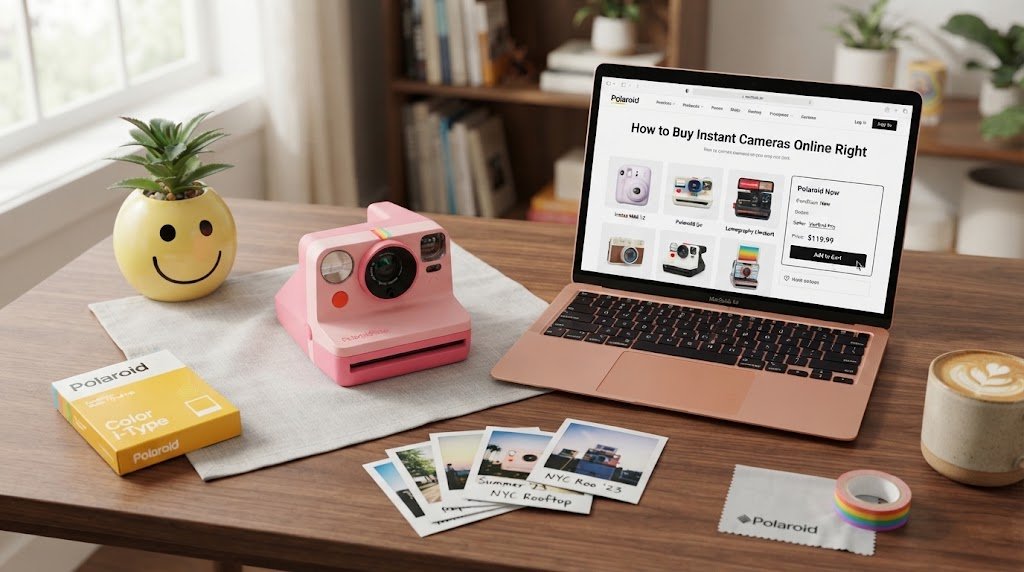
If this is your first instant camera, there is real value in a model that feels intuitive on day one, such as the instax mini 12, an entry-level point and shoot option for beginners with a handy selfie mirror. If you already know what frustrates you about basic instant cameras, then step up with purpose; the fujifilm instax mini evo is a more advanced hybrid instant camera with a three-inch LCD screen.
What to check before you click buy
Online product pages can make different cameras look more similar than they really are. This is where details matter, especially since instant camera bodies typically range from about $80 to $400 online.
Read the specs, but read between them too. Weight affects whether you carry the camera often. Lens information hints at how the camera sees the world and how easily you capture the moment. Unlike digital cameras, instant models can print photos directly instead of sending you to photo processing shops. A built-in flash can be helpful in low light, but it can also flatten a scene if you cannot control it. Battery type matters more than people expect, especially for travel or regular use, and some models add mobile connectivity so you can edit a photo on a smartphone before printing.
Pay close attention to dimensions. An instant camera that looks sleek in a studio image may still be bulkier than you expected. If portability matters, compare actual measurements instead of relying on photos alone.
It also helps to check whether film is included. Most instant cameras do not include film, and it is often sold separately. That detail changes the first-use experience immediately and is especially important if the camera is a gift.
Look at sample images and image quality with a critical eye
Sample photos are useful, but they can also be misleading. Brand images often show ideal conditions: good daylight, attractive styling, and subjects that flatter the camera's strengths. Along with brand galleries, check third-party comparison reviews for a more realistic sense of image quality and how models differ in real use.
Look for consistency instead of perfection. Do the sample shots suggest a camera that handles skin tones well? Are indoor images acceptable, or do they lean harsh and blown out? Many instant camera photos also carry a nostalgic retro hue, so decide whether that retro charm feels charming to you or simply too soft for your taste.
Instant photography is never about clinical perfection. That is the point. Still, there is a difference between character and disappointment. The final print can take around 90 seconds to develop, so judge sample images as finished prints rather than digital previews.
Match the fujifilm instax mini design to your actual lifestyle
This is not a trivial point. Instant cameras are visual objects. People buy them partly because they look good, and that is valid. But style should still connect to use. For example, the fujifilm instax mini 12 is user-friendly for beginners who want a simple, playful camera, while the Polaroid Go Generation makes sense if compact carry matters; as the world's smallest analogue instant camera, it is easy to bring along for the next moment without giving up the fun side of shooting.
A bold, playful camera can be exactly right for parties, travel diaries, and gift giving at an affordable price. A cleaner, more minimal design may suit someone who wants a camera that fits naturally into a daily carry setup. If you care about objects that feel considered, the camera should earn its place next to your bag, watch, and notebook, not clash with them.
The best online shops understand this. They do not treat instant cameras like generic electronics. They frame them as part of a lifestyle, which is closer to the truth.
How to buy instant cameras online from a seller you can trust
The camera matters. The seller matters just as much.
Instant cameras are often bought as gifts, collectibles, or style-driven purchases, which makes it easy for low-trust sellers to compete on appearance alone. A polished listing does not guarantee authentic stock, proper warranty coverage, or responsible handling.
Look for signs that the retailer is an authorized seller, not just a marketplace account moving inventory. Official brand sourcing matters because it lowers the risk of gray-market products, questionable packaging, or missing support if something goes wrong. Warranty coverage should be clearly stated, not buried or vague.
Product curation is another trust signal. A retailer that stocks every possible option is not always helping you choose well. A selective assortment usually tells you that someone has made decisions on quality, design, and brand relevance. That is useful when you want fewer, better choices.
A store like Bang On fits that mindset well because the edit is intentional. The camera is not presented as a commodity. It is part of a broader design-led lifestyle, which makes the shopping experience sharper and more confident.
Check the return policy before you need it
No one plans to return a camera, but online buying always carries some uncertainty. Make sure the return process is easy to find and easy to understand.
This matters even more with instant cameras because expectations can be emotional. Maybe the size feels wrong in hand. Maybe the color looks different than expected. Maybe you bought it for someone who already owns one. Clear policies remove hesitation.
Read reviews for usage patterns, not just ratings
A five-star average does not tell you enough. What helps is seeing how people actually use the camera.
Reviews can reveal whether a model is better for events than travel, whether the learning curve is real, or whether the camera feels durable enough for regular carry. Look for repeated comments about focusing reliability and exposure consistency too, since those patterns affect every shot. You are looking for patterns, not one dramatic opinion.
Reviews of the polaroid flip can also show whether its sonar autofocus produces consistent images in real use, and whether the smartphone app manual controls are genuinely useful.
If multiple reviewers mention the same strength or frustration, believe the pattern.
The smart buyer thinks beyond the first order
The camera itself is only part of the purchase. Film availability, case options, storage, and replacement habits all shape long-term satisfaction, and part of that comes down to choosing the right format family: instant cameras can be categorized into Mini, Square, and Wide formats.
If you expect to shoot often, it makes sense to think about film as a recurring part of the budget. Polaroid film generally costs more per shot compared to Instax, and Polaroid's i-Type film prints measure 79 x 77 mm and are pricier. Analog instant cameras print photos immediately after capturing, so every shot counts. If you want to bring the camera everywhere, consider whether you will need a protective case or dedicated pouch. If the camera is a gift, ask yourself whether the recipient wants a simple object to enjoy occasionally or the start of a hobby, since most instant cameras are easy to use but often do not include film.
That is the real difference between browsing and buying well. Browsing focuses on the object. Buying well focuses on ownership.
For some shoppers, the right choice is the easiest instant camera available from a trusted brand. For others, it is a more design-forward model with a little more personality and a little more learning built in. Neither is more correct. The better camera is the one that matches your pace, your eye, and your reasons for wanting instant photography in the first place.
The best online purchase feels settled before checkout. Not because you found the cheapest option, but because the camera makes sense on every level - format, function, design, and trust. Choose that one, and the first print will feel right before it even develops. Many instant cameras work best when the subject is roughly 1 to 3 meters away, so consider whether that suits how the recipient will use it.