
文章: A Guide to Buying Instant Cameras for Your Style
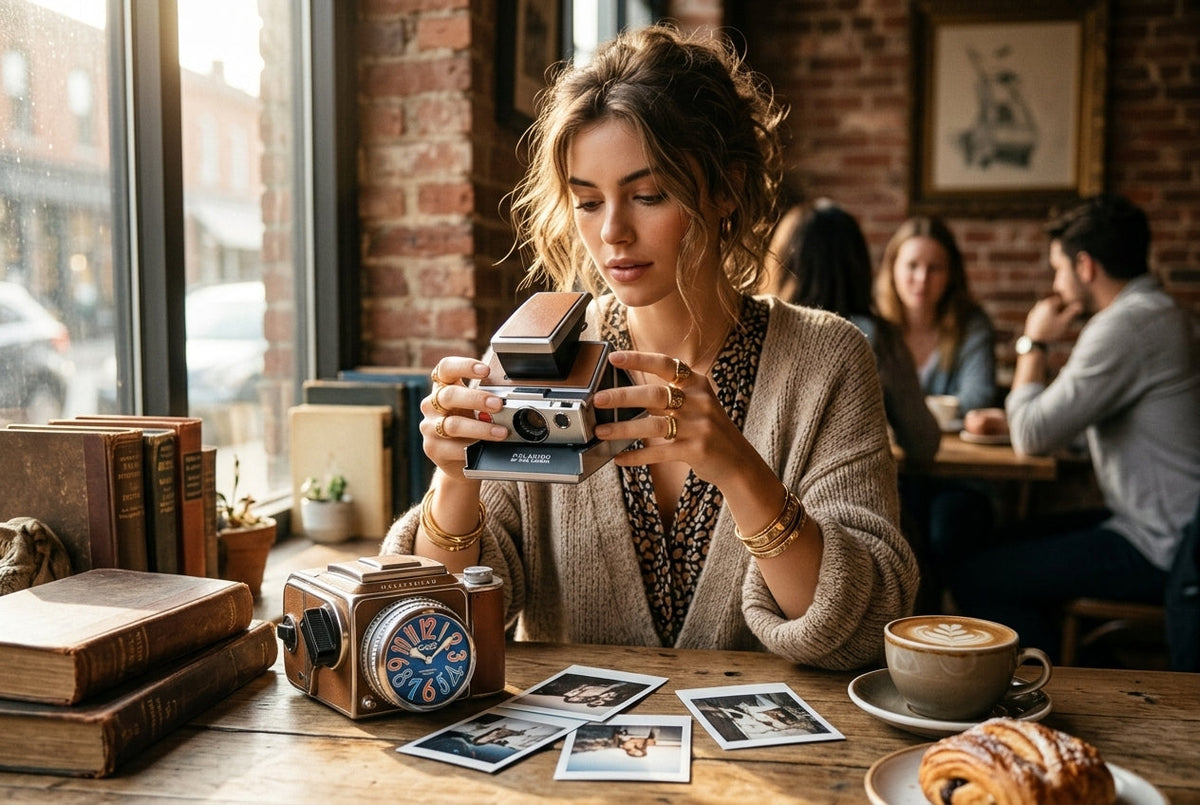
A Guide to Buying Instant Cameras for Your Style
A great instant camera does more than take a photo. It changes the pace of the moment. You frame with more care, hand someone a print instead of a file, and accept the small surprises that make analog photography feel alive. This guide to buying instant cameras is for choosing one that suits your eye, your routine, and the kind of memories you actually want to make.
For some, that means a classic square print passed around at a dinner table. For others, it is a compact camera in a jacket pocket, ready for late-night city walks, road trips, gallery openings, and everything between. The right choice is less about having the longest feature list and more about finding a camera you will want to carry.
Guide to Buying Instant Cameras: Start With the Print
The print is the point. Before comparing camera bodies, colors, or flash modes, consider the image size you want to hold onto. In the Fujifilm Instax system, that usually means choosing between Instax Mini, instax square, and instax wide. Instant photography is tactile, and every format creates a different feeling.
Square prints have the most iconic presence. They are generous enough for portraits, group shots, and visual storytelling, with a familiar border that makes even an everyday scene feel collectible. Instax square film sits neatly between the smaller Mini look and the larger Wide frame, so it feels balanced if you want something classic without going biggest. This is the format for people who want the full instant-camera ritual: compose, shoot, wait, share.
Smaller rectangular prints are more casual and more portable. They are ideal for spontaneous snapshots, travel journals, party albums, and gift notes. Instax Mini film is roughly the size of a credit card, which is why mini film works so well for wallets, journals, and everyday keepsakes. Film is often easier to carry in quantity, and the prints have a candid, diary-like energy. If your camera will mostly live in a bag and come out whenever something worth remembering happens, a mini format makes sense.
Wide-format cameras create the biggest instant prints. Instax Wide film produces the largest prints at 4.25 x 3.3 inches, and that extra image area is why many people choose wide film for landscapes, dinner tables, architecture, and groups. They reward more deliberate framing, especially for landscapes, dinner tables, architecture, and groups where everyone deserves to be in the shot. The trade-off is simple: the camera and film tend to ask for more space and more budget. Choose wide if the print itself is meant to become part of your wall, desk, or creative practice.
Film cost matters because it affects how freely you shoot. A lower per-print cost encourages experimentation. A larger, more premium format can make each exposure feel more intentional. Instax film packs usually contain 10 shots, while polaroid film packs have 8, and Polaroid also leans more vintage in color with thicker white borders. Neither approach is better. It depends on whether you want an easy visual habit or a slower, more considered object.
Film formats are not interchangeable, so each camera works with only one specific type of media.
Choose a Camera That Matches Your Pace
An instant camera can be almost entirely automatic or offer more room to shape the image. The best fit depends on whether you want the camera to make decisions for you or invite you into the process.
For effortless snapshots
Entry-level instant cameras are built for speed, and simple Instax cameras are often a good fit for children and first-time users. You point, shoot, and let automatic exposure and flash handle the conditions. They are a strong choice for first-time users, social occasions, and anyone who wants the experience to stay light. The Fujifilm Instax Mini 13 is aimed at beginners and casual users. Many include simple aids such as close-up modes, a selfie mirror, or a self-timer. Selfie mode and macro mode are common on beginner-friendly models for self-portraits and nearby subjects. Some Fujifilm Instax cameras also add additional features, and the Instax SQ40 is aimed at beginners with simplified modes and a built in selfie mirror, but their real appeal is still low friction.
Automatic does not mean anonymous. Design is part of the experience here. A camera with a confident silhouette, tactile controls, and styling that runs from minimalist to retro design is more likely to leave the shelf. Think of it as an accessory with a creative function, not a piece of technical equipment you have to learn to love.
For more control and character: Consider a hybrid instant camera
If you enjoy photography beyond the quick snapshot, look for manual or semi-manual options. Features such as exposure compensation, selectable aperture settings, focus zones, a tripod mount, or multiple-exposure capability can turn an instant camera into a more expressive tool. On higher-end models, that can also mean manual focus, adjustable shutter speed, flash control, brightness control, double exposure mode, and extra shooting modes for more creative control.
These features are not necessary for everyone. More control can mean more missed moments while you adjust settings, particularly in changing light. But for portraits, creative experiments, and slower weekends with a camera in hand, that pause can be the pleasure. You are not just recording a scene. You are making an interpretation of it.
Hybrid instant cameras sit in the middle. A good example is the Fujifilm Instax Mini Evo, a hybrid instant camera that captures digital photos, lets you preview them on a 3-inch LCD, and prints only the frames you want. The rear screen also helps you review digital images, keep shots in internal memory, and decide what to turn into an instant print. The mini evo can also print photos directly from your phone through a smartphone app, giving it some of the convenience of an instax printer without losing the camera-first feel. The instax mini evo adds 10 lens and film effects, which gives you more room to shape the look before printing. In practice, this kind of hybrid camera reduces wasted film and makes sharing easier, while still giving you a physical photograph. By contrast, some instant print cameras use photo paper instead of film, which can change image quality as well as long-term running costs. The trade-off is that the process feels less immediate. If the unpredictability of one-shot film is the attraction, a traditional film camera may feel more satisfying.
Pay Attention to Light, Not Marketing Claims
Instant film loves soft, even light. Window light, overcast afternoons, early evening, and shaded outdoor scenes often deliver the most flattering results. Direct midday sun can create hard shadows, while dim rooms can challenge even a camera with automatic flash.
Flash is not an optional extra on most instant cameras. It is a core part of the exposure system. Indoors, it can make the difference between a readable portrait and a dark, muddy frame. Outdoors, it can lift faces when your subject is backlit. Still, flash has limits. Standing too close can create a washed-out face, and shooting through glass can produce reflections. Even then, print quality and best image quality still depend on lighting and the film or print system, not just the camera’s claims.
Look for a camera with exposure compensation if you want an easy way to brighten or darken a scene. A small adjustment is especially useful in snow, bright walls, strongly backlit portraits, or low-light settings where the camera might overcorrect. Cameras with a fixed aperture usually manage that by automatically changing shutter speed. It is one of the few advanced features that quickly becomes practical.
Also consider close-focus distance. Some cameras handle selfies and tabletop details well; others need more room before their lens can focus cleanly. If you picture yourself photographing coffee, sketchbooks, flowers, watches, or friends across a small table, a dedicated close-up option is worth having, whether the model calls it macro mode or selfie mode.
The Details, Like Manual Controls, That Determine Whether You Carry It
Instant cameras are social objects. Their best feature may be the way they invite people into a moment. That makes size, weight, power, and handling more relevant than a specification sheet suggests.
A compact camera is easier to bring everywhere, but a larger body may offer a better grip, a clearer viewfinder, and a more substantial print. At the smallest end, a polaroid camera like the Polaroid Go Gen 3 shows just how pocketable the category can be. If you travel light, choose something that slips comfortably into a small bag. If the camera will be a fixture at gatherings or part of a home-studio setup, a more prominent format can be a feature rather than a drawback.
Battery design is another quiet decision. Some cameras use replaceable batteries, while others recharge by USB. Rechargeable power is convenient for frequent use and reduces the need to keep batteries on hand. Replaceable batteries can be reassuring on long trips, especially if you will be away from outlets. Neither is universally superior. Buy for your actual rhythm, not an imagined expedition. If you mostly want digital photos from your phone, an instax mini link or mini link style printer may make more sense than carrying a camera, since Instax printers pair over Bluetooth through an accompanying app. Devices that use Zink paper can also be cheaper to run than instant film, though they create a different kind of physical print.
A few practical checks will save frustration after the first roll of film:
-
Confirm the exact film type the camera uses and how readily you can keep it stocked.
-
Check whether the film has a white border, color-frame options, or special editions you would enjoy using.
-
Make sure the camera has the features you care about, such as a self-timer, close-up mode, or tripod mount.
-
Consider how it will travel: loose in a tote, protected in a dedicated case, or carried alongside other creative gear.
Instax film Is Part of the Aesthetic
Instant film is not neutral. Color can lean warm or cool, highlights can bloom, and contrast can shift with light, temperature, and exposure. That variation is not a defect to eliminate. It is the signature of the medium. In practice, instax prints usually develop in about 90 seconds, while Polaroid can take up to 15 minutes, and black and white film is another strong option if you want a moodier look.
Different film families also develop on different timelines and need slightly different treatment. Keep fresh film away from excessive heat, avoid leaving the camera in a hot car, and let a new print develop according to the manufacturer's guidance. Instax film packs usually contain 10 exposures, while Polaroid film packs typically contain 8. The goal is not to make instant film behave like a phone camera. The goal is to give it the conditions to look like itself.
This is also why choosing an authorized retailer matters. Fresh, correctly stored film and official warranty coverage are part of a better ownership experience, especially for a camera you plan to use for years. Bang On's selective approach is designed around that idea: fewer random choices, more confidence in the products that make the cut.
Buy for the Moments You Want More Of
The most satisfying instant camera is rarely the one with every feature. It is the one that makes you reach for it before you leave the house. Across the wider instax family, the right fit can range from simple instant film cameras to a hybrid instant camera, depending on how you like to shoot. A compact mini camera may be right for a friend who documents every weekend. A square-format model may suit someone building a photo wall. A wide camera may belong with a traveler, host, or visual storyteller who wants each print to carry more atmosphere; the Instax Wide 400 is a strong choice if you want larger prints than other Instax models.
Choose the format that feels good in your hands, the film you can afford to enjoy, and the level of control that keeps photography fun rather than fussy. If you are comparing the best instant camera or the best instax camera, decide by format, handling, and camera options rather than feature count alone. Some buyers may want to test instant cameras in person, because print size, ergonomics, and fun features matter as much as specs. Then bring it to the birthday, the train platform, the beach, the studio, and the ordinary Tuesday worth remembering. The best instant photos are not perfect. They are present.
Choose a Camera That Matches Your Pace
An instant camera can be almost entirely automatic or offer more room to shape the image. The best fit depends on whether you want the camera to make decisions for you or invite you into the process.
For effortless snapshots
Entry-level instant cameras are built for speed. You point, shoot, and let automatic exposure and flash handle the conditions. They are a strong choice for first-time users, social occasions, and anyone who wants the experience to stay light. Many include simple aids such as close-up modes, a selfie mirror, or a self-timer, but their real appeal is low friction.
Automatic does not mean anonymous. Design is part of the experience here. A camera with a confident silhouette, tactile controls, and a color you genuinely like is more likely to leave the shelf. Think of it as an accessory with a creative function, not a piece of technical equipment you have to learn to love.
For more control and character
If you enjoy photography beyond the quick snapshot, look for manual or semi-manual options. Features such as exposure compensation, selectable aperture settings, focus zones, a tripod mount, or multiple-exposure capability can turn an instant camera into a more expressive tool.
These features are not necessary for everyone. More control can mean more missed moments while you adjust settings, particularly in changing light. But for portraits, creative experiments, and slower weekends with a camera in hand, that pause can be the pleasure. You are not just recording a scene. You are making an interpretation of it.
Hybrid instant cameras sit in the middle. They often capture digitally, let you review or edit images, then print only the shots you choose. That can reduce wasted film and make sharing easier, while still giving you a physical photograph. The trade-off is that the process feels less immediate. If the unpredictability of one-shot film is the attraction, a traditional film camera may feel more satisfying.
Pay Attention to Light, Not Marketing Claims
Instant film loves soft, even light. Window light, overcast afternoons, early evening, and shaded outdoor scenes often deliver the most flattering results. Direct midday sun can create hard shadows, while dim rooms can challenge even a camera with automatic flash.
Flash is not an optional extra on most instant cameras. It is a core part of the exposure system. Indoors, it can make the difference between a readable portrait and a dark, muddy frame. Outdoors, it can lift faces when your subject is backlit. Still, flash has limits. Standing too close can create a washed-out face, and shooting through glass can produce reflections.
Look for a camera with exposure compensation if you want an easy way to brighten or darken a scene. A small adjustment is especially useful in snow, bright walls, strongly backlit portraits, or low-light settings where the camera might overcorrect. It is one of the few advanced features that quickly becomes practical.
Also consider close-focus distance. Some cameras handle selfies and tabletop details well; others need more room before their lens can focus cleanly. If you picture yourself photographing coffee, sketchbooks, flowers, watches, or friends across a small table, a dedicated close-up option is worth having.
The Details That Determine Whether You Carry It
Instant cameras are social objects. Their best feature may be the way they invite people into a moment. That makes size, weight, power, and handling more relevant than a specification sheet suggests.
A compact camera is easier to bring everywhere, but a larger body may offer a better grip, a clearer viewfinder, and a more substantial print. If you travel light, choose something that slips comfortably into a small bag. If the camera will be a fixture at gatherings or part of a home-studio setup, a more prominent format can be a feature rather than a drawback.
Battery design is another quiet decision. Some cameras use replaceable batteries, while others recharge by USB. Rechargeable power is convenient for frequent use and reduces the need to keep batteries on hand. Replaceable batteries can be reassuring on long trips, especially if you will be away from outlets. Neither is universally superior. Buy for your actual rhythm, not an imagined expedition.
A few practical checks will save frustration after the first roll of film:
- Confirm the exact film type the camera uses and how readily you can keep it stocked.
- Check whether the film has a white border, color-frame options, or special editions you would enjoy using.
- Make sure the camera has the features you care about, such as a self-timer, close-up mode, or tripod mount.
- Consider how it will travel: loose in a tote, protected in a dedicated case, or carried alongside other creative gear.
Film Is Part of the Aesthetic
Instant film is not neutral. Color can lean warm or cool, highlights can bloom, and contrast can shift with light, temperature, and exposure. That variation is not a defect to eliminate. It is the signature of the medium.
Different film families also develop on different timelines and need slightly different treatment. Keep fresh film away from excessive heat, avoid leaving the camera in a hot car, and let a new print develop according to the manufacturer’s guidance. The goal is not to make instant film behave like a phone camera. The goal is to give it the conditions to look like itself.
This is also why choosing an authorized retailer matters. Fresh, correctly stored film and official warranty coverage are part of a better ownership experience, especially for a camera you plan to use for years. Bang On’s selective approach is designed around that idea: fewer random choices, more confidence in the products that make the cut.
Buy for the Moments You Want More Of
The most satisfying instant camera is rarely the one with every feature. It is the one that makes you reach for it before you leave the house. A compact mini camera may be right for a friend who documents every weekend. A square-format model may suit someone building a photo wall. A wide camera may belong with a traveler, host, or visual storyteller who wants each print to carry more atmosphere.
Choose the format that feels good in your hands, the film you can afford to enjoy, and the level of control that keeps photography fun rather than fussy. Then bring it to the birthday, the train platform, the beach, the studio, and the ordinary Tuesday worth remembering. The best instant photos are not perfect. They are present.