Disposable Camera: Still Worth Carrying?
Yes, a disposable camera is still worth carrying if you want photography to feel more intentional, expressive, and less tied to your phone. There’s a reason it keeps showing up at dinner parties, weddings, weekend trips, and nights out that nobody wants to experience through a glowing screen. It does something your phone rarely does anymore - it slows the moment down.
For urban creatives and design-minded people who care as much about how an object feels as how it performs, that shift matters. You get one frame, one click, and no instant redo, which changes how you look, shoot, and remember. The result is often moodier, less polished, and more alive than what comes off a phone camera - exactly why disposable cameras still make sense in social settings, travel, and everyday carry.
This guide looks at where disposable cameras still fit, how they compare with your phone, what trade-offs come with film, how to get better results, and why that mix of surprise, presence, and imperfection still feels relevant in a screen-saturated world.
Why the disposable camera still works
The disposable camera survives because it offers a different kind of value than digital convenience. It is not sharper than a phone. It is not cheaper in the long run. It is not more practical if your goal is total control. What it does offer is mood, restraint, and surprise.
That matters more than it sounds. Over 63% of disposable camera sales come from younger generations aged 16-34, which shows the format still resonates now, not only as nostalgia. Photography has become frictionless, which is useful but often forgettable. When every image can be reviewed, edited, deleted, and reposted within seconds, the act of taking the photo starts to feel disposable even when the camera is not. A single-use film camera flips that dynamic. The object is temporary, but the process feels intentional.
For style-conscious buyers, there is also a tactile pleasure to it. The plastic body, the wind wheel, the built-in flash button, the slight resistance before the shutter fires - none of it is luxurious in the traditional sense, but it is unmistakably physical. That tactile roughness is part of what makes analogue photography appealing.
What a disposable camera is actually good at in film photography
A disposable camera performs best when you want atmosphere more than precision. That makes it especially strong for social settings. House parties, beach weekends, road trips, birthday dinners, music festivals, and wedding guest tables all benefit from a camera that people can pass around without overthinking it.
The look of the images plays a big role here. That unique aesthetic comes from film photography: grain, soft contrast, occasional flash blowout, and imperfect framing, and disposable cameras create a unique, grainy aesthetic that can make ordinary scenes feel more alive. The results are often flattering, though not because of technical image quality so much as character, in a way that hyper-detailed phone cameras are not. Skin looks softer. Light blooms. Backgrounds fall away. The picture feels less processed because, in a very real sense, it is.
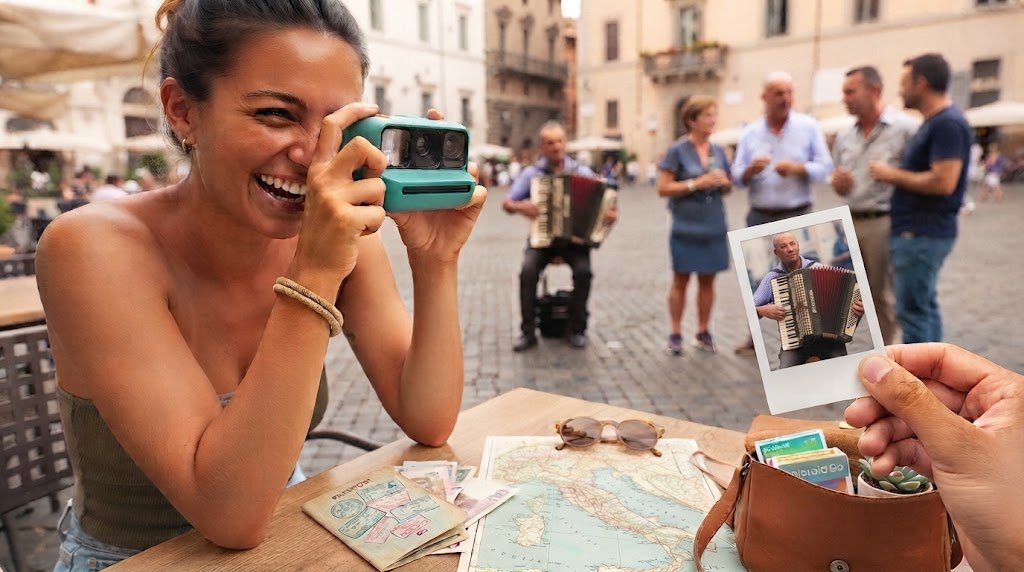
Travel is another strong use case, especially if you want to document a trip without turning every stop into content production. A disposable camera asks less of you. You stop composing for the feed and start shooting for memories. That trade-off will not suit everyone, but it is a refreshing shift.
Single use cameras vs phone camera
This is not a battle with one winner. It depends on what you want from the image.
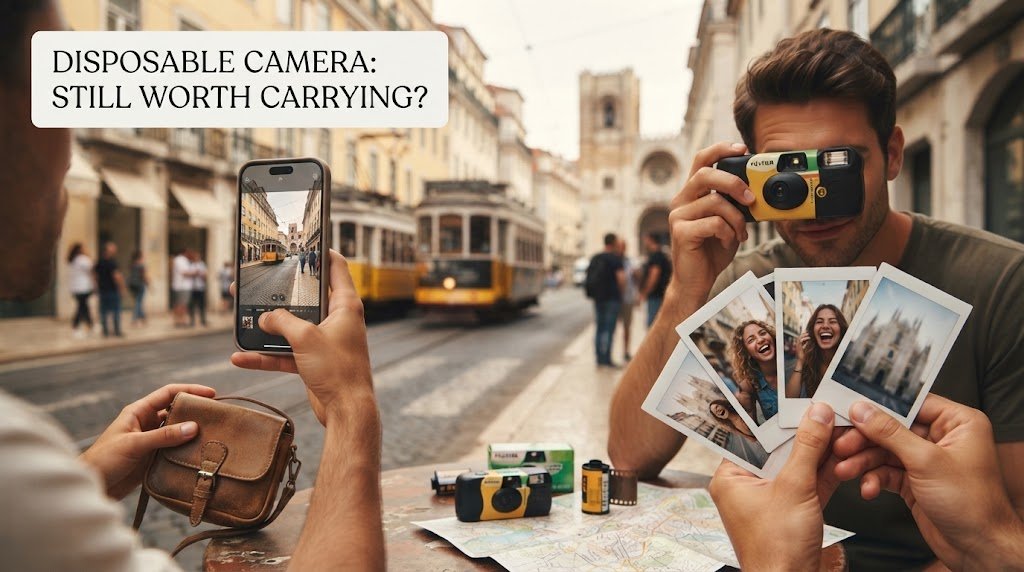
A phone camera wins on speed, flexibility, storage, and low-light performance. Unlike smartphones, it does not need to handle maps, payments, communication, and photos in one object. If you need reliability, convenience, and immediate sharing, your phone is the right tool.
A disposable camera wins on character. It creates a built-in edit by limiting your frame count and delaying the result. That delay matters. It changes your relationship with the image. Instead of taking 40 versions and choosing later, you commit. Instead of checking the screen, you stay in the room.
That said, the analog romance can be overstated. Film development costs money. Results can be inconsistent. Airport X-ray scanners can damage film in disposable cameras. CT scanners are more damaging than older X-ray machines. Keep it in hand luggage and request hand inspection at airport security. After repeated scans, expect a bit of fogging rather than perfect consistency; six airport scanners caused noticeable fogging on film images. If you are expecting professional-quality output or technical perfection, you may be disappointed. The point is not technical perfection. The point is a more memorable process and a look that feels less predictable.
Who should buy a disposable camera
A disposable camera makes the most sense for people who value experience as much as output. If you like objects with personality, if you care how a product fits into your lifestyle, or if you want photography to feel fun again, it is an easy choice.
It is also a smart gift. Not everyone wants another generic gadget, but a film camera carries a little story with it. It feels social, slightly nostalgic, and immediately usable, with a cool, retro appeal. You do not need to explain settings or apps. Hand it over, press the flash when needed, and start shooting.
For couples planning events, it works as both activity and keepsake. For travelers, taking photos feels more present and less screen-led, turning it into a visual diary with a softer edge. For creative people who spend most of the day on screens, it offers a welcome kind of limitation. That is why the format still resonates with urban creatives and design-minded shoppers. It is less about technical specs and more about how it changes the rhythm of seeing.
How to get better results from a disposable camera
The best way to use a disposable camera is to respect its limits. Most single-use cameras are strongest outdoors or in bright daylight. Indoors, the built-in flash becomes essential. If you skip it in dim rooms, your shots may come back muddy or underexposed. In low light, expect softer image quality rather than crisp detail.
Keep your subjects relatively close when using flash. These cameras are not designed to light a large room. A few feet away is usually ideal. For daylight shots, steady hands and simple compositions go a long way. Film often rewards clean framing more than overly busy scenes.
It also helps to think in moments rather than perfection. A disposable camera is great at capturing gesture, motion, and mood. It is less forgiving if you are chasing exact symmetry or tiny details. Let the image breathe a little. Some of the best frames are the ones that feel slightly unplanned, and occasional light leaks can add character, though you should not count on them.
And do not save every shot for the end of the trip. Part of the charm is to shoot freely. A disposable camera that comes home with 19 unshot exposures is a missed opportunity.
The real trade-offs to know before you buy
Film is not the cheapest habit, and a disposable camera is not the most sustainable format if you use them constantly, since film production involves chemical processes harmful to the environment. If you want regular analog shooting, a reusable film camera may be a better long-term choice. It gives you more flexibility and can reduce waste over time. Fujifilm has a recycling program specifically for used disposable cameras. Kodak also initiated a recycling program for disposable cameras.
Still, single-use cameras hold their place because they remove friction. No lens choice. No battery charging routine beyond the built-in system. No technical learning curve. No commitment to a full camera setup. Part of the appeal is the lack of extra features. That simplicity is exactly why people keep coming back to them.
There is also the issue of control. If you care deeply about exposure, focus, or consistent color, those preferences matter and you may find the format restrictive. But for many buyers, that is not a minor detail; it can lead to a more freeing experience. It is the whole point. The camera decides more than you do, and that can be surprisingly liberating.
Why the disposable camera fits now
The return of film is often framed as nostalgia, but that is only part of the story. A disposable camera fits contemporary life because it offers contrast. Our devices are optimized for efficiency, visibility, and endless output. Film offers scarcity, privacy, and delayed gratification, even as costs have changed from the past few years.
That contrast feels good right now. It preserves memories from the present instead of letting them disappear into the camera roll. It also adds presence to the event itself. When people are not reviewing every image on the spot, they stay engaged with each other. The camera becomes part of the atmosphere, not a barrier to it.
For a design-led retailer like Bang On, that kind of product has obvious appeal. It is functional, expressive, and still easily accessible, which helps keep it culturally relevant without feeling over-engineered. It belongs in the same universe as other well-chosen everyday items - the kind you carry because they do something useful, but also because they reflect how you want to move through the world.
Should you still carry a disposable camera?
If your goal is flawless documentation, probably not. Your phone already does that better, faster, and with far less effort, as do most digital cameras. But if you want photography to feel tactile, selective, and a little less controlled, a disposable camera still earns its place.
It works best when you stop asking it to compete with digital and let it do what it has always done well: produce a distinct picture with the unique aesthetic people associate with black and white or color film, while still being easy to develop and suitable for scanning if you want digital copies. Sometimes the best camera is not the smartest one. It is the one that makes you pay attention before you press the shutter.
Share
A designer watch buying guide for style-conscious shoppers - learn how to choose the right size, movement, materials, and brand with confidence.
Explore the best watches for urban professionals - design-led picks that balance style, reliability, versatility, and everyday city wear.