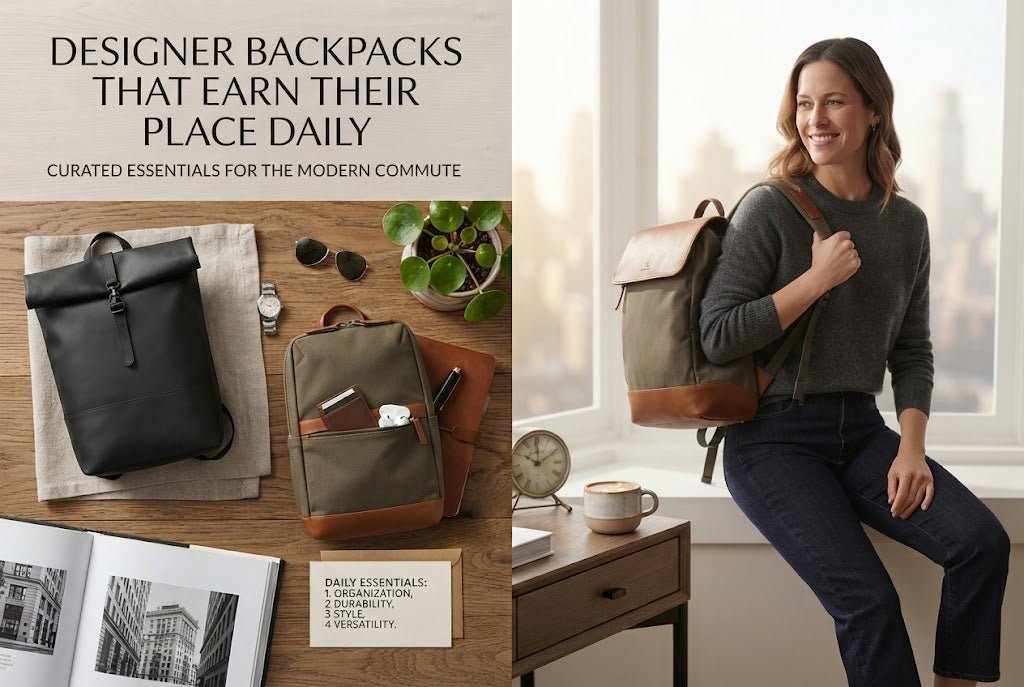
Designer Backpacks That Earn Their Place Daily
A backpack gets judged in motion: on a crowded train platform, outside a coffee shop with a camera in one hand, or during the short walk between meetings and the gym. The best designer backpacks that earn their place daily do more than look considered in that moment. They combine thoughtful design, practical organization, weather protection, and comfort for daily use, turning a stylish accessory into everyday gear that supports urban life.
That is the difference between buying a bag because it photographs well and choosing one you will reach for five days a week. For urban creative professionals and design-savvy consumers, a good design-led backpack has presence, but it also needs to work with the reality of city life: unpredictable weather, laptops, charging cables, water bottles, headphones, and the occasional need to carry a little more than planned. This guide looks at silhouette, materials, comfort, weather resistance, capacity, and organizational details so you can choose a backpack that protects your valuables, carries well across long days, and fits your personal style as easily as your routine.
What a Designer Backpack Should Do Better
Price alone does not make a backpack designer. The designation is earned through decisions you can see and feel: proportion, material selection, hardware, construction, and how every detail supports the bag's larger purpose. A well-designed backpack reflects a brand’s design identity and reputation through visible quality, from stitching to zips, and makes a full load look intentional instead of overstuffed.
Start with silhouette. Clean, architectural shapes tend to work across more settings than bags covered in straps, logos, and unnecessary compartments. A sleek, refined profile can move from a work commute to a dinner reservation without feeling overly technical, which is part of the appeal of quiet luxury. That said, minimal should not mean inconvenient. The strongest designs hide their practicality in thoughtful compartments, exterior pockets, and interiors that do not turn into a dark, bottomless space.
Materials carry equal weight. Smooth recycled polyester, matte nylon, coated fabric, or structured canvas each create a distinct visual language. They also age differently. Nylon is lightweight and practical, particularly for a daily commuter bag. Coated materials provide added confidence in rain. Leather-like finishes can look more polished, while premium materials such as high quality leather, Italian leather, full grain leather, or a soft body with leather accents may feel more sophisticated and fashionable, but can still show scuffs sooner depending on the treatment. Choose based on how you actually move through the week and what will hold up to daily use, not just the finish that looks best under studio lighting.
Then there is comfort, the feature people often overlook until a bag is packed. Adjustable padded straps, breathable back panels, a balanced frame, and a laptop sleeve matter when you carry a laptop and camera gear for hours. A backpack can be beautifully shaped yet still be the wrong choice if it pulls away from your back, concentrates weight at the shoulders, or feels oversized on shorter frames.
Choose for Your Carry, Not an Imagined Life
It is easy to buy for a version of yourself who takes spontaneous weekend trips every month and spends every afternoon working from a gallery cafe. Usually, the smarter approach is more specific. Think about what is in your bag on an ordinary Tuesday.
For office and hybrid work, laptop protection should be nonnegotiable. Look for a dedicated padded compartment sized for your computer, ideally with a secure closure and enough separation from the main section that keys or a camera charger cannot press against it. The Senreve Maestra is one clear example, with room for a 15-inch laptop. For modern travelers, the Tumi Voyageur Celina pairs durable materials with a 15-inch laptop compartment and still weighs 0.8 kg, which helps balance polish and functionality. Tumi has long been known for durability and reliability, and the Celina also comes with a five-year warranty covering wear. A luggage strap can be useful for frequent travel, but it is not essential for everyone. If you rarely pass through an airport, a lighter bag with a stronger everyday profile may serve you better.
For creative work, access matters as much as capacity. Photographers, designers, and students often benefit from a wide-opening main compartment that makes gear visible at a glance. Constantly unpacking a backpack to find a lens cap, notebook, or card reader interrupts the day. Internal organizers are helpful when they suit your equipment, but too many fixed dividers can waste space. A flexible interior often has a longer useful life, including after a few years of daily use.
For weekend use, consider whether you need a true travel bag or simply more room than your daily carry. A 20-liter backpack can handle a light day out, while a larger format is better for an overnight change of clothes, a camera, and toiletries. The Lo & Sons Rowledge 2 is a useful example if you want to store shoes separately on short trips. Bigger is not automatically better. Oversized bags can feel clumsy on public transit and encourage you to carry things you do not need.
Weather Protection and Leather Trim Is a Design Decision
Weatherproofing is not glamorous, until the forecast changes halfway through your commute. Water-resistant nylon tends to emphasize lightweight durability, while treated leather offers a more refined finish with solid weather protection. Coated zippers, protected seams, and a flap or covered opening offer meaningful protection for electronics and paper goods, and they also say a lot about overall durability. These details are especially valuable if you commute on foot, by bike, or through cities where rain is simply part of the calendar.
There is a useful distinction here. Water-resistant backpacks can handle rain, splashes, and damp surfaces, while stronger materials and hardware are better suited to daily abuse. Fully waterproof backpacks are built for heavier exposure and may use welded seams or roll-top closures. The latter can be the right choice for cyclists and people who spend long stretches outdoors, but those constructions can be less convenient for frequent access. It depends on whether you need a larger pack with a luggage sleeve that works alongside a suitcase for weekend use or just extra room for daily carry.
Gaston Luga has made this intersection of Scandinavian restraint and weather-minded utility a central part of its approach. It is a useful reference point for anyone who wants a bag that looks composed rather than expedition-ready while still taking daily conditions seriously. Around the 20-liter range, it helps to compare real-world sizing: the Away Featherlight backpack has a capacity of 18L. If you carry very little, sling bags can make more sense than sizing up to a backpack you will underfill.
The Details, Like a Padded Laptop Compartment, That Separate Good From Great
A backpack earns loyalty through small moments. Does the zipper move smoothly one-handed? Can you reach your transit card without opening the entire bag? Does the top handle feel substantial when you grab it from the floor? These are not minor details. They determine whether a bag feels considered after six months rather than just impressive on day one.
Pay attention to the points under the most stress: strap anchors, zipper tracks, base panels, and the top handle. Reinforced stitching and durable hardware are signs that a bag was built for repetition. Waterproof or coated nylon is especially useful for rain, travel, and gym-to-office days, and in a thoughtfully designed bag that translates into real durability under daily abuse. A structured base also helps a backpack stand upright, an understated luxury when you are trying to avoid placing your bag on a wet floor or digging through it at a cafe table, so look for structured materials that keep it from sagging when set down.
Color deserves a more practical conversation, too. Black remains the most versatile choice, and there is a reason it dominates urban carry. It is easy to wear, forgiving of daily marks, and lets form and texture do the work. But charcoal, deep green, muted sand, and navy can offer just as much versatility with more character. The right color should complement what you wear often, not demand a new wardrobe around it. For a weather-ready reference, Prada Re-Nylon uses recycled ECONYL nylon, the Small backpack measures 23.5 × 28 × 12 cm, and it costs $2,450. That kind of spend is not cheap, but the value conversation changes when you consider how Re-Nylon bags can last over fifteen years with proper care, making the money easier to justify in a premium market.
Branding is another matter of proportion. A visible logo can be part of the appeal, particularly when it reflects a design heritage you value. But loud branding can limit how and where a bag feels appropriate. Many of the most enduring designer backpacks use identity with restraint: a distinctive shape, a signature clasp, a material treatment, or a carefully placed mark. Others lean into stronger visual signatures, as seen in Côte&Ciel backpacks with their avant-garde silhouettes and experimental designs. Montblanc offers a different kind of signal, relying on premium leather and meticulous craftsmanship. Recognition does not have to shout.
How to Build a Better Everyday Carry With Interior Pockets
Before committing, place your real daily items together on a table. Laptop, charger, notebook, headphones, keys, sunglasses, water bottle, camera, and any essentials specific to your work. This simple exercise reveals the capacity and access you need far more clearly than a product description ever can, and it also shows how well the bag can store those essentials securely; details like smooth entry, stable structure, and easy organization are signs of a thoughtfully designed bag built for daily life.
Next, decide what must stay protected. For some people, that is a 16-inch laptop. For others, it is an instant camera, film packs, or a compact mirrorless setup. The Cuyana Leather Backpack, for example, measures 38 × 28 × 18 cm, which gives a more concrete sense of everyday capacity. A separate padded zone is valuable when delicate gear travels with harder objects. If you carry only a phone, wallet, and light layer, a slimmer leather backpack will look better and feel easier all day. If leather quality matters, the Il Bisonte Lungarno backpack is a useful reference point because it is made from vegetable-tanned cowhide. When the color is quiet, there is a reason it dominates urban carry: a neutral palette maximizes outfit compatibility and supports timeless style.
Finally, consider the bag in context. Your backpack will appear in elevators, restaurants, coworking spaces, airports, and your own home. It should fit the visual rhythm of those places without becoming precious. Carl Friedrik is one example of how minimalist execution can give a bag professional presence without making it feel stiff. The wallace metro backpack is a lightweight option in this same everyday category, with the MZ Wallace Metro Backpack Deluxe weighing 0.6 kg. Longchamp’s Le Pliage is another practical reference, weighing 0.37 kg and folding flat when flexibility matters. Louis Vuitton’s Palm Springs Mini shows how luxury recognition shapes value perception too, especially when shoppers weigh a compact 17 × 22 × 10 cm format against a $2,770 price tag. The best choice is not necessarily the most expensive one or the one with the longest feature list. It is the one whose design makes your routine feel more composed.
A designer backpack should make leaving the house easier. Choose the silhouette you will still want to wear after the novelty fades, then insist on the protection and organization that make it worth carrying every day.