文章: Can Instant Film Expire? Storage Changes Everything
Can Instant Film Expire? Storage Changes Everything
A pack of instant film can look perfectly fresh on the shelf, then deliver washed-out color or a frame that never fully develops. So, can instant film expire? Absolutely. But expiration is less of a hard stop than a signal that the film’s chemistry may no longer perform as designed.
For photographers who love the tactile surprise of Polaroid, that distinction matters. An expired pack can create beautifully unpredictable images. It can also turn a once-in-a-lifetime portrait into a pale, uneven disappointment. The difference often comes down to the film format, its age, and where it has been stored.
Can Instant Film Expire? Yes - Here’s What Changes
Instant film is a small chemical system sealed inside each frame. When the photo ejects from the camera, rollers spread developer paste across the image area, starting the process that brings the photograph to life. Over time, those chemicals gradually lose their intended balance.
That aging can affect sensitivity, color, contrast, and development consistency. A pack may still eject and produce an image after its date, but the result can shift away from the clean, recognizable look you bought it for.
With expired film, you may see muted blacks, color casts, lower contrast, hazy highlights, or uneven areas where the image does not develop properly. In more severe cases, frames can come out nearly blank, heavily faded, or with chemical artifacts that obscure the subject.
That does not make expired film automatically bad. Some photographers deliberately choose it for softened tones, strange color shifts, and an archival, dreamlike feel. The trade-off is control. If you are shooting a carefully planned look, a gift, a travel moment, or a portrait you cannot repeat, fresh film is the better creative tool.
The Date on the Box Is a Performance Window
Most modern instant film is marked with a production date or a best-before date, depending on the brand and market. Treat it as guidance for peak performance rather than a dramatic overnight cutoff.
Polaroid film is generally best used within about a year of production when it has been stored correctly. That recommendation exists because Polaroid’s distinctive large-format images rely on more sensitive chemistry than many people expect. A few months beyond the suggested date may still yield attractive photographs. Several years beyond it is a much bigger gamble.
Different formats can age differently. Polaroid 600 and i-Type film share a similar image character, while 600 packs include a battery that powers compatible vintage cameras. As a pack gets older, both the imaging chemistry and, in 600 film, the battery deserve consideration. Instax film also has an expiration date and can degrade, though its results and aging behavior are not identical to Polaroid’s.
The practical rule is simple: the older the film, the less predictable each frame becomes. If dependable results matter, check the date before you buy and before you load the camera.
Heat Is Usually More Damaging Than Time
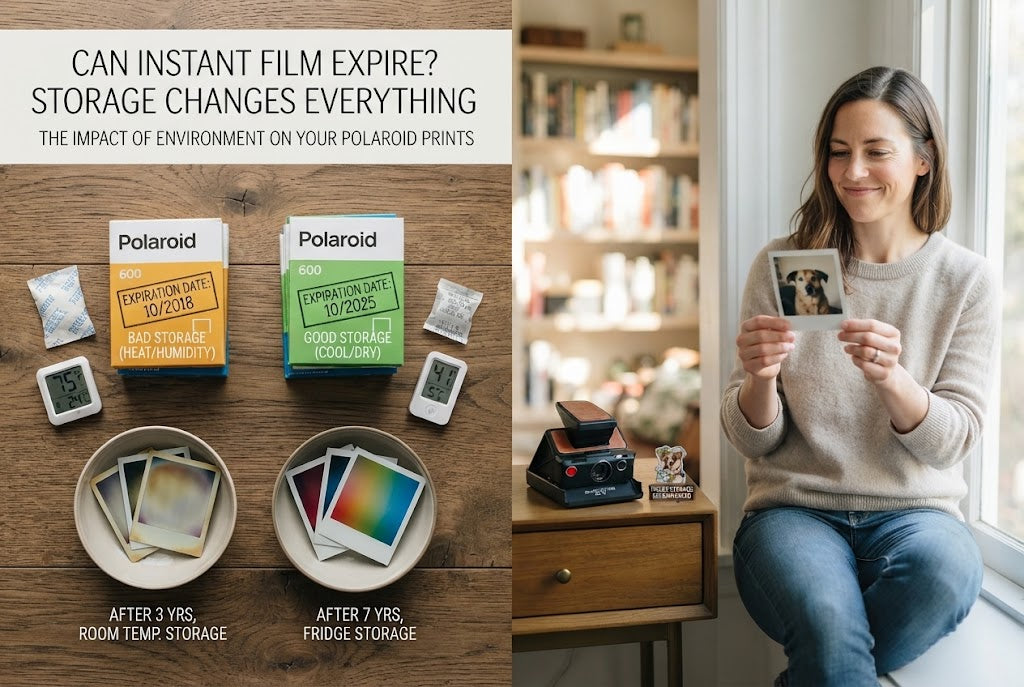
A recently expired pack that lived in a cool refrigerator may perform better than an in-date pack left in a hot car. Instant film dislikes heat because warmth accelerates chemical degradation. Sunlit windowsills, glove compartments, overheated apartments, and delivery boxes sitting outside in summer can all shorten its useful life.
Humidity and major temperature swings can add their own problems. Film that repeatedly moves from cold to hot conditions may not behave as consistently as film kept at a steady temperature.
This is why sourcing matters. Instant film is not just a boxed accessory. It is a light-sensitive, temperature-sensitive photographic material. Buying from an authorized retailer with direct brand sourcing gives you a better chance of receiving properly handled, current inventory rather than film that has spent an unknown amount of time in poor storage conditions.
How to Store Instant Film for Better Results
If you like keeping a few packs ready for weekends, trips, and spontaneous portraits, store unopened film in the refrigerator. A stable, moderate refrigerator temperature is ideal. Do not freeze it.
Keep the pack sealed in its original foil until you are ready to shoot. The sealed packaging protects it from light and environmental exposure, and it makes date-checking easier when you build a small film reserve.
Before loading refrigerated film, let it come to room temperature for at least an hour or two. Loading a cold pack can affect performance, and condensation is never useful around a camera or film cartridge. Letting it acclimate while still sealed is the cleanest approach.
Once film is inside the camera, it is best to shoot it relatively soon rather than treating the camera as long-term storage. If you know you will not use the camera for a while, do not load a new pack just for the sake of having it in place. Film performs best when it moves from proper storage to active use without an extended wait in a bag, car, or warm room.
For day-to-day shooting, keep the camera away from extreme heat and cold. On a summer walk, tuck it into a bag instead of leaving it on a café table in direct sun. In winter, carry it close to your body or inside a jacket pocket between shots. These small habits protect both the camera and the frame waiting to develop.
How to Tell Whether Your Film Is Still Worth Shooting
Start with the date. Film that is only modestly past its suggested window and has been refrigerated is often worth trying, especially for casual creative work. Film that is years old, has unknown storage history, or has been exposed to heat should be approached as an experiment.
The box can offer clues, but it cannot reveal everything. Damaged packaging, swelling, moisture marks, or a pack that has clearly been stored in harsh conditions are reasons to lower expectations. Even a pristine-looking box may contain compromised chemistry if it has been overheated.
If you have multiple old packs, test one before using the rest for an important occasion. Shoot in good, even light, follow the camera’s normal exposure guidance, and give the image its proper development time. With modern Polaroid color film, shielding the freshly ejected image from bright light during its early development is a smart habit. Place it face down, tuck it into a pocket, or use the camera’s film shield if it has one.
A single test frame will not guarantee every shot, but it can show whether the pack is generally rendering color, contrast, and exposure as expected.
Expired Film Can Be a Look, Not a Mistake
There is a reason photographers still seek out unusual analog materials. Perfectly controlled images are easy to make with a phone. Instant photography earns its place through physical presence, imperfect texture, and the fact that every frame has a little personality.
Expired film can push that character further. Faded blues, warm shifts, low-fi contrast, and unexpected blooms may suit a personal project, a journal, a looser travel series, or portraits meant to feel found rather than polished. It is less suited to situations where accurate skin tones, reliable exposure, or a specific color palette are nonnegotiable.
Think of it like choosing a weathered leather camera strap or a deliberately grainy compact camera mode. The imperfection can be part of the design language, provided you choose it intentionally.
When Fresh Film Is the Only Sensible Choice
Use current, properly stored film for events, celebrations, client work, wedding guest books, limited travel moments, and gifts. These are not the places to discover that a mystery pack from a drawer has lost its contrast.
Fresh film also makes learning easier. When you are getting to know a new Polaroid camera, dependable film helps you understand how light, distance, flash, and exposure compensation shape the final image. Expired stock introduces another variable, which can be creatively exciting but confusing when you are trying to improve your technique.
Bang On’s approach to design-led gear is built around choosing fewer, better things and using them well. Fresh film supports that idea. It gives your camera the best chance to make the bold colors, soft texture, and one-of-one prints that made you pick it up in the first place.
Keep older film for experiments if you enjoy surprises. For the frames that matter, check the date, store your packs cool, let them warm before loading, and shoot while the chemistry is still ready to make something memorable.