Which Instant Camera Prints Best?
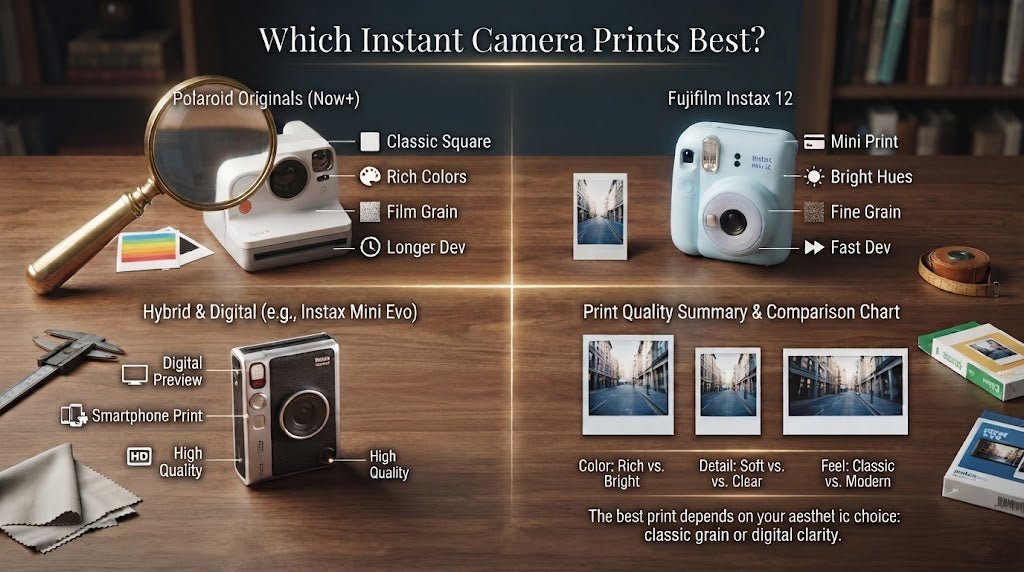
A great instant photo is rarely about resolution alone. If you are asking which instant camera prints best, Fujifilm Instax is the strongest answer for most people because its prints are typically brighter, crisper, and more consistent, while Polaroid delivers a moodier, more characterful look that some people will prefer on purpose. What stays with you is how the print feels in your hand, how the color lands in real light, and whether the image still has presence a week later on your desk, fridge, or studio wall.
That is the part buyers often miss, especially design-conscious city users who want an instant camera that fits everyday carry as well as personal style. Instant cameras do not all chase the same look, and this comparison is built for people choosing between systems they will actually live with, not just test once. We are looking at how Fujifilm Instax, Polaroid, and Kodak prints differ in color, sharpness, mood, format, and film character, and which one makes the most sense for different tastes and use cases. The best print is not just the sharpest one. It is the one that matches how you want your photos to feel long after they come out of the camera.
Which instant camera prints best for most people?
For most people, Fujifilm Instax cameras print the most consistently polished photos. They tend to deliver brighter images, more stable exposure through automatic exposure, and crisp detail with less guesswork, which makes them easy to trust for reliable results. If your idea of a good instant print is clean, colorful, and reliable straight out of the camera, Instax is usually the safest answer.
But safest is not always most interesting. Polaroid prints often have more mood, more depth, and more of that classic instant-photo character people picture when they think about analog joy, especially if you want something less clinical than what you may get from other instant cameras. Kodak sits in a different lane, depending on the model, often appealing to buyers who want compact fun and accessible output rather than a highly stylized print signature.
So if the question is purely which instant camera prints best with the least effort, Instax has the edge. If the question is which print looks the most iconic, many people still prefer Polaroid.
Image quality is not one thing
When people compare instant cameras, they usually say “better print quality” as if that means a single measurable result. It does not. With instant photography, print quality is really a mix of color rendering, contrast, exposure consistency, sharpness, skin tone handling, and even the surface feel of the film itself.
Instax film is known for looking tidy and dependable. Whites stay brighter, and Instax prints often have a soft, saturated look, while indoor shots usually come out with fewer surprises. That makes it easy to recommend, especially for parties, travel, and casual portrait use.
Polaroid film has more personality. You may get richer atmosphere, stronger emotional texture, and a larger print that feels more display-worthy. You may also get more variation from shot to shot. Sometimes that is a flaw. Sometimes it is exactly the point.
Kodak instant options are a bit more mixed because the brand spans different product types and print systems. Some Kodak options are digital instant cameras rather than traditional instant film cameras, which helps explain the wider spread in print style and shooting experience. Some Kodak cameras and mini printers focus more on convenience and portable fun than on the classic analog look. If your priority is a social, easy-to-share print instead of a collectible object, that can still be the right call.
Polaroid vs Instax: which instant camera prints best in real life?
This is the comparison that matters most. For everyday reliability, Instax usually wins. For visual character, Polaroid often wins.
Instax prints are generally sharper. The film develops with fewer dramatic shifts, and the cameras themselves are often tuned to produce more usable shots in mixed conditions. You do not need to fight the format. That matters if you are photographing friends indoors, street scenes at dusk, or spontaneous moments where you only get one chance.
Polaroid prints are larger and more expressive. With instant film, Polaroid's i-Type film offers a 79 x 77 mm image size, so the prints have noticeably more presence. They often have softer rendering, warmer or moodier tones, and a look that feels less clinical. In good light, Polaroid can produce prints with real presence. They feel designed for the wall, not just the wallet. Polaroid film costs about £2 per print, which adds to the format’s appeal as well as its trade-offs. The trade-off is that they can be less forgiving. Exposure can drift. Lighting matters more. Film handling matters more too.
For a design-conscious buyer, this becomes a style decision as much as a technical one. Instax gives you control. Polaroid gives you character.
If you care most about color
Instax tends to be brighter and more neutral. Blues, greens, and skin tones usually land in a way that feels familiar and easy to like. It is the more universally flattering print style.
Polaroid color can be beautiful, but it is more interpretive. Depending on the light and film stock, you may see warmer shifts, deeper shadows, or a more vintage cast. That is attractive when you want atmosphere, but less ideal when accuracy matters.
If you care most about sharpness
Instax is typically sharper. Fine details hold together better, and faces often look cleaner, especially in good daylight. If you want the print to feel neat and readable, this helps.
Polaroid is softer. Not bad, just softer. That softness is part of the format's charm, but if you expect digital-style clarity, it can feel less precise.
If you care most about mood
Polaroid has the stronger signature. That mood-first appeal is also why some buyers still prefer a polaroid instant camera even when results are less consistent. Its prints often feel more cinematic and less standardized. They can carry a scene emotionally, especially portraits, interiors, and quiet outdoor shots.
Instax can still be charming, but the look is more consistent than romantic. Think bright, clean memories instead of dreamy artifacts. A smartphone camera image may look cleaner, but it usually does not create the same nostalgic physical print effect.
The film matters as much as the camera in instant photography
A lot of buyers ask which instant camera prints best when they are really asking which film looks best. That distinction matters.
The camera affects lens quality, exposure, flash behavior, and focusing. But the film defines much of the final print's color, contrast, size, and surface personality. With an instant film camera, that look is locked in the moment you shoot, while a hybrid instant camera lets you choose the shot before it prints. You are not just buying hardware. You are buying into a print system.
Instax Mini, Square, and Wide all share a certain clean Fuji character, but the format changes the experience, and instax mini film measures 54 x 85mm with a 46 x 62mm image area. Mini is playful and compact, with mini film giving you 46 x 62 mm prints that feel great for everyday carry and gifting. Square feels more balanced and display-friendly, and instax square film measures 62 x 62 mm and usually costs around 85p per shot. Wide gives scenes more breathing room, and fujifilm's instax wide film measures 99 x 62mm, making it the largest Instax format if you actually want to keep or frame your photos. Cameras like the Instax Wide 400 also produce larger prints than Instax Mini cameras. Even so, most instax cameras retain that same neat, consistent film character across the range. If you want an easy square-format option, the Fujifilm Instax Square SQ40 keeps things simple with just three settings.
Polaroid's larger frame has a different emotional weight. It feels iconic because it is. Polaroid cameras use larger instant film, so the print feels more like a small object than a quick snapshot. Even before you look at the image itself, the object already has visual presence.
That is why a technically “better” print does not always win. The format changes how people value the photo.
Best instant print quality by use case: Fujifilm Instax Mini Evo and more
If you are buying for parties, travel, or easy everyday shooting, Instax is hard to beat. The hit rate is high, the prints are bright, and the learning curve is gentle. The Fujifilm Instax Mini 12 is a good example, with simple beginner-friendly controls that make quick shooting easy, much like the Instax Mini 13 is designed for simple point-and-shoot photography. It feels effortless in the best way. If you want more flexibility than basic models, hybrid cameras let you preview photos before printing, and digital preview screens help prevent wasted film by letting you choose what to print. The Fujifilm Instax Mini Evo is a hybrid instant camera with a 3-inch LCD screen, so you can review a digital photo before you print photos instead of committing every shot automatically. It also sits between analog photography and a digital camera workflow, since hybrid instant models can hold digital files while still producing instant photos. As a hybrid camera, it can save digital images before you print images, and its internal memory or expandable storage helps save images and transfer photos later. It can also keep digital files, and some users see it as the best hybrid instant camera for balancing flexibility with film output. Some hybrid Instax models such as the Instax Mini LiPlay+ also include a rear-facing selfie camera, which is handy for self-portraits and social shooting. The Fujifilm Instax Mini Evo adds a 3-inch LCD screen, can save digital copies, and lets you print from a smartphone’s camera roll, while its 10 lens effects and 10 film effects make it a stronger creative option.
If you are buying for creative portraits, studio corners, fashion snapshots, or photos you want to pin up and keep, Polaroid has a stronger emotional pull. It asks a bit more from the shooter, but it gives more back in visual identity. The Polaroid Flip is a better fit if you want more manual involvement, with aperture and shutter speed control plus sonar autofocus for sharper results in portraits and more deliberate shooting, and the Polaroid app can extend creative control for users who want more manual involvement.
If you want something casual, giftable, or compact for social moments, Kodak can make sense, especially for users who prioritize fun over film purism. Just be clear on whether you want classic chemical instant photography or a more printer-like output experience. Some buyers may still prefer a pocket-sized option like the Polaroid Go Generation 2 for simple carry-anywhere fun.
The Instax Mini 99 is also a strong middle-ground pick, since it adds manual controls, including an exposure control dial, plus exposure compensation, flash control, and double exposure mode, which is why many people see it as the best instax camera when they want more than a basic model.
So, which instant camera prints best?
For consistent quality, Instax is the leader and the best instant camera for most people if print consistency is the priority. It delivers the most dependable combination of color, clarity, and exposure across a wide range of conditions. If you want the fewest missed shots and the most universally appealing prints, start there.
For iconic style, Polaroid still holds a special place. Its prints are less predictable, but often more memorable. If you are drawn to objects with soul, not just technical performance, Polaroid remains compelling. If you are choosing within the same category, decide whether you want a dependable photographic tool or a more stylized instant print camera experience.
The smart answer is that the best instant print depends on your taste threshold. Some people want accuracy. Others want atmosphere. Some want a camera that behaves. Others want a print that feels alive.
For urban creatives, that choice is part of the appeal. Instant photography is not only about capturing a moment. It is about choosing how that moment should look, age, and be remembered. A colorful camera or compact printer workflow suits some people, while others want the fuller camera-first instant photography experience. Buy the print style you want to keep close.
Instant camera accessories that protect your gear, improve every shot, and make printing, sharing, and carrying photos feel more personal, wherever you go.