기사: Film Printer for Journaling: Print What Matters
Film Printer for Journaling: Print What Matters
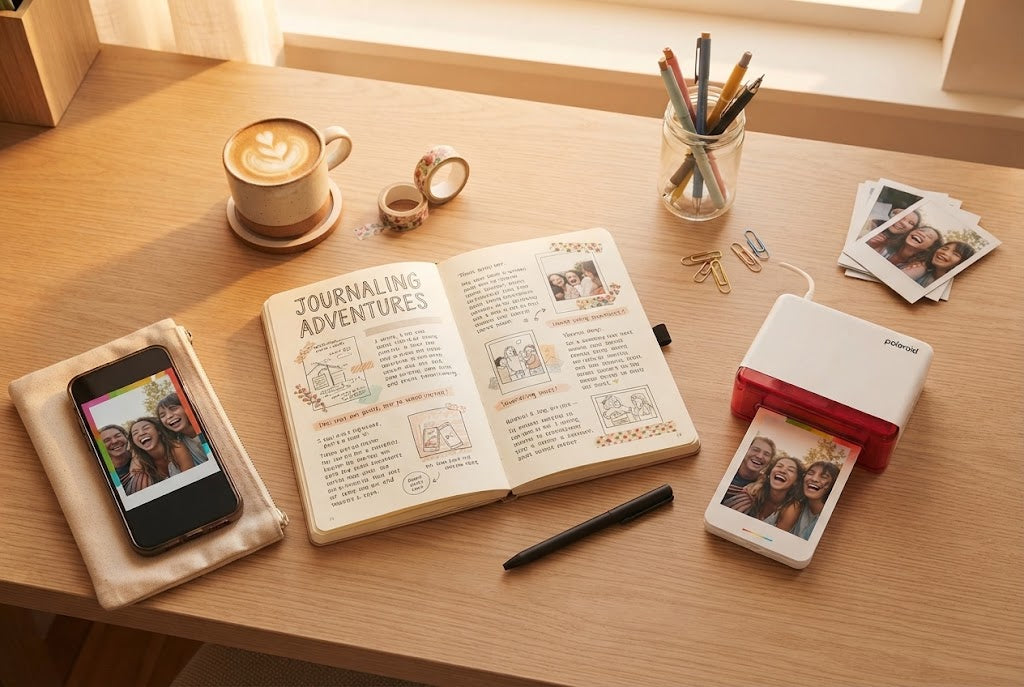
A ticket stub fades. A camera-roll screenshot gets buried. But a small photo taped beside a sentence keeps the moment in reach. That is the appeal of a film printer for journaling: it lets you print what matters by turning the images already living on your phone into physical photos you can arrange, annotate, and revisit in your journal.
For creative people and urban professionals who use journaling to document ideas, moods, and personal stories, that shift from screen to paper makes memories easier to hold onto in the middle of digital overload. Journaling is rarely about perfect handwriting or a flawless spread. It is a record of visual fragments: the coffee shop where an idea arrived, the friend who made a hard week lighter, the strange color of the sky on a late walk home.
A compact photo printer gives those fragments a place on the page without the commitment, cost, or delay of a traditional photo lab. Below, you will find how film printers improve the journaling process, what to look for when choosing one based on print style and how you plan to use it, and practical ways to build journal pages that feel meaningful and visually balanced.
Why a film printer belongs beside your journal
A photo changes the tempo of a journal page. Instead of explaining every detail, you can let an image set the scene and use a few words to say what mattered. That makes the practice easier to maintain, especially for anyone who has abandoned a blank notebook after one overly ambitious first page.
The best setups are deliberately low-friction. Take a photo, select it from your phone, print it, and give it a home in your notebook. The ritual feels tactile without becoming precious. It also makes a useful counterpoint to the endless scroll: your favorite images become finite objects, chosen for a reason.
There is a visual argument for it, too. Instant-style prints bring a border, a little texture, and a sense of proportion to a page. They make a simple grid notebook feel more personal. A travel journal can become a compact visual diary. A reading journal can hold bookshop snapshots, covers, and handwritten reactions. Even a work notebook benefits from a printed reference image or a visual mood marker.
Choose a film printer for journaling by print style
Not every portable printer serves the same kind of journal. The right choice depends on whether you value an instant-film look, miniature sticker prints, richer color, or larger photographs with more detail.
Instant-film printers and instant cameras for a classic analog feel
Printers that produce Polaroid-style images suit journals built around atmosphere. Their white borders give you room for dates, captions, and quick notes, while the larger format makes a single picture feel intentional. This is the format for a weekend trip, a birthday dinner, a new apartment, or any moment that deserves more than a thumbnail.
The trade-off is pace and cost. Larger instant prints use more page real estate and typically cost more per image than tiny adhesive prints. They also ask for a little restraint. That can be a strength. Printing one image that captures the day is often more compelling than covering a spread with twelve nearly identical shots.
Mini prints for everyday entries
Small-format printers are made for frequent use. Their prints fit easily into pocket notebooks, planners, and compact memory books, and many use adhesive-backed photo paper. Many mini printers use ZINK photo paper, a type that uses heat to form the image after you load the paper. It is water-resistant, tear-resistant, and smudge-resistant for everyday journaling use. For daily journaling, that convenience matters. No glue stick in your bag, no drying time, no extra step between printing and placing.
These printers work especially well for visual lists and serial projects: one image a day, a month of morning walks, favorite outfits, meals worth repeating, or a year of small wins. For example, a typical 2 x 3-inch ZINK print takes about 40–60 seconds, which suits a spontaneous workflow. The image quality is usually designed for charm and portability rather than gallery-level detail. Pocket-size options like the Hanin MT53 keep that setup easy to carry, and refills are commonly sold in 10-, 20-, 50-, or 100-sheet packs. Choose them for spontaneity, not for reproducing intricate landscapes or low-light portraits.
Larger photo printers for color and detail on photo paper
If your journal leans more scrapbook than pocket diary, a larger portable photo printer may be the better fit, and some models from each brand use dye-sublimation technology for more vibrant, longer-lasting images. The Fujifilm Instax Link WIDE Printer is one option if you want larger, more expressive journaling prints. A 4-by-6 print can anchor a travel spread, a wedding guest book, or a creative project journal, and some canon-style layouts and templates also work well across different sizes. Better detail and broader color range, along with smudge-proof output, make these printers a natural choice for images you want to keep looking at.
The practical question is scale. Larger prints ask for a bigger notebook and a more edited approach. They are ideal when your journal is a keepsake in progress, less ideal when you want to print at a café or document an ordinary Tuesday in a slim planner. Printed correctly, photographs can last up to 100 years.
The details that shape your printing habit
It is easy to focus on printer design, but the ongoing experience is shaped by a few quieter decisions. Print size comes first. Before buying, place a piece of paper in the dimensions of the print inside your usual notebook. It will quickly tell you whether the format leaves enough room for writing.
Then consider the paper itself. Adhesive-backed prints are efficient for travel and daily use. Traditional instant film has more presence and a more collectible character, but you will need photo corners, double-sided tape, or glue. Neither is objectively better. It depends on whether your journaling is quick and portable or slow and composition-led.
Color is another factor. Phone screens tend to make photos look brighter than they will on paper. A printer app with basic editing controls is useful, especially when app integrations let you customize layouts before printing from your smartphone, because you can lift shadows, warm up skin tones, use templates, or crop an image before it becomes permanent. Avoid over-editing, though. A journal does not need every photograph to look polished. Slightly imperfect prints often feel more honest on the page.
Finally, look at refill availability and cost per print before committing to a format. A printer only earns a place in your routine if you can keep it stocked, and the supplies you need should match how often you actually print. It helps to plan around your usual usage, not just the printer price. For frequent journalers, a smaller print format may offer the freedom to experiment. For occasional use, a larger instant print can make every image feel like an event, so take time to find the balance that fits.
Build a simple print-and-journal ritual
The most successful journaling tools are the ones you actually reach for. Keep your printer, refill pack, notebook, favorite pen, and any pre-made templates or printed inserts together when possible. If the supplies live in separate drawers, a five-minute creative break becomes a project.
Start with a manageable rhythm. Print one image at the end of each week and pair it with three lines: what happened, what you noticed, and what you want to remember. Using pre-made designs can simplify the process, and these tips make the habit easier to keep. This structure gives the page shape without forcing a long reflection. Over time, those short entries become a more vivid record than a stack of uncaptioned photos, which is a great reason to stick with it and enjoy the routine.
For travel, print at the end of the day rather than waiting until you get home. The details are still fresh: the name of the street, the song playing at dinner, the color of the hotel lobby, the unexpected conversation. A compact printer turns the quiet part of an evening into a simple way to stay in control of the memory-keeping process.
You can also journal around themes rather than events. Print a photo of something blue each week. Collect hand-painted signs, unusual packaging, shadows, dogs seen on walks, or tiny examples of good design. This is where a film printer moves beyond nostalgia. It becomes a tool for noticing.
Make pages that feel collected, not crowded
A strong journal spread does not need matching stickers or perfect lettering. Let the photo do some of the visual work. One image on a mostly open page can feel more considered than a dense collage with no breathing room.
Try pairing photographs with small things you collect to create pages with more meaning: a receipt, a museum ticket, a pressed leaf, a menu corner, or a scrap of wrapping paper. Keep the palette loose, but repeat one detail across several pages, such as black ink, a single tape color, or a date stamp. Some readers also love adding printable designs or canon Creative Park templates beside keepsakes, as long as the page still feels balanced. That small amount of consistency makes an evolving journal feel cohesive without making it rigid.
It also helps to print fewer images than you think you need. The goal is not to archive every frame. It is to select the images that carry a story. The slight pause before you press print is part of the process, a chance to choose what matters most on the page.

A creative tool worth keeping close
A film printer for journaling is not only for milestone memories. Its real value is in making ordinary life visible and helping you manage the small parts of life you want to remember: a desk in good afternoon light, a first attempt at a recipe, the view from a train, a friend across the table. For urban creatives who want more from the photos they already take, a thoughtfully chosen printer offers analog joy in a digital world.
Choose the format that suits your notebook and your pace, keep the setup simple, and let the page stay imperfect. The best journal is not the one that looks staged. It is the one that makes you stop long enough to remember, stay mindful, and read back through old pages to notice patterns, goals, or moments that still matter. Choose the kind of printer and routine that fits how you live and what you want to create at home.
Shop official sourced watch brands with confidence: authentic design, valid warranties, and the considered details that make a daily watch worth wearing.