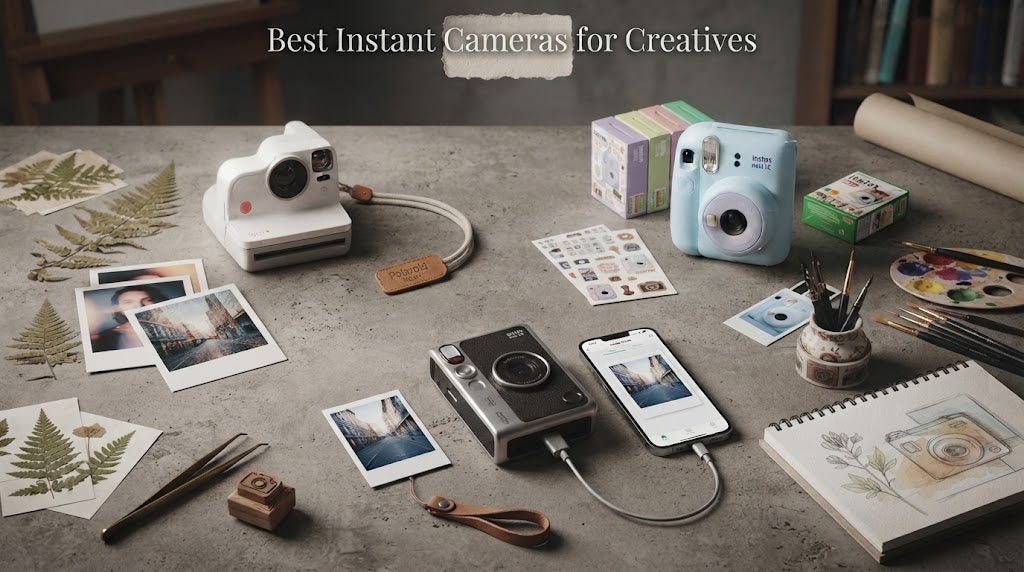
Best Instant Cameras for Creatives
Some cameras are built to document. Others are built to spark ideas. The best instant cameras for creatives are the ones that fit your rhythm, taste, and process, balancing control, film format, lens character, and design in a way that supports intentional image-making rather than just cleaner specs. That is why they still hold real appeal, even for people who shoot on phones, mirrorless bodies, or both. The print in your hand changes the pace. It asks you to look closer, commit sooner, and treat each frame like a decision instead of an endless draft.
For designers, stylists, photographers, and visual artists building a visual life, that shift matters. Instant photography is not just nostalgia. It is a tactile creative tool that sharpens visual choices and gives you physical prints you can use in moodboards, styling references, design work, or visual storytelling. In this guide, we compare the instant cameras that make the most sense for different creative styles, look at the features that shape the experience most—film format, lens character, controls, and cost of shooting—and focus on curated, authentic options that are genuinely distinct rather than padding the list with interchangeable picks.
Why instant cameras still make sense for creative work
Digital is efficient. Instant is intentional. That difference explains why so many artists and image-makers keep both in rotation.
An instant camera gives you a finished object right away, but it also gives you constraints. You have a limited frame count. Exposure is less forgiving. Composition matters more because there is no casual burst mode to hide behind. Those limitations can sharpen your eye. They can also loosen you up. When a format feels playful, people often take better risks.
There is also the physical result. A print can be pinned to a mood board, taped into a sketchbook, handed to a subject, or used as a color and styling reference on set. For creative people, that utility is part of the appeal. The image is not trapped in a camera roll waiting to be sorted later.
What to look for in instant cameras for creatives
Not every instant camera serves the same kind of user. Some are better for spontaneous portraits and social moments. Others feel more considered, with manual controls or stronger design appeal. Before you choose a model, it helps to know what actually affects the experience.
Film format shapes the look
Film size changes more than the dimensions of the print. With instax mini, square film, and wide formats as the main choices, it affects composition, visual impact, and how the image lives after it develops. Smaller formats feel casual, graphic, and easy to carry around. They work well for journals, travel diaries, and quick studies. credit card sized prints on instax mini film are usually the lowest-cost option at about 45 cents per print. Larger square or wide formats feel more expressive and display better on walls, desks, or studio boards. instax square film is especially good for artistic compositions, while instax wide film works well for landscapes and group shots thanks to its 108x86mm format.
If you like compact, everyday shooting, mini film and square prints can both make sense depending on how much presence you want in the image. If you want prints that feel more present and less like keepsakes, a larger format usually earns its place. film refills matter long term too: Square is around $1 per print, and Wide usually costs more than Mini or Square.
Lens character matters more than perfection
Many people shopping for instant cameras ask about sharpness first. Creatives often care more about character, and glass lenses usually deliver cleaner rendering with better edge-to-edge sharpness than plastic lenses, while softer setups can feel more atmospheric. Some instant cameras render scenes with clean contrast and better edge definition. Others lean softer, with a dreamier or more unpredictable feel. Neither is automatically better. Some cameras also add built-in effects that create distinct tone variations directly on the instant film.
If your style is graphic and polished, look for a camera known for consistency, where sharpness is just one part of overall image quality. If you like texture, imperfections, and a little analog chaos, a looser rendering can be part of the charm. Instant photography often looks strongest when the camera has a point of view.
Control versus ease
Some instant cameras are almost fully automatic, with auto mode as the baseline on simpler models, while others add manual mode for users who want more control. That is useful if you want grab-and-go simplicity or plan to share the camera with friends. Other models add features like auto exposure, a built in flash, a selfie mirror, close up mode, self-timer options, a light meter, support for changing ambient light, and app-connected remote shooting. Manual controls let you adjust exposure, focus, shutter speed, and aperture, while full manual controls matter most for advanced experimentation. These tools can make a real difference if you use instant photography as part of a more deliberate visual practice.
The trade-off is simple. More control can lead to better results, but only if you actually want to use it. Creative features such as double exposure mode, multiple exposures, and long exposures give creative photographers more creative freedom. A camera that feels too fiddly for your habits will stay on the shelf, while a hybrid option that works more like a digital camera can let you preview images and choose what to print first, which can save on film packs over time.
Design is not superficial here
With instant cameras, design affects behavior. The camera body matters because weight, grip, and finish affect how comfortable it is to carry and use. A well-sized body, intuitive controls, and a finish you genuinely like can make you reach for the camera more often. For style-conscious buyers, this is not vanity. It is product fit. A polaroid camera like the Polaroid Now+ combines classic design with modern technology, and the Polaroid Now+ Gen 2 connects to a smartphone app through the polaroid app for extra control.
Creative tools live in your bag, on your desk, and in your daily routine. If a camera feels clumsy or looks disposable, that changes the relationship. The best choices balance visual appeal with practical handling, whether that means solid battery life, a built in rechargeable battery with decent battery life, or app-based shooting features such as remote control.
The main types of instant cameras worth considering
The category is broader than it first appears. Most buyers will land in one of three lanes. Some prefer an analog camera approach, and the Fujifilm Instax Square SQ6 suits buyers who want a more traditional analog photography feel. Larger-format models like the Instax Wide 400 are especially good for instant photos at gatherings and group photos because they produce bigger prints.
One lane is simple, social, and easy to carry. Another is more style-led and creative. Some other instant cameras, especially Lomography models, are recognized for encouraging experimental photography and appeal to users who want more experimental results.
For spontaneous shooters
These cameras are made for ease. Point, shoot, wait for the print, with auto exposure helping keep things simple. They are ideal for parties, city walks, weekends away, and gift buyers who want something intuitive. Wide-format models can be especially helpful for casual group shots. If your priority is atmosphere over technical control, this is the cleanest entry point.
The best versions in this category still get the basics right: decent exposure reliability, a lens with some personality, and a form factor that feels good to carry. They are often the right pick for people who want analog joy without turning every shot into a project.
For design-led image makers
This is where instant cameras start to feel more intentional. The Fujifilm Instax Mini 99 is a good example, with manual zone focusing and exposure compensation for users who want more say in the final frame. You may get stronger optics, a more refined body design, or settings that help shape the final image. These models appeal to users who want the camera to do more than document a night out. They want it to support a visual language. At the higher end, the Polaroid I-2 offers high optical clarity, sharper imaging, and professional-level exposure control, including full manual controls for advanced users.
If you style interiors, shoot outfits, collect printed references, or build mood boards, this category tends to make the most sense. You get enough control to steer the result, but not so much that the process becomes technical overhead.
For hybrid digital-analog users
Some modern instant cameras function as a hybrid camera, combining digital photography convenience with instant printing. The Instax Mini LiPlay is one example, using a small LCD screen to preview, manage, and select shots before printing. They may let you preview images, select shots before printing, or work through an app. Some Instax cameras, especially the Instax Mini Evo, have become popular because they feel closer to a digital camera while still producing instant prints. Purists sometimes resist that idea, but it solves a real problem: film costs money, and not every frame deserves a print.
For creatives who concept heavily, test compositions, or want more predictability, hybrid models can be a smart choice. They preserve the pleasure of a physical print while cutting down on wasted film. The trade-off is that the process feels slightly less raw. That digital workflow is useful when you want to protect your shot count and avoid wasting film.
How to choose based on your creative style
If your work leans polished and editorial, choose a camera that offers consistency. Polished workflows often benefit from Fujifilm Instax models with consistent output and easy-to-source film. Reliable exposure, a clean lens, and a design you can carry daily will matter more than novelty. You want a tool that slips into your process without fighting it.
If your style is looser, more tactile, or rooted in experimentation, lean into cameras with stronger character. Cameras with built in effects, double exposure, or more tactile analog behavior usually offer more room for creative freedom. Slight unpredictability can become part of the image language. In that context, flaws are not always flaws.
If you are buying for travel, portability and ease of use should lead. A built in selfie mirror can also be useful for solo travel portraits and quick framing. A camera that is too bulky or precious tends to stay in the hotel room. If you are buying for studio inspiration, print size and image presence may matter more than compactness.
And if this is also a gift, simplicity counts. The best camera for a gift is usually the one that makes good moments easy, not the one that demands a manual.
The hidden cost creatives should think about
Film is part of the commitment. Film packs can add up quickly over time, especially if you shoot often. That is not a reason to avoid instant photography, but it is a reason to be honest about how you plan to use it.
A camera with cheaper film can be better for frequent shooting, testing ideas, and casual carrying. Polaroid film is generally the pricier route compared with Instax film. A camera with more premium or larger-format film may deliver a more satisfying print, but each shot asks for more intention. That can be good for your work. It can also make you hesitate.
The right answer depends on volume. If you shoot often, running costs shape the experience as much as the camera itself. If you shoot selectively, paying more per frame may be worth it for the stronger result. In practice, a reasonable price depends on both the camera cost and the ongoing film refills.
Why curation matters in this category
Instant cameras look simple, but buying one is not always simple. Specs only tell part of the story. Film availability, support, and how easy it is to find Fujifilm Instax Mini or Fujifilm Instax Square refills can matter just as much as features. The real difference often comes down to feel, format, and whether the product suits the kind of creative life you actually lead.
That is why selective retail matters more here than endless choice. A tight edit saves time and usually leads to better decisions. Brands and stores with a clear point of view understand that a camera is not just a device. It is an object you live with and a tool that shapes how you see.
For shoppers who care about authenticity, official warranty support, and a cleaner buying experience, that layer of trust counts. Bang On fits naturally into that conversation because the value is not about flooding you with options. It is about helping you choose well.
A better way to think about the purchase
Do not ask which instant camera is best in general. Ask which one fits the way you collect moments, references, and ideas, whether that is a simple analog option, a more manual model, or a hybrid digital camera. The right camera should make you want to carry it, use it, and keep the prints where you can see them.
Creative tools earn their place when they change behavior. A good instant camera can slow your eye in the right way, add texture to your workflow, and turn ordinary scenes into objects worth keeping. Many creative photographers also like compatibility with vintage lenses or interchangeable systems when they want more flexibility than most Instax cameras offer. If a camera does that, it is already doing more than taking pictures.
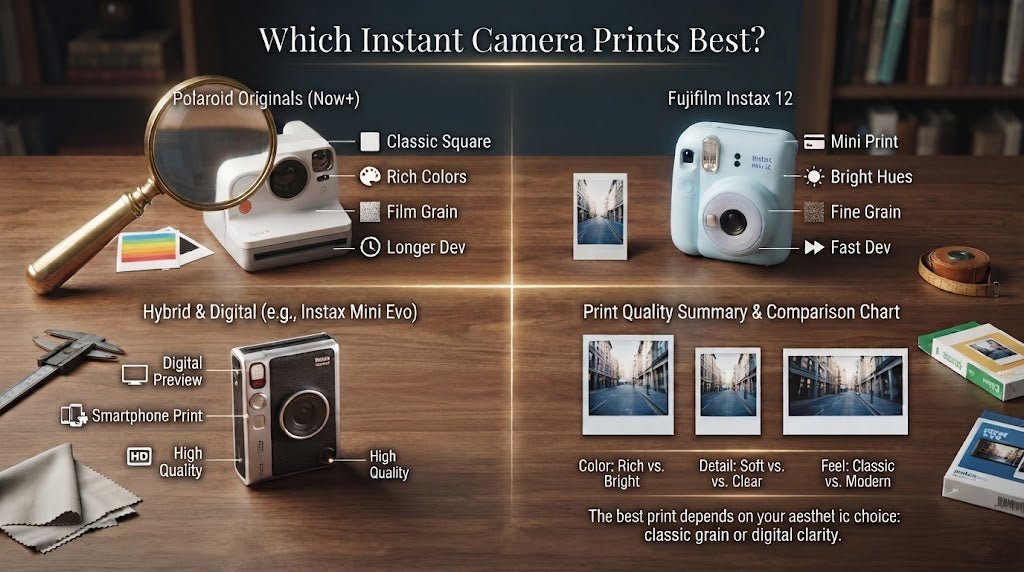
The best choice often comes down to whether you prefer instant photography for tactile analog results or a hybrid workflow that blends digital photography with printmaking. Wondering which instant camera prints best? Compare Polaroid, Instax, and Kodak on color, contrast, sharpness, and overall print character.