Polaroid Go Generation 3: Worth It?
Yes — the Polaroid Go Generation 3 is worth it if you want a compact, stylish instant camera for casual, everyday shooting rather than a full-size Polaroid experience. Pocket cameras usually ask you to compromise. You get the charm, but not the feel. You get portability, but not the kind of object you actually want to carry. The Polaroid Go Generation 3 is interesting because it aims for both - a true grab-and-go instant camera that still feels considered, not toy-like.
For casual creatives, design-conscious buyers, gift shoppers, and urban lifestyle users drawn to analog image-making but unwilling to haul a larger camera everywhere, that balance matters. This is a camera built around spontaneity: quick portraits, low-stakes travel shots, nights out, desk-side still lifes, little visual notes from everyday life. Below, we look at where its size and design work in its favor, what trade-offs come with the smaller format, how it compares with larger instant cameras, and who will get the most from it. The question is not whether it can replace a full-size Polaroid. It cannot. The better question is whether the smallest camera in the lineup makes enough sense for the way people actually shoot and carry a camera now.
What the Polaroid Go Generation 3 gets right
The strongest argument for the Polaroid Go Generation 3 is simple: size changes behavior. This tiny camera measures 106.5 x 83.8 x 64.6mm and weighs 251.9g, so it has a better chance of leaving the house with you. That sounds obvious, but it is the difference between a product you admire on a shelf and one that becomes part of your routine.
Polaroid has always traded on more than pure image perfection. The appeal is physicality, mood, and the small ceremony of making a print on the spot. In the go series, that experience becomes more casual and more social. It is easier to pass around a table, slip into a bag, or keep handy at a party without committing to a full camera kit.
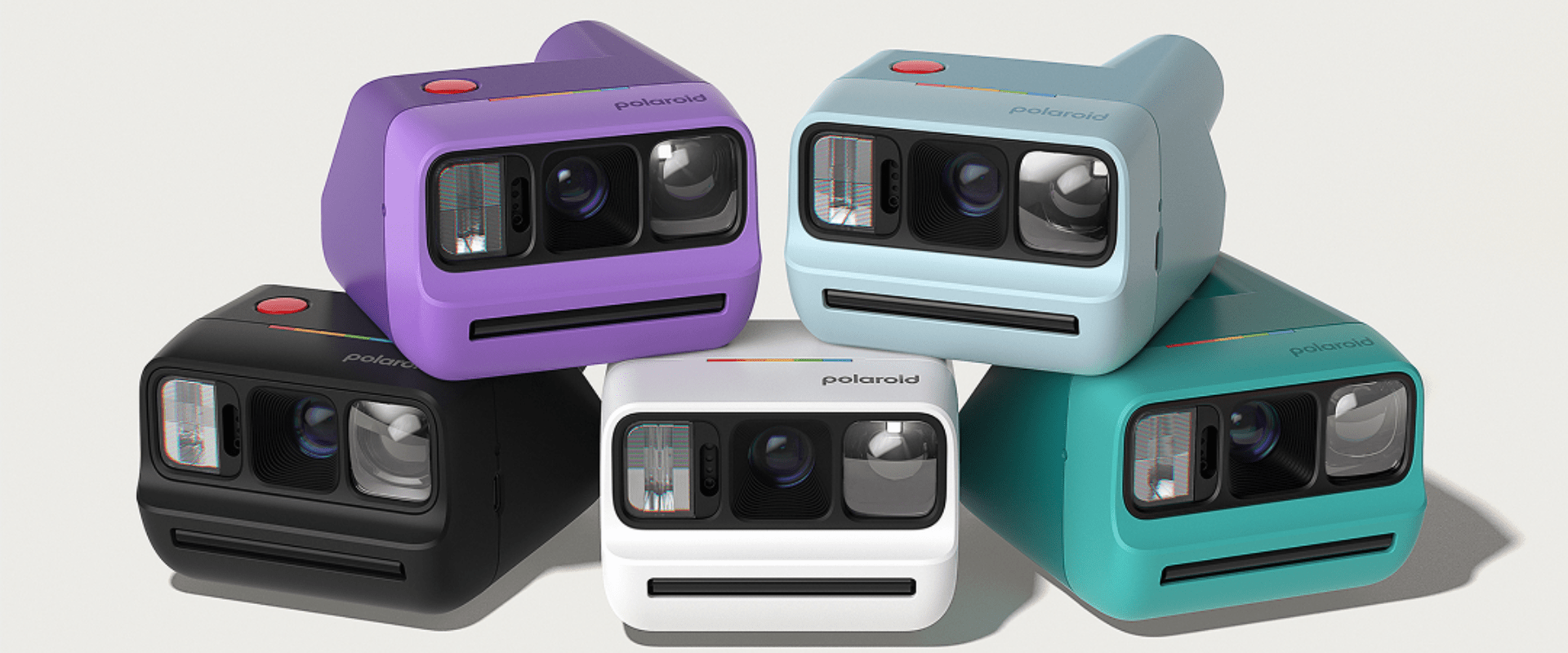
The design language also helps. The Go line has a clean, compact silhouette that feels aligned with modern everyday carry rather than novelty tech, and its cute proportions make it look approachable rather than gimmicky. It looks intentional. For a lot of buyers, especially those who care about objects as much as specs, that is not a side detail. It is part of the value.
A smaller Polaroid means a different kind of use
Anyone considering the Polaroid Go Generation 3 should start here: small format changes the experience, and the film format is more precisely scaled for pocketable prints. The prints are smaller than the classic Polaroid square-framed image, which makes them feel intimate rather than dramatic.
That can be a strength. Small prints (66.6 x 53.9mm) are great for wallets, journals, mood boards, mirror corners, and casual gifting. They feel personal. They also make sense for people who want the analog effect without needing every frame to become a go print.
But there is a trade-off. If what you love most about Polaroid is the iconic larger print with more visual presence, the Go Gen 3 prints are 66.6 x 53.9mm in size, so the Go format may feel a bit restrained. Landscapes lose some impact. Group shots can feel tighter. They feel charming and display-worthy, but details matter more because there is less frame to work with.
This is why the Go works best when you treat it as its own format rather than a scaled-down substitute. It rewards closeness, direct compositions, and moments with personality. The image area is just 47 x 46mm, which clarifies how little frame space you actually get.
Who the Polaroid Go Generation 3 is really for
This camera makes the most sense for three types of users. First, there is the casual creative who wants an instant camera that fits real life - dinner plans, weekends away, studio corners, and everyday errands. Second, there is the design-conscious buyer who wants a camera that feels collectible but still useful. Third, there is the gift shopper looking for something with immediate emotional payoff.
It is especially appealing to people who like photography as part of a lifestyle, not as a technical hobby. You do not need to be deep in camera settings to enjoy this kind of product. That simplicity also makes this polaroid camera suitable for children and beginners. You need good instincts, decent light, and a willingness to let imperfection be part of the result.
That distinction matters. If you are chasing maximum control, larger prints, or consistently polished output, this fun camera may not be for you because there are no manual controls or Bluetooth features. If you want analog joy with less friction, the Go format is easier to live with.
Polaroid Go Generation 3 vs larger instant cameras
The easiest mistake is to compare the Polaroid Go Generation 3 to larger instant models strictly on image size or dramatic presence. Yes, bigger formats usually feel more iconic. Yes, they often have a stronger wall-display effect. But they also take up more room, ask for more commitment, and can end up used less often. If you are cross-shopping, instax mini is the other obvious small-camera alternative, while a polaroid flip makes more sense if you want a more feature-rich step up with larger prints.
The Go shifts the value equation toward frequency. You may not get the same visual impact per frame, but you may take the camera out twice as often. For many people, that is the smarter trade. It is also worth noting that Polaroid Go film is pricier at about $1.24 per shot, while instax film for Instax Mini is roughly $0.79 per shot and commonly sold in single packs of 10 shots.
There is also the social factor. Smaller instant cameras tend to feel less precious. People are more willing to use them casually, hand them to a friend, or bring them into situations where a larger camera might feel cumbersome. That ease can produce better memories, even if the prints themselves are not the biggest or most technically impressive.
So the decision is not really small versus large. It is presence versus portability. Statement piece versus everyday companion. Neither is universally better.
The aesthetic appeal is part of the product
With instant cameras, form and function are always intertwined. People do not just buy them for output. They buy them because the object itself contributes to the ritual. The Polaroid Go Generation 3 understands that.
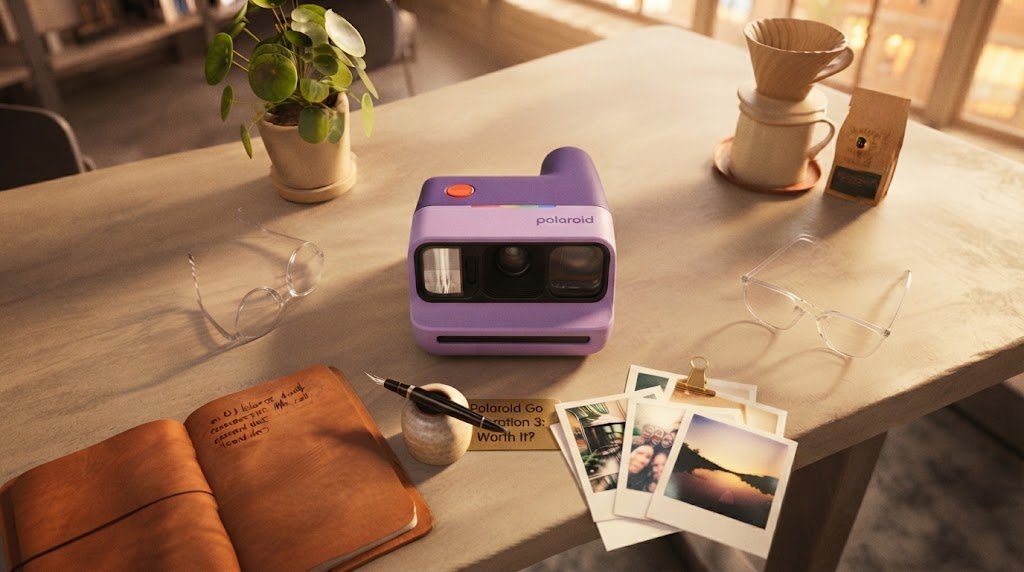
Its compact proportions give it a neat, modern presence. It feels made for shelves, workspaces, compact bags, and city routines. For an audience that values design-led products, that matters as much as the spec sheet. A camera you want to pick up is a camera you use.
This is where a curated retailer earns its place. When a product sits at the intersection of style, utility, and brand identity, context matters. A well-chosen instant camera does not just fill a category. It fits a way of living.
What to expect from the shooting experience
The best way to approach the Polaroid Go Generation 3 is with the right expectations. Instant photography is not about perfect efficiency. It is about editing your moment before you even press the button. You have fewer frames, each shot costs more than a phone photo or a pack of polaroid film, and the result is physical from the start.
That creates a different rhythm. You shoot less, but with more intent. You pay more attention to distance, light, and composition. You accept that some images will be strange, soft, overlit, underlit, or unexpectedly better because of those qualities, and image quality can still go soft or show motion blur in low light.
In the Go format, this rhythm becomes even more playful. The camera invites quick, personal shooting. Best results usually come from subjects that are relatively close, thanks to the new lens: a 42mm equivalent lens with improved optics and a tighter field of view. Compositions that are simple tend to work best. Close ups usually work better than distant scenes, but framing still feels casual because of the fixed focus design. If you try to force every scene into a cinematic instant image, frustration follows. If you treat it like a visual diary, it clicks, and the stronger flash helps indoors and at night when light conditions are less cooperative.
Creative extras like the selfie mirror and double exposure also suit its playful shooting style.
The trade-offs are real, and that is fine
No instant camera is all upside. Film costs add up at about $1.24 per shot, and Polaroid Go film is sold in double-packs of 16 shots. For casual creators staying within the Polaroid system, it can still be more affordable per shot than standard i-Type film. Output varies. Smaller prints will not satisfy everyone. And while compact size is the whole point, it also means the visual drama is more subtle than what some Polaroid fans expect.
Still, compromise is not failure. It is product positioning. The Polaroid Go Generation 3 is not trying to be the biggest, boldest, or most feature-heavy instant camera. It is trying to be the one you actually bring.
That is a more useful goal than it sounds. A camera that fits your habits tends to outperform one that only wins on paper. For urban creatives, frequent travelers, and anyone building a more tactile relationship with photography, convenience has aesthetic value too.
Is the Polaroid Go Generation 3 worth buying?
If you want a compact instant camera that feels stylish, giftable, and easy to carry, yes. The Polaroid Go Generation 3 has a clear place. The polaroid go gen 3 is best for everyday memory-making, casual portraits, personal keepsakes, and creative use that does not depend on technical perfection, because it remains a very basic camera by design.
If your priority is the classic large-format Polaroid effect, it may not be the right fit. The smaller print changes the emotional scale of the image, and that alone can be decisive. But for many people, the portability is exactly what makes the camera more relevant. Its 42mm equivalent lens and smaller go series approach make it better for casual snapshots than technical versatility. Polaroid Go film is more expensive than Instax Mini film, so the value depends on whether you want polaroid photography specifically.
At Bang On, that is the kind of distinction worth paying attention to. When comparing products in this category, specs alone can miss the appeal here. The right product is not always the biggest spec flex. Often it is the one with the strongest fit - visually, practically, and emotionally. That is also true of the polaroid go gen.
The Polaroid Go Generation 3 makes a strong case for keeping instant photography close at hand. Compared with a digital camera, getting sharper images is easier and cheaper, but that is not the point of this product. And sometimes that is all a camera needs to do: make the moment easy enough to keep.
Share
Wondering where to buy authentic watches? Learn how to spot trusted sellers, avoid gray-market risk, and shop with more confidence today.
A Polaroid instant film guide for choosing the right film, improving exposure, and getting cleaner, richer results from every shot.