
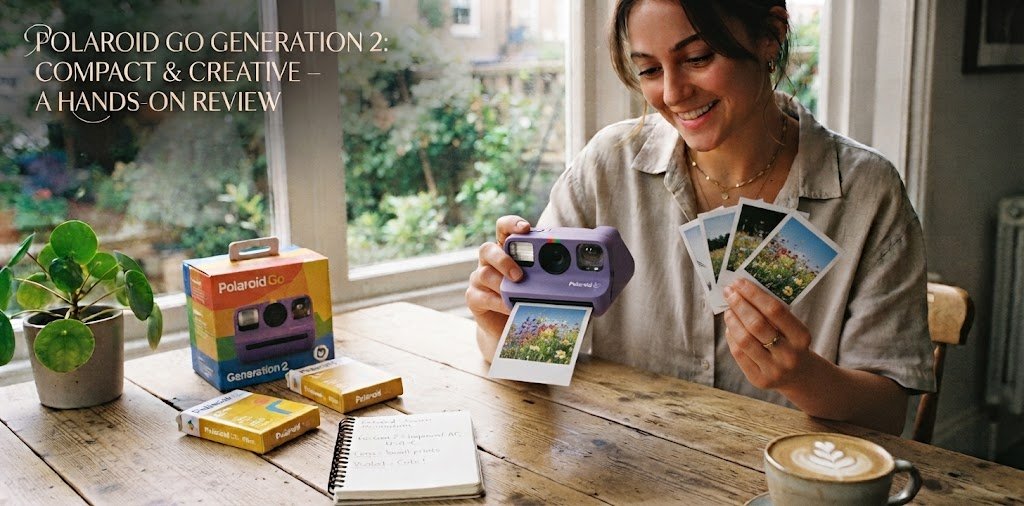
Polaroid Go Generation 2 Review
Small cameras usually ask you to compromise. In this Polaroid Go Generation 2 review, the answer is largely yes: it is a compact instant camera that gets the balance right for most people, combining playful portability with meaningful upgrades like USB-C charging and a wider aperture range while keeping the tactile, slightly unpredictable Polaroid feel that phones still cannot fake.
That makes it especially relevant for style-conscious urban creatives and design-savvy buyers who want analog photography to fit naturally into daily life, not stay at home on a shelf. For anyone building a more considered everyday carry, the Go Generation 2 sits in a useful middle ground. It is not trying to replace a mirrorless setup, and it is not pretending instant photography is about technical perfection. It is about mood, memory, and object value in a smaller format you will actually bring with you.
This review looks at the parts that matter before you buy: design and portability, image character, the smaller film format and ongoing film cost, how it compares with larger Polaroid models, and who will enjoy living with it day to day. The real question is whether this new version of Polaroid’s smallest camera turns analog charm into something practical enough for everyday use.
What the Polaroid Go Generation 2 gets right
The first impression is simple: it looks good. The proportions are tight, the body feels playful without tipping into toy territory, and the controls are approachable. That matters because instant cameras live on kitchen tables, café counters, road trips, and studio shelves. They are used in public, passed between friends, and often bought as much for the experience as the result.
The Polaroid Go Generation 2 understands that role. It keeps the visual identity that made the original polaroid go appealing, while responding to the mixed reviews around the first model with more meaningful refinements where it counts. The updated aperture range, light meter refinements, and USB-C charging make it feel more current and less novelty-driven, and the larger aperture lens helps produce clearer and brighter images. Those are not headline-grabbing changes, but they improve everyday usability.
There is also a practical win here: size. A standard full-size Polaroid camera has presence, but it also takes up real room in your bag. The Go format makes more sense for city weekends, casual events, and travel when you want a pocket sized camera that still delivers analog joy without carrying a brick. If your instinct is to bring a camera more often when it asks less of you, this one makes a strong case.
Design and portability feel especially well judged
Some compact products feel reduced. This one feels edited. That is a big difference.
The body has a slightly boxy form, but its main charm is the tiny Polaroid scale. It is small, but not so tiny that it becomes awkward to grip. The shutter button is easy to find. Inserting the film pack is straightforward. It still feels like a camera with character, not just a miniaturized version of something better. For design-minded buyers, that distinction matters. You want an object that earns its place in your bag, fitting easily into a camera bag, and on your shelf.
This is also where the Go format becomes part of the appeal rather than a limitation. The smaller prints have a collectible quality, and the new film format helps explain why they feel so different. They feel intimate, almost like visual notes instead of standard photographs. For journaling, pinboards, wallet keepsakes, gift inserts, and casual table shots at dinners or parties, the scale works in its favor.
Of course, smaller film also means a different visual impact. If you love the iconic presence of classic full-size Polaroid prints, Go film will feel less dramatic. It is more personal than cinematic. Whether that is a drawback depends on what you want from instant photography.
Image quality on the Polaroid Go Generation 2
Nobody should buy a Polaroid expecting lab-clean precision. The appeal is texture, color shifts, imperfect exposure, and the sense that each frame is a one-off. The Polaroid Go Generation 2 leans into that identity, but it does improve consistency enough to deliver better photos without losing the format’s character, with an f/9 to f/42 aperture range that shapes its contrasty, dreamy rendering and a maximum shutter speed of 1/300s that also sets realistic exposure limits. Its main appeal is still how compact and easy it feels in everyday use rather than any promise of technical perfection.
In bright light, results are charming and often genuinely beautiful, though the film can show more contrast. Colors can feel soft and nostalgic rather than hyper-processed. Skin tones tend to land best when the light is even and generous. Outdoors during the day, or indoors near windows, the camera can produce the kind of instant print that people actually keep, and even the small box adds to that approachable, giftable feel.
Low light is where expectations need to stay realistic. The built-in flash helps for close subjects up to 2m, and the wider aperture improves low-light performance, helps reduce motion blur, and contributes to brighter, more detailed images than the previous model, but this is still a small instant camera working within the usual analog limits. If you are shooting dim restaurants, late-night parties, or dark interiors, some frames will miss. That is part of the format, but it is still a trade-off. People who want reliable low-light results with minimal waste may find instant film expensive for experimentation.
Focus range also shapes how you use it. This camera uses a 51.1mm fixed-focus polycarbonate resin lens, so close ups are less forgiving than casual portraits, travel moments, objects, and spontaneous scenes. The selfie mirror near the viewfinder is useful, and the self-timer adds a social dimension that suits the camera well. To use double exposure mode, press the flash button with a quick double tap so you can layer double exposures on one print. It is easy to picture this being used at birthdays, weekend getaways, gallery nights, and dinner parties where the point is to make the moment tangible, while the usb c port keeps charging simple between outings.
Film cost and format are part of the decision
This is the part many buyers underestimate. With any instant camera, the real commitment is not the body. Even though the Polaroid Go camera costs US$79.99, it is the film that keeps adding up.
Polaroid Go film is smaller than standard Polaroid film, but against instax mini or instax film it is still a distinct value choice because you get a tiny square frame at 66.6 x 53.9 mm rather than the usual credit-card shape. On one hand, the reduced size makes each shot feel playful and portable. On the other, you are still paying for instant analog chemistry, branded film, and a dedicated film format used by the only cameras made for Polaroid Go. A double pack of Polaroid Go film is $19.99, each pack contains 16 frames, and Polaroid Go film costs about US$1.24 per shot, compared with US$0.79 per shot for Instax Mini film, which gives 10 shots per pack. Its ASA rating of 640 and dynamic range of about 3.5 stops also help explain why it behaves differently from Instax and why exposure latitude is limited. That means every frame has a cost attached to it, and buying two packs can make sense if you already know you will use them.
For some people, that is exactly why instant photography works. It slows you down. You compose more carefully. You shoot less and keep more. For others, especially those used to phone photography, the ongoing cost can feel restrictive.
The best way to think about the Polaroid Go Generation 2 is not as an everyday documentation machine, but as a selective image-maker. It is strongest when you use it intentionally. A few photos and images from a night out, a travel diary, a thoughtful gift, or a creative side project make more sense than trying to capture everything.
Who this camera is actually for
This is not a camera for spec chasers. It is for people who care how an object feels to use and how a photo feels to keep, and that experience stays fun in a way that feels more playful than the original Polaroid.
If you are style-conscious, carry a compact bag, and want a camera that fits naturally into your daily life, the Go Generation 2 is appealing, especially with the included wrist strap as a small convenience. It suits creatives who want analog texture without committing to a larger instant system. It also makes sense for gift buyers because it looks distinctive, feels easy to understand, and offers immediate emotional payoff.
There is also a strong case for this camera as a second camera rather than a first or only one. If your phone already handles convenience and your digital camera handles quality, the Polaroid Go Generation 2 adds something neither does particularly well: physical memory with personality.
It is less convincing for buyers who prioritize value per shot, maximum image area, or technical control. In that case, a larger instant format or a different type of camera might be the better fit. Smaller here is the feature, but also the compromise.
Polaroid Go Generation 2 vs larger Polaroid options
The main difference is not just print size. It is presence.
Larger Polaroid cameras and film formats create more iconic, display-worthy prints. They feel bolder and more nostalgic in the classic sense. The polaroid go gen 2, by contrast, is the smaller option: more mobile, more casual, and a little more design-led. It is the version you carry because you might want it with you, not because you built the day around photography.
That makes it especially relevant for urban creatives and travelers. If you want instant photography to be part of your routine rather than a dedicated activity, the smaller body is a real advantage. If the print itself is the centerpiece, larger formats still hold more appeal.
This is where curation matters. Not every good product is for everyone. The right choice depends on whether you value portability more than print scale, and spontaneity more than control, and on how many shots you want to bring per outing if smaller prints and fewer frames suit the way you shoot.
The everyday experience matters more than the spec sheet
With a camera like this, the technical details matter, but only up to a point. What matters more is whether it encourages use.
The Polaroid Go Generation 2 succeeds because it lowers the barrier. It is easy to bring, easy to understand, with a straightforward power button and an easy-to-find USB-C port that make everyday use feel approachable, and visually rewarding enough to make you reach for it. That matters in a category where too many products are either charming but flimsy or credible but uninspiring.
Its battery life is practical for casual outings, and a single battery charge is generally enough for multiple packs of film, which lines up with the kind of real-world ownership confidence reflected in strong reviews. It also fits a broader shift back toward intentional objects. People are editing their carry, buying fewer things, and choosing products with identity. A compact instant camera that looks sharp, feels authentic, and produces real keepsakes fits that mindset well. It is one of those rare devices that earns affection through use, not just display.
For a retailer like Bang On, that is the point of curation. You are not choosing from a wall of lookalikes. You are choosing a product with a clear role, a strong point of view, and a specific kind of pleasure attached to it.
If you want instant photography in its most portable Polaroid form, this camera makes sense, and that main appeal is a big part of why. Not because it is perfect, but because it is easy to live with, satisfying to use, and distinctive enough to keep close.
Share
A curated lifestyle shop makes buying easier with design-led picks, authentic brands, and fewer better choices for style-conscious shoppers.
Why buy from authorized retailers? Get authentic products, valid warranties, trusted sourcing, and a better buying experience from day one.