
How to Clean Leather Watch Straps Properly
A leather strap has a way of showing real life. A few warm days on the commute, a long flight, an impromptu workout, and the material begins to hold moisture, skin oils, and the darker marks that make a watch feel less intentional. To clean leather watch straps properly, use a barely damp microfiber cloth and a small amount of mild leather cleaner or dye-free soap, keep moisture to a minimum, avoid harsh chemicals and soaking, and let the strap dry naturally away from heat. That approach works because leather is porous and sensitive, not something to scrub like metal bracelets or rubber.
A good strap does not need to look factory-new forever. Fine creasing and a softened finish are part of leather's character. The goal is to remove buildup, avoid preventable damage, and preserve the color and texture that made the watch worth wearing in the first place, without causing fading, stiffness, or cracking. For leather-strap owners who care how their watch wears and ages—especially style-conscious, design-minded buyers—this guide walks through the right cleaning materials and method for different leathers, how to dry and condition the strap, how to handle suede and exotic finishes, the habits that keep straps cleaner for longer, and when replacement makes more sense than another round of care.
Why leather watch straps need a different approach
Leather is porous. Unlike stainless steel, it absorbs perspiration, fragrance, hand cream, and water, so water exposure is a particular risk for a leather watch strap, especially if it is genuine leather. That makes a leather strap comfortable and personal, but it also means aggressive cleaning can create a new problem: faded color, stiff fibers, a tide mark around the edges, or a surface that feels dry and papery.
The safest approach is a step by step routine: with daily wear, clean lightly every 2–4 weeks rather than waiting for a deep rescue after months of neglect. A smooth calfskin strap will usually respond well to a soft, barely damp cloth. Suede, nubuck, and heavily textured leathers need even less moisture and a more cautious hand. If the strap is heavily cracked, smells persistently musty, or has begun to delaminate at the edges, cleaning may not be the answer. Replacement is often the better-looking choice.
Also separate the strap from the watch head before you begin whenever possible. Even a water-resistant watch case is not an invitation to soak the leather attached to it, so avoid soaking it because excess moisture can weaken or warp the strap. Removing the strap protects the case, keeps moisture away from the lugs, and gives you better control over both sides of the leather.
What you need to clean leather watch straps
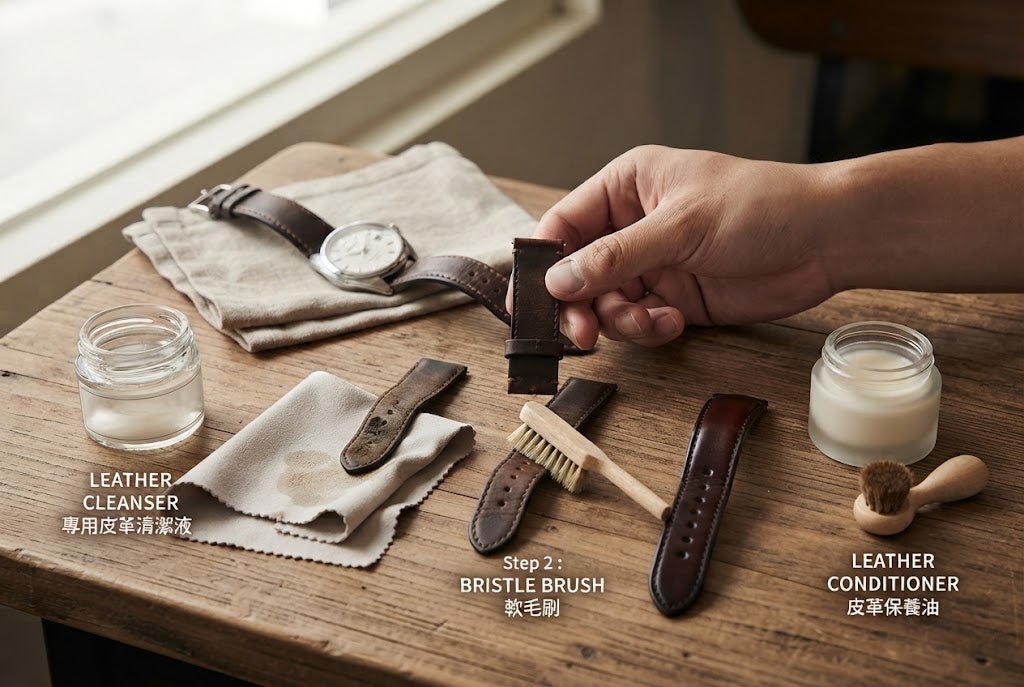
Keep the kit minimal. You need a clean microfiber cloth or soft cloth, a second dry cloth, lukewarm water, and a small amount of mild leather cleaner or gentle hand soap. A soft-bristled brush can help around stitching and embossed grain, but use it with almost no pressure.
Avoid alcohol wipes, hand sanitizer, bleach, household sprays, and dish soap. They may remove surface grime quickly, but they can strip natural oils that keep leather supple and disturb the finish. Baby wipes are not a reliable shortcut either. Many contain fragrances, moisturizers, or cleansing agents that leave residue on leather. For daily wear, clean leather straps every 2-4 weeks, and avoid soaking leather to prevent weakening and warping.
If you use a leather conditioner, choose one made for finished leather and apply it in a very small amount. Conditioner is useful when a smooth leather strap feels dry after cleaning. If the strap starts to feel dry or look dull, that is the cue to apply leather conditioner rather than using it weekly. Too much can darken lighter straps, soften their structure, or leave a tacky finish that attracts more dirt.
The careful method for smooth leather
Start with a dry wipe
Lay the detached strap flat on a clean towel. Use a dry microfiber cloth to gently wipe the front, back, buckle, keeper loops, and edges of the watch strap, giving the edges extra attention because grime collects there and this pre-cleaning helps the cleaning solution work more effectively later. This first pass lifts dust and loose debris without introducing moisture, which matters more than it sounds. Rubbing grit into damp leather can dull the surface.
Pay special attention to the underside, as this dry pass helps remove dust, loose dirt, and surface dirt before any deeper clean. It is the side that sits against the skin, so it collects the most sweat and body oil. Wipe along the full length of the strap, then fold the cloth over a fingertip to clean around the stitching and buckle holes.
Clean only the surface
Lightly dampen a corner of the cloth with lukewarm water, then wring out any excess water before it touches the strap. It should feel barely moist, not wet enough to squeeze. Add a tiny amount of leather cleaner or mild soap as a cleaning solution to safely clean leather watch strap surfaces, then test it on the underside near the buckle where a small color change will be less visible.
Wipe the strap using short, light strokes to keep the leather watch strap clean. If you need to work product in more gently, use small circular motions only with very light pressure and minimal moisture. Focus on visible marks, the underside, and areas near the holes where grime tends to build up. For stitching, use a soft brush that has been lightly dampened, then immediately wipe away any moisture with a clean cloth.
A darker spot after cleaning is not always a stain. Leather may temporarily darken while damp, especially in tan, brown, or natural finishes. Give it time to dry before deciding whether another pass is necessary, and do not use artificial heat sources, which can warp the leather.
Let it dry slowly and naturally
Pat the strap dry with the second cloth and let it air dry flat in a shaded, ventilated place, away from direct sunlight. Do not place it on a radiator or use a hair dryer. Fast heat can shrink leather, stiffen the fibers, and make the strap curl at the ends.
Let the strap dry fully before reinstalling it. Depending on humidity, that can take several hours. If the leather feels slightly dry once it is fully dry and has returned to room temperature, apply leather conditioner in a very small amount with a cloth, work it in sparingly, and buff away excess after a few minutes to restore natural oils, keep the leather supple, and prevent cracking; conditioning every 3-6 months helps prevent cracking.
How to handle suede, nubuck, and exotic textures
Not every leather strap should meet a damp cloth. Suede and nubuck have raised fibers that can flatten, darken, or become patchy when wet. Begin with a suede brush or clean, soft toothbrush, brushing gently in one direction to lift surface dust. For a small dry mark, a suede eraser may help, but test it first on the underside.
For embossed, perforated, or grained straps, clean around the texture rather than forcing moisture into it. Use a dry soft brush first, then a nearly dry cloth only if needed. Perforated racing straps deserve extra care because sweat can collect inside the holes. A brush will remove loose debris, but avoid soaking the perforations, since excess moisture can cause lasting discoloration.
Exotic leathers, including alligator-style finishes and genuine reptile skins, and even genuine leather with delicate surface treatments, can react badly to overly wet cleaning or harsh products. When in doubt, use only a dry microfiber cloth and consult the strap maker's care guidance. A generic leather cleaner may not suit every finish.
The habits that keep a strap cleaner longer
The most effective care happens before the strap looks dirty. Take the watch off before showering, swimming, washing dishes, or applying sunscreen. Water is not the only issue. Soap, salt, chlorine, and sunscreen can all leave residues that change leather's finish over time.
After a humid day, wipe the underside with a dry microfiber cloth and let the strap air out so excess moisture does not get trapped. A closed watch box is excellent for display and protection, but putting a damp strap away immediately can trap odor and moisture. Let it rest on a clean surface for a little while first.
If odor lingers, leave the strap overnight in a sealed bag beside a small open container of baking soda, or place activated charcoal nearby; baking soda absorbs odors by morning without wetting the leather.
If you keep multiple straps, rotate straps to reduce wear on any one piece. If you wear one watch every day, consider keeping a second strap in a different material for travel, warm weather, or active weekends. A rubber, textile, or metal option asks less of you when the forecast is hot. Leather remains the sharper choice for the office, dinner, and formal occasions, while other materials are more practical for heat or activity.
To store properly, keep the strap in a cool, dry, breathable space rather than closing it away while still damp.
At Bang On, the appeal of a well-chosen watch is not just the case design. It is the complete object on the wrist. A fresh, well-kept strap makes even a familiar watch feel newly considered.
When cleaning is no longer enough
Some signs point beyond maintenance. Deep cracks near the buckle holes, peeling lining, loose stitching, or a strap that stays stiff after conditioning indicate structural wear. So does a persistent odor that returns after gentle cleaning and full drying, which can mean the strap is beyond saving even if you clean a leather watch carefully.
Replacing a worn strap, and accepting that most leather straps eventually need replacement depending on quality and care, is not a failure of care. It is an easy way to change the proportion, color, and attitude of a watch without replacing the watch itself. A black smooth strap keeps things precise. Cognac leather brings warmth to steel. A textured finish can make a minimal dial feel more tactile and less expected.
Keep the routine light, protect the strap from heat and water, and accept a little honest patina where it suits the material. Leather looks best when it has been worn with purpose, not scrubbed into submission.
Make your instant prints part of the room. These Polaroid photo projects turn everyday moments into personal displays, gifts, and rituals with intent.