How to Choose Film for Polaroid
A Polaroid camera can look deceptively simple until you're standing in front of a few film packs wondering which one actually fits your camera and your style. If you're figuring out how to choose film for Polaroid, the right answer usually comes down to three things: compatibility, look, and the way you actually shoot.
That matters because instant film is not a background purchase. It shapes the color, the frame, the mood, and even how precious each shutter press feels. For anyone who treats photography as part of personal style, film choice is part of the creative decision, not just a refill.
How to choose Polaroid film without guesswork
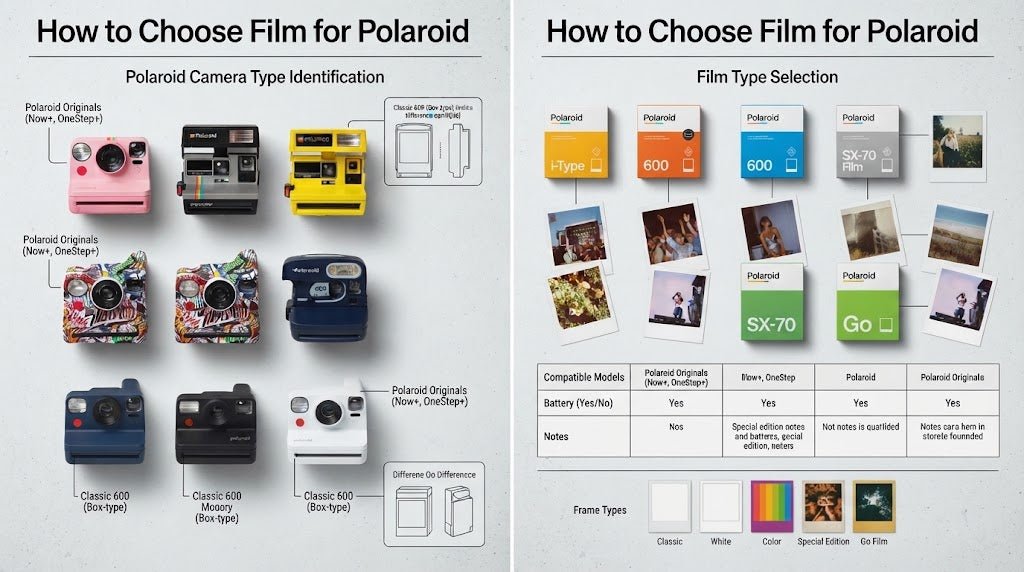
Start with the least glamorous detail first: format. Polaroid produces five distinct instant film formats, but for most buyers, this guide focuses on the main consumer options. Polaroid film is not one-size-fits-all, and choosing the wrong pack is the fastest way to waste time and money. Before you think about black-and-white versus color, or whether a special frame looks better on your desk, confirm what your camera is built to use.
Most current Polaroid cameras use either i-Type film or 600 film. They look similar in size and produce the classic square image with the wider bottom border, but they are not identical in how they power the camera. i type cameras use film that lacks an internal battery for power, while 600 film includes a battery in the pack that older cameras rely on. In practice, 600 film is compatible with vintage Polaroid 600 cameras and can also be used in some modern Polaroid cameras, while i-Type film lacks a battery and will not work in vintage cameras. That means newer rechargeable Polaroid cameras typically use i-Type, while older vintage 600 cameras need 600 film to function.
There's also Polaroid Go film, which is smaller and made specifically for the compact Polaroid Go camera. It is designed exclusively for that model. It won't work in standard-size Polaroid cameras, and standard film won't fit the Go. If you own a Polaroid Now, Now+, OneStep, or a recent i-Type model, you're usually looking at standard-size i-Type film. If you're carrying a vintage 600 camera for the look and nostalgia, stay with 600 packs.
This first step sounds obvious, but it's where most hesitation starts. Once compatibility is clear, choosing film gets much more interesting. To confirm the right film cartridge, check the label inside the film door for the correct film type for your camera.
Pick the instant film format first, then the aesthetic
The cleanest way to choose is to think in layers. First, what fits your camera. Second, what fits your eye.
Color film is the default for a reason. It gives you the Polaroid look most people picture right away: soft contrast, gentle shifts in tone, and the signature white border that helps give it the classic instant aesthetic many people choose over other formats. If you want party shots, travel snapshots, portraits of friends, or casual city moments, color film is usually the easiest place to start.
Black-and-white film feels more deliberate. It strips away distractions and puts more weight on shape, shadow, and expression. That can be beautiful for portraits, interiors, architecture, and quieter scenes, but it also asks for more intention. If your photography style leans graphic, minimal, or mood-driven, black-and-white can feel more design-forward than nostalgic.
Then there's frame style. Standard white frames are timeless and easy to live with. They suit almost everything, from pinboards to photo walls to gifting. Special edition color frames or graphic borders can be fun, but they work best when you want the frame to be part of the statement. For everyday use, white is more versatile. For birthdays, trips, creative projects, or a specific visual theme, limited frame editions can add personality without changing the image chemistry itself.
Match the film, such as SX 70, to how you shoot
A lot of people choose film based on how it looks in the pack. A better approach is to choose based on the moments you actually shoot.
If you mainly photograph people, especially indoors, color film is the most forgiving choice. Skin tones feel warmer, the images feel social and immediate, and the end result tends to match the emotional energy of instant photography. This is the film equivalent of a reliable daily watch: versatile, easy to wear, and rarely the wrong move. Polaroid SX-70 film needs more light because of its lower sensitivity, so it is less forgiving in dim situations. SX-70 film is only compatible with SX-70 and I-2 cameras, which makes it a niche choice tied to specific shooting habits.
If you shoot objects, details, cafés, corners of the city, or design-heavy spaces, black-and-white can elevate the image quickly. It brings structure to the frame and often makes a scene feel more intentional. The trade-off is that weak lighting or cluttered composition becomes more obvious, so it rewards a steadier eye.
If you use your Polaroid for travel, keep practicality in mind. Standard white-frame color film gives you the most flexibility across changing locations. You might start the day in a bright street scene and end it at dinner with friends. One film pack that can move with both situations is usually smarter than chasing a niche aesthetic, and most photographers are better served by sticking with the film their camera already supports.
If your Polaroid is part of events, gifting, or social moments, frame choice starts to matter more. A special frame can make the print feel more collectible right away. Just remember that novelty can date a moment quickly. Classic frames age better.
Light changes everything
One of the best answers to how to choose film for Polaroid is to be honest about your lighting. Instant film has character, but it also has limits.
Polaroid film generally loves light. Outdoor daytime shots tend to look cleaner, sharper, and more balanced. If most of your photos happen outside, you have more freedom to choose based on aesthetic preference alone.
Indoor shooting is different. Low light can create beautiful atmosphere, but it can also introduce muddier tones, softer detail, and less predictable results. That unpredictability is part of the medium's charm, but only to a point. If you mostly shoot indoors at dinners, parties, or in apartments, color film is often the safer choice unless you specifically want the moodiness of black-and-white.
Flash matters too. Some photographers love the direct, punchy look of flash on instant film because it leans into the candid, nightlife quality that Polaroid does so well. Others prefer available light for a softer result. Neither is wrong, but your preference should affect your film choice. Color film with flash can feel playful and energetic. Black-and-white with flash can feel sharper, more dramatic, and occasionally harsher.
Temperature also plays a role. Instant film is sensitive to cold and heat, and that affects development. If you shoot in winter or carry film around all day in summer, storage and handling are part of the equation. Film is at its best when treated with a little care.
Cost matters, because it changes how you shoot
No one buys Polaroid film expecting it to be cheap. Still, cost affects behavior more than people admit.
If every frame feels precious, you may shoot less freely. That can be good if you want to become more selective, but it can also make the camera feel too ceremonial. If you're new to instant photography, start with standard color packs and use them often enough to learn your camera's rhythm. If you shoot the Go regularly, its film is often sold as a double pack, which can offer better value per frame. Save special edition frames or mood-specific black-and-white film for when you already know how you like to compose and expose.
There's also a style trade-off here. A carefully curated aesthetic is appealing, but only if it doesn't stop you from making pictures. The best instant film for you is the one that makes you want to carry the camera, not the one that looks best unopened on a shelf.
A simple way to choose between the main options: including i type film
If you want the short version, modern i-Type cameras use i-Type film, vintage Polaroid 600 cameras use 600 film, and Go film is designed for the Polaroid Go camera. Polaroid instant film is not interchangeable with fujifilm instax formats, so do not assume cross-brand compatibility. For example, instax mini fits mini-format Instax cameras, while instax wide format is a separate larger option within Fujifilm rather than the Polaroid system. From there, go with color film for everyday shooting, black-and-white for mood and form, and special frames only when the occasion really benefits from them.
That might sound restrained, but good curation usually is. Most people do not need every variant. They need the right one for their camera and a second option for a different mood.
For many urban creatives, that means one reliable color pack and one black-and-white pack in rotation. It keeps your choices focused while still giving your work a visual shift when you want it.
The best film choice is the one that fits your visual language
Polaroid photography works because it is imperfect in all the right ways. The softness, the chemistry, the wait, the object itself - none of that feels accidental, and the modern polaroid brand still continues instant film production after the impossible project revived and produced film for classic cameras. Film choice is part of that appeal.
So instead of asking which film is best in the abstract, ask what kind of images you want to live with. Do you want warm social snapshots, graphic monochrome portraits, or a small-format camera that slips into daily life more easily? Once you answer that, the right film gets obvious.
At Bang On, that's the difference between shopping and being well edited. Choose the film that matches your camera, your habits, and your taste, then let the unpredictability do the rest. In analog photography, for example, vintage polaroid cameras and other older cameras remain popular because vintage cameras create a distinct shooting experience tied to physical polaroid photos. The best instant photos usually come from a clear point of view, not an endless menu of options.
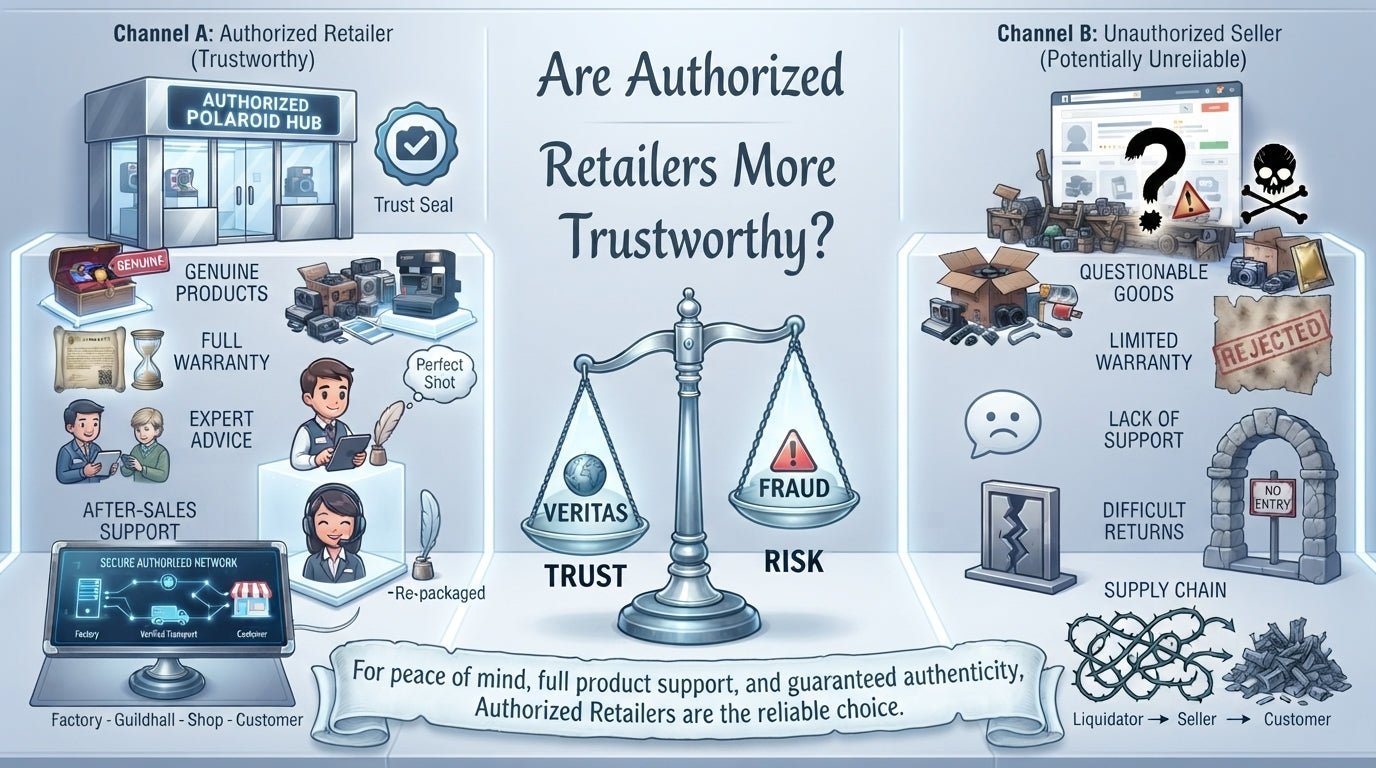
Are authorized retailers more trustworthy? Learn when authorization matters, what it protects, and where careful buyers should still look closer.