A Guide to Instant Camera Film That Fits Your Style
A great instant photo starts before you press the shutter. This guide to instant camera film is about choosing the format, look, and handling habits that make each print feel less like a disposable snapshot and more like a small object worth keeping.
Instant photography has its own visual language: soft highlights, imperfect color, a tactile white border, and the thrill of seeing an image take shape in your hands. Film is not just a refill. It determines the size of the image, the character of the color, the camera you can use, and the way you shoot.
A great instant photo starts before you press the shutter. If you’re looking for a guide to instant camera film that fits your style, this is about choosing the film format, print size, visual look, and handling habits that suit the way you shoot, so each print feels less like a disposable snapshot and more like a small object worth keeping.
For urban creatives and design-conscious camera lovers who want their gear to reflect how they live, instant photography has its own visual language: soft highlights, imperfect color, a tactile white border, and the thrill of seeing an image take shape in your hands. Film is not just a refill. It determines the size of the image, the character of the color, the camera you can use, how forgiving it is in different light, and how you need to store, carry, and expose it.
That is why choosing the right film matters as much as choosing the camera itself, especially if you want analog photos that feel personal in a digital world. Ahead, you’ll see how to match film to your camera, compare print sizes and film types, understand the look each option creates, and pick up practical tips for lighting, storage, handling, and everyday shooting so instant film fits naturally into your creative routine and personal style.
Start With Your Camera's Film Format and Film Sizes
The first rule is simple: instant film is format-specific. A pack that looks right may still be completely incompatible with your camera. Check the model name printed on the camera or inside its film door before buying anything.
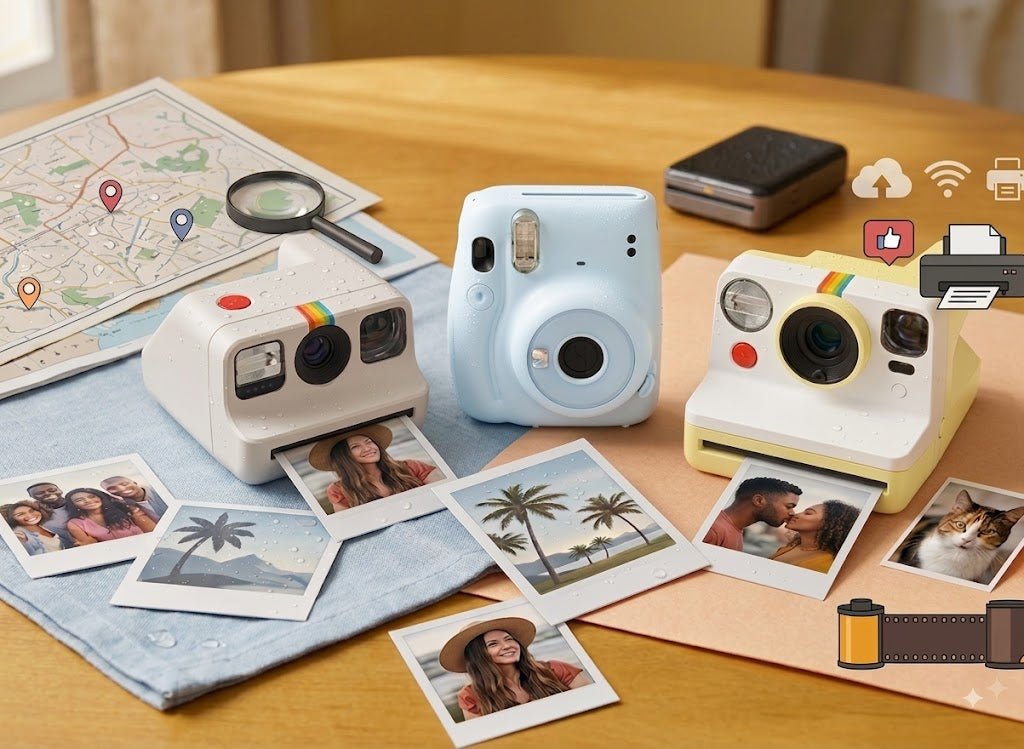
Polaroid's current film family is built around a few distinct systems. i-Type film is made for newer Polaroid cameras with a rechargeable internal battery. Because the camera powers the film ejection mechanism, i-Type packs do not need their own battery. That makes them a smart everyday choice for cameras such as the Polaroid Now and I-2.
Polaroid 600 film looks very similar in size, but it includes a battery in every pack for classic 600-series cameras. It can also work in many newer cameras, though it is typically the less economical option when your camera already has its own power source. The image area and familiar square frame give both i-Type and 600 film the classic Polaroid presence people expect.
Polaroid Go film is smaller in every direction. It is designed only for the compact Polaroid Go camera, so it will not fit a full-size Polaroid. The scale is part of its appeal: it makes photos feel intimate, graphic, and easy to carry in a wallet or pin to a wall.
Other instant systems use their own cartridges and dimensions. Fujifilm Instax Mini, Square, and Wide are all separate formats, while Kodak instant products may use a different printing technology or proprietary media. Never assume that two packs are interchangeable because their packaging or photo size seems similar.
Choose the Print Size You Actually Want to Live With
Film size changes the entire experience. Instax Mini users get charming, fast snapshots with instax mini film: the mini film pack is 54 x 86 mm and produces credit card-sized prints that suit coffee dates, train platforms, friends in low light, and details from a weekend away, even if those small prints leave less room for detail. A larger square print asks for more intention. With instax square instant film, Fujifilm’s instax square format uses instax square film with a 62 x 62 mm image size, and that square format works especially well for balanced compositions, artistic framing, portraits, interiors, travel scenes, and images you want to display.
If you want the biggest Fujifilm option, instax wide film uses wide film packs sized 108 x 86 mm and delivers the largest image area at 99 x 62 mm.
There is no universally better format. It depends on whether you want a camera that disappears into your bag or a print that holds its own on a desk. If the camera is for a gift, consider the recipient's habits. Someone who journals, scrapbooks, or decorates a studio may value a larger print. Someone who brings a camera everywhere may prefer a smaller format and a more compact body, while Polaroid film measures 10.8 x 8.8 cm and works especially well for portraits.
The Look of Black and White Film Is Part of the Decision
Digital photography trains us to expect clean detail and accurate color. Instant film offers something more interpretive, and your film choice shapes the visual aesthetic of the photograph as much as camera compatibility. It can render skin tones warmly, let bright areas bloom, soften contrast, and turn an ordinary scene into something with atmosphere.
Polaroid film is especially recognizable for its large square composition and expressive, often nostalgic color. It is also known for vivid colors, strong colour reproduction, and high quality, often producing clear images with a softer, more emotional feel than digital. It rewards thoughtful light and a willingness to accept variation from frame to frame. That variation is not a flaw to eliminate. It is often the reason the final print feels personal.
Film editions can push that character further. Standard white frames and elegant black borders are the most familiar options, but special editions can push the look further when they support the image rather than compete with it. Fuji Instax also offers colored and themed borders for different styles and more personal expression, from playful designs to character editions like Hello Kitty. A bold border can make party photos, fashion-forward portraits, or a visual diary feel more graphic. For everyday documentation, standard white frames remain hard to beat. They leave room for a date, a note, or simply a little visual breathing space.
Black-and-white instant film creates a different kind of focus. Without color competing for attention, shape, shadow, and expression carry the frame. It suits architecture, candid portraits, rainy-day walks, and scenes with a strong play of light. If you want color film instead, it is usually because you are after rich colours and vibrant colours rather than monochrome mood. It is less forgiving when the light is flat, but that limitation can make you look harder before taking the shot.
Lighting Conditions Matter More Than You Think
Instant cameras are wonderfully direct, but their simplicity can hide a few technical realities. Unlike digital cameras or other cameras, they give you instant printing instead of sending you to a separate device or later editing for a physical photo. Film needs light, and most instant cameras have limited control over exposure. Give your camera a clear view of the subject, avoid shooting directly into harsh sunlight when possible, and use the flash when your camera recommends it.
For portraits outdoors, open shade is often more flattering than midday sun. Place the subject near a bright wall, beneath a tree canopy, or beside a window. Indoors, get close. Built-in flashes are designed for nearby subjects, not for lighting an entire room across the dance floor, which can be limiting at family gatherings or when taking group photos.
Wider formats are often better for group shots or capturing group shots than smaller prints.
Watch the background as closely as the person. A bright window behind a subject can turn them into a silhouette. If you want the window and the person, move them closer to the light or shift your angle. Instant film rewards small adjustments that take only a few seconds.
Many cameras include an exposure-compensation control, usually marked with light and dark symbols. Use it with restraint and adapt it to different lighting conditions. Bright snow, pale walls, or a backlit scene may need a lighter setting. A subject against a dark background may need less exposure. Take notes for a few shots and patterns will emerge quickly.
Treat Fresh Instant Film Like a Creative Material
Film is sensitive to heat, age, and handling. Store unopened packs in a cool, dry place, ideally with film cartridges kept between 5°C and 25°C. A refrigerator is appropriate for longer storage, but do not freeze film. Before shooting, let a chilled pack return to room temperature for at least an hour. Loading cold film into a camera can affect development and color.
Check the production or expiration date when buying. Fresh film generally offers the most predictable results. Expired film can produce interesting shifts, muted color, or unexpected artifacts, but it is a creative gamble rather than a reliable way to save money.
Once film is loaded, keep the camera away from prolonged heat. A car dashboard in summer is a bad place for both camera and film. Heat can weaken color, reduce contrast, and make results less consistent, especially since Polaroid film chemistry is sensitive to heat and cold. If you are traveling, keep the camera in a bag and out of direct sun when you are not shooting.
With Polaroid film, the first moments after ejection matter. Shield the developing image from bright light by placing it face down, tucking it into a pocket, or using the camera's film shield if it has one. Do not shake the photo. Shaking does not speed development, and it can create pressure marks while the chemistry is still settling.
Development time varies with temperature and film type. Instant cameras print photos in about 90 seconds, but Polaroid film usually takes longer to fully develop than Fujifilm film. Give color prints several minutes before judging them, and allow black-and-white prints enough time to deepen for the final result. Keep developing instant photos away from direct sunlight and high temperatures while they settle. The image may continue to settle after it first appears. Patience is part of the format.
Shoot Fewer Frames, Notice More
A pack of instant film has a fixed number of exposures, which changes how you move through a scene. That constraint is one of the format's best features. You slow down, frame with purpose, and decide whether the moment is worth a physical print.
Try using a simple rhythm: establish the scene, make one intentional photo, then put the camera down. At dinners and gatherings, this prevents the camera from becoming another screen between people. It also makes the photo you do take feel more considered.
Keep a fine-tip pen nearby and write on the border once the print is fully dry. A location, date, or one-line observation gives the image a second life years later. For creators, instant prints can become mood-board material, casting references, color studies, or a record of work in progress.
Build a Film Habit That Suits Your Life
The best film choice is the one you will actually use. Instax cameras also come in different styles and colour options, so the body can matter as much as the format. Choose the right instant film if you want Mini, Square, Wide, or Polaroid output, because the right film determines both compatibility and the look you get. A hybrid instant camera like the Instax Mini LiPlay also adds a digital preview screen for people who want more control before printing. The Instax Square SQ6 adds creative features such as double exposure and color filters. The Polaroid Now+ Gen 2 connects to a smartphone app for extra creative tools. Some buyers want selfie mode or a selfie mirror, while others are creative photographers who prefer manual mode, light painting, or other advanced controls. Choose a compact format when portability matters and you want to shoot more freely; Fujifilm Instax Mini film has an ISO of 800, making it a flexible everyday option for many instax cameras. Choose Wide when you want larger keepsakes, since Instax Wide 400 prints are double the size of Mini prints and work especially well for landscape shots. Choose black and white when the scene is about form and feeling, not color.
At Bang On, instant cameras and film belong to the same idea: analog joy in a digital world, selected for how they look, work, and fit into real creative lives. Start with the compatible format so your camera gets the right film, store it well, and let a few imperfect frames teach you what your camera sees best.
The print in your hand will never be infinitely editable. That is precisely the point. Give each frame a little attention, and it has a much better chance of preserving cherished moments, becoming part of your space, your story, or someone else's keepsake from your most cherished moments.
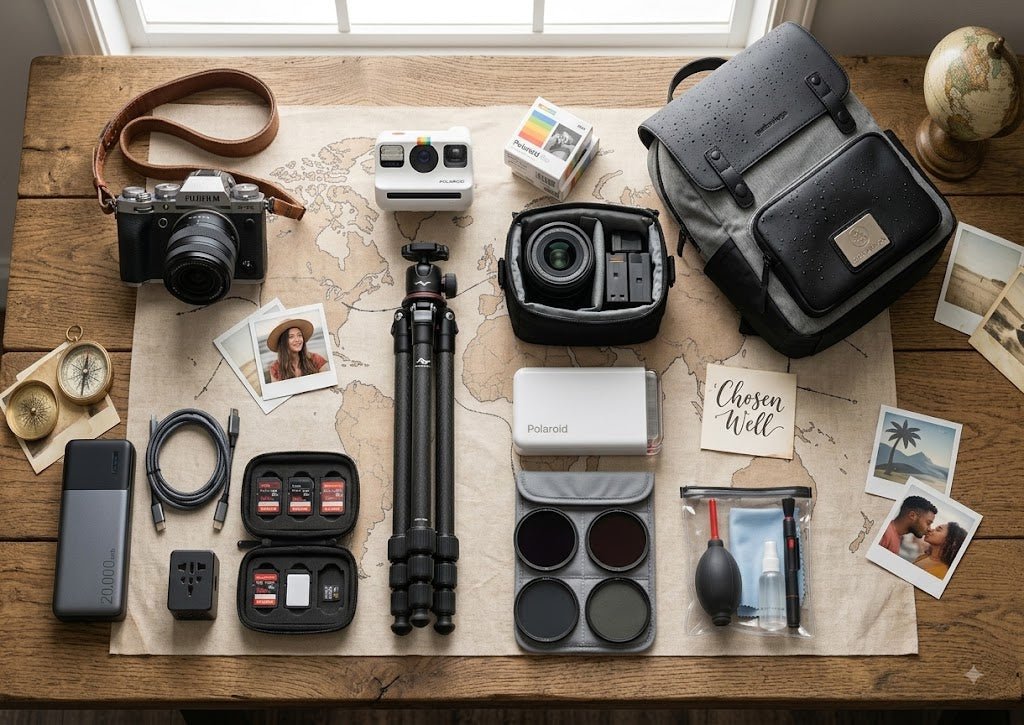
Find the best photo accessories for travel, from instant film to waterproof bags, chosen for lighter packing, sharper memories, and personal style abroad.
Watch collecting trends are shifting toward personal style, smaller independents, vintage character, and watches made to be worn every day with purpose.