Gaston Luga vs Rains Backpack
A backpack says a lot before you do. In the gaston luga vs rains backpack decision, the real question is not which brand looks better in a product photo. It is which one fits the way you move through a city - commuting, working, traveling light, and wanting your bag to feel considered rather than generic.
Both brands sit in the design-led end of everyday carry. Both appeal to people who care about clean lines and modern styling. But they arrive there from different angles. Gaston Luga tends to balance Scandinavian minimalism with practical organization and a more lifestyle-flexible silhouette. Rains leans harder into stripped-back utility, coated surfaces, and a distinctly weather-first identity.
If your priority is visual simplicity with enough structure for daily essentials, both can work. If your priority is the right kind of simplicity, the differences matter.
Gaston Luga vs Rains backpack: the design language
This is where most buyers make the first cut. Gaston Luga bags usually feel more refined and more versatile across settings. They are minimal, but not severe. The shapes often have a slightly more polished profile, which makes them easy to carry from office to cafe to weekend travel without looking like pure commuter gear.
Rains backpacks have a more industrial presence. The brand's signature coated finish and pared-down construction create a sharper, more functional mood. For some people, that is exactly the appeal. A Rains bag can look crisp and directional, especially with technical outerwear or a monochrome wardrobe. For others, it can read a bit more rigid and less adaptable with softer or more tailored outfits.
If your style sits closer to modern creative professional, Gaston Luga often feels easier to integrate. If you like a more utilitarian, weather-ready aesthetic, Rains has a strong point of view.
Materials and waterproof backpack weather protection
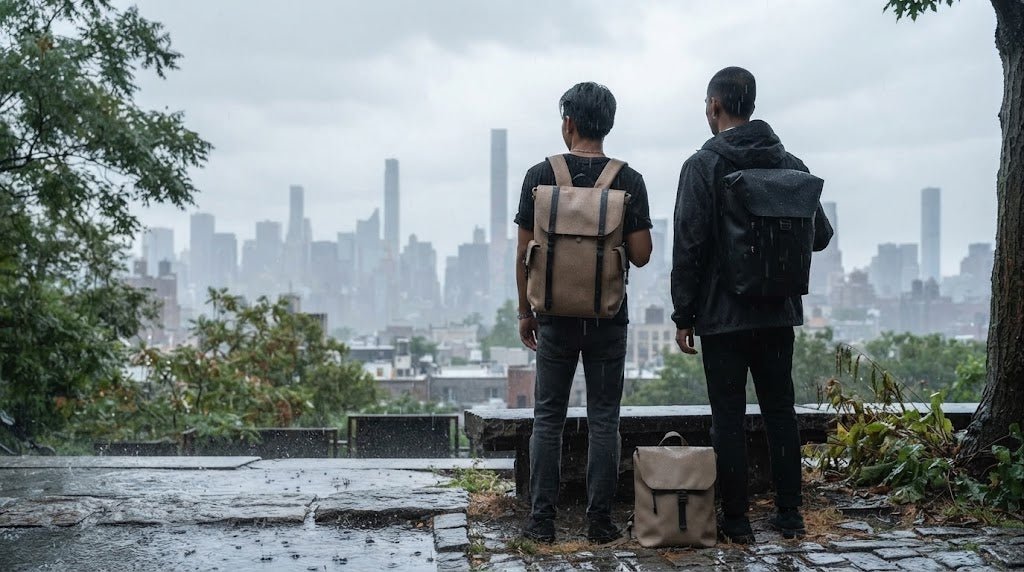
Rains has built much of its reputation on water-resistant materials, and that focus shows. Many of its backpacks use a polyurethane exterior welded to woven polyester, a durable construction that resists water, sand, and dirt and gives the bags their sleek, rubberized look. If you live in a wet city and want your bag to visually communicate weather protection, Rains makes that story obvious. The trade-off is that this finish can pick up oil stains and scratches over time.
Gaston Luga also puts real emphasis on water resistance, especially in newer waterproof and weather-ready styles. The Splash 2.0 uses 100% polyurethane waterproof material, and the brand also uses recycled polyester with polyurethane in other models for durability. The difference is that the brand often packages that function in a more elevated, less overtly technical form. You get protection without always looking like you are carrying specialized rain gear. That material approach also aligns with sustainable practices designed to reduce waste and avoid animal-based materials.
That distinction matters more than it sounds. Some people want their backpack to feel like part of their outfit first, with weather protection built in. Others want the material itself to make the point. Neither is wrong. It depends on whether you are buying for climate, style, or both.
One trade-off to keep in mind is texture and long-term quality. Both brands rely on polyurethane exteriors, but while Rains often feels more sturdy in wet conditions, Gaston Luga bags can develop white marks that are hard to remove over time. Gaston Luga often lands better for buyers who want performance without the overt slickness, while Rains is closer to the look people expect from waterproof bags or a waterproof backpack.
Comfort and daily wear
A backpack can look sharp online and still disappoint by lunchtime. Comfort is where brand identity meets reality.
Rains backpacks often keep their profile quite structured, which helps maintain a clean silhouette. The downside is that some styles can feel less forgiving when packed heavily or worn for long stretches. On several models, the shoulder straps use narrow, 1-inch polyester webbing with thin padding, so the design leans toward form over function; some are also only adjustable shoulder straps in a limited sense, fitting most users but offering less fine-tuning. That becomes more noticeable in everyday carry, especially if the bag has a good amount of weight. These straps can also feel awkward if you are running or when your arms swing more naturally. The closure can also feel fiddly and not very fun to use in low light.
Gaston Luga generally performs better for buyers who want an everyday bag rather than a style piece that happens to carry things. In many models, the wear experience feels more considered - easier shoulder carry, more practical weight distribution, and interiors that support actual daily routines. It is usually the better pick for daily wear, though its shoulder straps can still feel under-padded and narrow once the bag gets heavy. That makes a difference if your bag regularly carries a laptop, charger, notebook, water bottle, and the rest of your day. After about an hour, some pressure on the shoulders can start to show up.
This is the part many design-conscious shoppers underestimate. Minimalism works best when it does not create friction.
Organization and usability
Clean design often means fewer visible compartments, but not all minimal bags are equally useful once you open them.
Rains tends to favor simplicity. That can be a strength if you want a straightforward main compartment and do not like visual clutter. In practice, many Rains designs offer very few pockets, though some include one spacious inner pocket for smaller items. It can be less ideal if you want thoughtful organization built into the bag compared with other backpacks. Some users love the reduction. Others end up adding pouches just to keep small stuff from disappearing into the main section.
Gaston Luga often strikes a stronger balance here. The best models usually offer enough internal structure for daily essentials without making the bag feel busy. Gaston Luga backpacks are designed with internal organization for urban professionals, with a concealed zippered pocket for valuables and a layout that makes small items like earphones more handy to sort. Laptop storage, smaller pockets, and smarter compartment layouts give the bag more day-to-day ease while preserving the clean exterior. On the Splash, the roll-top flap changes the opening and gives you adjustable space when you need to fit more. The Splash 2.0 also adds two external quick access pockets for accessories.
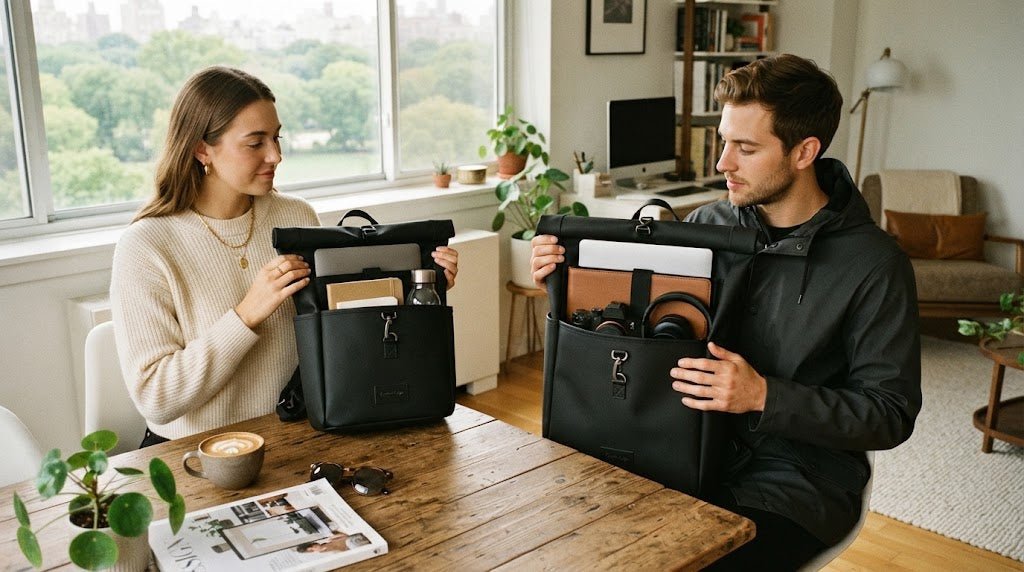
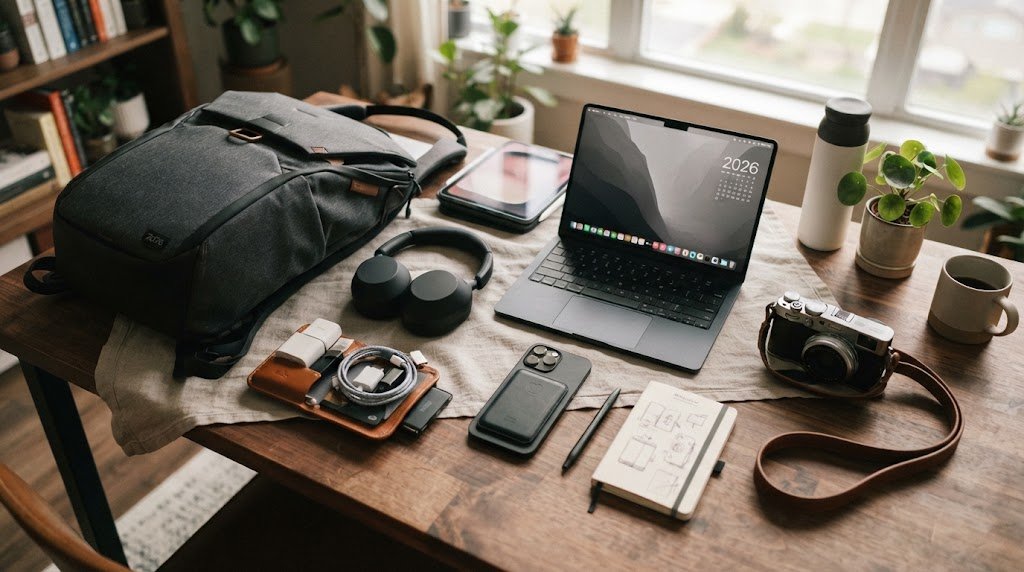
For urban creatives, that balance is useful. You may be carrying a camera, tablet, notebook, headphones, and personal items, not just a hoodie and keys. A backpack should support that mix without turning into a tactical organizer.
Laptop compartment carry and work use
If your backpack doubles as your work bag, this comparison gets clearer. A typical RAINS backpack can fit a 13" laptop and a 1L water bottle, which makes it suitable as a simple baseline for daily office use. At this price, that level of functionality is about what most buyers would have expected.
Rains bags can absolutely function for office and commuting use, especially if you prefer a stark, modern look. But some models feel designed around appearance first, with laptop accommodation as a necessary feature rather than the heart of the product.
Gaston Luga tends to feel more naturally aligned with hybrid work life. The Splash 2.0 includes an external laptop compartment, which makes workday access easier. The bags often look polished enough for meetings while remaining casual enough for everyday use. That versatility is part of the appeal. They do not force you into either corporate or purely technical styling.
For people moving between coworking spaces, client meetings, transit, and casual social plans, that middle ground is valuable. It keeps your carry looking intentional without trying too hard.
Which brand feels more premium?
Premium can mean different things. It can mean heavier hardware, more refined detailing, better construction, or simply a stronger sense of product coherence.
Rains feels premium when you value brand consistency. Its products have a very specific visual identity, and the materials deliver that identity with discipline. You know what world the brand belongs to.
Gaston Luga feels premium in a more lifestyle-oriented way. The bags often come across as better resolved for people who care equally about form, comfort, and practical daily use. The finish feels considered, and the styling usually has broader appeal across wardrobes and settings.
So which feels more premium? If you define premium as design purity with a technical edge, Rains has a case. If you define premium as a more complete everyday product, personally, Gaston Luga often comes out ahead.
Price and value
This is not a budget category, so value matters more than sticker shock. Most shoppers comparing these two brands are not trying to spend the least possible amount. They are trying to avoid buying the wrong bag once, and get better use for their money.
Rains offers value if you want its signature look and weather-resistant material above all else. When the aesthetic clicks with your lifestyle, it feels justified, but any extra cost from shipping or duties can matter more at this price point, and some buyers mention those charges were not clearly mentioned upfront.
Gaston Luga tends to offer stronger all-around value for buyers who want one backpack to cover more situations. You are not only paying for a clean exterior. You are paying for a bag that is easier to live with over time, and while polyurethane is practical and weather-friendly, it may not age as well over the long term as leather.
That makes it a smart purchase for people who do not want a wardrobe-specific backpack. If you prefer to own fewer, better accessories, versatility has real value, and a clear warranty plus a reliable website can make the buying experience feel safer.
Who should choose Gaston Luga?
Choose Gaston Luga if you want a backpack that looks elevated, works across work and weekend settings, and offers practical organization without visual noise; this swedish brand, a company known for design-led everyday bags, has a Splash 2.0 that also comes in eight colorways, including grey, which helps it suit more wardrobes. It is especially well suited to people who care about design but still expect their bag to earn its place every day, especially if a fashionable look matters as much as utility.
It also makes sense if you want weather-ready performance without leaning too far into technical styling. That balance is why the brand feels at home in a curated retail environment like Bang On - it speaks to taste, but it also respects function.
Who should choose Rains?
Choose Rains if your style is more utility-driven, you like the coated finish, and weather resistance is one of your top decision factors. Many styles keep a slim, rectangular profile at around 4.5 inches thick, which gives the pack a clean silhouette for commuting, a bike ride, or light hiking. It is a good fit for buyers who want a backpack with a very clear visual identity and do not need extensive internal organization. Rains bags are completely impervious to splashes and spills, though some users have reported water entering during heavy rain. For everyday wet-weather use short of prolonged downpours, that protection works great.
Rains also suits people who treat their backpack as part of a broader technical or minimalist wardrobe. If that is already your lane, the brand can feel very cohesive.
The smarter pick for most urban users
For most people weighing gaston luga vs rains backpack options, this comparison and review comes out in Gaston Luga’s favor. It tends to deliver a better mix of aesthetics, comfort, organization, and cross-setting wearability. Rains is strong when its distinct look and weather-first feel are exactly what you want. Gaston Luga is stronger when you want a backpack that fits more of life without asking you to compromise on style, and that is the clearest overall picture for most urban users.
The best bag is not the one with the loudest design story. It is the one you keep reaching for on ordinary days, because it quietly gets everything right.