Design Forward Travel Accessories That Earn Their Space
The best carry-on item is rarely the loudest one. It is the backpack that sits comfortably through a long terminal walk, the watch that keeps a clean read on a changing itinerary, or the camera that makes you look up from your phone. Design forward travel accessories are not travel props. They are daily objects with enough visual intelligence and practical discipline to earn a place in your bag. The right ones keep a clean silhouette while still providing the support, organization, and comfort travel quickly tests.
For urban creatives and design-aware travelers, travel is not a separate aesthetic category. The same standards that shape a workday, a gallery visit, or a spontaneous weekend shoot should apply at the gate, including a preference for environmentally sustainable materials that feel considered rather than disposable. That means choosing fewer pieces, choosing them well, and expecting them to do more than photograph nicely on a hotel bed; sustainable designs can also reduce waste while maintaining a refined aesthetic. This guide looks at design-led backpacks, watches, instant and digital cameras, and smarter packing choices that work across daily life and travel, with neutral and earthy palettes that stay versatile across outfits and settings. Craftsmanship details and premium materials are often what separate an accessory that feels luxurious in hand from one that simply looks cheap.
What Makes Travel Accessories Design Forward?
Design-forward does not simply mean minimal, expensive, or covered in a recognizable logo. It means the form and function feel considered together. A bag should have a silhouette you want to carry and a layout that makes sense when you are searching for a charger at security. A watch should bring personality to a simple travel uniform while remaining comfortable across a full day in transit.
The distinction matters because travel exposes weak design quickly. Zippers are opened one-handed, and plenty of accessories works fine until that moment reveals they were never thoughtfully resolved. Straps are worn over jackets. Pockets are tested in low light. Cameras come out in a moment, not after ten minutes of setup. Accessories that work beautifully in a product photo but add friction on the road tend to stay home after one trip.
A strong travel edit also avoids the trap of buying a specialized item for every hypothetical scenario. More gear can make a trip feel overplanned and overpacked, while packing light usually makes better use of what you actually carry. The better approach is to select versatile objects with a clear point of view, because choosing the right gear often means finding a Swiss Army knife kind of bag; style-led selection is still a personal choice: a weather-ready bag that works on a commute as naturally as it does in an unfamiliar city, or an instant camera that turns a dinner table into a small occasion.
Start With the Bag and Packing Cubes, Not the Packing List
Your bag sets the tone for everything else. It determines how much you carry, whether frequently used items stay within easy access, whether lockable bags add security for valuables, and whether you still look composed after a delayed connection. For most trips, a streamlined backpack, crossbody, or travel bag is more useful than a collection of organizers inside an oversized tote.
Look first at the carrying experience. Adjustable straps, a stable shape, and enough structure to protect essentials matter more than an elaborate interior with compartments for things you do not actually bring, which is why Osprey backpacks are often recognized for comfort and quality. Waterproof or water-resistant materials add real value for city travel, especially when your day moves between sidewalks, public transit, and sudden weather. The best interior layouts also use external pockets well, giving you access where it helps instead of adding clutter. Packing cubes help keep clothes organized in your luggage and keep travel bags organized.
Then consider visual versatility. A highly technical hiking pack may solve a particular problem, but it can feel out of place with a tailored coat or a clean sneaker-and-denim uniform. Compared with other bags, the Cotopaxi Allpa 35L is a useful example of a clamshell design that makes packing easier, and a design-led waterproof backpack strikes a better balance for most urban itineraries. It should feel polished enough for a meeting, relaxed enough for a museum day, and durable enough to be set down without anxiety.
Capacity is the trade-off. A compact crossbody keeps boarding passes, documents, phone, wallet, and film close, but it will not replace a personal item if you travel with a camera, headphones, and a change of clothes. A backpack gives you more range while still leaving enough room for essentials without turning into an overpacking exercise. The Peak Design Travel Backpack expands from 30L to 45L, which can save space if you want flexibility without jumping straight to a larger bag. Unlike backpacks, hard-shell suitcases offer better protection against damage. Go much bigger and you may end up in checked luggage territory when your usual travel style is better served by a smaller setup, especially if you are packing for the whole family. Buy for the trip you take most often, not the expedition you might take once, and use packing cubes to keep clothes organized if you want to keep your clothes organized. A luggage scale helps avoid overweight baggage fees when you are pushing capacity.
Keep Your Quick-Access Items Deliberate
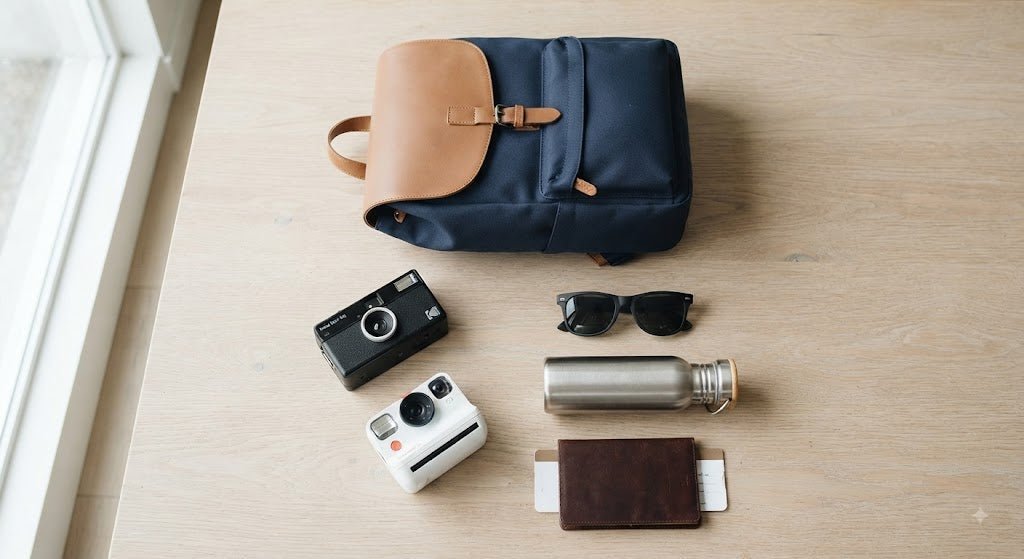
The items you reach for most should be easy to find without turning your bag into a gadget showroom. Passport, phone, wallet, keys, charging cable, travel adapter, and one small creative tool are usually enough. If power banks, or a battery pack, are part of your regular carry, they should be just as easy to grab. When each object has a distinct shape, material, or color, you find it faster and your bag stays calmer.
That is one reason design detail has practical value. A tactile zipper pull, a contrasting lining, or a thoughtfully placed exterior pocket makes it easier to reach a USB C cable without digging around for an older USB-A one. These details also improve the rhythm of moving through a crowded airport or train station, especially when you are stopping briefly near charging ports. Good quick-access organization matters even more for travel tech.
Wear a Watch That Does More Than Tell Time
Travel compresses time. Boarding windows, unfamiliar time zones, reservations, and meeting points all compete for attention. A well-chosen watch is one of the more handy ways to bring a useful degree of order without requiring another notification.
For style-conscious travelers, the watch is also the simplest way to make a basic travel outfit feel intentional. A statement Italian-inspired profile can add character to neutral layers. A refined Japanese design can feel quieter, precise, and equally distinctive. The right choice depends on whether your personal style leans toward both the expressive and restrained directions, but either approach is stronger than treating a watch as an afterthought.
Comfort is non-negotiable. A watch that looks exceptional but feels heavy after a five-hour flight will not become a travel favorite, especially on long trips where weight and strap feel become obvious. Consider case size, strap material, and how easily the piece works with sleeves. Leather often gains character over time but dislikes a downpour; metal is durable and versatile but can feel more substantial; a soft strap is casual and easy for active days. There is no universal winner, only the right fit for your itinerary.
A watch can also create a more present way of traveling. Checking the time on your wrist instead of opening your phone or other Apple devices protects a small amount of attention. It also simplifies the day without tying that ease to the upgrade cycle around an Apple Watch Series. That matters when you are trying to notice the city you came to see.
Bring Camera Gear for the Moments Your Phone Flattens
Phones are excellent travel tools. They hold tickets, maps, confirmations, and an almost limitless camera roll, and that phone-first habit can flatten the feel of places, even in hotel rooms. A dedicated camera changes the pace because it asks for a choice: this is worth framing.
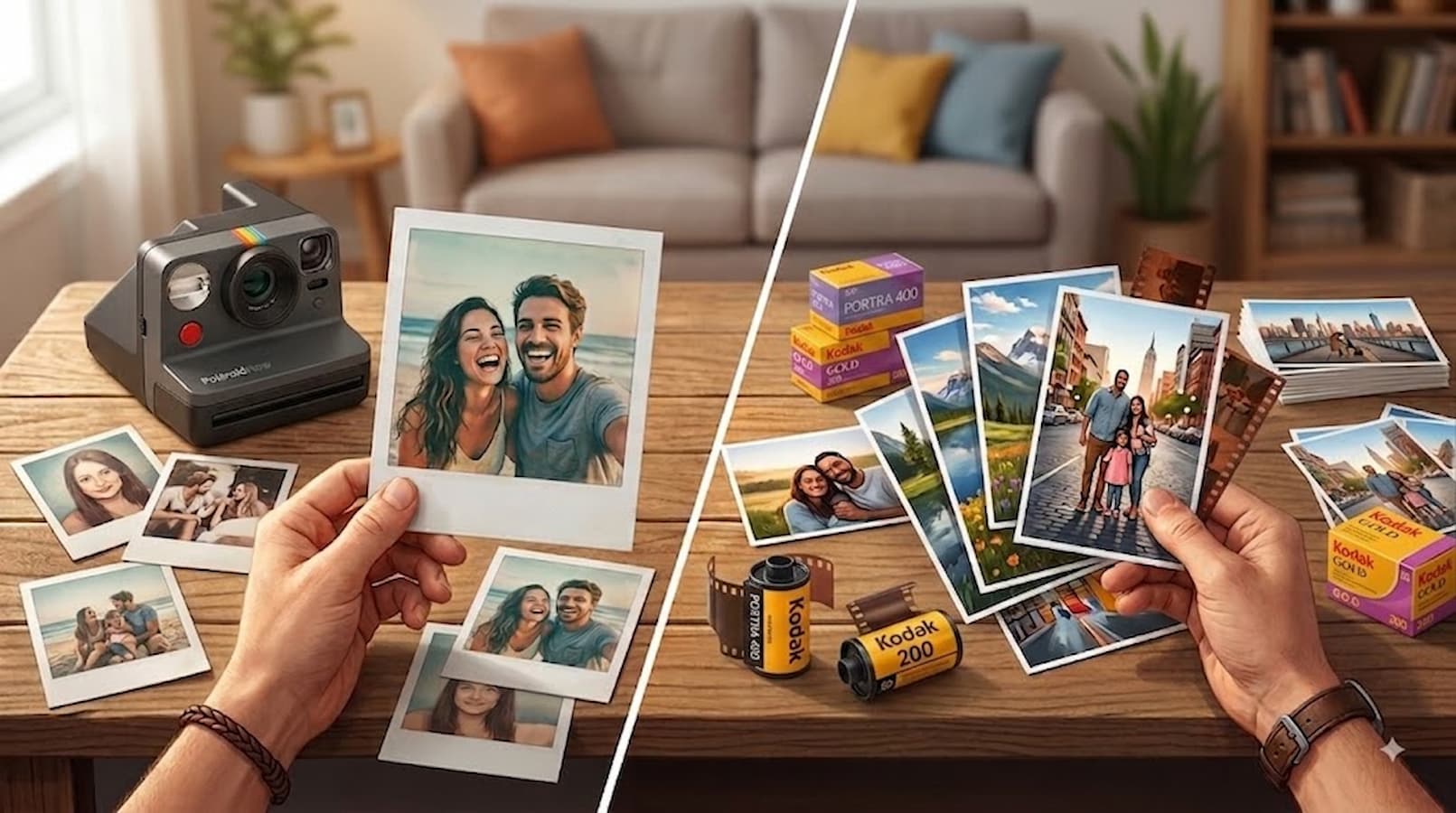
Instant cameras are especially good companions for trips with people. The image becomes part of the event rather than content waiting to be sorted later. A photo passed across a café table, taped into a mirror so the room starts to hold a memory of the place, or handed to a new friend carries a different energy from another image in a shared album. Polaroid photography has that tactile, imperfect appeal - analog joy in a digital world.
Compact digital cameras and collectible mini cameras offer another kind of travel pleasure. Their smaller profiles make them easy to take on a walk, and their visual character gives an image a point of view before editing begins. They are not replacements for a phone in every situation. Low light, speed, and convenience may still favor your phone. But when the experience of making the photograph matters as much as the result, a smaller camera can spare you from overcommitting to camera gear and still do double duty for documentation and personal keepsakes.
If you travel with instant film, pack it with care. Film does not love heat, pressure, or being forgotten at the bottom of a bag. Keep it protected in a ziplock bag if needed, bring only what you realistically expect to shoot, and make sure the camera is accessible enough to use. A camera buried under cables is a camera you will not reach for.
Edit for Use, Not Just Aesthetic
There is a particular kind of overpacking that happens when every accessory is individually appealing. The compact camera, the second camera, the alternate strap, the oversized charger that becomes a bit bulky without a clear use case, a rigid water bottle instead of a foldable option that is lightweight and collapsible, the extra pouch, the toiletry bag, wireless headphones, the item purchased specifically because it looked good in a packing video. Together, they create extra weight and indecision.
The same logic applies to travel underwear because it dries quickly and takes up less space, which makes packing less easier to justify.
A better test is simple: Can this item do its job across more than one part of the trip? The Bundle Method can also reduce wrinkles when packing clothes. Laundry detergent sheets are a cost effective way to wash small essentials and pack fewer clothes while traveling, and the right laundry detergent can help them smell nice between washes. Can it work in transit, at the destination, and still earn a place on your next trip once you return home? The most successful travel accessories do not become clutter after landing. They return to your desk, your commute, your weekend plans, and your regular rotation, which is exactly what makes them worth it for a frequent traveller.
This is where selective curation beats endless choice. A focused assortment, such as the one Bang On builds around design-led bags, watches, and cameras, makes it easier to spot products with unique features that improve form and function instead of just adding novelty. Authentic sourcing and official warranty coverage also matter when you are buying a piece intended to hold up for over a year rather than one season of novelty.
Let the Travel Essentials and Accessories Carry Some of the Story
The strongest travel setup is not uniform. It reflects the way you move through the world: practical, visually alert, and willing to choose objects with personality. A waterproof backpack can hold the day together and, on shorter trips, even stand in for carry on luggage instead of bulkier luggage, while still leaving room for discreet safety tools like a personal alarm. A watch can make a simple outfit feel like your own. A camera can turn a passing scene into a physical memory.
A portable carbon monoxide alarm can also improve safety in accommodations without adding much bulk.
Pack only the travel essentials you will genuinely use with pleasure, not just the ones that promise to solve every possible problem; that can mean an Ultralight Power Bank at 163g, a Tiny Sonic Pulse Travel Toothbrush at 48g, an Ultralight Travel Towel at 84g that dries quickly, a packtowl personal towel for fast-drying utility, or a Nanobag 15L Daypack at just 30g that fits in your pocket. A Compact Foldable Hair Brush can earn its place too when it stays genuinely small, and at 6 inches it was the smallest tested. The right accessory should make travel feel less like managing stuff and, by carrying fewer better pieces, leave more space for what happens next. Long-haul comfort pieces can justify themselves too when they solve a real problem, whether that means travel pillows for neck support on flights, noise cancelling headphones to reduce ambient noise, compression socks to enhance circulation, or an eye mask to block light for better rest.
Travel insurance is essential for a digital nomad, and flexible options like SafetyWing can be booked while already overseas and may cover unexpected medical emergencies, trip cancellations, lost luggage, and theft.
Read our master works watch review for a design-first look at Japanese quartz craftsmanship, everyday wear, value, and the details worth considering now.